面向智能服務的智能化養老系統研究
2021-09-26 06:21:10劉超霞
河南科技 2021年24期
劉超霞
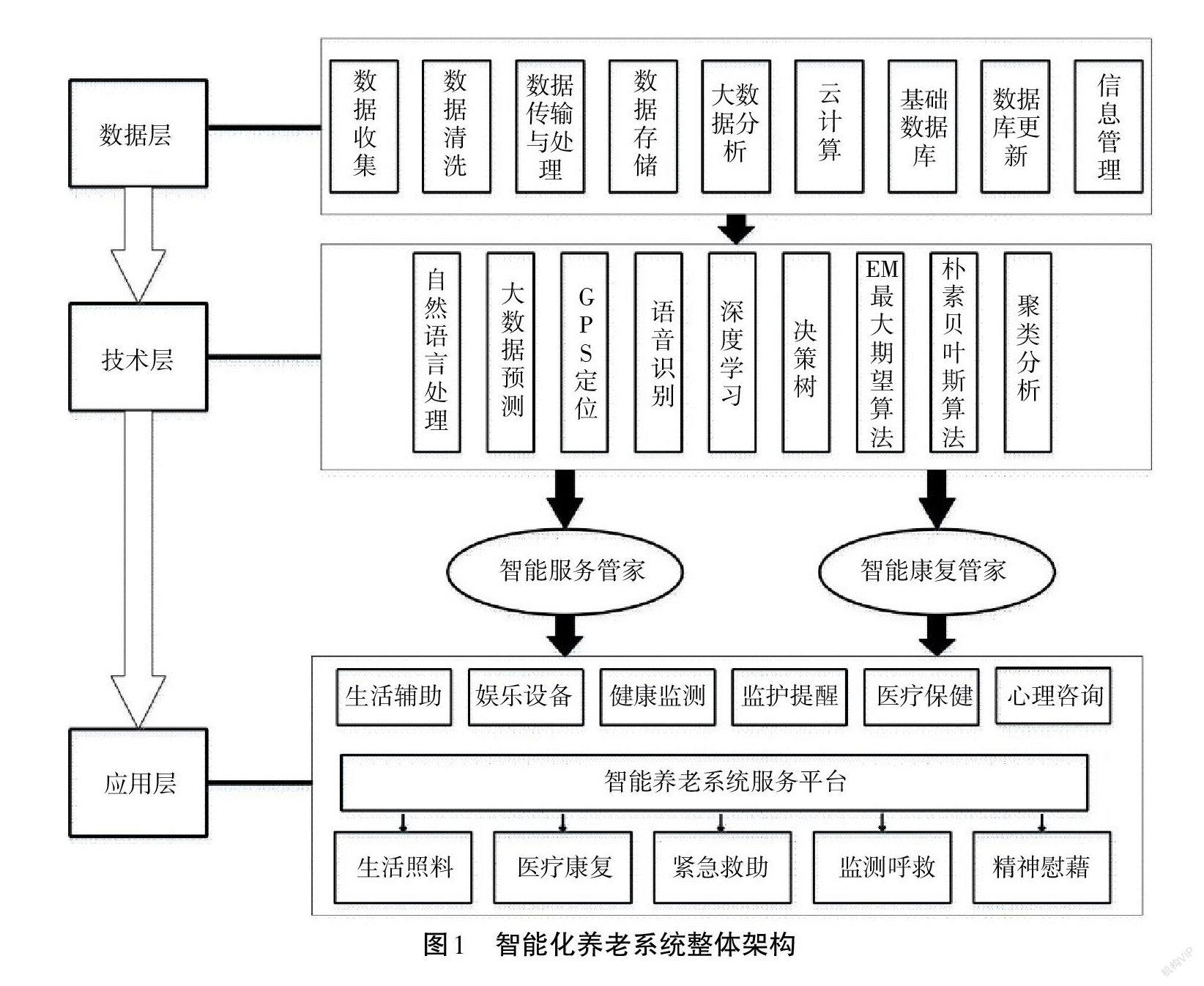
摘 要:伴隨著社會的進步和經濟的發展,以及國民生活水平的提高,新時代老年人的養老需求呈現出多樣性、復雜性、特殊性等顯性特征,這與養老產業的服務范圍窄、內容單一、對象局限構成矛盾。人工智能技術為改善養老模式、建設智能養老系統產業提供了新機遇。本文結合智能養老的全新內涵,基于大數據和機器學習等智能技術,嘗試構建由數據層、技術層、應用層構成的智能化養老服務系統,可提供智能生活照料、智能醫療康復、智能緊急救助、智能精神慰藉四項智能服務功能。
關鍵詞:大數據;人工智能;智能養老;智能化;養老系統
中圖分類號:F49;D669.6? ? ? 文獻標識碼:A ? ?文章編號:1003-5168(2021)24-0009-03
Research on Intelligent Elderly Care System Oriented to Intelligent Service
LIU Chaoxia
(Department of Computer Science in Binhai College Nankai University ,Tianjin? 300450)
Abstract: With the progress of the social and the development of the economy,? as well as the improvement of national living standards, the demand of the new generation of the elderly presents the obvious characteristics of diversity, complexity and particularity, which is in contradiction with the narrow service scope, single content and limited object of the pension service industry. Artificial intelligence technology provides new opportunities for improving the elderly care model and building an intelligent elderly care system industry. This paper combines with the new connotation of intelligent pension, based on intelligent technologies such as big data and machine learning, which attempts to build an intelligent pension service system consisting of data layer, technology layer and application layer so that to provide four intelligent service functions: intelligent life care, intelligent medical rehabilitation, intelligent emergency assistance? and intelligent spiritual comfort.
Keywords: big data; artificial intelligence; intelligent pension; intellectualization; pension system
隨著人口結構的改變,我國老年人口呈遞增趨勢,養老需求加劇。呈現出“未富先老”“未備先老”與“未富先驕”等局面,全社會養老負擔重[1],養老問題日益嚴峻。養老服務是指針對老年人群的養護服務[2]。老年人需求的多樣性、特殊需求的顯性化[3]與養老服務產業服務范圍窄、內容單一、對象受限形成矛盾[4],作為老齡化社會的基礎性公共服務,該問題逐漸受到學術界和實踐界的關注。當前,人類正處于新興科技高速發展的新時代,如何利用新興科學技術,構建智能化社區、提供智能化養老服務模式已經成為當前的熱點話題。在黨和國家政府的高度重視下,中國的養老服務事業改革與發展成就顯著,但整體而言養老服務機制還不完善。我國機構養老服務標準體系仍處于初級階段,對于重要標準的建立存在局限,機構內部的專業隊伍不夠健全,服務團隊質量不高,醫養結合養老服務仍需進一步發展。因此,有必要將人工智能技術與養老服務融合以促進智能養老服務的實現,助力我國智能化養老服務業的發展。
1 研究設計
1.1 研究思路
大數據技術、自動化技術、自然語言處理技術、機器學習等技術為智能化養老服務系統提供了堅實的理論基礎,完善了智能化養老服務產業。一方面,數據的日益積累為數據分析提供先決條件。分析歷史數據庫中價值大的數據特征,建立和調整數據變化的預測模型,為人機互動提供基礎。人工智能結合多模態情感識別技術、圖像識別技術等自動化技術,收集和識別人的生物信息,通過數據建模并持續優化模型,對未知的環境隨機搜索并反饋結果。自然語言處理技術把知識轉化成便于計算機存儲和利用的某種數據結構的知識表達形式,實現機器學習。機器學習對人的思維和行為進行分析和模擬,實現人機互動。另一方面,人工智能技術使智能化養老服務系統具有高度協同性、高效性、及時性、預測性,應合理應用人工智能技術完善原有機構養老模式。首先是建立人工智能與養老機構基本的聯結,其次是使用人工智能服務代替傳統人工服務,加快建設智能機器人養老服務培訓體系,制定智能機器人養老服務隊伍建設的長期規劃;最后是融合二者,優勢互補,形成一種更符合老年人需求的養老模式。
猜你喜歡
軍事文摘(2022年19期)2022-10-18 02:41:14
印刷工業(2020年4期)2020-10-27 02:45:52
商界(2019年12期)2019-01-03 06:59:05
IT經理世界(2018年20期)2018-10-24 02:38:24
小康(2017年16期)2017-06-07 09:00:59
中國交通信息化(2017年4期)2017-06-06 07:21:52
科技視界(2016年20期)2016-09-29 10:53:22
南風窗(2016年19期)2016-09-21 16:51:29
能源(2015年8期)2015-05-26 09:15:56