
中國網絡作家村:為夢想筑巢
2021-09-24 20:59:45金少策
文化交流 2021年8期
關鍵詞:網絡文學
金少策

一臺電腦、一副鍵盤就能誕生上億元產值,影視、游戲、動漫領域無所不包。《斗羅大陸》《花千骨》《瑯琊榜》《鬼吹燈》……這些超級IP竟然創作于之江藝術長廊上的一個“村”!
這個“村”就是坐落于白馬湖畔的中國網絡作家村,是由中國作協授牌于2017年12月9日成立并落戶杭州濱江,由高新區(濱江)與中國作協網絡文學研究院、浙江省作協、杭州市文聯等多方力量共建,是全國首個也是唯一一個冠名中國的網絡作家村。
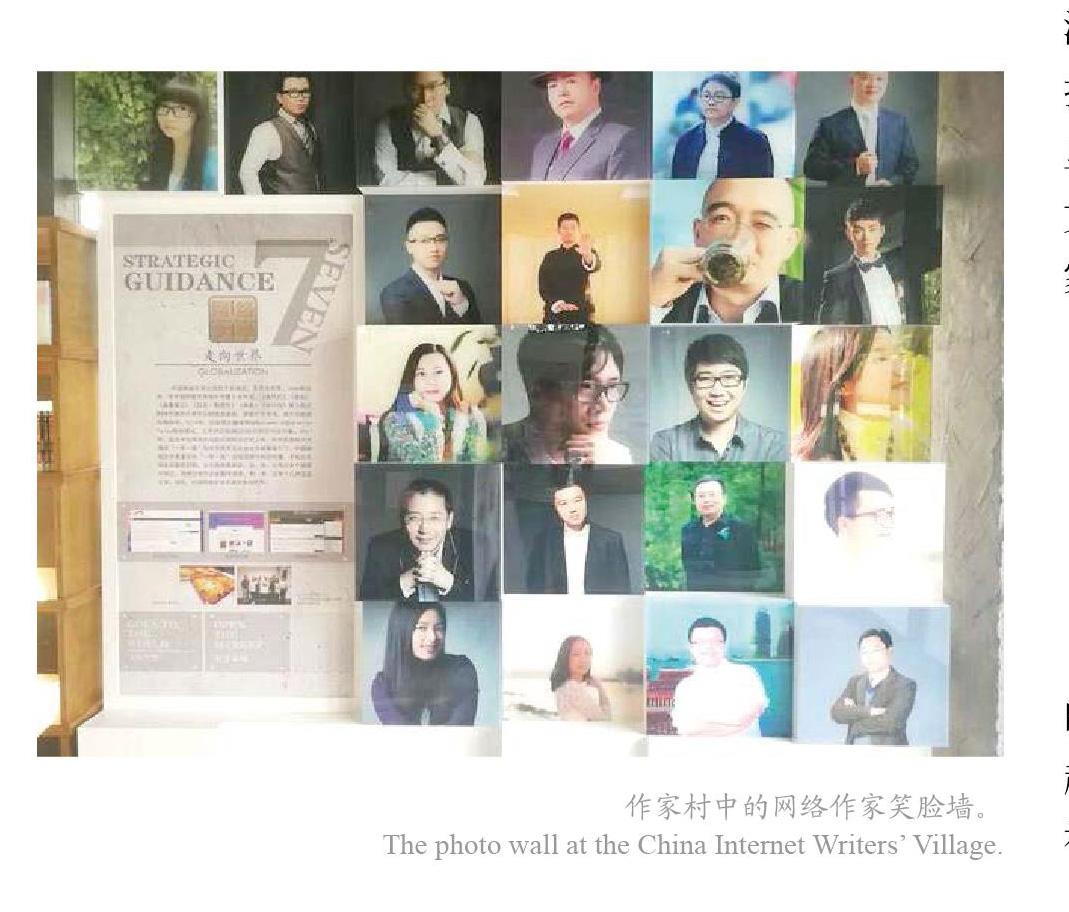
中國網絡作家村已經成為網絡文學的圣地。這里集聚了國內一半以上網絡文學“頭部作者”,聚焦于“作家、作品、平臺”三大關鍵環節,截至2020年12月10日,中國網絡作家村成立3周年,已經有179名網絡作家入駐中國網絡作家村。在中國作協全委會委員中,網絡作家有9名,其中6名都是中國網絡作家村的“村民”。
一居一苑 一廳一長
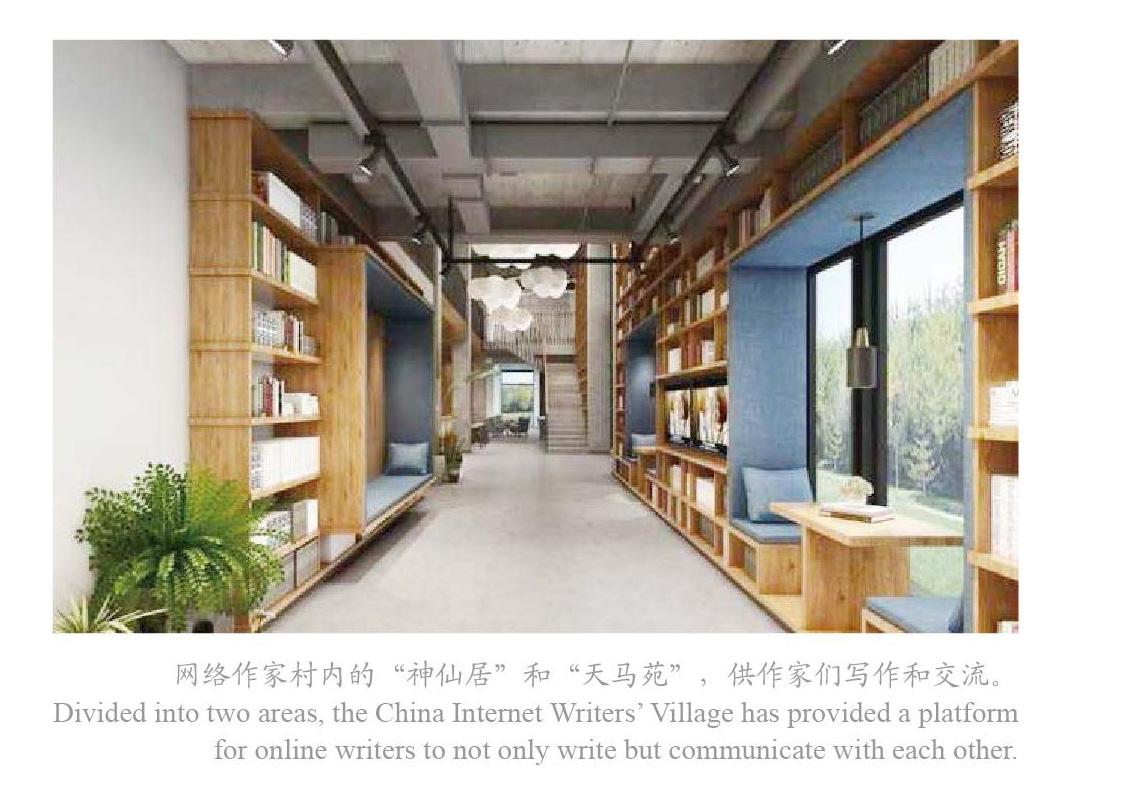
“望得見山,看得見水,記得住鄉愁”——作家村正是坐落在這樣一片山水之間:左邊靠著冠山公園,右邊緊鄰白馬湖。“神仙居”和“天馬苑”是作家村里最重要的兩個區塊。
“神仙居”隱藏在濱江區山一社區孔家里自然村。一期共改造了5幢農居SOHO,布局巧妙,呈倒V字型分布,東南邊一座小山坡上還矗立著一株200多歲的樟樹,猶如一個守護神。5幢民居之中,圍著一處綠地,顯得空曠而清新。
農居SOHO打破了城郊農村傳統的零星發展農家樂的做法,通過科學規劃和因地制宜的改造、農居SOHO的建設,讓農民直接服務于前沿的文化創意產業,這是農民生產方式、生活方式的一次重大變革。
位于海山公園3號樓的“天馬苑”,建筑面積1700平方米,“天馬苑”取意“作家文思天馬行空”,主要承擔網絡文學發展的成就展示、網絡作家交流培訓、培育孵化等功能。“天馬苑”的一樓是活動區和展示區,二樓、三樓是為網絡作家提供的個人創作工作室。
知名網絡作家唐家三少受聘出任作家村首任“村長”,中國作協原副主席、中國作協網絡文學委員會主任、中國作協網絡文學研究院院務委員會主任陳崎嶸則被聘為“名譽村長”。
此外,作家村里還有“廳長”——浙江省政協建立的開放性履職平臺“委員會客廳”。身為浙江省政協委員、浙江省網絡作家協會副主席的張鳳翔(筆名管平潮),則把“委員會客廳”設在了“神仙居”里。這幾年,“神仙居”里的“委員會客廳”最為熱鬧,網絡文學作家代表、網絡文學平臺負責人代表和相關部門人士等常就“新興網絡作家的成長”在此展開交流探討。
網絡作家有了“組織”
首任村長唐家三少代表著網絡文學的一面旗幟,他的《斗羅大陸》系列創造了獨有的魂師職業(斗羅大陸中存在的高貴職業。擁有超越常人的力量;存在不同的等級,等級越高能力越高,每個十級一個稱號,總共十個稱號)體系和神話情境,再造了神話新世界,作出了成功探索,這部作品被評選為“中國網絡文學20年20部優秀作品”之一。
除了唐家三少,中國網絡作家村的“村民”中還有五人被評選為“中國網絡文學20年20部優秀作品·20名優秀作家”:貓膩的《間客》、今何在的《悟空傳》、酒徒的《家園》、月關的《回到明朝當王爺》、蝴蝶藍的《全職高手》。
“中國的網絡文學和美國的好萊塢大片、日本動漫、韓劇并稱為世界四大文化現象,我覺得這個評價很客觀。中國的網絡文學,無論從作家群體、作品存量、讀者群落和廣泛影響力來看都是獨一無二的。”中國作協網絡文學委員會副主任歐陽友權說。
“網絡作家的責任感越來越強”,是牛凳、瘋丟子、蓮青漪的共同感受。“網文可以影響很多人的,這是原創崛起和互聯網時代的魅力吧。網絡文學已經在分水嶺上,精品化是必然趨勢。”蓮青漪說。
《戰起1938》之所以被稱為瘋丟子的成名作,很大程度上是因為這部小說入圍了茅盾文學獎。此前,茅盾文學獎的評選對象主要是傳統小說,作為網絡小說入圍茅盾文學獎實屬不易。
“網絡文學已經慢慢走上主流了,現在我說我是網絡作家,可能有一半人還會有些偏見,但是我說我還入圍過茅盾文學獎,大家的看法就不一樣了。網絡作家四個字的分量是越來越重了,我們寫起來,越來越有責任感了。”瘋丟子說。
在網絡作家還沒有形成“組織”之前,他們中很多人是很“宅”的。隨著各地網絡作協和網絡作家組織的成立,他們有了越來越多的發聲口。
浙江省網絡作家協會副秘書長、中國網絡作家村辦公室主任沈榮說:“在中國作協的指導下,浙江順利吸引全國唯一的中國網絡作家村落戶到杭州,意義重大。主要目的有兩個:一是讓網絡作家有一個線下交流、合作的平臺;二是引導好網絡作家創作,結合培訓,鼓勵網絡作家創作更多的精品。”
搭建平臺 雙向利好
中國網絡作家村不僅是個地點,更是一個平臺。
依托作家村強大的網絡文學集聚力,周邊數字產業鏈應運而生,目前已有8家動漫影視游戲企業在作家村“神仙居”周邊自發式集聚,聯動形成高新區內文學創作、游戲動漫上下游優質企業,形成了作家村特有的數娛產業矩陣。
同時,一年間,作家村舉辦了首屆“中國網絡文學周”“白馬薈”“好故事訓練營”等10余項文化和產業互動活動,其間還有各種對談和沙龍,這些都促進作家們與企業進行對接,在杭州就能開發自己的IP品牌。
管平潮就是通過中國網絡作家村的沙龍活動認識了杭州玄機科技,這家動畫公司的代表作是“國漫之光”《秦時明月》系列。2017年,玄機科技和唐家三少合作,推出了經典IP《斗羅大陸》的動畫版。
《斗羅大陸》是玄機科技第一次嘗試改編網文,網絡小說自帶的受眾基數和如此高的關注度讓他們驚嘆,所以,他們也有意尋找一些新的網文IP開發。而中國網絡作家村的出現對于他們這樣的制作公司而言是再方便不過的平臺,玄機科技媒介總監施凌霄說道:“有了中國網絡作家村,我們不僅能和這么多作家聯系上,還能通過參加一些活動和他們聊聊,知道他們最近在寫什么,才有機會去參與他們手中的優秀IP開發。”
顯然,平臺的利好是雙向的。
譬如,在和玄機科技深聊之前,管平潮幾乎沒有考慮過將自己的作品動畫化,而他以往合作的影視制作方,要么來自橫店,要么就是北京的,玄機科技是他接觸的第一家杭州公司,而且就在濱江,“從我們家就能看到玄機科技的辦公樓,如果以后真的合作,走走路就能到”。
中國網絡作家村已逐步發展成了網絡文學優質IP的資源熱島,在這座島上,作家們可以安心創作,制作公司可以便捷地探尋IP。在施凌霄眼中,這樣的關系平衡且適度,“我們和村民們有聯系,有合作,但其中充滿了偶然性,沒有那么特意與功利”。
“作家村肩負著歷史的重任——除了吸引更多優秀的網絡作家匯聚于此,更重要的是幫助青年作家實現自己的文學夢想。”沈榮說,“我希望,作家村的未來將形成一條以網絡文學為核心的IP產業鏈,并向外延伸。在這里,作家們接受培育、孵化、相互交流,創作出高質量的作品;再由專業的經紀公司對接資源、聯系出版、影視化,以及動漫周邊衍生開發……”
China Internet Writers Village:
Where Dreams Fly
By ?Jin Shaoce
What does it take to create an industry that generates hundreds of millions of dollars and that encompasses movies, televisions, animations, comics, games and a host of other fields? A single computer, coupled with a keyboard, is more than enough for Chinas online literature industry.
Douluo Dalu (Soul Land), Hua Qiangu (The Journey of Flower), Langya Bang (Nirvana in Fire), Gui Chuideng ( host Blows Out the Light) … What is more remarkable is the fact that these popular web fictions, plus the TV dramas and movies adapted from them, as well as mobile games and related products — commonly known as IP (intellectual property) brand — were all born in a “village”.
That “village” is the China Internet Writers Village, which is situated by the White Horse Lake in Hangzhou, and was opened on December 9, 2017. Co-established by the authorities of Hangzhou High-Tech Zone (Binjiang), Online Literature Academy of China Writers Association and the Hangzhou Municipal Federation of Literary and Art Circles, the village is Chinas first such organization of its kind. By December 10, 2020, figures show that 179 cyberspace writers have chosen to be the villages resident writers. Of the nine members of China Writers Association who consider themselves as internet writers, six are “villagers” of the China Internet Writers Village.
Among the famed resident writers in the village are Zhang Wei, better known by his pen name “Tangjia Sanshao”, author of Douluo Dalu (Soul Land), who also happens to be the first chief of the village; Xiao Feng (pen name Mao Ni), author of Jianke (Guest); Zeng Yu (pen name Jinhezai), author of Wukong Zhuan (A Biography of Wukong); Meng Hu (pen name Jiu Tu), author of Jiayuan (Home); Wei Lijun (pen name Yue Guan), author of Huidao Mingchao dang Wangye (Return to the Ming Dynasty as a Prince); and Wang Dong (pen name Hudielan), author of Quanzhi Gaoshou (The Kings Avatar). Incidentally, each of the six novels has also been listed as one of the “20 Best Works of Chinas Online Literature in the Past 20 Years”.
“Hollywood blockbusters, Japanese animations, Korean TV dramas and Chinese online literature are regarded as the four cultural phenomena in the world,” according to Ouyang Youquan, deputy director of the Online Literature Academy of China Writers Association. “I think this is a very fair assessment. Chinas online literature is unique in terms of its writers community and readers groups, the number of works created and its widespread influence.”
Internet writers are developing a growing sense of social responsibility. “The influence of online literature cannot be overestimated,” argued Fu Zhen, who goes by the pen name Lianqingyi. “This is not only down to its rising popularity but also shows the charm of the internet era. Right now, online literature is facing a watershed moment, as quality, rather than quantity, will be the ultimate litmus test for online literature.
One case in point is Zhanqi 1938 (War Starts in 1938), a web novel by Zhu Minqi (pen name Fengdiuzi), which was shortlisted for the Maodun Literature Prize, the most prestigious literary prize in China. Online literature is gradually going mainstream, Zhu believes. “If I tell people that Im an internet writer, half of them will probably still take my qualification with a pinch of salt,” she said. “But if I tell them that my work was once considered for the Maodun Literature Prize, they may well change their attitude.” internet writers like Zhu are increasingly winning recognition for their works, which in turn has propelled them to gain a keener awareness of social responsibility when writing.
They also have a lot to thank for what the village has offered. “Mountains, lakes and a tinge of nostalgia”. Sitting right between the Guanshan Mountain Forest Park and the White Horse Lake, the village and its surroundings are proved to be quite a source of inspiration for the resident writers. The village works as both as a base for established writers to create new works and an incubator for young and upcoming authors. Indeed, most of the internet writers worked on their own before they join “organizations” such as the China Internet Writers Village. Now, with the establishment of local associations of internet writers, they have ever more channels to have their voices heard.
“The purpose of the village is mainly two-fold,” explained Shen Rong, director of the villages general office. “The first is to help internet writers to communicate and cooperate with one another, and the second is to guide them in their writing, offer training courses as well as workshops, and ultimately encourage them to produce quality works.”
But the village is more than a gathering place for literary minds; it is also a platform for related industries to thrive. Relying on the villages strong network effect derived from online literature, a digital and entertainment industry chain around it has already come into shape. Some eight animations, films and games companies have already spontaneously converged around the village, both upstream and downstream, engaged in literary creation, games and animations.
Meanwhile, more than a dozen events such as the China Online Literature Week, salons, training camps and workshops have been held over the past year. In fact, it is during one of the events that the idea to produce the animated version of Douluo Dalu (Soul Land) was born. The village has gradually grown into a hot place of high-quality online literature resources to develop IP brands. Apart from Douluo Dalu (Soul Land), a number of other IP brands have already been born or are being incubated.
“The mission of the village is to attract more outstanding internet writers, and more importantly to help young writers realize their literary dreams,” said Shen Rong. “In the future, I hope the village can create an IP industrial chain with online literature at the center, where authors can write their works in peace and production companies can easily explore opportunities to build IP brands.”
猜你喜歡
社會科學戰線(2022年7期)2022-08-26 08:45:24
當代陜西(2019年8期)2019-05-09 02:23:26
當代陜西(2019年8期)2019-05-09 02:23:24
當代陜西(2019年8期)2019-05-09 02:23:22
當代陜西(2019年8期)2019-05-09 02:23:16
新聞傳播(2018年8期)2018-12-06 09:03:06
消費導刊(2018年10期)2018-08-20 02:56:34
華人時刊(2017年17期)2017-11-09 03:11:48
網絡文學評論(2017年1期)2017-07-22 05:37:16
網絡文學評論(2017年1期)2017-07-22 05:36:38
