
A qualitative study on the experiences and attributions for resigned nurses with career plateau
2021-09-10 02:31:04HongmeiZhuChunjunXuHuJingMingziLi
Hongmei Zhu ,Chunjun Xu ,Hu Jing ,Mingzi Li ,*
a Peking University International Hospital,Beijing,China
b Peking University School of Nursing,Beijing,China
Keywords:Career plateau Nurses Organizations Phenomenology Turnover
ABSTRACT Objectives: This study seeks to understand the experiences of nurses who resigned because of limited available career development opportunities and of the possible reasons for their resignation.Methods: Semi-structured interviews were conducted with nine clinical nurses who experienced limitations in the development of their careers and consequently left their jobs to elicit their feelings and reasons for leaving.The content analysis was used to analyze the interview data.Results: Two themes and four subthemes relating to the experiences and attributions of former nurses were identified.Nurses who experienced career plateau were disappointed with the current work and uncertainty about the future.The attribution of career plateau lies in unsatisfied personal needs and the absence of organizational support.Conclusions: Nurses had strong career plateau experiences before they left,and it caused a series of negative feelings in their practice.Establish a clear career development path and multi-dimensional support from the organization may be helpful to reduce the occurrence of career plateau,thus increasing the retention of nurses.
What is known?
? Career plateau could lead to decreased job satisfaction among clinical nurses.
? Nurses may have an increased propensity to resign when nurses encounter a career plateau.What is new?
? This study explores the experiences of resigned nurses with career plateau.
? This study reveals the possible attribution of nurses’ career plateau by the method of qualitative research.
1.Introduction
The shortage of nurse human resources has been a problem that many countries may face now or in the future.It is estimated that by 2030,there would be a global shortage of 5.7 million nurses and midwives [1].The high turnover rate of nurses has undoubtedly aggravated the shortage of nurses’ human resources,which is a causative factor contributing to nursing staff insufficiency [2,3].In China,the development of nursing education is not long,and the number of registered nurses is relatively insufficient;it is one of the countries with the severe shortage of nurses in the world.A crossstudy showed that the nurse turnover rate of hospitals in Jiangsu Province ranged 0.64%-12.71%,and 4.9% of nurses had a very strong turnover intention [4].The high turnover rate further aggravates the shortage of nurses and affects the stability of nursing resources.Many scholars have researched the turnover of Chinese nurses,but qualitative research was relatively insufficient.The results of many studies show that many reasons for the turnover of practitioners;however,quite a lot of studies have shown that encountering a career plateau in the process of career development is one of the possible reasons [5-7].
Career plateau depicts the uncomfortable and frustrating career experiences that most of us unwillingly stuck in a job role for a long time [8].It occurs when promotion becomes highly unlikely[9]or has little likelihood of obtaining assignments of increased responsibility [10].Considerable evidence indicates that reaching a career plateau may result in negative consequences,such as decreased job and career satisfaction,reduced organizational commitment [11],unsatisfactory performance [12],and increased intention to quit [13].Studies focusing on career plateau started around 40 years ago.Employees in many industries are high-risk groups experience career plateau,such as enterprise employee,managers,teachers,medical staff,and so on [14].In recent years,people began to pay attention to the career plateau phenomenon of nurses.Also,most present studies showed that career plateau could lead to decreased job satisfaction among clinical nurses,decreased organizational promise,and an increased propensity for these staff to resign [15-18].
Most previous studies on this topic have empirically investigated the correlation between the propensity to resign and career plateauing.Research showed that some senior nurses took the same work pattern as junior nurses,such as day and night shift,had little sense of personal achievement,less development space and promotion opportunities,and gradually appear career plateau,which eventually led to their resignation[19].However,in view of the fact that most studies used quantitative empirical research,the“dynamic” and “procedural” problems in the process of individual career plateau were not fully revealed.Especially for the resigned nurses,it is necessary to explore and descript their experiences of career plateau and the deep reasons behind it.Therefore,in this study,in-depth interviews were conducted with nurses who had resigned to elicit possible reasons for their resignation and provide feasible recommendations for minimizing the resignation or turnover rates of nurses,thereby contributing to the stabilization of nursing teams.
2.Methods
2.1.Study design
This study adopts a qualitative research design and Husserl phenomenological research.Semi-structured,face-to-face interviews were performed to profile and understand the participants and identify similar or different topics.
2.2.Setting and participants
Convenient purposive sampling was performed to obtain a sample of clinical nurses who had resigned between January and August 2019 in a hospital in Beijing.The following inclusion criteria were applied in the study:1) the nurses were registered,2) their service duration was five or more years,3)their resignations were prompted due to limited scope for developing their careers,and 4)those willing to be interviewed and signed the informed consent.During this period,33 nurses resigned for a variety of reasons.Fourteen nurses raising reason for limited career development in their resignation when leaving the hospital were included.We collect and analyze the data simultaneously and stop the interview only after the data is saturated.(i.e.,no new code can be recognized in later interviews) [20].After we finished the interview and data analysis of nine nurses,new information no longer appeared,and the data was saturated,so we stopped collecting information.Finally,the total participants were nine nurses (Table 1).

Table 1General profiles of the participants (n=9).
2.3.Data collection
The interview outline was prepared based on previous studies’theoretical framework and results [16,21,22].Combined with the purpose of this study,the interview outline was developed by the research team based on repeated discussions and pre-interview results,including the following four key issues.“How did you feel during the pre-resignation period?”“When did you realize that you only had limited chances for career development?”“What were the possible reasons for this view?”“What,for you,was the last straw that broke the camel’s back?”
The study’s aims and methodology were clearly explained to all of the participants via phone or WeChat.Each interview took place in a meeting room at the appointed time according to the participants’ convenience.During the interview process,only the interviewer and the interviewee were present.Before the interviews commenced,the participants were introduced to the research,and the significance of relevant concepts was explained to them.They showed ethical approvals obtained for this study to earn their trust and signed an informed consent form.During each interview,which lasted 30-50 min,the interviewer did not comment on the responses of the participant,who was encouraged to express his or her honest opinion.The participants were told that their privacy would be protected,and the conversations were only used for research data analysis,which would not have any impact on the outgoing colleagues so that they could express their true opinions.The interviewer listened attentively to the participant’s responses throughout the interview,which was recorded,to determine any changes in this individual’s feelings or expressions,and written records were made.
2.4.Data analysis
The interviewer transcribed each interview within 48 h after it was completed,and the voice recording and written record were reviewed.A generic profile of the participant was obtained by repeatedly playing back the voice recording and carefully reading the written record.Two researchers used a Colaizzi method to highlighting the text code.The Qualitative Analysis Guide and steps of phenomenological analysis were followed [23].1) Read all the texts described by the interviewees carefully and repeatedly;2)Identify the changes of the interviewees’ thoughts and divide the text into fragments of thoughts;3)Use the interviewees’sentences to detail the important expressions in each fragment of thoughts;4)Refine the important expressions with the researchers’language to express the central meaning of the fragments of thoughts;5)Summarize the thought fragments with a similar meaning;6) The preliminary summary of thought fragments aims to study the essence of imagination;7)The formation of ultimate essence.Two researchers scanned all transcripts to acquire a global recognition of the data in context.If there were inconsistencies and discrepancies in the data analysis,they listened to the interview recording repeatedly and figured out the real intention of the interviewees.If they still cannot reach a consensus,they would put it forward in the report to the research group and discussed it together for judgment.We connect the meaning unit to the feeling of career plateau and the reasons to form a complete narrative to ensure that the relationship between the formed themes really exists in the original data.
2.5.Ethical considerations
The biomedical ethics committee of Peking University (No.IRB00001052-19079) approved this study.Under the premise of full informed consent,all subjects voluntarily participated in the interview and signed the informed consent form in person.We followed the informed consent principle and ensured anonymity and privacy during data collection and analysis.All recorded andwritten materials are in safekeeping with one of the authors.
2.6.Trustworthiness
Multiple methods were used to develop the trustworthiness of the findings.The research team consisted of professors from Peking University School of Nursing,the director of the Nursing Department and a researcher with a Master’s degree.Researchers regularly reported and discussed the progress to avoid deviation in data analysis,writing and other aspects.We use an outline template based on the interview outline for transferability,and the research process was outlined step-by-step (including participant recruitment,data collection,analysis,and study circumstances) [24].To gain dependability and conformability,the first author interviewed all participants.The author had received professional training before,such as how to better listening to others in communication.In order to improve the credibility of the research,this study adopts the triangulation method in terms of data sources,data collection methods,data types and researchers [25].We also presented relevant quotations to explain the categories further and strengthen the credibility [26].We provided explanations on how the interpretation was performed for readers to judge the analysis process [27] (Table 2).
3.Results
3.1.Participants
Nine nurses were interviewed,including one male and eight female,aged 29-38 years,who had served in their profession for 6-18 years.Of these individuals,five possessed a bachelor’s degree,and four had an associate degree.Six of them were junior nurses,and the others were with a title of nurse-in-charge.Before they resigned,all of them were clinical nurses in different departments.Table 1 presents general information about the participants.
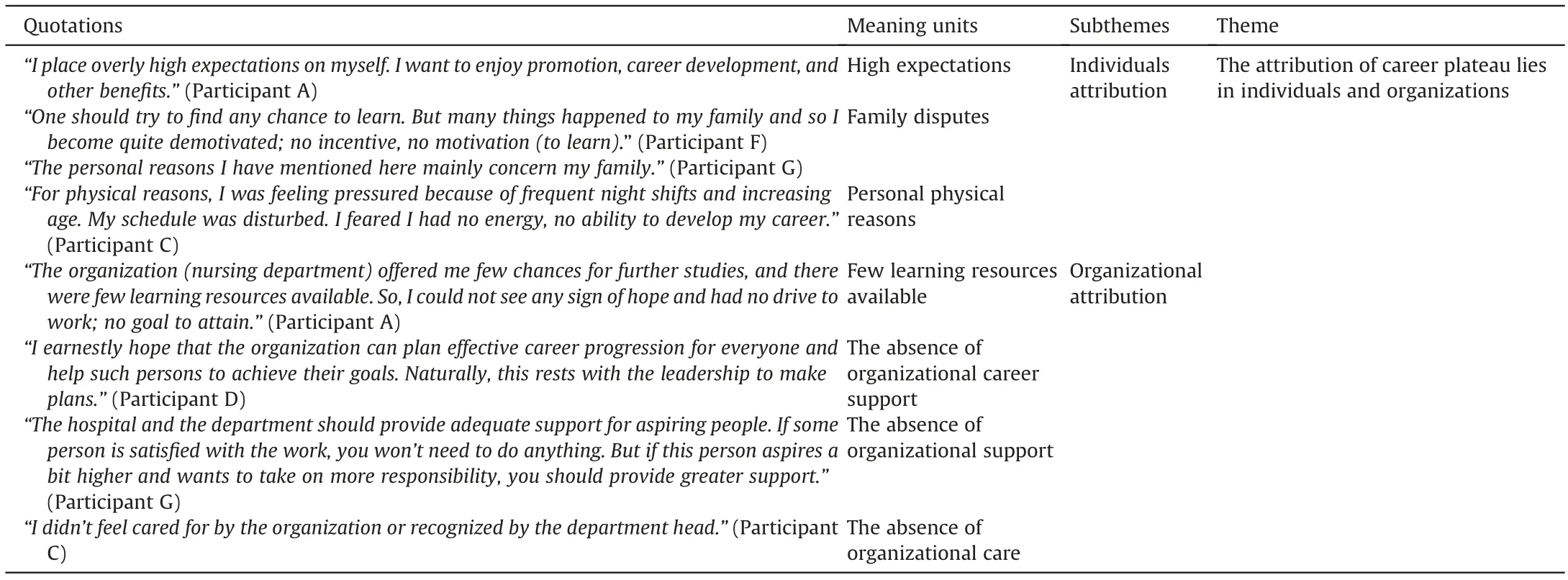
Table 2Analysis of attribution theme of career plateau.
3.2.Findings
The interviews conducted with nine nurses who had resigned yielded insights on how they felt about uncertainty relating to the future and their feelings of disappointment concerning their daily work before they resigned.Fig.1 shows the points of theoretical saturation for meaning units and the possible relationships among them.
3.2.1.Nurses had strong negative feelings before leaving
3.2.1.1.Extremely disappointed with the current work.When talking about their feelings,the interviewee stated that they were disappointed and tired of repeating the same work each day and did not have the slightest sense of freshness.In addition,most participants said that working there each day made them feel worthless,unhappy and disappointed.
“I have been chasing my own tail nearly a year.I have seen no sign of promotion…Ifind no value in working.My gain is nothing compared with my effort (repeated).Now I can see noflicker of hope.” (Participant A)
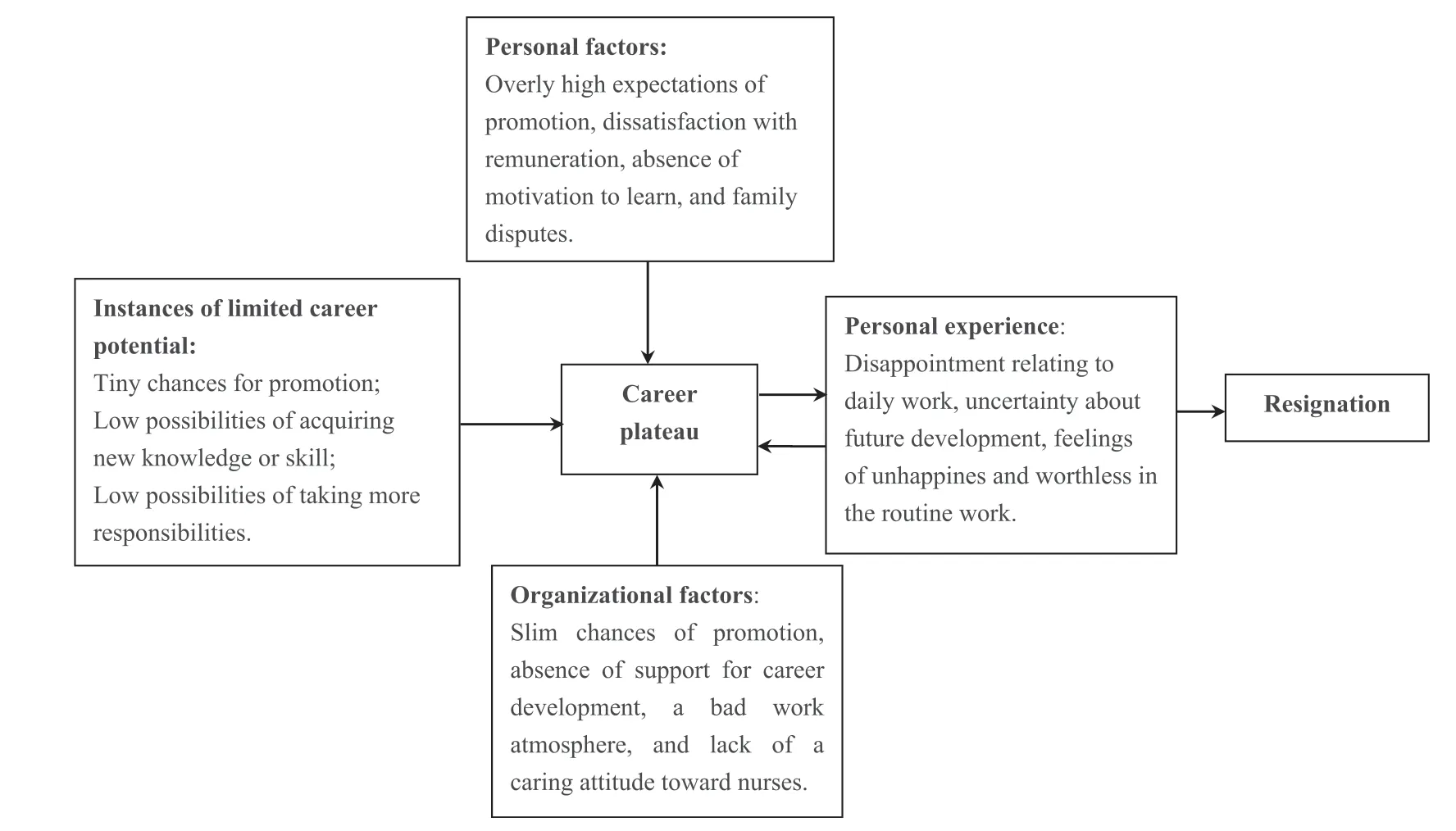
Fig.1.Nurses’ experiences and attributions associated with a career plateau.
“Each day when I work,I feel valueless and disappointed.I do not wanna work here anymore.Repeated work,no challenge,no trust and little care.I felt that there were no possibilities for me to make any progress.There was no way to be promoted.I was just going around in circles,making absolutely no progress in moving forward!” (Participant B)
“I always do the same work day after day.I am so busy that I even have no time to eat or drink.…I feel no respect and no recognition.I was depressed and disappointed.” (Participant C)
“All our work is to gain recognition and get a sense of accomplishment.Alternatively,we will feel happy if our overall capabilities can be improved.However,I have never had such feelings in the past two years.” (Participant D)
“I have no sense of achievement and no hope of development.”(Participant G)
“I’m busy every day,do the same work every day,but I still feel worthless.Even when I am at leisure,I am unhappy.I do not wanna laze away my life.I do not wanna waste my time.I do not like that!But if my career can improve a bit or become a bit more important for me,I won’t even consider resigning.” (Participant I)
Obviously,the resigned nurses had negative feelings about their limited leeway in career development.There were no signs of improvement in the following period,and they were disappointed with the current work,which explains why they chose to resign and sought out new organizations that they believed to have a superior chance of promotion.
3.2.1.2.Deeply uncertain about the future.The interviewee stated that their current career had fallen into stagnation because of the little chance to get a promotion,learn new knowledge or skill,or take more responsibilities.They often felt at a loss and were uncertain about future development.
“The promotion system isflawed,and there is a limited chance for promotion.What if I grow older and older and the situation does not improve?” (Participant A)
“I feel I have no possibilities of making any progress.There is no way to get promoted or develop my career.”,“I am down and depressed because I could not clearly see the direction of future career development.” (Participant B)
“I feel I am reaching the end of my career.I am seeing no prospect of a change of situation.I am at a great loss.I am totally uncertain about the future.There is little potential for promotion.” (Participant C)
“I have never been given any chance for promotion.There is no such luck for me.…I couldn’t see any hope for the future.”(Participant D)
“I feel at a real loss.Though I work well,there are tons of trivia impacting my progress.I’m not able to do anything meaningful.Each day Ifind myself doing a lot of useless things.Perhaps the job is notfitting for me or I do not work hard really.Therefore,I cannot make further progress anyway.I am lost and uncertain about what the future holds.I don’t know what I can do if this won’t change.”(Participant I)
It can be seen that repeated work day by day for a long time while without the opportunity of promotion or learning new knowledge and skills might cause nurses’ sense of uncertainty about the future.Thus they would lose confidence in the current organization and then leave to look for new career development.
3.2.2.The attribution of career plateau lies in individuals and organizations
When asked about the possible reasons for career plateau,the participants mentioned mainly focuses on the individuals and organizations.Individuals’ factors included overly high expectations of promotion,dissatisfaction with the remuneration,a lack of motivation to learn,and family disputes.Moreover,the lack of recognition and support provided by the hospital administration and the department,especially in career development,the work atmosphere,and humane care,were the organizational reasons.
3.2.2.1.Unsatisfied personal needs.When asked about the possible reasons for this restriction,the nurses mentioned that high promotion expectations,dissatisfaction with salary,lack of learning motivation,and family disputes were personal reasons,mainly dissatisfaction with personal needs.
“Maybe I place too high expectations on myself.I want to enjoy the promotion,career development and other benefits.I’m not satisfied with the current income because I make many more efforts.”(Participant A)
“I have never got such a chance owing to my limited ability and other shortcomings.It’s possibly the truth.” (Participant D)
“To be a specialist nurse has always been my goal,but there is no chance to achieve it.” (Participant E)
“One should try tofind any chance to learn.But many things happen to my family and thus I become quite lazy.No incentive,no motive (to learn).” (Participant F)
“For my physical reasons,I have been feeling pressed by frequent night shifts and increasing age.My schedule is disturbed.I’m afraid I have no energy,no ability to develop my career.” (Participant C)
“The personal reasons we mention here are mainly about our families.Most of us have married and have to support old parents and little babies or children.So,what matters most to us is income.For wanderers like us,life pressure is tremendous.If there are a high salary and good working conditions,we will definitely work hard.And of course,our families want us to earn more money.”(Participant G)
Therefore,the personal factors of nurses were related to their career plateau.When individuals have high expectations of their career and are not satisfied with the personal need(salary,learning opportunities,he needs of the body or family),they are more likely to encounter career plateau.
3.2.2.2.Absence of organizational support.When asked about the possible reasons for limited career development and the direct reason for their resignation,the participants emphasized the hospital administration and the department’s little recognition and support,especially in career development,work atmosphere and humane care.
“The organization(Nursing Department)offers me few chances for further studies,and there are fewer learning resources available.So,I cannot see any sign of hope and have no drive to work,no goal to attain.” (Participant A)
“The head’s fairness and the department’s working atmosphere are especially important for me.Unfair shifts,inappropriate performance distribution andflawed excellence appraisal disappoint me greatly.I won’t be valued for good performance.So,I don’t wanna work hard.I feel depressed at work every day.” (Participant B)
“I can’t feel being cared by the organization or being recognized by the department head.” (Participant C)
“The work atmosphere is suffocating.I can’t have any sense of belonging.I am insecure.” (Participant D)
“Perhaps this has something to do with the hospital atmosphere.”(Participant F)
“The hospital and the department should provide adequate support for those aspiring guys.If this person aspires a bit high and wants to take more responsibilities,you (the organization) should provide great support.I earnestly hope the organization can plan effective career progression for everyone and help this person achieve the goal.Naturally,it rests with the leadership to make plans.”(Participant G)
Besides,when asked why they finally chose to resign,they each mentioned the absence of organizational support(in remuneration and career advancement) and the deterioration of the work atmosphere.
“I devoted my youth and effort to work,but gained a low income and saw no rise in income for 5 years.” (Participant A)
“The department’s working atmosphere is primarily depended on my head nurse’s management.…Iflatly submitted my resignation because our working atmosphere was really bad.” (Participant B)
“Indeed,nursing is a job I’ve been dreaming of.Yet the opportunity of specialist nurse training that head nurse promised me has never come my way.I can’t wait any longer.” (Participant C)
“The department’s work atmosphere is unfavorable.It has little support for my career development.I cannotfind a clear career path.I cannot see any hope for future development.So,I’d go out and try tofind a new job.” (Participant G)
It was shown that perceiving the lack of organizational support was the main reason these nurses encountered the career plateau.The limitation of the organizational structure provided nurses fewer opportunities for promotion and rare opportunities to learn new knowledge,new skills and further career development.Therefore,these nurses eventually left the hospital.
4.Discussion
This study attempted to explore some resigned nurses’feelings about their experiences and possible reasons for resigning.Specifically,a study of the cases reveals what made them choose resignation and how the nurses realized the job plateau and finally resigned.
Based on the study,we found that career plateau experience was related to nurses’ turnover behavior.The in-depth interviews conducted for this study revealed that nurses’ resignations were primarily attributed to their perception of the limited career potential of their jobs.According to the interview results of this study,the dimensions of the nurses’ career plateaus,illustrated in the interviews,accord well with the dimensions of hierarchical,content,and centralized plateaus proposed by Xie et al.[28].Moreover,the findings of this study reveal that the interviewees mainly felt disappointed about their daily work and uncertain about the future.These phenomenons were also be expressed by Sun et al.in a systematic review.They found that nurses whose chosen specialties were associated with higher requirements felt they had few opportunities to embark on further studies,be promoted,or join the management.Consequently,they were pessimistic about their future career development[29].This situation induced a decreased sense of obligation toward the organization and deep feelings of worthlessness,unhappiness,and disappointment.Ultimately,the nurses’ negative feelings about their work aggravated their resignation.Ko,Jeonga’s[6]study also suggested that career plateau was related to nurses’ turnover intention.It was consistent with the results presented in this study.
It is crucial to make clear the causes of career plateau.The results of this study show that combined personal and organizational factors contribute to a career plateau.Employees are nowadays reaching plateaus earlier in their careers than their predecessors.According to the previous research results,employees who have worked for more than five years may encounter career plateau[30,31].Therefore,It is important for organizations and individuals to prepare to cope with the phenomenon successfully [32].The interview results indicate that the origin of the career plateau phenomenon can be traced to interplaying personal and organizational factors.Put differently,and the phenomenon occurs because of unsatisfied personal needs and the absence of organizational support.The quotes elucidate previous empirical results,such as the correlation found between indexes (e.g.,age,years in service,personal career goals,expectations of promotion,and family disputes)and career plateaus[33-35].As nurses age,regular daily work under pressure and frequent shift rotation might induce exhaustion and a sense of monotony,while they perceive no possibilities to be promoted and barriers to realizing the personal potential [36].At the same time,nurses who do not receive the salaries as they expected may consequently lack a sense of selfworth.This situation further constraints the development of their careers,ultimately bringing about a perception of career plateau.
The interviewee also stated that they lacked organizational support.Many of them pointed out that they had made no progress and had no chances of promotion.Other studies also showed that career plateau arises mainly due to the organizational structure[36].This absence of opportunities stems from the conventional hospital hierarchy,whereby a higher level of seniority corresponds to fewer available posts.Though most of the interviews conveyed an understanding of this situation,they finally decided to resign because they got minimal care and support for their career development from the leadership.Overall,the nurses expressed a lowlevel sense of sporting from their organization.Zuo et al.who carried out a study on 480 nurses from five tertiary hospitals in Shanxi Province in China,concluded that the nurses perceived a low level of organizational support,which indicated that support provided for nurses at these hospitals was at significantly low levels[37].An unfavorable organizational atmosphere induces career plateaus among employees;conversely,a supportive atmosphere can increase their devotion to their work,thus boosting their career development[33].If a nurse perceives a low level of organizational support,he or she might provide inefficient service for the organization and be more prone to experiencing a career plateau.
It is important to identify and manage career plateaus to reduce resignations among nurses.During the interviews,all participants stated that they did not decide directly to resign based on the perception of an impasse;instead,they pondered over the choice before taking the final action.During this period,they developed negative feelings,such as unhappiness,disappointment,and dissatisfaction with their work.However,they stated that they would have changed their decision if some positive events had occurred,such as appropriate transfers,the assignment of greater responsibility to them,and the provision of adequate support for their career advancement.The study showed when the signs of an impending plateau are observed,the risk of the plateau is less if organizations accept responsibility for employee development and if employees are prepared to invest time in their development[32].Evidently,to tackle the career plateau phenomenon,hospital administrators should seriously consider introducing professional titles,such as“specialist nurse,”“clinical nurse specialist,”“advanced practice nurse,” and “case manager” to facilitate their career development.At the same time,analyses of career plateau factors should be strengthened,and a prediction model is suggested to develop,incorporating personal and organizational indexes to identify likely candidates for resignation and take concrete measures to avoid their resignation.Studies have shown that planning the career in the right way will avoid the career plateau for any employee [38].In addition,the employees who progressed in an organization in a good job path were more motivated,had more roles beyond a single role performance,were more satisfied,and reported less absenteeism and burnout [39].Consequently,the adverse results of career plateauing could be minimized so that individuals who may otherwise have resigned transition smoothly to a new stage in their professional development.
5.Limitations
The study analyzed the experiences and possible reasons for their career plateau from resigned nurses.As all participants were from the same hospital,it is easier to get saturated analysis data with similar meaning units.Only resigned nurses were interviewed,and other stakeholders were not included.This limitation restricts the generalizability of the research findings.It is suggested to expand the scope of interviews involving stakeholders on all levels in medical institutions in future research to get a deeper and more comprehensive understanding of nurses’ career plateau.
6.Conclusion
As part of the available human resources for health care,nurses play a crucial role in maintaining the health of the public and the safety of their lifespan,tackling various public health emergencies of international concern.The influences of nurses’ resignations extend beyond the concerned individuals and affect their organizations.This study showed that career plateauing is the real culprit contributing to the limited career potential of resigned nurses.It is essential to provide appropriate organizational support and career planning to improve nurses’ experience and reduce their career plateau and resignation.
CRediT authorship contribution statement
Hongmei Zhu:Conceptualization,Methodology,Investigation,Data curation,Formal analysis,Writing-original draft,Writingreviewing &editing.Chunjuan Xu:Conceptualization,Methodology,Supervision,Validation.Hua Jiang:Conceptualization,Methodology,Software,Validation.Mingzi Li:Conceptualization,Methodology,Formal analysis,Writing-reviewing &editing,Supervision,Validation,Project administration,Funding acquisition.
Funding
The study was supported by a grant from the nursing research subproject of China Health Human Resources Training Program(RFA:2019-HLYJ-001),which did not influence the study results and publishing.
Declaration of competing interest
The authors declared no potential conflicts of interest.
Acknowledgments
The authors would like to thank all the participants in the study for their time and willingness to participate in the study and provide rich and valuable information.We acknowledge the China Health Human Resources Training Program (RFA:2019-HLYJ-001)for the funding support for the project.
Appendix A.Supplementary data
Supplementary data to this article can be found online at https://doi.org/10.1016/j.ijnss.2021.05.006.
 International Journal of Nursing Sciences2021年3期
- International Journal of Nursing Sciences的其它文章
- The impacts of organizational culture and neoliberal ideology on the continued existence of incivility and bullying in healthcare institutions:A discussion paper
- Reliability and validity of the Chinese version of the Head and Neck Information Needs Questionnaire for patients with head and neck cancer and their caregivers
- Prevalence and correlates of lifestyle behavior,anxiety and depression in Chinese college freshman:A cross-sectional survey
- Understanding South African mothers’ challenges to adhere to exclusive breastfeeding at the workplace:A qualitative study
- Operating room nurses’ lived experiences of ethical codes:A phenomenological study in Iran
- Sense of courage:The mediating role of courage between emotional reflexivity and work-life integration among nurses in Indian hospitals