高等教育內涵式發展評價指標體系研究
2021-08-27 02:31:27李靖林玲魯圓圓
高教學刊 2021年19期
李靖 林玲 魯圓圓
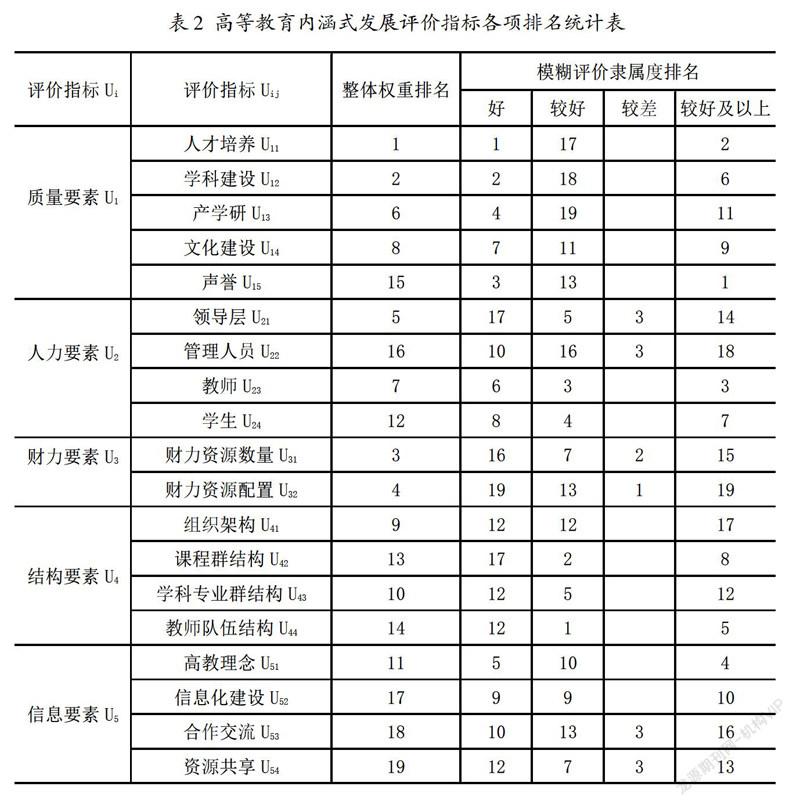
摘 ?要:高等教育內涵式發展是我國高等教育發展到一定階段的必然選擇,對其評價指標體系進行研究有利于提升高等教育管理水平,加快高等教育內涵式發展步伐。通過層次分析法和模糊綜合評價法對高等教育內涵式發展評價指標體系進行構建及指標權重量化,對高等教育內涵式發展水平進行評價分析。研究結果表明,在19個具體指標中,人才培養、學科建設、財力資源數量指標在高等教育內涵式發展中所占權重最多,其中人才培養是重中之重;依據該指標體系對我國高等教育內涵式發展進行評價的結果為總體處于良好水平,但是在學科建設、產學研、領導水平、管理水平、財力資源數量和配置、組織架構等方面需要大力改善,只有這樣才能更好適應高等教育內涵式發展的需求。
關鍵詞:AHP;FCE;高等教育內涵式發展;評價指標體系
中圖分類號:G640 ? ? ? ?文獻標志碼:A ? ? ? ? ?文章編號:2096-000X(2021)19-0017-05
Abstract: It is an inevitable choice for higher education to move forwards the connotative development in a certain stage. The research on the evaluation index system of connotative development of higher education is conducive to improve the management level of higher education and accelerate the connotative development of higher education. Through the analytic hierarchy process and fuzzy comprehensive evaluation method, this paper constructs the evaluation index system of connotative development of higher education and quantifies the index weight, and evaluates the connotative development level of higher education. The research results show that, among the 19 specific indicators, talent training, discipline construction, and financial resources are the most important indicators in the connotative development of higher education, among which talent training is the most important. The overall level of connotative development of higher education in our country is in a good level, but there are still some shortcomings, we need make improvements in some aspects such as discipline construction, production,teaching and research, leadership level, management level, the quantity and allocation of financial resources and organizational structure, can the connotative development of higher education be met.
Keywords: AHP; FCE; connotative development of higher education; evaluation index system
高等教育內涵式發展是新時代高等教育發展的必然趨勢和必然選擇[1],是推動高等教育現代化進程的必由之路。黨的十九大報告提出要“實現高等教育內涵式發展”,這對我國高等教育賦予了新的歷史使命,提出了新的時代要求,同時也為我國建設高等教育強國指明了發展方向。
高等教育內涵式發展是相對于先前的高等教育外延式發展而言的,是一種轉型升級式發展[2]。外延式發展重視外在的數量增加和規模擴張,內涵式發展是一種以質量提升為核心的適度規模發展[3],更加注重規模、質量、效益和結構的協調發展[4],突出公平性、開放性、協調性、創新性、共享性[5]。通過構建高等教育內涵式發展評價標準,明確評價指標,有利于更好、更快地推動高等教育內涵式發展進程[6]。
目前,國內很多學者對高等教育內涵式發展進行了一些研究。黃小芳[7]、吳玫[8]從不同維度對高等學校內涵式發展指標體系進行了分析,王洪新等人[9]分析了高等教育內涵式發展中存在的問題,楊秀娟[10]基于“雙一流”建設,馬廷奇[11]結合“雙萬計劃”,范笑仙[12]基于高等教育哲學視角,對高等教育內涵式發展進行了研究,郭健[13]、康翠萍等[14]從不同方面對高等教育內涵式發展進行了定性分析研究。
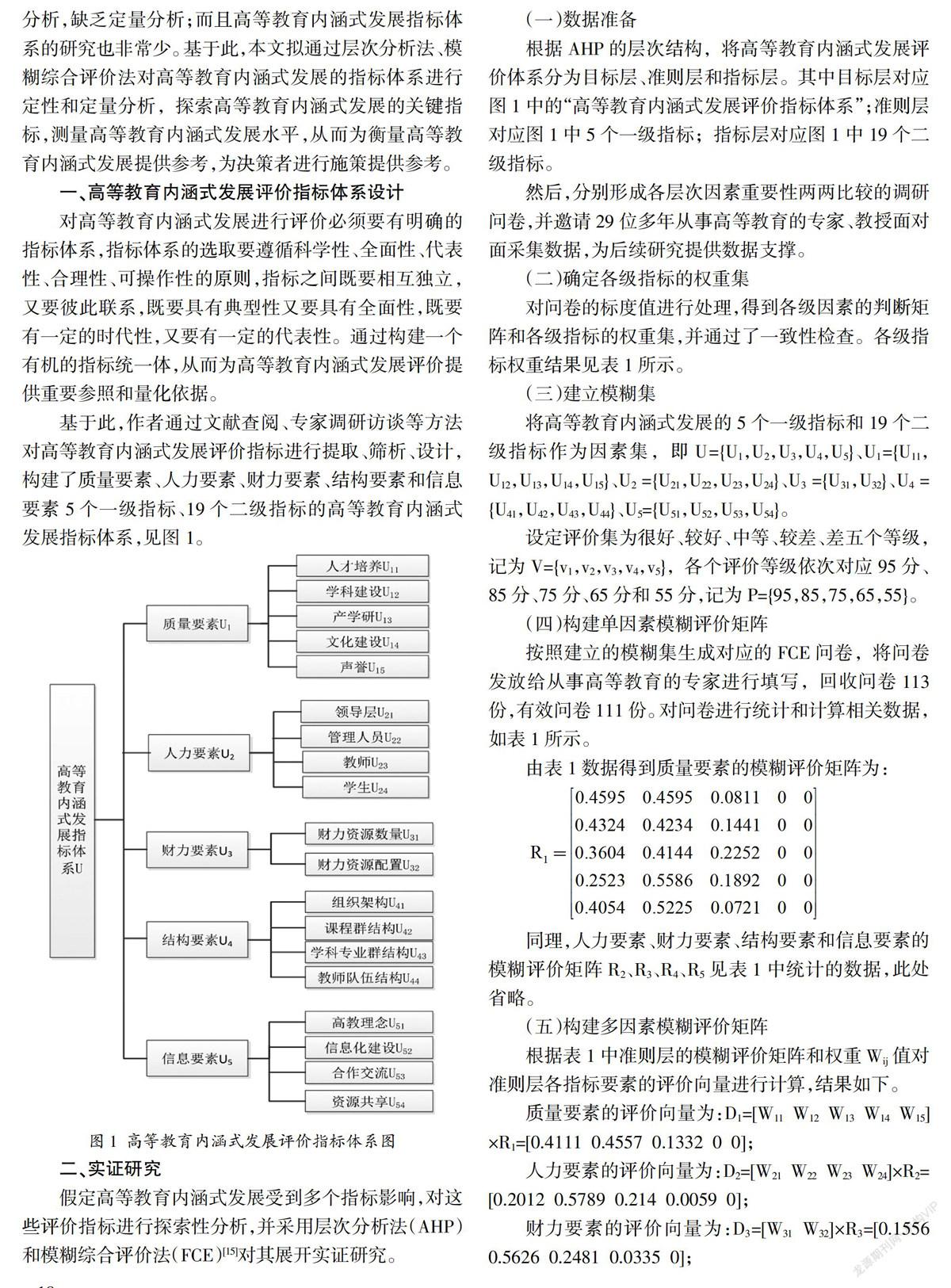
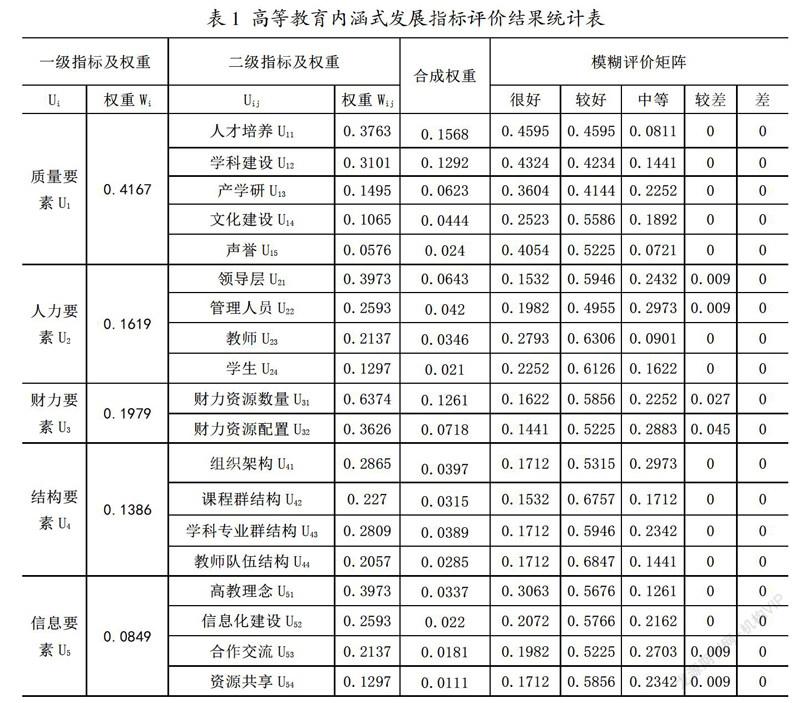
從檢索文獻看,現有研究大部分聚焦于高等教育內涵式發展中存在的問題以及對應的實現路徑和策略分析,為本文高等教育內涵式發展評價指標的設計提供了參考。這些研究大都采用歸納、演繹、分析、概括等定性分析,缺乏定量分析;而且高等教育內涵式發展指標體系的研究也非常少。基于此,本文擬通過層次分析法、模糊綜合評價法對高等教育內涵式發展的指標體系進行定性和定量分析,探索高等教育內涵式發展的關鍵指標,測量高等教育內涵式發展水平,從而為衡量高等教育內涵式發展提供參考,為決策者進行施策提供參考。