年輕人發(fā)信息不愛用句號Full Stop Is “Intimidating” to Young People
2021-03-18 09:37:19
時代英語·高一 2021年1期

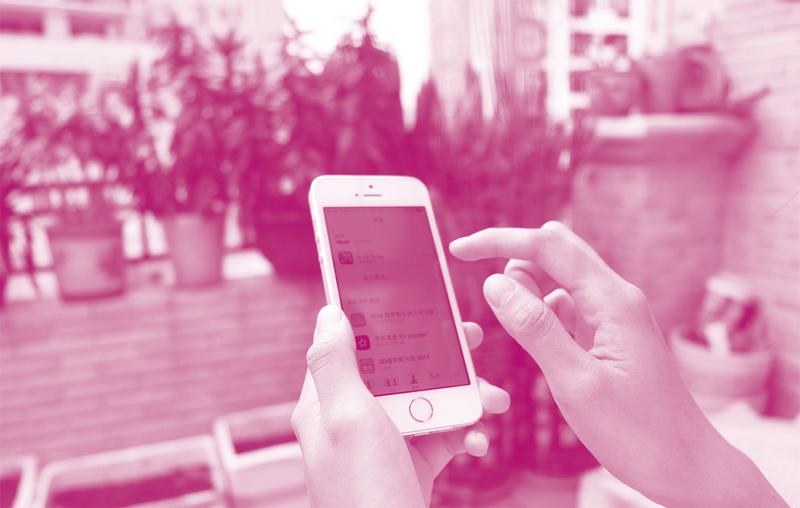

在微信里交流的時候,你會在一句話結(jié)束時用句號嗎?一些語言學(xué)家表示,用句號來結(jié)束一句話,會讓拿著手機(jī)長大的Z世代人感到恐慌,因為這個標(biāo)點符號對于他們而言,不再意味著句子的結(jié)束,而是表示“說話時語氣生硬或憤怒”。
Full stops intimidate young people when used in social media communication as they are interpreted as a sign of anger, according to linguistic experts.
語言專家表示,在社交媒體交流中使用句號會讓年輕人感到恐慌,因為他們認(rèn)為這表示憤怒。
Teenagers and those in their early twenties, classified as Generation Z, have grown up with smartphones which they use to send short messages without full stops.
青少年和那些20歲出頭的人被稱為Z世代,他們在智能手機(jī)的陪伴下長大,用智能手機(jī)發(fā)送短信,但不使用句號。
Linguistic experts are now investigating why teens interpret a correctly-punctuated text as a signal of irritation.
語言專家正在研究,為什么青少年會把正確地使用了標(biāo)點的短信理解為憤怒的信號。
The debate was reignited after writer Rhiannon Cosslett tweeted: “Older people—do you realize that ending a sentence with a full stop comes across as sort of abrupt and unfriendly to younger people in an email or a text chat? Genuinely curious.”
作家里安農(nóng)·科斯萊特在發(fā)布的推文中寫道:“年齡較大的人們,你們是否意識到,在郵件或短信聊天中使用句號對年輕人來說意味著生硬和不友善?純粹好奇。”這引發(fā)了有關(guān)年輕人對句號態(tài)度的再次討論。
That prompted crime novelist Sophie Hannah to reply: “Just asked 16-year-old son—apparently this is true. If he got a message with full stops at the end of sentences hed think the sender was ‘weird, mean or too blunt.”
犯罪小說家索菲·漢娜回復(fù)道:“我問過16歲的兒子,這顯然是真的。如果他收到的短信末尾有句號,他會認(rèn)為發(fā)件人‘古怪、刻薄或太生硬。”
According to experts, youngsters used to communicating electronically break up their thoughts by sending each one as a separate message, rather than using a full stop, which they use only to signal they are annoyed or irritated.
專家認(rèn)為,習(xí)慣用電子設(shè)備交流的年輕人會將他們的想法分開發(fā)送,而不是使用句號,因為句號只在表示他們感到煩惱或憤怒時使用。
Some have said the full stop is redundant when used in texting because the message is ended just by sending it.
有些人說,發(fā)短信時用句號是多余的,因為發(fā)出短信的行為就表示那句話結(jié)束了。
According to The Daily Telegraph, Linguist Dr Lauren Fonteyn of Leiden University in Holland, said, “If you send a text message without a full stop, its already obvious that youve concluded the message. So if you add that additional marker for completion, they will read something into it and it tends to be a falling intonation or negative tone.”
據(jù)英國《每日電訊報》報道,荷蘭萊頓大學(xué)的語言學(xué)家勞倫·方廷博士說:“發(fā)短信時不加句號,很明顯說明你已經(jīng)說完了。所以如果已經(jīng)結(jié)束了,你還額外加上一個表示完成的符號,人們就會解讀出一些往往是消極或負(fù)面的情緒。”
A linguist from the University of Cambridge, Owen McArdle, told the newspaper, “Im not sure I agree about emails. I guess it depends on how formal they are. But full stops are, in my experience, very much the exception and not the norm in young peoples instant messages, and have a new role in signifying an abrupt or angry tone of voice.”
劍橋大學(xué)的語言學(xué)家歐文·麥卡德爾告訴《每日電訊報》:“我不太確定我是否認(rèn)同電子郵件中使用這種處理方式,我想這取決于郵件有多正式。但根據(jù)我的經(jīng)驗,在年輕人的即時通信中,句號的確是個例外,它并不常見,而且它有了一個新角色,就是表達(dá)突兀或憤怒的語調(diào)。”
And the potential change in meaning of the full stop, in relation to online communication, has been debated by linguists for years.
關(guān)于句號的含義在網(wǎng)絡(luò)交流中可能發(fā)生的變化,語言學(xué)家已經(jīng)爭論了很多年。
Professor David Crystal, one of the worlds leading language experts, argues that the usage of full stops is being “revised in a really fundamental way”.
大衛(wèi)·克里斯特爾教授是世界頂尖的語言專家之一,他認(rèn)為句號的用法正在“從根本上發(fā)生改變”。
In his book, Making a Point, he says that the punctuation mark has become an “emotion marker” which alerts the recipient that the sender is angry or annoyed.
他在所著的《表達(dá)觀點》一書中寫道,句號已經(jīng)變成了一種“情緒標(biāo)記”,提醒收件人,發(fā)件人感到生氣或惱怒。
He wrote: “You look at the Internet or any instant messaging exchange—anything that is a fast dialogue taking place. People simply do not put full stops in, unless they want to make a point. The full stop is now being used in those circumstances as an emotion marker.”
他寫道:“看看互聯(lián)網(wǎng)或任何即時通信交流,任何正在發(fā)生的快速對話。除非想要表明一個觀點,否則人們根本不會使用句號。如今,句號在這些語境中被用來表達(dá)情緒。”
In 2015, a study from Binghamton University in New York suggested that people who finish messages with full stops are perceived as insincere.
2015年,紐約賓漢姆頓大學(xué)的一項研究表明,用句號結(jié)束短信的人會被認(rèn)為不真誠。
The study involved 126 undergraduates and the researchers found that text messages ending in the most final of punctuation marks—eg “l(fā)ol”—were perceived as being less sincere.
共有126名大學(xué)生參與了這項研究。研究人員發(fā)現(xiàn),使用句號的短信會被認(rèn)為不那么真誠,比如“大聲笑(Laugh Out Loud)”。
Unusually, texts ending in an exclamation point—“Just a cheeky one!”, “Youre killing me!”—are deemed heartfelt or more profound.
不同尋常的是,短信以感嘆號結(jié)尾被認(rèn)為是真心誠意或更深刻的。比如,“真是個厚顏無恥的家伙!”“你笑死我了!”
Research leader Celia Klin said at the time,“When speaking, people easily convey social and emotional information with eye gaze, facial expressions, tone of voice, pauses and so on. People obviously cant use these mechanisms when they are texting. Thus, it makes sense that texters rely on what they have available to them—emoticons, deliberate misspellings that mimic speech sounds and, according to our data, punctuation.”
研究負(fù)責(zé)人西莉亞·克林當(dāng)時說:“在說話的時候,人們很容易通過凝視、面部表情、語調(diào)、停頓等方式來傳遞社交和情感信息。人們在發(fā)短信時顯然不能使用這些方式。因此,發(fā)短信的人依賴他們現(xiàn)有的表情符號、刻意用錯別字來模仿語音,以及根據(jù)我們的研究數(shù)據(jù),使用標(biāo)點符號來傳遞信息,這都是有道理的。”
The full stop derives from Greek punctuation introduced by Aristophanes of Byzantium in the 3rd Century BC.
句號源自希臘標(biāo)點符號,由拜占庭的阿里斯多芬尼斯(古希臘早期喜劇代表作家、詩人)在公元前3世紀(jì)引入。
Word Study
intimidate /?n't?m?de?t/ v. 恐嚇;威脅
She refused to be intimidated by their threats.
interpret /?n't??pr?t/ v. 把……理解為;領(lǐng)會
The data can be interpreted in many different ways.
investigate /?n'vest?ɡe?t/ v. 調(diào)查,偵查(某事)
irritation /'?r?'te??n]/ n. 激怒,惱怒,生氣
obvious /'?bvi?s/ adj. 明顯的;顯然的
It was obvious to everyone that the child had been badly treated.
negative /neɡ?t?v/ adj. 消極的;負(fù)面的;缺乏熱情的
Scientists have a fairly negative attitude to the theory.
revise /r?'va?z/ v. 改變;修改
I can see I will have to revise my opinions of his abilities now.
alert /?'l??t/ v. 使意識到;使認(rèn)識到
They had been alerted to the possibility of further price rises.
convey /k?n've?/ v. 表達(dá);傳遞
derive /d?'ra?v/ v. 源于;來自
The word “politics” is derived from a Greek word meaning “city”.
猜你喜歡
體育科技文獻(xiàn)通報(2022年3期)2022-05-23 13:46:54
科教新報(2022年12期)2022-05-23 06:34:16
今日農(nóng)業(yè)(2021年14期)2021-10-14 08:35:28
天津外國語大學(xué)學(xué)報(2021年3期)2021-08-13 08:32:18
遼金歷史與考古(2021年0期)2021-07-29 01:06:54
海峽姐妹(2020年8期)2020-08-25 09:30:18
科技傳播(2019年22期)2020-01-14 03:06:54
民用飛機(jī)設(shè)計與研究(2019年4期)2019-05-21 07:21:24
汽車工程學(xué)報(2017年2期)2017-07-05 08:13:02
人民中國(日文版)(2015年10期)2015-04-16 03:53:58