
Study on the acupoints belonging to the three yin meridians of foot reflecting the variation pattern of uterine qi and blood in women with moderate constitution
2020-12-24 02:33:12SongXiaodan宋曉丹YangFei楊飛SheYanfen佘延芬GaoYayu高亞玉ChenHao陳豪FanXisheng范璽勝YuAotian于傲天ZhangMan張曼ZhangZhifang張治方PanLijia潘麗佳WangBingcheng王炳成ShiXuliang師旭亮
Song Xiao-dan (宋曉丹), Yang Fei(楊飛),She Yan-fen (佘延芬),Gao Ya-yu (高亞玉),Chen Hao(陳豪),Fan Xi-sheng (范璽勝), Yu Ao-tian (于傲天),Zhang Man (張曼), Zhang Zhi-fang (張治方),Pan Li-jia (潘麗佳),Wang Bing-cheng (王炳成),Shi Xu-liang (師旭亮)
1 Hebei University of Chinese Medicine,Shijiazhuang 050200,China
2 Hebei General Hospital,Shijiazhuang 050051,China
Abstract
Keywords: Uterus;Menstrual Cycle;Research on Acupoints;Specificity of Acupoints;Points, Yuan-Primary;Points,Xi-Cleft; Microcirculation; Women
Acupoints are special components of the human body where qi from the internal organs and the meridians is infused into the body surface, and have the functions of treating and responding to diseases[1].Studies have shown that when the visceral organs undergo physiological or pathological changes,the relevant local acupoints will change accordingly. The essence of the local changes in acupoints is the changes in qi and blood of the internal organs[2-3].
Microcirculation is where the human blood circulation directly exchanges nutrients,oxygen and carbon dioxide with tissues,and is close to the connotation of ‘blood’ in traditional Chinese medicine(TCM). It is an ideal indicator for observing the ‘blood’state[4]. The changes in skin blood perfusion volume reflect the local and systemic changes[5].
As the most important female internal genitalia,uterus is characterized by regular storage and excretion,mainly in the form of regular menstrual onset. The rhythmic changes of blood and qi during a menstrual cycle are very suitable to observe the ups and downs of blood and qi in the uterus[6]. Therefore, the purpose of this trial was to explore the specific pattern of related acupoints reflecting physiological changes in uterine qi and blood by detecting the changes in the skin microcirculation of uterine-related acupoints during the menstrual cycle.
Constitution is a comprehensive and relatively stable characteristic of individual life in terms of morphological structure,physiological function,and psychological state[7].Differences in the quantity and composition ratio of qi, blood and fluid in the human body lead to different constitutions[8].It has been shown that the resistance[9]and superficial microcirculatory perfusion volume of the same point differ in populations with different constitutions[10].Moderate constitution is a strong and healthy constitution.People with this constitution have a balanced state of yin, yang, qi and blood without obvious bias. Therefore, subjects with moderate constitution can reflect the state of the body more objectively.
In this study, healthy and not yet giving birth female college students with regular menstrual cycles and moderate constitution,and without dysmenorrhea were recruited as the observation subjects. The laser speckle blood flow imaging technique was used to detect the skin microcirculation changes at the Yuan-Primary points and Xi-Cleft points, located in the adjacent spinal cord segment of the uterus, at different phases of one menstrual cycle, in order to explore the specificity law of the related acupoints reflecting the changes of uterine qi and blood in moderate constitution women.
1 Observation Subjects and Test Materials
1.1 Observation subjects
Healthy and not yet giving birth female college students with regular menstrual cycles and without dysmenorrhea were recruited from Hebei University of Chinese Medicine. With reference toClassification and Determination of Constitution in TCM(ZYYXH/T157-2009)[11], a total of 43 subjects who met the criteria for moderate constitution were finally included.The subjects were(21.4±2.6)years old,with the first menstruation age of (13.3±1.1)years, the menstrual period of (5.5±0.9)d,and the menstrual cycle of (29.5±2.1)d.All the subjects signed the informed consent form before the trial. This study was approved by the Ethics Committee of Hebei University of Chinese Medicine in March 2016.
1.2 Test environment
This trial was conducted in the Acupuncture Laboratory of the Research Center in Hebei University of Chinese Medicine, between April 2018 and January 2019. The laboratory was kept away from noise and strong electromagnetic interference.Air conditioners and humidifiers were used to control the indoor temperature at (25±2) ℃, and the indoor humidity at(40±5)%.
1.3 Test instruments
MoorFLPI-2 laser speckle blood flow imager (Moor Instruments, UK).
1.4 Statistical methods
The SPSS version 20 statistical software was used for data analysis.Measures were presented as mean± standard deviation (±s). The changing trends of the same point at different time points of the menstrual cycle were analyzed by repeated measure analysis of variance.P<0.05 indicated a statistically significant difference.
2 Methods
2.1 Subject selection
2.1.1 Inclusion criteria
without heart,liver,kidney and other important organ diseases,qualified physical examination;18-26 years old not yet giving birth female college students;no reproductive system diseases checked by color Doppler ultrasound and gynecological examination;regular menstrual cycle lasting (28±7) d; conforming to the moderate constitution criteria in the Classification and Determination of Constitution in TCM(ZYYXH/T157- 2009), (Table 1)[11].
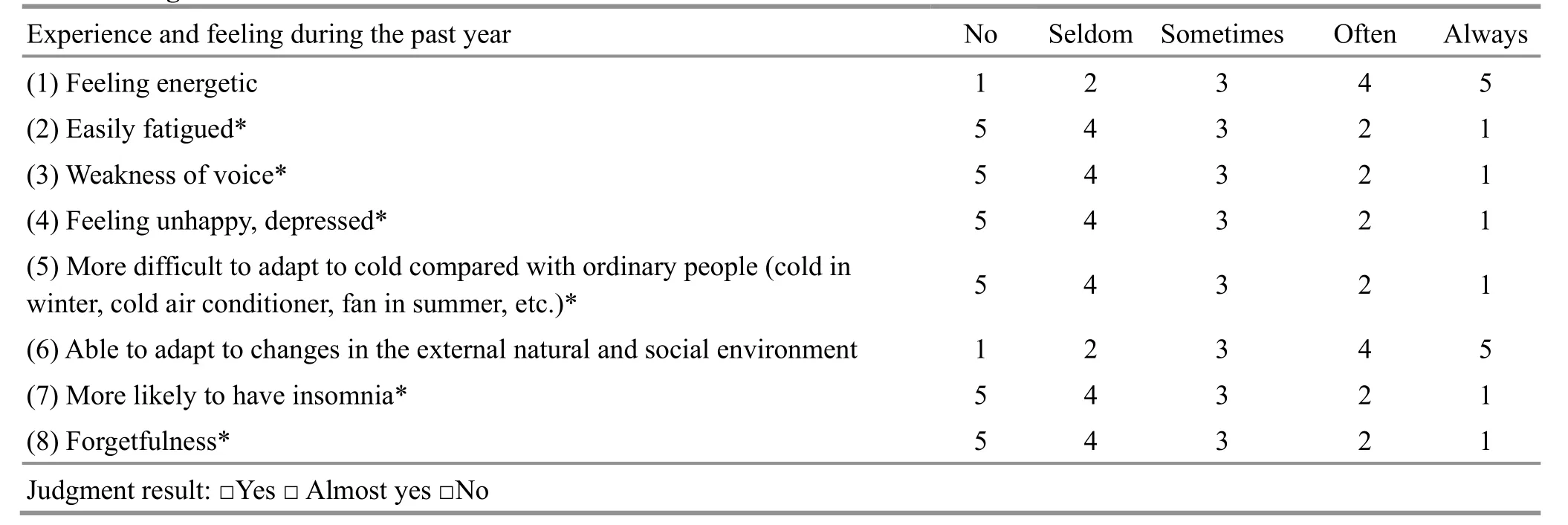
Table 1. Judgment criteria for moderate constitution
Scoring methodology and evaluation criteria for Table 1: there were 5 levels of answers under each entry, and a score of 1-5 points was given according to the tendency degree (the items marked with * were the reverse scoring items). The raw scores were obtained in a single-choice manner and then summed for each entry.Conversion score=(Raw score - Number of entries) ÷ (Number of entries × 4) × 100. The result was‘yes’if the conversion score of the moderate constitution was ≥60 and the conversion score of the other biased constitution was<30.The result was‘almost yes’if the conversion score of the moderate constitution was ≥60 and the conversion score of all other biased constitutions was <40,otherwise the result was ‘no’.
2.1.2 Exclusion criteria
Patients with breast tenderness,lumbosacral soreness,lower abdomen pain and other symptoms during the menstrual period, with a visual analog scale(VAS) score more than 2 for more than 1 d; patients with psychiatric diseases; patients with abnormal body temperature due to sickness in the past week; patients with muscle pain, skin diseases or peripheral nervous system diseases; patients with scars at the detection points.
2.1.3 Termination criteria
The test should be discontinued if intolerance or serious adverse reactions emerged before the end of detection; the subjects requested to stop as a result of unwilling to continue the test.
2.1.4 Elimination criteria
Those who did not meet the inclusion criteria and were erroneously enrolled; those who developed other illnesses such as cold, diarrhea, insomnia, etc. during the trial; and those whose results were affected by the data evaluation such as failure to detect as specified or the incomplete data.
2.1.5 Drop out criteria Those who withdrew themselves due to poor compliance; those who withdrew for various reasons;and those whose detection records were incomplete or missing.
2.2 Test records and statistics
The detectors,the data recorder and the data statistician followed the blinding method during the test.
2.3 Point selection and positioning
The Yuan-Primary points [Taichong (LR 3), Taibai (SP 3)and Taixi (KI 3)] and the Xi-Cleft points [Zhongdu (LR 6),Diji (SP 8) and Shuiquan (KI 5)] of the Liver Meridian, the Spleen Meridian and the Kidney Meridian were selected as the detection points,and Sanyinjiao(SP 6,the crossing point of the three yin meridians of foot),Xuehai (SP 10, the non-specific acupoint of the Spleen Meridian), Xuanzhong (GB 39, the non-related meridian acupoint of the uterine), and the non-meridian nonacupoint point[on the lateral side of the leg, at the same level of Xuanzhong (GB 39), between the Stomach Meridian and the Gallbladder Meridian] served as the control points.
The above-mentioned points were positioned based on theWHO Standard Acupuncture Point Locations in the Western Pacific Region[12].
2.4 Observation items and detection methods
The main observation item for this study was the blood perfusion volume in the body surface microcirculation at the points. Detection methods: four phases in one menstrual cycle, including the menstrual phase (the day with the greatest menstrual flow, T1),the follicular phase (the first day after menstruation, T2),the ovulatory phase (the first day after the increase of the basal body temperature, T3) and the luteal phase(the eighth day after the increase of the basal body temperature, T4)[13]. To avoid the effect of time on the point surface microcirculation, the 4 detections of each subject were performed at night on the same time. The subjects should maintain a good mood,not be too hungry or full, no strenuous exercise; should rest for 30 min after entering the laboratory and keep quiet indoors.The apparatus was turned on 20 min before the detection to stabilize its performance.The scanning head of the apparatuswas aligned with the point to be detected,and automatically focused during the detection process;each point was detected for 2 min.The subject remained relaxed and still during the detection process.The MoorFLPI-2 Review V50 software was used to analyze the monitored data.The detected points were defined as the areas of interest.The average blood perfusion volume in a circular area of 90-100 mm2in the area of interests was selected.Perfusion unit (PU)was used as the unit of measure(Figure 1-Figure 6).
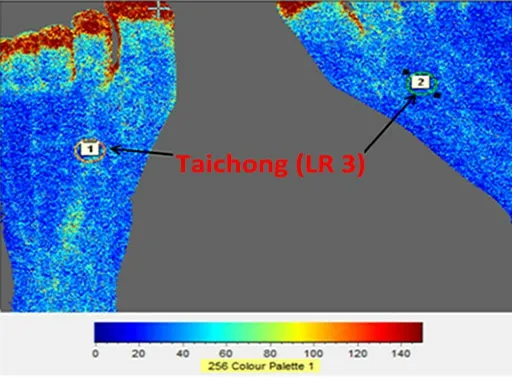
Figure 1. Laser speckle blood flow images of bilateral Taichong (LR 3)
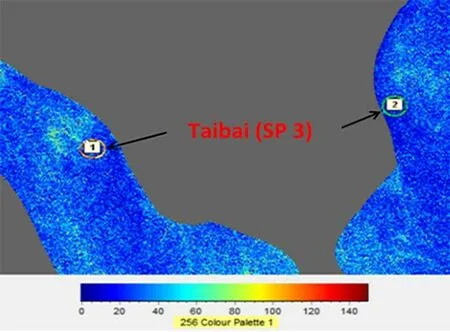
Figure 2. Laser speckle blood flow images of bilateral Taibai (SP 3)
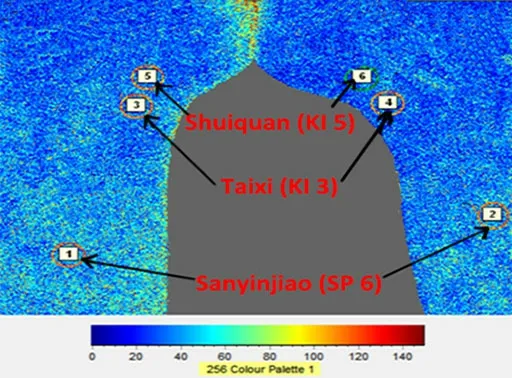
Figure 3. Laser speckle blood flow images of bilateral Shuiquan (KI 5), Taixi (KI 3)and Sanyinjiao (SP 6)
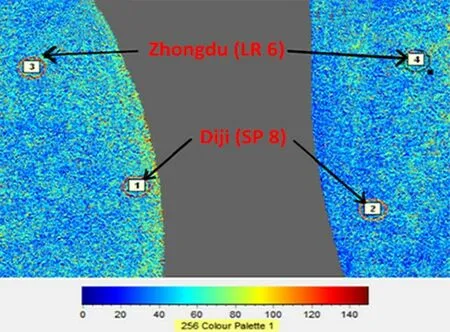
Figure 4. Laser speckle blood flow images of bilateral Zhongdu (LR 6)and Diji (SP 8)
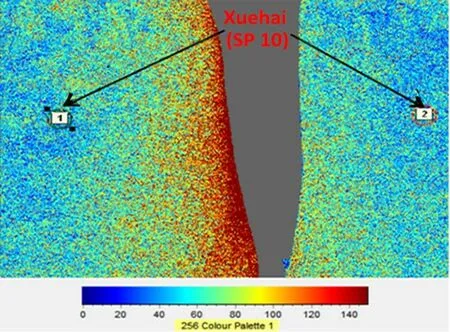
Figure 5. Laser speckle blood flow images of bilateral Xuehai (SP 10)
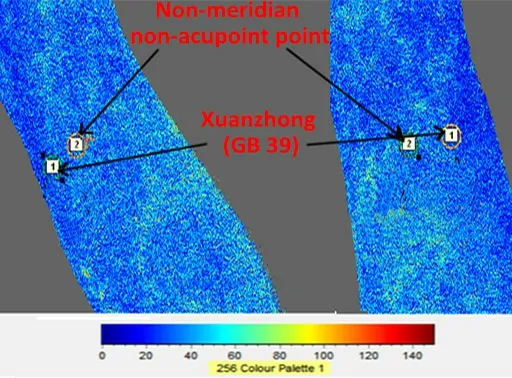
Figure 6. Laser speckle blood flow images of bilateral non-meridian non-acupoint point and Xuanzhong (GB 39)
3 Results
3.1 Comparison of the body temperature and environmental data of subjects
Differences in the indoor temperature,humidity,and the body temperature at the measurement time among the four detection phases were statistically insignificant(allP>0.05),indicating the comparability.Comparison of daily morning body temperature,i.e.,basal body temperature(the body temperature was measured when the subject woke up in the morning,before getting up or moving around,so that the body was at a steady state):higher at the ovulatory phase than at the menstrual,follicular and luteal phases,and higher at the luteal phase than at the menstrual phase and follicular phase (allP<0.05),(Table 2 and Table 3).
3.2 Comparison of the blood perfusion volume at the same point among different phases
The blood perfusion volume at the right Zhongdu(LR 6)at the ovulatory phase was higher than that at the menstrual,follicular and luteal phases(allP<0.05);and there was no statistically significant difference in the blood perfusion volume at the remaining points among different phases (allP>0.05),(Table 4 and Table 5).
Table 2.Comparison of the environment data ( ±s)

Table 2.Comparison of the environment data ( ±s)
Item n Menstrual phase Follicular phase Ovulatory phase Luteal phase Room temperature(℃)43 25.47±2.16 25.53±1.90 25.30±1.92 25.67±1.79 Indoor humidity (%)43 37.84±6.28 37.47±6.91 36.95±5.97 36.30±6.88
Table 3.Comparison of the body temperature ( ±s, ℃)

Table 3.Comparison of the body temperature ( ±s, ℃)
Note:Compared with the basal body temperature at the menstrual phase,follicular phase and luteal phase,1) P<0.05;compared with the basal body temperature at the menstrual phase and follicular phase, 2) P<0.05
Item n Menstrual phase Follicular phase Ovulatory phase Luteal phase Basal body temperature 43 35.75±0.43 35.77±0.37 36.10±0.481) 35.95±0.382) Body temperature during test 43 36.51±0.33 36.52±0.29 36.62±0.34 36.56±0.27
Table 4.Comparison of the blood perfusion volume at the same point on the left side among different phases ( ±s, PU)
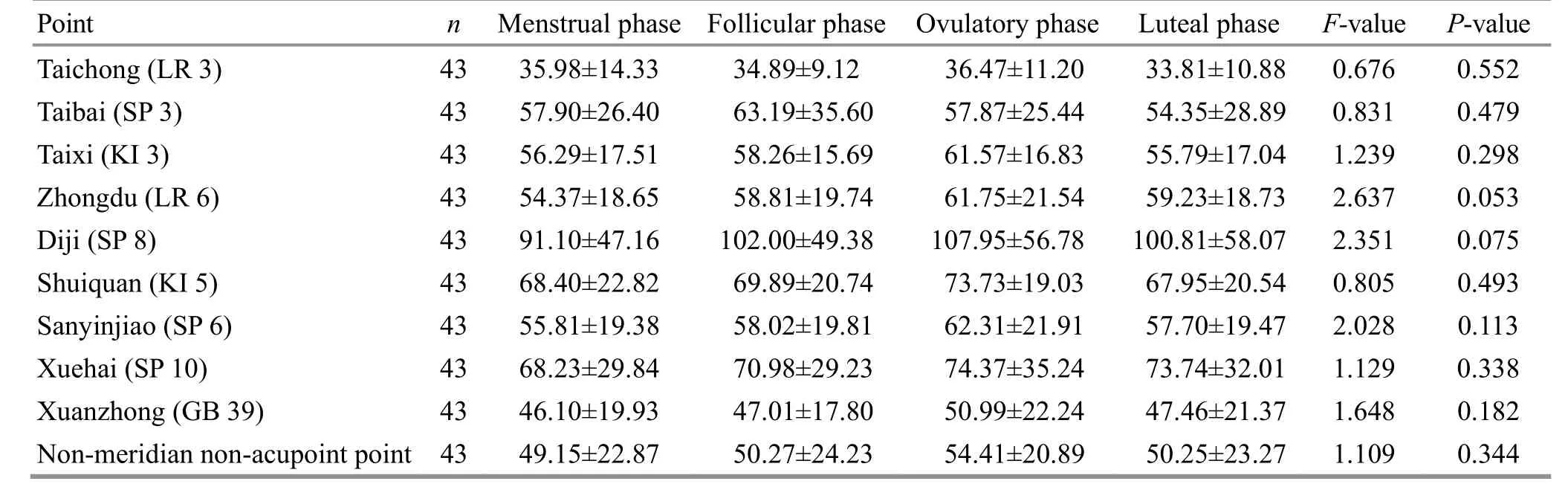
Table 4.Comparison of the blood perfusion volume at the same point on the left side among different phases ( ±s, PU)
Point n Menstrual phase Follicular phase Ovulatory phase Luteal phase F-value P-value Taichong (LR 3)43 35.98±14.33 34.89±9.12 36.47±11.20 33.81±10.88 0.676 0.552 Taibai(SP 3)43 57.90±26.40 63.19±35.60 57.87±25.44 54.35±28.89 0.831 0.479 Taixi(KI 3)43 56.29±17.51 58.26±15.69 61.57±16.83 55.79±17.04 1.239 0.298 Zhongdu (LR 6)43 54.37±18.65 58.81±19.74 61.75±21.54 59.23±18.73 2.637 0.053 Diji(SP 8)43 91.10±47.16 102.00±49.38 107.95±56.78 100.81±58.07 2.351 0.075 Shuiquan (KI 5)43 68.40±22.82 69.89±20.74 73.73±19.03 67.95±20.54 0.805 0.493 Sanyinjiao(SP 6)43 55.81±19.38 58.02±19.81 62.31±21.91 57.70±19.47 2.028 0.113 Xuehai(SP 10)43 68.23±29.84 70.98±29.23 74.37±35.24 73.74±32.01 1.129 0.338 Xuanzhong (GB 39)43 46.10±19.93 47.01±17.80 50.99±22.24 47.46±21.37 1.648 0.182 Non-meridian non-acupoint point 43 49.15±22.87 50.27±24.23 54.41±20.89 50.25±23.27 1.109 0.344
Table 5.Comparison of the blood perfusion volume at the same point on the right side among different phases ( ±s, PU)
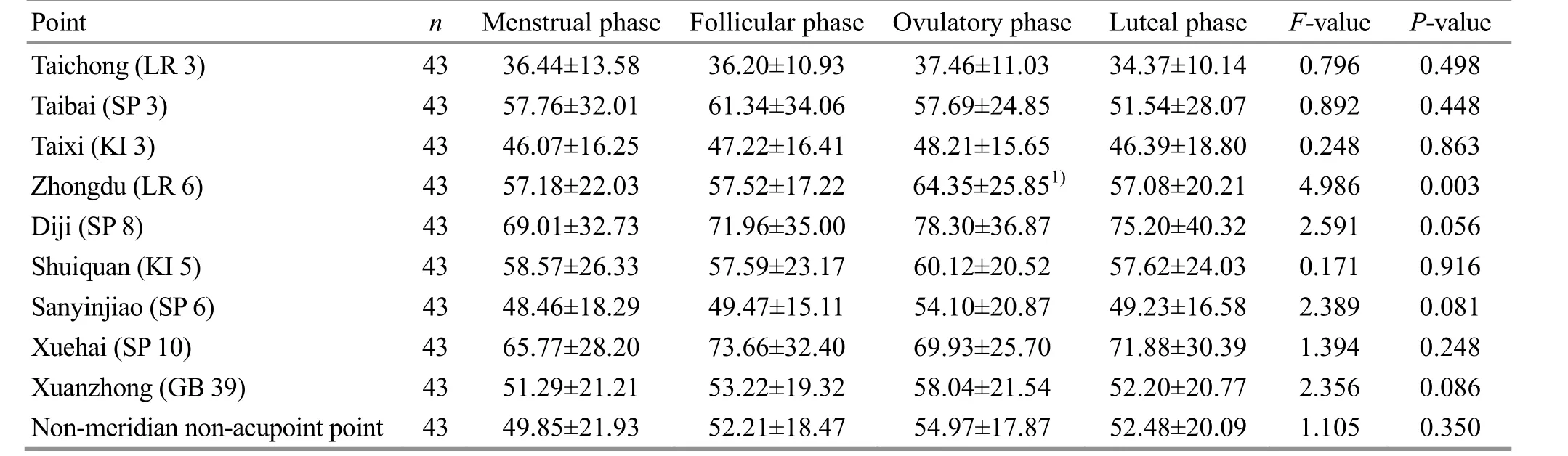
Table 5.Comparison of the blood perfusion volume at the same point on the right side among different phases ( ±s, PU)
Note:Compared to the menstrual phase,follicular phase and luteal phase, 1) P<0.05
Point n Menstrual phase Follicular phase Ovulatory phase Luteal phase F-value P-value Taichong (LR 3)43 36.44±13.58 36.20±10.93 37.46±11.03 34.37±10.14 0.796 0.498 Taibai (SP 3) 43 57.76±32.01 61.34±34.06 57.69±24.85 51.54±28.07 0.892 0.448 Taixi (KI 3)43 46.07±16.25 47.22±16.41 48.21±15.65 46.39±18.80 0.248 0.863 Zhongdu (LR 6)43 57.18±22.03 57.52±17.22 64.35±25.851) 57.08±20.21 4.986 0.003 Diji (SP 8)43 69.01±32.73 71.96±35.00 78.30±36.87 75.20±40.32 2.591 0.056 Shuiquan (KI 5)43 58.57±26.33 57.59±23.17 60.12±20.52 57.62±24.03 0.171 0.916 Sanyinjiao(SP 6)43 48.46±18.29 49.47±15.11 54.10±20.87 49.23±16.58 2.389 0.081 Xuehai (SP 10) 43 65.77±28.20 73.66±32.40 69.93±25.70 71.88±30.39 1.394 0.248 Xuanzhong (GB 39)43 51.29±21.21 53.22±19.32 58.04±21.54 52.20±20.77 2.356 0.086 Non-meridian non-acupoint point 43 49.85±21.93 52.21±18.47 54.97±17.87 52.48±20.09 1.105 0.350
4 Discussion
The acupoint-viscera relationship is one of the core contents of the meridian theory, reflecting the two-way connection between the acupoints and the viscera, that is, the acupoints can not only treat the diseases of the viscera, but also reflect the function of the viscera. In recent years, research on the acupoint specificity has mostly focused on its function of treating diseases and responding to the pathological changes of the body[14-17],while little attention was paid to the physiological changes of the acupoints.The Liver Meridian,the Spleen Meridian,and the Kidney Meridian are closely related to the uterus.The three meridians directly or indirectly connect to the uterusthrough the Conception Vessel,the Governor Vessel,and the Thoroughfare Vessel,and provide a material source for the‘kidney-Tiangui(congenital kidney essence)-Thoroughfare and Conception Vessels’reproductive axis associated with the menstrual onset of women[18].Therefore,we speculated that if the uterus changes, the acupoints on the three yin meridians of foot,especially the Yuan-Primary points and the Xi-Cleft points,may respond accordingly[19-20].
In the detected aupoints,the blood perfusion volume at the right Zhongdu(LR 6,the Xi-Cleft point of the Liver Meridian of Foot Jueyin)showed specific response in one menstrual cycle:the blood perfusion volume at the right Zhongdu(LR 6)at the ovulatory phase was higher than at the menstrual phase,follicular phase and luteal phase.For women,liver is the congenital basis[21]and the root of the Thoroughfare Vessel,and it belongs to yin in physique and yang in function.On one hand,yin in physique indicates that the liver stores blood, and the remaining blood in liver will be infused into the uterus to become the menstruation;on the other hand,yang in function governs dispersion,and the normal dispersion function of liver willensure normalqiactivity and the smooth menstrual flow.Therefore,the liver is closely related to the menstruation.Studieshave shown that changes in the liver are often the first to present when the body'sqiand blood status changes[22].Xi-Cleft point isthe place where qiand blood of Zang-fu organs and meridians accumulate at deep.Therefore,as the Xi-Cleft point of the Liver Meridian,Zhongdu (LR 6)is the place where the qiand blood of the Liver Meridian deeply accumulate,it can reflect the ups and downs of the meridian qi,and the flow of qi and blood of the Liver Meridian.Zhao HL,et al[23]tried to match the menstrual cycle with the five elements and yin-yang.They pointed out that the ovulatory phase corresponded to the yang aspect of yin, belonging to the wood and liver,in accordance with abundant qiand blood in the uterus.In this study,the blood perfusion volume at Zhongdu(LR 6)at the ovulatory phase was higher than at the other three phases.The abundant and sufficient qiand blood at the ovulatory phase may be the physiological reason for this.
In addition to the meridian acupoint-viscera relationship theory,the somatic visceral reflex theory is often used to explain the underlying mechanisms by which the acupoints respond to changes in the internal organs[24],which holds that the meridians and internal organs sharing the same or adjacent nerve spinal cord segments should be the basis for the acupoints to reflect the functions of the internal organs.The uterus in Chinese medicine is roughly the same as the internal genitalia of the female reproductive system in Western medicine,including the uterus,fallopian tubes,ovaries,and vagina.The sympathetic segments of sympathetic nerve afferent fibers of the uterus,ovaries and appendages are located at T12and L1-L3,and the sympathetic segments of the sympathetic nerve efferent fibersof the uterus,fallopian tubesand ovaries are located at T12-L1,T11-L1and T10-T11,respectively[25].According to the skin segmentalinnervationsmap[26],all of the detected points in this study are located at the same or adjacent nerve spinal cord segments with the uterus.But,the results of thisstudy showed that not all points located in the same or adjacent spinal cord segment with the uterus had specific reactions during the menstrual cycle,only Zhongdu(LR 6),the Xi-Cleft point of the Liver Meridian showed a specific response during the menstrual cycle,the other acupoints and the non-meridian non-acupoints point detected in this study had no specific responses.Thus, it is speculated that the function specificity of the acupoints in response to the viscera is not only related to the spinal cord segment to which the points belong,but also related to the meridian where the points are located and the propertiesof the points.
In this study,we observed that the body surface microcirculation at Zhongdu(LR6),the Xi-Cleft point of the Liver Meridian,could specifically reflect the qiand blood changesin the uterusduring one menstrualcycle.It is preliminarily confirmed that the body surface microcirculation at Zhongdu(LR6),the Xi-Cleft point of the uterine-related Liver Meridian of Foot Jueyin,could specifically respond to the physiological changes of the uterus in the moderate constitution women.It provides a basis for the specificity of response function of the acupoints.
Conflict of Interest
There is no potential conflict of interest in thisarticle.
Acknowledgments
This work was supported by General Programs of National Natural Science Foundation of China (國家自然科學基金面上項目,No.81573884,No.81973755);Youth Program of National Natural Science Foundation of China (國家自然科學基金青年基金項目,No.81603542);Project of Innovation Fund for Postgraduates of Hebei Province (河北省研究生創新資助項目,No.XCXZZSS2019003);Excellent Innovative Teambuilding Project of Hebei University of Chinese Medicine (河北中醫學院優秀創新團隊建設項目, No.JTZ2020008).
Statement of Informed Consent
Informed consent was obtained from all individual participants.
Received:8 January 2020/Accepted:5 March 2020
 Journal of Acupuncture and Tuina Science2020年6期
- Journal of Acupuncture and Tuina Science的其它文章
- Clinical observation on electroacupuncture plus long-snake moxibustion for rheumatoid arthritis due to kidney deficiency and cold coagulation
- Effect of Shaolin internal qigong exercise on the surface electromyography signals of shoulder muscle groups in patients with capsulitis of the shoulder
- Observation on therapeutic efficacy of heat-sensitive moxibustion plus Western medicine for diabetic peripheral neuropathy
- Clinical observation on acupoint sticking therapy plus electroacupuncture for treating peripheral facial paralysis
- Clinical observation on acupoint massage plus Vitalstim electrical stimulation for deglutition disorder after stroke
- Effects of intradermal needle therapy plus pinaverium bromide on gastrointestinal hormone levels in irritable bowel syndrome-diarrhea patients