外包數(shù)據(jù)完整性審計(jì)綜述
2020-12-15 10:52:32林莉檀文婷儲(chǔ)振興
網(wǎng)絡(luò)空間安全
2020年11期
關(guān)鍵詞:云計(jì)算
林莉 檀文婷 儲(chǔ)振興

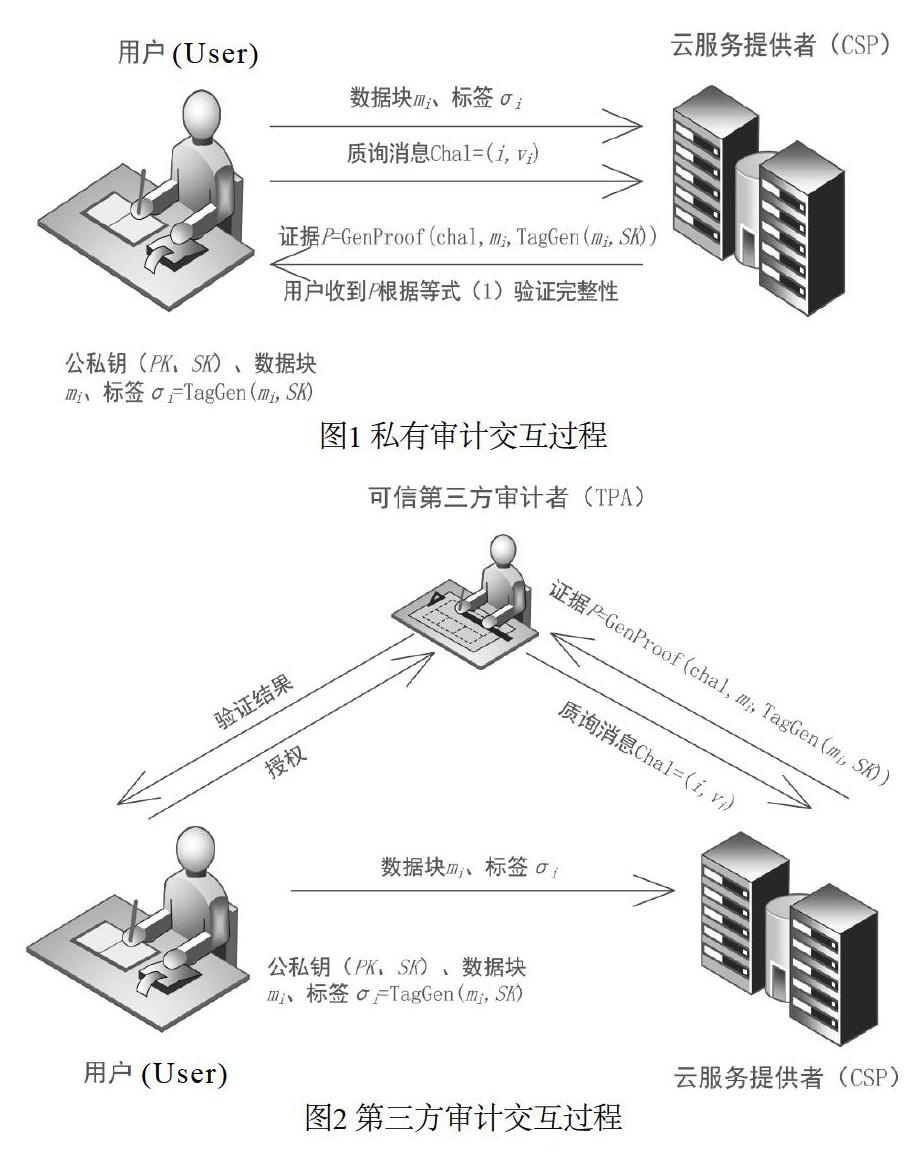
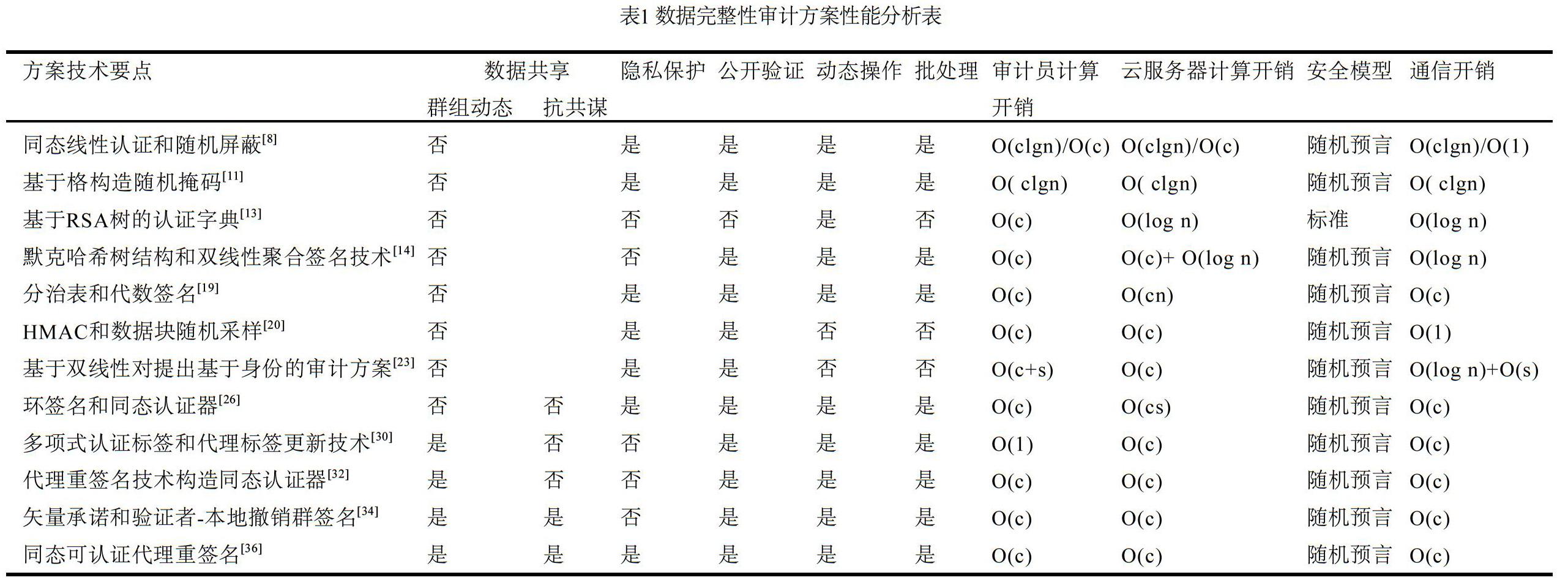
摘 ? 要:數(shù)據(jù)外包云存儲(chǔ)是當(dāng)前主流的海量數(shù)據(jù)存儲(chǔ)方式,這種模式下用戶失去對(duì)其數(shù)據(jù)的絕對(duì)控制權(quán),惡意租戶或云服務(wù)內(nèi)部人員可能會(huì)篡改或破壞云端數(shù)據(jù),如何確保非可信云存儲(chǔ)環(huán)境下外包數(shù)據(jù)的完整性是制約云計(jì)算發(fā)展的重要安全問題。文章對(duì)現(xiàn)有的數(shù)據(jù)完整性審計(jì)工作進(jìn)行綜述,基于對(duì)外包數(shù)據(jù)完整性審計(jì)問題的統(tǒng)一抽象給出審計(jì)模型分類,結(jié)合支撐數(shù)據(jù)動(dòng)態(tài)操作、計(jì)算和通信開銷等審計(jì)目標(biāo),從審計(jì)中用戶關(guān)鍵數(shù)據(jù)是否共享的視角分類,對(duì)當(dāng)前典型方案進(jìn)行了對(duì)比分析和優(yōu)缺點(diǎn)討論,最后總結(jié)了外包數(shù)據(jù)完整性審計(jì)的未來發(fā)展方向。
關(guān)鍵詞:完整性審計(jì);外包數(shù)據(jù);云計(jì)算;云存儲(chǔ)
中圖分類號(hào): TP393 ? ? ? ? ?文獻(xiàn)標(biāo)識(shí)碼:A
Abstract: Data outsourcing cloud storage is the current mainstream mass data storage method. However, in this mode, data owners lose absolute control over data, and cloud data may be tampered with or destroyed by malicious tenants or internal personnel of cloud service providers. How to ensure the integrity of outsourced data stored on untrusted clouds is an important problem that restricts the development of cloud storage. This paper summarizes the existing data integrity audit work, gives the classification of audit models based on the unified abstraction of outsourcing data integrity audit issues, and compares and analyzes the current typical schemes and discusses their advantages and disadvantages from the perspective of whether users' key data are shared in the audit in combination with the audit objectives such as supporting data dynamic operation, calculation and communication overhead. Finally, it summarizes the future development direction on integrity auditing of outsourcing data.
Key words: integrity audit; outsourcing data; cloud computing; cloud storage
1 引言
隨著計(jì)算技術(shù)和網(wǎng)絡(luò)技術(shù)的迅猛發(fā)展,人們所產(chǎn)生的數(shù)據(jù)呈現(xiàn)爆炸式增長。如何解決本地計(jì)算機(jī)在計(jì)算和存儲(chǔ)方面帶來的局限性,以滿足用戶日益增長的需求是當(dāng)前廣受企業(yè)和用戶關(guān)注的。作為云計(jì)算[1]技術(shù)的核心功能,云存儲(chǔ)是當(dāng)前存儲(chǔ)技術(shù)的發(fā)展趨勢(shì),用戶通過將數(shù)據(jù)存放到云服務(wù)器上減輕了自身存儲(chǔ)和管理的負(fù)擔(dān),伴隨云儲(chǔ)存技術(shù)的快速發(fā)展,越來越多的企業(yè)和個(gè)人選擇將所擁有的數(shù)據(jù)存儲(chǔ)于第三方所提供的云平臺(tái)[2]。
盡管云存儲(chǔ)帶來許多好處,但由于這種模式下數(shù)據(jù)以外包方式存儲(chǔ)在云端,數(shù)據(jù)擁有者失去對(duì)其數(shù)據(jù)的絕對(duì)控制權(quán),近年來一系列信息安全事件的發(fā)生使得外包數(shù)據(jù)完整性,成為云租戶最關(guān)注的重要安全問題[3]。……
登錄APP查看全文
猜你喜歡
數(shù)字技術(shù)與應(yīng)用(2016年9期)2016-11-09 22:56:18
數(shù)字技術(shù)與應(yīng)用(2016年9期)2016-11-09 00:07:05
知音勵(lì)志·社科版(2016年8期)2016-11-05 04:28:47
電腦知識(shí)與技術(shù)(2016年21期)2016-10-18 23:34:52
電腦知識(shí)與技術(shù)(2016年21期)2016-10-18 23:24:44
電腦知識(shí)與技術(shù)(2016年21期)2016-10-18 22:11:15
科技視界(2016年22期)2016-10-18 14:33:46
中國新通信(2016年16期)2016-10-18 10:49:17
大學(xué)教育(2016年9期)2016-10-09 08:54:03
科技視界(2016年20期)2016-09-29 13:34:06