
India’s bleak recovery path
2020-11-09 03:12:04
China Textile 2020年5期
The outlook for Indias reeling economy has worsened again as business activity slows and COVID-19 infections soar, and will probably prompt the Reserve Bank of India to cut interest rates again soon, a Reuters poll of economists suggests. The latest findings echo recent criticism of New Delhis USD 266 billion economic rescue package, which does not include new spending, tax breaks or cash support, suggesting more will be needed to turn the economy around.
The Indian economy is now likely to contract this quarter and next and in this fiscal year as a whole, according to the July 20 - 28 poll of nearly 60 economists. Growth had been expected for all of those periods except the second quarter in the previous poll, taken in April. In the quarter just gone by, the Indian economy is forecast to have shrunk 20.0% - the first double-digit contraction since official quarterly data started being released in the mid-1990s. It will then contract 6.0% and 0.3% in the current and following quarters, respectively, according to the poll. That compared to a -5.2% forecast for the last quarter in the April 23 poll, followed by 0.8% and 4.2% growth in the current and next quarters, respectively.
For the current fiscal year, Asias third-largest economy is forecast to shrink 5.1%, a complete turnaround from the 1.5% growth predicted in the previous poll. It would be the weakest performance since 1979. Under a worst-case scenario, the economy is forecast to have contracted 30.0% in the April - June quarter, and to shrink 10.0%, 4.0% and 9.1% in the current and next quarters and this fiscal year, respectively. “The health crisis is yet to be addressed and is spreading geographically, which has led to re-initiation of lockdowns and restrictions in many parts of the country,” said Prithviraj Srinivas, chief economist at Axis Capital in Mumbai. “With the health crisis yet to be contained, we cannot hope for a smooth recovery.”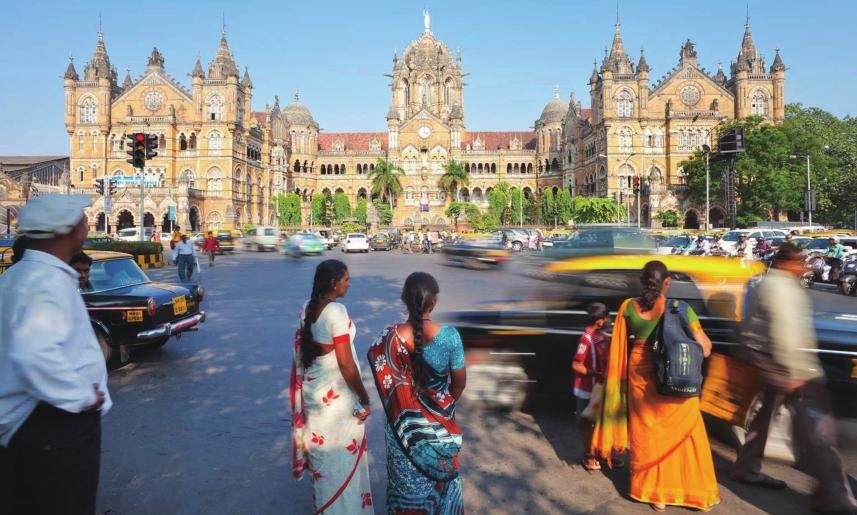
When asked how long it would take for Indias gross domestic product to reach pre-COVID-19 levels, a slight majority of economists, 23 of 44, said within two years. Only seven respondents predicted it would happen within a year, while the remaining 14 said it would take two years or more. Inflation is expected to average 4.5% this fiscal year, and the RBI is forecast to cut the repo rate by another 25 basis points at its Aug 4 - 6 meeting, and once more next quarter, to a record low of 3.50%. The RBI has already reduced the repo rate by a total of 115 basis points since February, and 135 basis points in an easing cycle last year, from 6.50%, responding to an economy that was already slowing. In response to an additional question, over three-quarters of 45 economists said the strength of the recovery had worsened or at best stayed the same over the last month.
FICCI: Manufacturing is in a downturn
The Federation of Indian Chambers of Commerce and Industry (FICCI) released a survey report recently. The results of a questionnaire survey of more than 300 large, medium and small manufacturing companies across India showed that despite the closure of many parts of the country, the automobile industry has been hit the most in terms of the continuous production and order situation of factories. In addition, the leather and footwear, electronics, electrical and textile machinery industries are also in a downturn.
The agency also evaluates the manufacturing production status of 12 categories including automobiles, cement and ceramics, chemicals, fertilizers and pharmaceuticals, electronics and electrical, leather and footwear, medical equipment, and textiles. The results showed that the overall capacity utilization rate of the manufacturing industry dropped to 61.5% from January to March this year. 90% of companies expect production in the second quarter will not increase.
Respondents believe that the outlook for Indias manufacturing industry is bleak in the short term. Only 22% of respondents plan to increase investment and expand production capacity in the next six months. 85% of respondents said that they are unlikely to hire more labor in the next three months.
Respondents said that export prospects are sluggish, and only 8% of respondents expect their exports to increase in the second quarter of this year.
Affected by the pandemic, the textile and textile machinery industries can only recruit one-third of workers, and only about 35% of workers in automobiles, leather and footwear come to work in factories. These industries are all facing serious labor shortages.
Cotton spinning industry revenue expected to fall 30%
According to the report of the Indian research institute ICRA, the revenue of the Indian cotton spinning industry in 2021 is expected to drop by 25% to 30% yearon-year, and the profit margins will drop by 3% to 4%.
ICRA stated in its July 2020 report on the Indian cotton spinning industry that although the industry hopes that with the help of weak domestic cotton prices, cotton yarn exports will gradually recover from the fourth quarter of 2020. Because of the COVID-19 pandemic, the industry will experience a decline in profit margins for the second consecutive year.
Due to the accumulation of inventory throughout the industrial chain and increased risks, downstream demand will be suppressed in the next few quarters. At the same time, in order to ensure corporate capital turnover, the Bank of India announced relevant relief measures. The report said that although the measures announced by the Bank of India are expected to provide entities with temporary liquidity support to withstand shocks, the subsequent recovery still depends on the containment of the pandemic. ICRA predicts that in the second quarter of 2021, demand from the downstream Indian domestic and export markets will remain weak and gradually recover in the second quarter. Therefore, ICRA predicts that the production efficiency of Indian cotton textiles will be severely affected in 2021.
Textile and apparel industry has been hit severely
The sector severely hit by the pandemic-induced lockdown is the textile and apparel. It contributes 13% to Indias total exports, 7% to the industrial output in value terms, 2% to Indias gross domestic product (GDP), 15% to export earnings and offers employment to around 60 million directly or indirectly.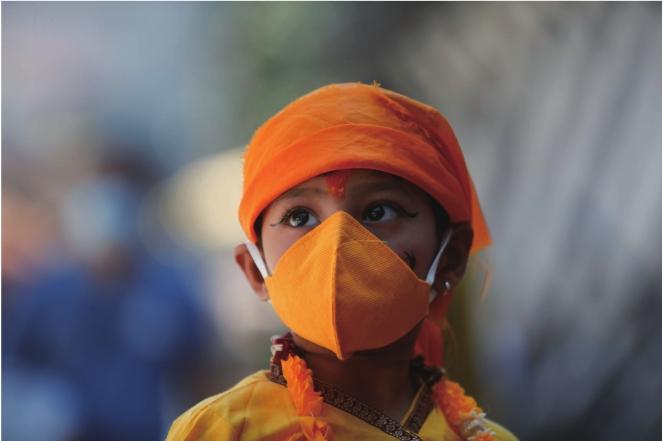
The industry was estimated to be worth USD 100 billion in January 2020 and includes a wide range of players, including manufacturers, retailers, wholesalers and exporters of cotton textiles, handloom and woollen textiles.It also includes those engaged in the manufacturing of capital goods, such as textile machinery and equipment, dyes and raw materials, finished textiles, fabrics and garments. Exports in the sector from India were projected to reach USD 82 billion in fiscal 2020 - 2021 from USD 39 billion in the last fiscal year.
Most of employment in the textile and clothing industry is in the informal sector, which generally pays much less wages than the formal sector. While the pandemic has affected both formal and informal sectors, the impact will be more disastrous for workers in the latter. This sector is characterised by the lack of social security provisions, paid leaves, healthcare provisions and other safety measures, and therefore, workers are more vulnerable. In the formal sector, the rise in contractual workforce, a post-liberalisation phenomenon, has helped employers in retrenching workers with ease during the pandemic. This has led to a mass exodus of workers from cities back to their villages.
The Clothing Manufacturers Association of India(CMAI) had projected in April that there could be a job loss of a crore in the textile sector due to the lockdown. The losses in the textile industry in Punjab have reportedly been pegged at around 2,000 crore so far.
Structural changes of the industry resulting from pandemic
The virus has shown us that the global supply chain is highly fragile and fundamentally susceptible to disruptions. The weaker links in the supply chain can pose a great threat to the entire ecosystem on which the textile business sustains itself. The industry across its supply chain needs reorientation and restructuring towards a more sustainable and resistant web.
A Forbes article argued that prior to the pandemic, all talk related to fast fashion focused on sustainability and companies were rethinking their business models for 2030 and beyond. But the pandemic has reduced that timeline, it said. Robert Antoshak, a textile consultant, in his blog argues: “The pre-virus apparel industry was not sustainable. It was only a matter of time before the ailments in the sector caused the industry to either falter or, worse, collapse. It doesnt matter: COVID-19 has elected the latter. ”
The virus will end sooner or later. The post-pandemic world will altogether be different. Most industries will see a sharp rise in demand, but it will not be so for the textile industry. Its nature and the customer-product relationship are such that it makes it more susceptible to a post-pandemic recession. Global consulting firm McKinsey feels once the dust settles in the immediate crisis, the fashion industry will face a recessionary market and industrial landscape will undergo a rapid structural transformation. It further argues that the industry will see a period of recovery characterised by a lull in spending and slack in demand across channels.
The pandemic has not only affected the demand for textile and apparel but also its supply. India is one of the major textiles and apparel exporters (around 60% of the countrys exports) to the United States and the European Union (EU) and these markets are hit hard by the virus. Buyers from these markets have either cancelled orders or put them on hold because consumers are locked inside, shopping malls are closed and access to online marketing is restricted.
A report by Wazir Advisors titled Impact of COVID-19 Scenario on European and U.S. Apparel Market estimated that combined U.S. and EU apparel consumption might fall by about USD 308 billion, around 45% lower than projected in 2020.
The spread of the virus has majorly impacted the textile industry as China, the United States and the EU are huge markets for Indian textile products, according to T Rajkumar, chairman of the Confederation of Indian Textile Industry (CITI). The cascading effect of external demand shock along with domestic demand slack resulted in lower production. Many firms were shut down and production fell drastically.
Retail prices now will see a jump because sanitation and social distancing measures are going to add to the costs. This will make deficient demand a perennial phenomenon for the industry. The virus has shattered the supply chain at each level.

- China Textile的其它文章
- China’s dye industry market to develop in a green and clean direction in 2020
- Intertextile Shenzhen Apparel Fabrics ends successfully
- Focus on baby diaper market trends
- What does music bring us?
- The dazzling half-year“transcript”of some fabric companies
- With U.S.Cotton Trust Protocol,brands and retailers source U.S.cotton with more confidence