
Unit 4詞匯要點(diǎn)講解
2020-10-29 05:42:45李天雨
考試與評(píng)價(jià)·八年級(jí)版
2020年2期
李天雨
1. communicate v. 溝通,通信,通訊
She and I don't communicate any more. 我和她不再通信了。
communicate with sb. 表示“與某人交流”。
People can communicate with each other freely on the Internet. 人們可以在互聯(lián)網(wǎng)上自由交流。
【拓展】 communication n. 交流,溝通
Students should come with better preparation and better communication skills. 學(xué)生應(yīng)做好更充分的準(zhǔn)備,具備更好的溝通能力。
2. allow v. 允許,讓
If you allow me, I will send you back. 如果你同意,我就送你回去。
【拓展】常用結(jié)構(gòu):allow sb. to do sth. 允許某人做某事;allow doing sth. 允許做某事;be allowed to do sth. 被允許做某事
His parents allowed him to stay out late. 他的父母允許他在外面待到很晚。
Our teacher does not allow cheating to go unpunished. 我們的老師不容許欺騙行為不受到懲罰。
Smoking is not allowed in the hall. 大廳里禁止抽煙。
【拓展】 使役動(dòng)詞let和make也可以表示“讓某人做某事”。使役動(dòng)詞后接動(dòng)詞原形作賓語(yǔ)補(bǔ)足語(yǔ),但是當(dāng)變?yōu)楸粍?dòng)語(yǔ)態(tài)時(shí)需要加上不定式符號(hào)to,即be let to do sth., be made to do sth.。
Mom often makes her child do the homework all day. 媽媽經(jīng)常讓孩子一整天做作業(yè)。
She is made to follow the rules. 她被迫遵守這些規(guī)定。
3. argue v. 爭(zhēng)論,爭(zhēng)吵
My brothers are always arguing. 我的兄弟們總是爭(zhēng)論不休。
【拓展】 argue with sb. 與某人爭(zhēng)吵;argue about sth. 就某事?tīng)?zhēng)論
Mary often argues with her mother about which clothes to wear. 瑪麗經(jīng)常和她媽媽爭(zhēng)論穿什么衣服。
They were arguing about the matter again. 他們又在爭(zhēng)論這件事了。
4. offer v. 提供,自愿給予
He offered $4,000 for the car. 他出價(jià)四千美元買(mǎi)這輛汽車(chē)。
【拓展】 (1) offer表示“提供”時(shí),作雙賓語(yǔ)動(dòng)詞,常用的結(jié)構(gòu)為:offer sb. sth.相當(dāng)于offer sth. to sb.“為某人提供某物”。
The restaurant offers free coffee to customers. 餐廳為顧客提供免費(fèi)咖啡。
=The restaurant offers customers free coffee.
(2) offer to do sth.“主動(dòng)提出做某事”。
The kind man offered to help the old lady across the road. 那個(gè)好心人主動(dòng)幫助老太太過(guò)馬路。
5. compete v. 比賽,競(jìng)爭(zhēng)
He's hoping to compete in the London marathon. 他期盼著參加倫敦馬拉松比賽。
【拓展】 (1) compete with意為“與……競(jìng)爭(zhēng)/對(duì)抗”,相當(dāng)于compete against。
It is difficult for a small store to compete with / against a supermarket. 小商店很難與超市競(jìng)爭(zhēng)。
(2) competition n. 比賽;競(jìng)爭(zhēng);competitive adj. 競(jìng)爭(zhēng)的
6. elder n. 長(zhǎng)者;長(zhǎng)輩;元老;比……年長(zhǎng)的人adj. 年紀(jì)較大的;資格老的;老練的
His elder brother is fifteen. He's younger than you. 他哥哥十五歲,比你小。
【拓展】 elder和older的區(qū)別
elder, older這兩個(gè)詞均是old的比較級(jí),elder用來(lái)表示兄弟姐妹以及子女之間的長(zhǎng)幼關(guān)系,常用作定語(yǔ);older泛指新舊、老幼或者年齡大小的關(guān)系,可以用作表語(yǔ)或者定語(yǔ)。
(1) elder表示“前輩的,年紀(jì)較長(zhǎng)的”,僅用于同一家庭成員的比較;older則不限于此。
登錄APP查看全文
猜你喜歡
科教新報(bào)(2022年12期)2022-05-23 06:34:16
環(huán)球時(shí)報(bào)(2022-03-21)2022-03-21 19:19:19
今日農(nóng)業(yè)(2021年14期)2021-10-14 08:35:28
海峽姐妹(2020年8期)2020-08-25 09:30:18
大灰狼(2019年4期)2019-05-14 16:38:38
小天使·一年級(jí)語(yǔ)數(shù)英綜合(2017年10期)2017-10-31 22:30:38
小雪花·小學(xué)生快樂(lè)作文(2016年11期)2017-01-09 22:11:33
智慧少年(2016年2期)2016-06-24 06:12:54
小朋友·聰明學(xué)堂(2016年6期)2016-05-14 09:13:09
人民中國(guó)(日文版)(2015年10期)2015-04-16 03:53:58
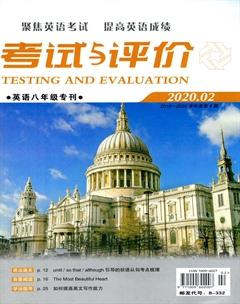 考試與評(píng)價(jià)·八年級(jí)版
2020年2期
考試與評(píng)價(jià)·八年級(jí)版
2020年2期
- 考試與評(píng)價(jià)·八年級(jí)版的其它文章
- 參考答案
- Questions&Answers
- 小幽默
- IQ TEST
- JOB SPOT
- WHAT’S THIS?