
Gallbladder sarcomatoid carcinoma:Seven case reports
2020-09-18 08:03:54QingQinMingLiuXinWang
World Journal of Clinical Cases 2020年17期
Qing Qin,Ming Liu,Xin Wang
Qing Qin,Ming Liu,Department of Medical Oncology,Cancer Center,West China Hospital,Sichuan University,Chengdu 610041,Sichuan Province,China
Qing Qin,Department of Oncology,Chengdu Shangjin Nanfu Hospital,Chengdu 611730,Sichuan Province,China
Xin Wang,Department of Abdominal Oncology,Department of Radiation Oncology,Cancer Center,West China Hospital,Sichuan University,Chengdu 610041,Sichuan Province,China
Abstract
Key words:Gallbladder neoplasm;Sarcomatoid carcinoma;Adjuvant therapy;Case report
INTRODUCTION
Gallbladder cancer is the fifth most common malignancy of the gastrointestinal tract[1].It is also the most aggressive cancer of the biliary tract with the shortest median survival time[2].Adenocarcinoma is the most common type,while sarcomatoid carcinoma is rare and even more aggressive than other pathological types.Gallbladder sarcomatoid carcinoma accounts for only 4.3% of gallbladder cancers[3]and has often been confused with carcinosarcoma in previous reports.If we exclude the reports that may have confused sarcomatoid carcinoma and carcinosarcoma,there are approximately 20 cases of sarcomatoid carcinoma of the gallbladder described in the English-language literature worldwide[3-8].Because of the rarity of this tumor,little is known about its clinical behavior,prognosis,and optimal treatment.
Despite rapid advances in surgery,chemotherapy,radiotherapy,and biomedicine in the past several decades,gallbladder cancer remains an invasive cancer with a discouraging prognosis,and there is no standard treatment for gallbladder sarcomatoid carcinoma[9].Surgery is suggested as the main and only recognized treatment for sarcomatoid carcinoma of the gallbladder[6].However,even with radical excision,patients still develop recurrence quickly,and postoperative adjuvant treatment might be necessary[6].However,there is no standard adjuvant treatment,and only a few patients have received adjuvant chemotherapy in previous reports with unfavorable results[3].
To enrich this information,we retrospectively reviewed the data of patients with gallbladder sarcomatoid carcinoma at our institution over the past 20 years.We found seven patients,among whom one treated with chemoradiotherapy after surgery achieved a progression-free survival (PFS) of 12 mo and overall survival (OS) of 15 mo,which might be the longest PFS reported among patients who ultimately experienced recurrence or metastasis.
CASE PRESENTATION
Chief complaints
A total of seven patients were diagnosed with gallbladder sarcomatoid carcinoma and treated at our institution from 1997 to 2017.The median age was 68.5 years (ranging from 50 to 83 years).Six patients were female,and only one was male.All seven patients presented to hospital complaining of abdominal pain.
通過新課改第一輪的課堂教學實踐研究,教師課堂教學能力迅速提升,教育教學效果不斷提高。通過課例研究,教師們對教育教學已經有了比較深刻的認識。因此,第二輪教研的目標重點放在了提升數學教師的教科研能力上,主要通過專題研究的形式開展教研活動。在這個過程中,海淀區東片數學區域教研組針對教學實際情況開展專題研究,把教育科研與提高課堂教學質量結合起來,圍繞學科特點以及教師的專業能力培養要求,嘗試在區域內聯合開展各個級別的教育科研課題研究。
History of present illness
Although the duration of abdominal pain prior to admission ranged between 20 d and 4 years,the majority (71.4%) experienced pain for less than 2 mo (Table 1).
History of past illness
Case 1 and case 6 had undergone inguinal herniorrhaphy and appendectomy respectively.Case 2 had a history of hypertension.

Table 1 Chief complaints
Physical examination
Both case 6 and case 7 had mild tenderness in the right upper abdomen and no obvious rebound pain.No obvious abnormality was found in the physical examination of the other patients.
Laboratory examinations
The laboratory examinations revealed that only case 2 and case 4 had liver dysfunction(Table 2) .The preoperative serum levels of several tumor markers [carbohydrate antigen (CA) 19-9,CA-125,carcinoembryonic antigen (CEA),and alpha-fetoprotein(AFP)] are shown in Table 2.The CEA and CA19-9 levels for both patients without recurrence were normal,and the CA-125 level was slightly elevated in one of these patients.Two (40%) patients with recurrence or metastasis had elevated serum CEA levels.Three (60%) patients with recurrence or metastasis had significantly high CA19-9 levels,with the highest one exceeding 1000 U/mL.Three (60%) patients with recurrence or metastasis had notably elevated CA-125,two of whom had high levels of both CA19-9 and CA-125.All the seven patients,with or without recurrence,showed normal AFP levels.
Imaging examinations
Case 1 and case 5 underwent contrast-enhanced abdominal MRI,and the rest of the patients underwent contrast-enhanced abdominal computed tomography (CT).Gallbladder mass was found in all patients.Granulomatous hyperplasia was considered in case 1 and malignant tumor was considered in other patients.
FINAL DIAGNOSIS
The seven patients were eventually diagnosed with gallbladder sarcomatoid carcinoma.A total of 57.1% (4/7) of the tumors were located in the gallbladder body,one located in the body and choledochus,one in the fundus and neck,and one in the fundus.A total of 85.7% (6/7) of the tumors had a maximal diameter greater than 7 cm.Two patients without recurrence had early-stage disease;one had stage I disease with a tumor restricted to the lamina propria,and the other had stage II disease with a tumor restricted to the connective tissue without extension beyond the serosa.The other five patients had advanced-stage disease,including one with stage IIIB,three with stage IVB,and one with stage III/IV with unknown lymph node status (Table 3).
Pathological appearance
The pathological appearance of the sarcomatoid carcinoma samples is shown in Figure 1 and Table 4.Hematoxylin and eosin staining showed poorly differentiated carcinoma with spindle-shaped cells and a commonly pleomorphic morphology,which were typical figures of sarcomatoid carcinoma (Figure 1A and B).According to immunohistochemical staining,all seven patients strongly and diffusely expressed pan-cytokeratin (Figure 1C).Other epithelioid markers,such as CK-7 and CK-19,were also detected in some patients.Sarcoma-like spindle cells were negative for desmin in all seven patients (Figure 1D,Table 4) and negative for a-SMA in six patients (Table 4).All of these immunohistochemical results suggested that the sarcoma-like component was essentially carcinoma.Sarcomatoid carcinoma was usually pleomorphic.Adenocarcinoma and adenosquamous carcinoma can be found after extensive sampling.In the cases we collected,we also found some mixed components of carcinoma.Adenocarcinoma was common (3/7),with adenosquamous sometimesoccurring concurrently (2/7).
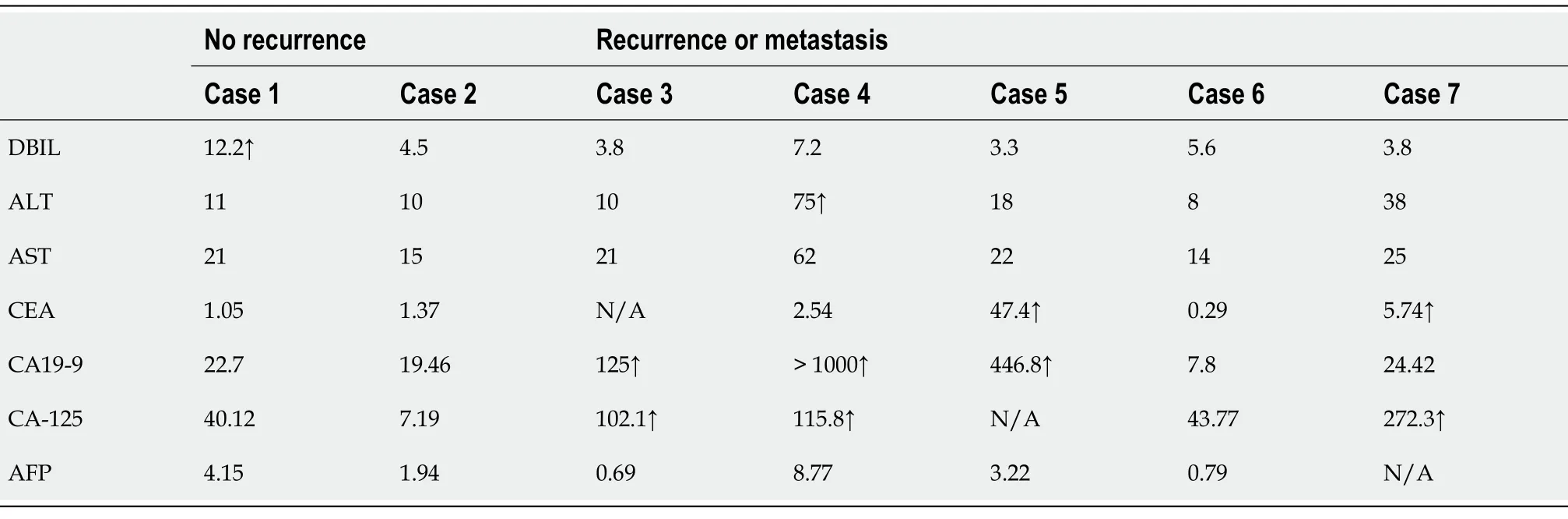
Table 2 Laboratory examinations
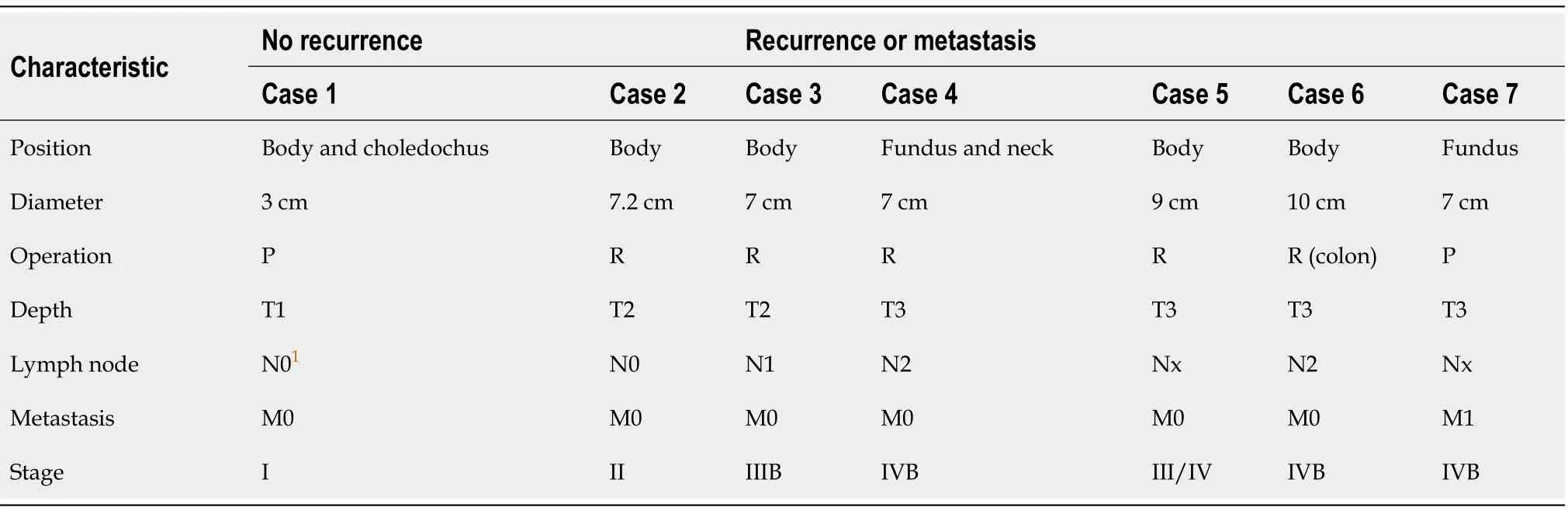
Table 3 Tumor characteristics
TREATMENT
Surgical procedures
All patients underwent surgical procedures.Case 1 underwent cholecystectomies without lymphadenectomy because intraoperative frozen section analysis resulted in a diagnosis of “adenoma”,which was finally proven to be sarcomatoid carcinoma by paraffin section analysis.Case 7,who had stage IV disease with peritoneal metastasis and intraperitoneal hematoma,underwent palliative cholecystectomy.The other five patients underwent radical surgery,which included resection of the primary gallbladder tumor,involved extrahepatic biliary tract,and portions of liver tissue(cases 2/3/4/5),lymphadenectomy,and right hemicolectomy (case 6).No serious surgical complications or death occurred.
Adjuvant therapy
Case 3 was a 50-year-old woman who underwent cholecystectomy,lymphadenectomy,and partial resection of the liver.She received adjuvant chemotherapy and radiotherapy 1 mo after surgery for stage T2N1M0 (IIIB) disease.She was treated with gemcitabine and capecitabine in 21-d cycles.After two cycles of chemotherapy,she received radiotherapy (5040 cGy to the tumor bed and regional lymph nodes).Two other cycles of chemotherapy were administered after radiotherapy.One month after the completion of all the adjuvant therapy,a CT scan was carried out to reassess theenlarged lymph node that was found before adjuvant therapy (Figure 2A),which had already shrunk without recurrence or metastases (Figure 2B).Three months after the completion of adjuvant therapy,the patient came to the hospital with abdominal distention,and the CT scan found metastases in the liver (Figure 2C) and thoracic vertebra (Figure 2D).She was treated with FOLFOXIRI as second-line chemotherapy for two cycles.She did not visit our hospital for antitumor therapy again because of her gradually declining general medical condition.She died 2 mo after second-line chemotherapy.With serial adjuvant therapies,she achieved a PFS of 12 mo and OS of 15 mo,which are the longest reported periods to date in such patients.
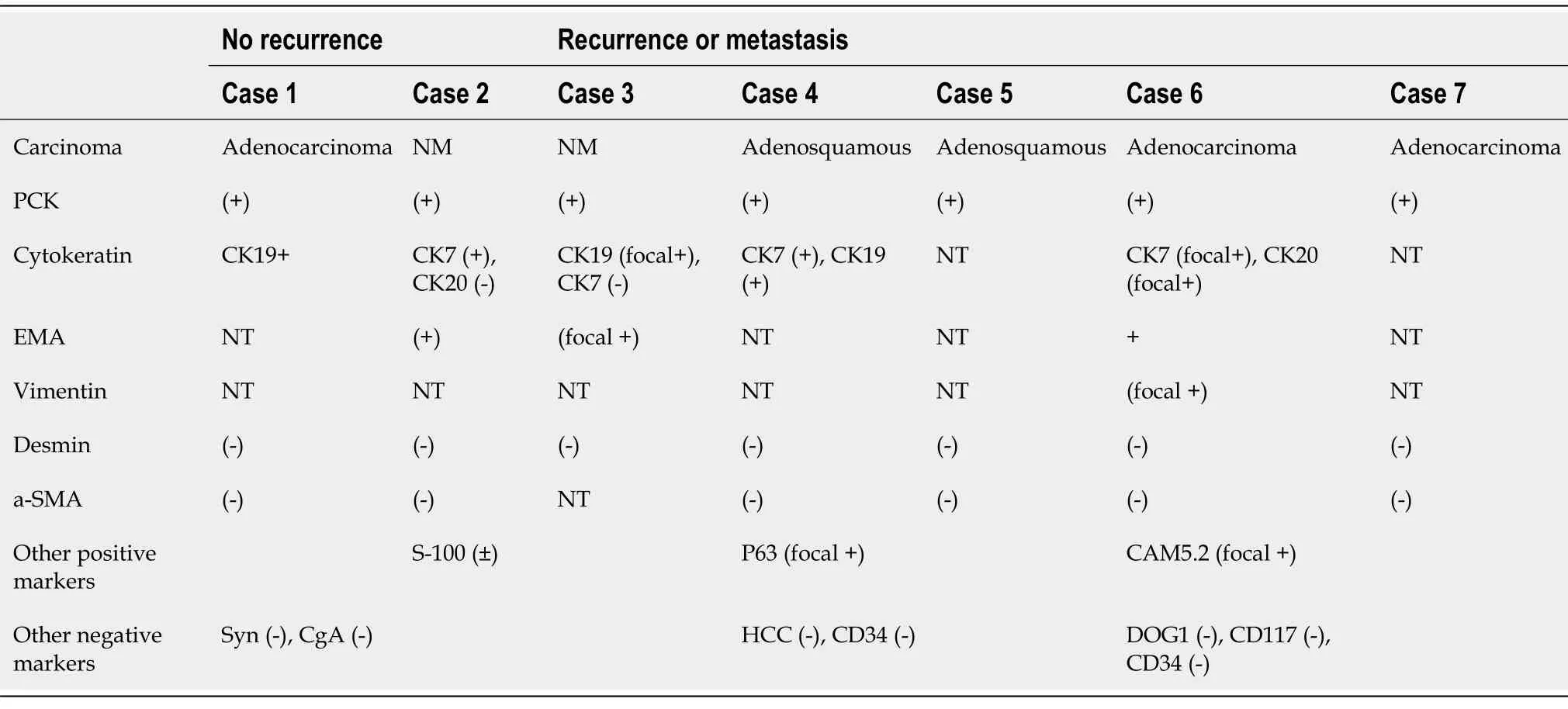
Table 4 Pathological diagnosis
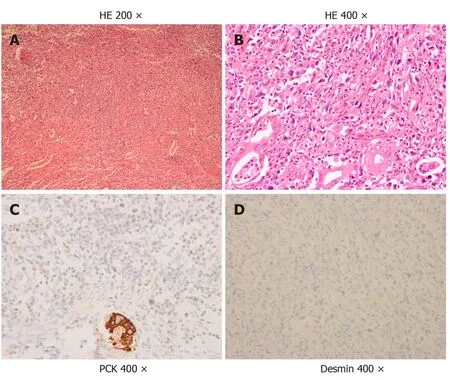
Figure 1 Pathological findings.A and B:Representative images of hematoxylin and eosin staining (HE)-stained tumor tissue (A:× 200;B:× 400);C and D:Immunohistochemical images showing positive staining for pan-cytokeratin (C) and negative staining for desmin (D) (× 400).HE:Hematoxylin and eosin;PCK:Pancytokeratin.
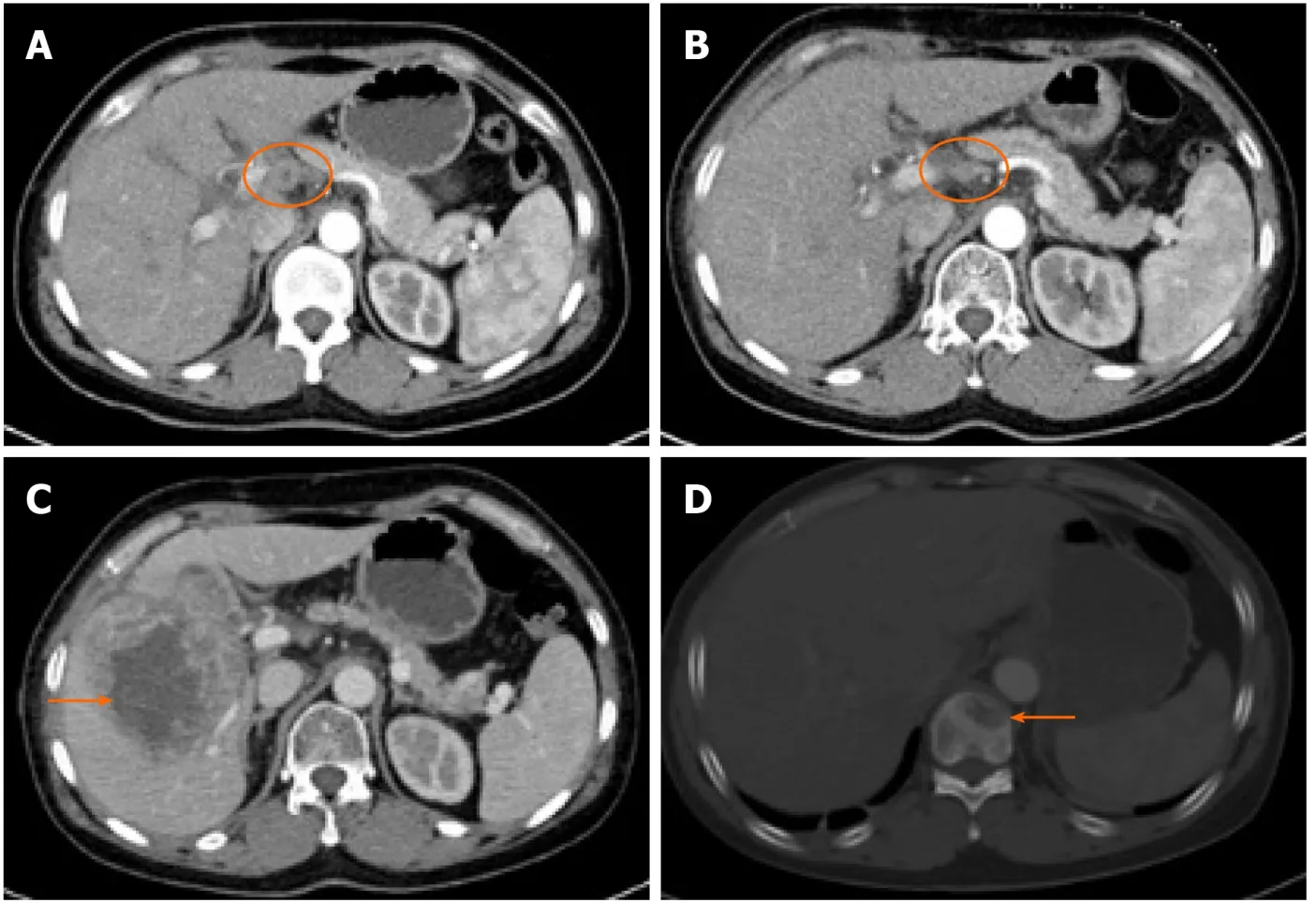
Figure 2 Computed tomography images.A:Lymph node involvement before adjuvant therapy;B:Computed tomography image showing a significant reduction in lymph node involvement (B circle) compared to that before adjuvant therapy (A circle);C:Metastases in the liver (arrow);D:Metastases in the thoracic vertebra (arrow).
OUTCOME AND FOLLOW-UP
The follow-up time ranged from 1.5 years to 5 years.Tumor node metastasis (TNM)stage seemed to be a very important prognostic indicator.There was a significant difference in prognosis between patients with early-stage and advanced-stage disease.Two patients with early-stage (I/II) disease were still alive without recurrence for 5 years and 3 years.Neither patient received adjuvant therapy after the operation.All five patients with advanced-stage (III/IV) disease died from metastases or disease progression shortly after surgery.Four of five patients without adjuvant therapy developed metastases or progressed within 2 mo and died within 3 mo,while only one patient with stage IIIB disease who received adjuvant chemotherapy and radiotherapy achieved a PFS of 12 mo and OS of 15 mo (Table 5).Liver metastases were most common (4/5),followed by bone and peritoneal metastases.
DISCUSSION
Gallbladder sarcomatoid carcinoma is an extremely rare malignancy with aggressive behavior,representing only 4.3% of all gallbladder cancers,and has often been confused with carcinosarcoma in previous reports,as long as they have both epithelioid and sarcomatoid components[10].In our opinion,there are two different kinds of malignant neoplasms.Kimet al[4]found that in sarcomatoid carcinoma,the tumor cells of the sarcomatous area coexpress CK and vimentin immunohistochemically and ultrastructurally showed desmosome-like junctions and aggregates of cytoplasmic intermediate filaments.These findings suggested that the sarcomatoid components in sarcomatoid carcinoma were essentially carcinoma.According to the World Health Organization classification of digestive system tumors[11],carcinosarcoma is composed of carcinoma and sarcoma components.The sarcoma components can be chondrosarcoma,fibrosarcoma,leiomyosarcoma and so on.In this situation,immunohistochemistry shows that sarcomatoid and epithelioid components express interstitial and epithelioid markers,respectively[12].Although sarcoma-like spindle cells were mixed with carcinoma tissue in our report,the cells actually expressed epithelioid markers and not sarcomatoid markers on immunohistochemistry.These results indicated that the sarcoma-like component was essentially carcinoma,and our pathologists defined those as sarcomatoid carcinoma rather than carcinosarcoma.
Females seem to be more likely to develop gallbladder tumors than males.Among all cases of gallbladder cancer,female patients are three times more common thanmale patients,and in sarcomatoid carcinoma,the trend is much more pronounced,as female patients are five to six times more common[2].Advanced age is considered to be a high-risk factor for gallbladder cancer[2].The median age was 68.5 years,and approximately 71.4% (5/7) of the patients in our center were over 65 years old,which is higher than the 40% in previous reports[3-8].Nevertheless,interestingly,we found that two patients who have not yet developed recurrence were as old as 80,which may suggest that advanced age is a predictor of a better prognosis in gallbladder sarcomatoid carcinoma.Almost every patient with gallbladder sarcomatoid carcinoma shows symptoms of abdominal pain.However,most of the patients in our report had advanced-stage disease,and the tumor was larger than 7 cm.Visiting the hospital for an abdominal CT or ultrasound examination after the onset of abdominal symptoms is too late.For older patients,it may be more possible and economical to detect gallbladder lesions at an earlier stage by routine abdominal sonography,especially high-resolution[13]or contrast-enhanced[14]sonography,before the onset of symptoms.
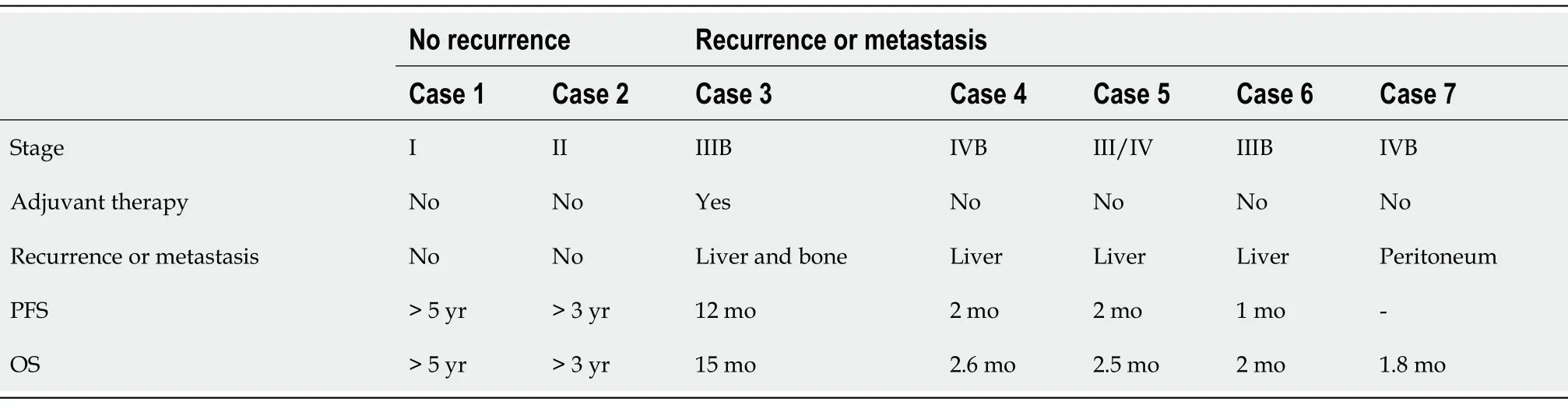
Table 5 Prognosis
The elevations in CEA,CA19-9,and CA-125 appear to be indicators of a poor prognosis in patients with gallbladder sarcomatoid carcinoma.CEA and CA19-9 are recommended tumor markers associated with gallbladder cancer in the National Comprehensive Cancer Network (NCCN) guidelines.The elevations in CEA and CA19-9 in gallbladder sarcomatoid carcinoma reported in the previous literature were not obvious[4,5,7,8].In our report,three (60%) patients with recurrence or metastasis had significantly high CA19-9 levels,with the highest level exceeding 1000 U/mL.CA-125,initially thought to be a specific biomarker for ovarian cancer,is considered a potential biomarker of digestive tract neoplasms and is associated with a poor survival[15,16].There were three (60%) patients with recurrence or metastasis who had significantly high CA-125 levels,and the number of patients with stage IV disease was approximately seven times higher than normal.Furthermore,the two patients without recurrence with stage I or stage II disease showed normal CEA,CA19-9,and CA-125 levels.Unfortunately,we did not continue to monitor the changes in the above tumor markers after progression and cannot further explain their correlations with the disease.
TNM stage seems to be an important indicator for the prognosis of gallbladder neoplasm[17].In our report,the prognosis of patients with early-stage disease (stage I and stage II) was much better than that of patients with advanced-stage disease.The patients with stage I and stage II disease did not have recurrence for more than 5 years and 3 years,respectively.However,most of the patients who had advanced-stage disease were found to have recurred at approximately 2 mo and died quickly thereafter.These data are similar to those reported in the previous literature.The majority of patients with advanced stages disease recurred between 2 and 3 mo,and the survival time was between 5 and 12 mo in previous reports[3-8].The data of patients with early-stage disease were not clear because there were no previous reports.However,no mention of long-term survival in patients with advanced-stage disease has been found until now.
Surgery is suggested as the first and only recognized treatment for sarcomatoid carcinoma of the gallbladder.Radical cholecystectomy refers to extensive resection of the gallbladder bed with a rim of liver tissues and peripheral metastatic lymph nodes or tissues.However,even with such a wide excision range,patients with late stage disease still recurred quickly after surgery,and the liver was the most common site,which may be because the serosa is lacking on the side that the gallbladder embeds in the liver.In total,two patients in our report and six in the past literature recurred only2 mo after the operation[3-5,8].These frustrating results suggest that surgical treatment is not enough for patients with locally advanced disease and that postoperative adjuvant treatment may be appropriate.Because of the rarity of gallbladder sarcomatoid carcinoma,there was no previously recommended adjuvant treatment.We considered that sarcomatoid carcinoma of the gallbladder was a kind of carcinoma,not sarcoma,so we referred to the adjuvant treatment regimen for gallbladder cancer.A nomogram suggested that certain subsets of patients with at least stage T2 or N1 disease will gain survival benefits from adjuvant chemoradiotherapy[18].Wanget al[19]suggested that adjuvant radiotherapy provides a survival benefit in node-positive or ≥ T2 gallbladder cancer.The combination of gemcitabine and capecitabine followed by concurrent capecitabine and radiotherapy (45 Gy to regional lymph nodes;54 to 59.4 Gy to the tumor bed) was proven to be well tolerated and promising by Ben-Josefet al[20].Gemcitabine and cisplatin were used in a randomized,multinational phase III trial and were thought to increase the 24-mo postoperative disease-free survival (DFS) rate from 35% to 55% in gallbladder cancer[21].Moreover,adjuvant chemotherapy with gemcitabine and adjuvant radiotherapy are still recommended by the NCCN clinical practice guidelines.Therefore,we treated the patient with a stage T2N1M0 tumor with gemcitabine and capecitabine for two cycles followed by radiotherapy (5040 cGy to the tumor bed and regional lymph nodes).Two additional cycles of the same chemotherapy as before were administered after the radiotherapy.With the combination of adjuvant chemotherapy and radiotherapy,the PFS of this patient was 12 mo,which is much longer than that of patients with advanced-stage gallbladder sarcomatoid carcinoma reported in the literature.To the best of our knowledge,this is the first detailed report of postoperative adjuvant treatment for gallbladder sarcomatoid carcinoma,and the patient got a PFS of 12 mo,which is the longest reported period to date.Gemcitabine combined with fluorouracil and radiotherapy could be considered as an adjuvant treatment for patients with locally advanced gallbladder sarcomatoid carcinoma.Unfortunately,liver and bone metastases occurred 3 mo in the patient after the completion of adjuvant therapy,suggesting that our adjuvant regimen could be further optimized.These optimizations may include an increase in the dose of radiotherapy at the liver site,as well as appropriate maintenance chemotherapy.
CONCLUSION
Gallbladder sarcomatoid carcinoma is a unique gallbladder malignancy with a poor prognosis.Surgery is suggested as the first and only recognized treatment.There is a significant difference in prognosis between patients with early-stage and advancedstage disease.Postoperative adjuvant therapy may bring survival benefits for locally advanced patients.Gemcitabine combined with fluorouracil and radiotherapy could be a choice that should be further tested and optimized.
ACKNOWLEDGEMENTS
This study was generously supported by the Department of Pathology,West China Hospital of Sichuan University.
猜你喜歡
發明與創新(2022年30期)2022-10-03 08:40:56
甘肅教育(2020年22期)2020-04-13 08:10:38
人大建設(2018年6期)2018-08-16 07:23:10
文理導航·科普童話(2017年5期)2018-02-10 19:42:14
作文教學研究(2016年1期)2016-07-05 12:22:32
小星星·閱讀100分(低年級)(2015年10期)2015-10-22 08:30:04
散文百家(2014年11期)2014-08-21 07:17:04
散文百家(2014年11期)2014-08-21 07:16:56
中國火炬(2014年4期)2014-07-24 14:22:19
體育師友(2011年5期)2011-03-20 15:29:50
 World Journal of Clinical Cases2020年17期
- World Journal of Clinical Cases的其它文章
- Diagnosis and treatment of an elderly patient with 2019-nCoV pneumonia and acute exacerbation of chronic obstructive pulmonary disease in Gansu Province:A case report
- Active surveillance in metastatic pancreatic neuroendocrine tumors:A 20-year single-institutional experience
- Shear wave elastography may be sensitive and more precise than transient elastography in predicting significant fibrosis
- Diagnosis and treatment of mixed infection of hepatic cystic and alveolar echinococcosis:Four case reports
- Surgical strategy used in multilevel cervical disc replacement and cervical hybrid surgery:Four case reports
- Diagnostic value of ultrasound in the spontaneous rupture of renal angiomyolipoma during pregnancy:A case report