早期云計算如同從圖書館借書
2020-08-28 11:33:20戴夫·格什戈恩
英語世界 2020年8期
戴夫·格什戈恩
The idea of cloud computing, which is really just multiple people using the same computer hardware at the same time, has been around since some of the first computer systems.
Before the internet, there was ARPANet1, an experimental government-funded prototype2 for a connected communications network of computers.
But before ARPANet, there was another technology called time-sharing3. It was a glimpse of our own connected future—well before the dawn4 of the personal computer, the smartphone, or even the web.
Time-sharing was a way of computing where a user would type into a typewriter-like terminal connected to a phone line. That phone line would connect to a larger computer somewhere else in the US. The code typed into the terminal would be transmitted to the larger computer, which would run the code and then send the output back through the phone lines to the user.
How time-sharing began
Through the mid-20th century, scientists worked at transforming the computer from a mechanical machine to an electronic one, shrinking the hardware from the size of a room to something that fit on a desk. But even these early, clunky5 electronic computers were still only capable of running one persons program a time, and generally were only found at universities and government research facilities. Everyone else at the research center would have to wait until the current programmer was done, and then reconfigure the computer for their use afterward. This hassle6 led to the development of a process called “time-sharing,” where computers could automatically handle a queue of codes to execute one after another.
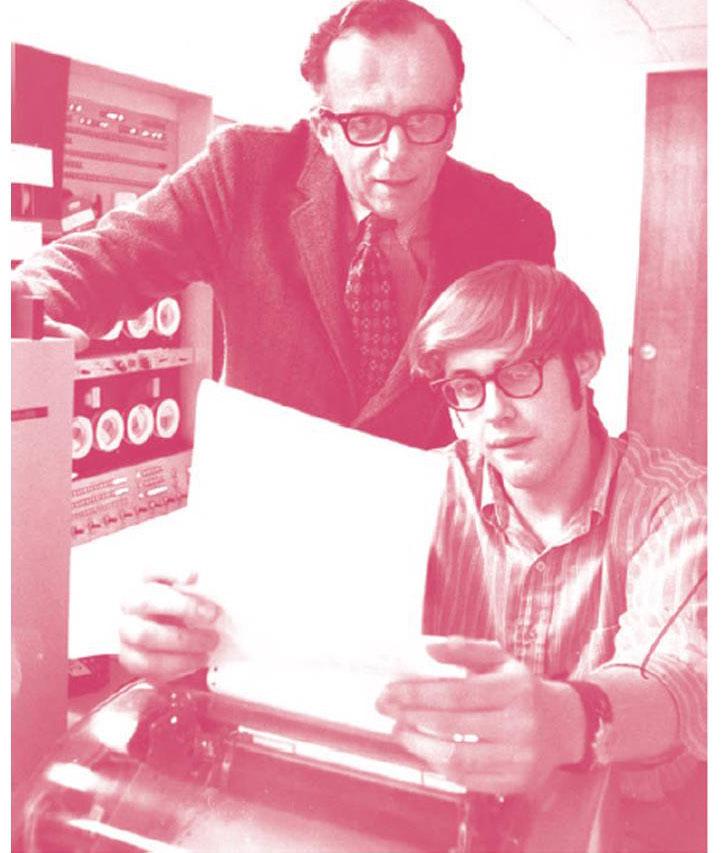
One of the first projects to tackle7 time-sharing was MITs Project MAC8, according to 1965 MIT graduate and then Project MAC contributor Tom Van Vleck.
“Time-sharing a single computer among multiple users was proposed as a way to provide interactive computing to more than one person at a time, in order to support more people and to reduce the amount of time programmers had to wait for results,” he wrote in 2014.
This is essentially the same idea that big tech companies are using today, but the speed and scale has been exponentially9 increased. Instead of simple mathematical equations10 among a handful of researchers, billions of lines of code are being run from millions of different users on tens of thousands of servers. These servers are just high-powered11 computers, custom-built12 to work together, and still take up entire warehouses, but can accomplish many orders of magnitude13 more computing than their earlier room-sized ancestors.
The idea of time-sharing and linking computers together in the 1960s would be formative14 for decades to come. In 1968, J. C. R. Licklider15, a director at the US Department of Defense Advanced Research Projects Agency (ARPA), wrote a paper titled “Compu-ters as a Communications Device” that would sketch out the basis of the internet and the idea of connecting compu-ters to one another, which influenced the creation of ARPANet itself.
“It appears that the best and quickest way… to move forward the deve-lopment of interactive communities of geographically separated people—is to set up an experimental network of multiaccess computers,” he wrote.
Making money selling computer processing
In the 1960s, computers were marketed to mathematicians and scientists because of their enormous cost. But with time-sharing, which could be done from long distances over a phone line, the cost of the hardware was distributed across many customers, meaning access could be cheaper. The institutions that at first were only using computers for mathematics found that they could use computers for office automation tasks like payroll and mailings and forms and simple databases.
In the years after Lickliders paper, about 150 businesses formed in the US to provide time-sharing services, according to the Computer History Museum. Small, portable typewriters with simplistic computer chips would be rented on a monthly basis, and when plugged into a phone line, these terminals would connect to a large computer elsewhere in the country. Customers were charged for how much computing power they used.
The 1980s saw the introduction of smaller, more affordable microchips, leading to the era of the personal computer, led by the likes of Apple and IBM. Time-sharing started to feel unnecessary, as many had now machines at their offices or homes, and didnt need to call into a computer somewhere else to get their work done.
But it wasnt long before the idea of “cloud computing” sprang up16. In 1997, entrepreneur Sean OSullivan filed a trademark on the phrase “cloud computing,” according to MIT Technology Review. (The trademark is now dead.) OSullivans company was hammering out a contract with PC manufacturer Compaq17, where OSullivan would provide the software for Compaqs server hardware. The two would in turn sell that technology to burgeoning18 internet service providers like AOL, who could offer new computing services to their customers.
The first mention of the technology was scribbled19 in a daily planner in 1997, inside the offices of Compaq Computer, where a small group of technology executives was plotting the future of the Internet business and calling it “cloud computing.” Their vision was detailed and prescient20. Not only would all business software move to the Web, but what they termed “cloud computing-enabled applications” like consumer file storage would become common. Compaq predicted that enterprise software, which needed to be directly installed on users computers, would be usurped21 by cloud services distributed over the internet, what we now call “Software as a Service” or SaaS.
Thats the world we live in today. But it all started with time-sharing, and the simple idea that you could book time on someone elses computer.
自第一批計算機系統問世以來,云計算的概念就產生了。云計算,實際上就是多個人同時使用一套計算機硬件。
先于互聯網出現的,還有由政府資助的計算機互聯通信網絡實驗原型——阿帕網。
而在阿帕網之前,還有一種叫作分時的技術。這種技術讓我們初步感知了網絡互聯的未來,后來很久才出現了個人電腦、智能手機甚或網絡。
分時是一種用戶使用連接電話線的打字機式終端進行輸入的計算方式。電話線會連接到美國其他地方的一臺大型計算機上。大型計算機在收到輸入終端的代碼之后,會運行代碼,并通過電話線將輸出內容返回給用戶。
分時技術的起源
在整個20世紀中葉,科學家們都致力于將計算機從機械化轉變為電子化,將硬件從房間大小縮減到桌面大小。但即便是這些笨重的早期電子計算機,一次也只能運行一個人的程序,并且通常只有大學和政府研究機構才有。研究中心的其他所有人都必須等正在使用的程序員完事了,再重新配置計算機供自己接下來使用。這種窘境促進了 “分時”處理的發展,讓計算機能夠自動輪流處理一列代碼。
據1965年畢業于麻省理工學院的湯姆·范弗利克介紹,麻省理工學院的“數學與計算”項目是最早研究分時技術的項目之一,他當時曾參與此項目。
他于2014年寫道:“提出由多名用戶分時使用同一臺計算機的方法,為多人同時提供交互式計算,由此支持更多人共用,并縮短程序員等候結果的時間。”
如今,大型科技公司仍在使用基本相同的概念,只是速度和規模已呈指數級增長——不再是少數幾個研究人員運行簡單的數學方程式,而是數萬個服務器同時為數百萬名用戶運行數十億行代碼。這些服務器是特殊定制、可協同工作的大功率計算機,雖然體積依然大到占滿整個庫房,但完成運算指令的數量級比房間大小的早期計算機大得多。
1960年代的分時概念和計算機互聯概念對接下來的幾十年產生了深遠影響。1968年,美國國防部高級研究計劃局的一位負責人J. C. R.利克萊德曾經寫過一篇題為“計算機作為通信設備”的論文,描繪了互聯網的基本原理和計算機互聯的概念,促使了阿帕網的誕生。
他寫道:“看來,促使地理上分隔的人們建立互動社區的最好最快的方法是,設立一個多路存取計算機實驗網絡。”
計算機進入大眾消費市場
1960年代,由于成本巨大,計算機只被推銷給數學家和科學家。但有了分時技術之后,通過電話線遠程接入,硬件成本可以由眾多客戶分攤,這意味著使用計算機變得更便宜了。最初只將計算機用于計算的機構發現,他們可以使用計算機完成制作工資單、發郵件、制表和建立簡單數據庫等自動化辦公任務了。
據計算機歷史博物館記載,在利克萊德發表論文后的數年內,約有150家提供分時服務的企業于美國成立。帶有簡單計算機芯片的小型便攜式打字機按月出租。插上電話線,這些終端就可以連接上美國其他地方的一臺大型計算機。客戶使用多少計算能力,就支付多少費用。
1980年代,體積更小、更便宜的微型芯片出現了,由此進入了由蘋果和IBM等巨頭引領的個人電腦時代。許多人在辦公室或家里配備了計算機,無須再調用其他地方的計算機來完成工作,因此分時技術開始變得可有可無。
但在不久之后,“云計算”的概念就開始生根發芽。據《麻省理工學院技術評論》記載,企業家肖恩·歐蘇利文于1997年用“云計算”一詞注冊了商標。(目前該商標已過期。)歐蘇利文的公司與個人電腦制造商康柏公司簽訂了合同,歐蘇利文為康柏的服務器硬件提供軟件。兩家公司繼而將這項技術銷售給美國在線等新興互聯網服務提供商,這些提供商向其客戶提供新型計算服務。
這項技術第一次被提及是在1997年,是在康柏公司辦公室的一張日程表上潦草寫下的,幾位技術高管規劃著這項因特網業務的未來,并稱其為“云計算”。他們的愿景既詳實又高遠。他們不僅計劃將所有的商業軟件轉移到網上,還計劃普及客戶文件存儲等所謂的“云計算應用程序”。康柏預測,需要直接安裝在用戶計算機上的企業軟件將被分布在互聯網上的各種云服務(現稱為“軟件即服務”,簡稱SaaS)所取代。
我們如今就身處在這樣的世界。但這一切都始于分時技術,源于你可以預約使用他人計算機的這一簡單概念。
(譯者為“《英語世界》杯”翻譯大賽獲獎者)
猜你喜歡
現代裝飾(2022年1期)2022-04-19 13:47:32
小學科學(學生版)(2021年7期)2021-07-28 06:44:42
現代裝飾(2020年2期)2020-03-03 13:37:44
科技傳播(2019年22期)2020-01-14 03:06:34
中學生數理化·高一版(2018年9期)2018-10-09 06:46:48
消費導刊(2017年20期)2018-01-03 06:26:40
中學生數理化·高一版(2017年9期)2017-12-19 12:15:14
商用汽車(2016年11期)2016-12-19 01:20:16
商用汽車(2016年6期)2016-06-29 09:18:54
商用汽車(2016年4期)2016-05-09 01:23:12