Consistency of autorefraction by two autorefractors in 1 138 Chinese children and adolescents
2020-07-06 06:20:16
國際眼科雜志 2020年7期
Abstract
?KEYWORDS:consistency; autorefractor; refractive error; Topcon; Tianle; screening; Chinese; children
INTRODUCTION
Myopia, as an increasingly serious public health problem, is predicted to affect almost 5 billion people globally by 2050 without effective interventions, nearly one fifth of whom will suffer from high myopia and related ocular complications[1-3]. In 2015, it was estimated that the global potential productivity loss reached $244 billion due to uncorrected myopia, especially East Asia bearing the greatest burden[1]. Faced with such a severe situation, children at high risk of myopia require more frequent vision screening for early discovery and intervention.
Cycloplegic refraction is the gold standard for detecting refractive errors, because noncycloplegic refraction will inevitably result in an overestimation of myopia especially in children who have strong accommodative reserve[4-7]. However, it’s too time- and energy-consuming to perform cycloplegic optometry in large-scale screening. Recently, several studies found that noncycloplegic autorefraction was effective for myopia screening in Chinese children especially when combined with uncorrected visual acuity[8-11]. Linetal[8]demonstrated that, based on decision curve analysis, the combination of noncycloplegic autorefraction and uncorrected visual acuity even produced higher net benefits for myopia screening than cycloplegic autorefraction.
There is sometimes more than one kind of autorefractors being used in the same myopia studies especially multicenter studies, follow-up studies and large-scale cross-sectional investigations. Therefore, it is vital to assess consistency among different methods of refractive measurement. In China, autorefractors from Japan (Topcon) are traditionally utilized to measure refractive errors in clinic, however, the machines may be unavailable for myopia screening in remote and underdeveloped regions. Instead, autorefractors of local brands are more frequently used in such cases. As far as we know, Tianle RM-9000 auto-refactors are widely used in epidemiological investigations in southern China. Our current study was aimed to compare measuring results from Topcon RM-8900 (Topcon co., Japan) and Tianle RM-9000 (Ningbo star technology development co. LTD, China) in a large-scale myopia screening of school-aged children and adolescents under noncycloplegic condition.
SUBJECTS AND METHODS
ParticipantsThe study was accomplished in December 2018. The study population was composed of 1216 children and adolescents aged 6 to 16 years by conducting cluster sampled from two primary schools and two secondary schools in Dongli district, Tianjin. Parents or legal guardians of the participants signed the informed consent in written form. The study was carried out following the Declaration of Helsinki and was approved by the Institutional Review Board of Tianjin Medical University Eye Hospital.
ExaminationsFar vision was tested firstly through the standard Logarithmic visual acuity chart. Then, Hirschberg test and cover test were performed to detect strabismus. History of contact lens wearing and ocular surgery was subsequently checked.
Autorefraction without cycloplegia was carried out with the two autorefractors (Tianle RM-9000 and Topcon RM-8900) successively in random order for each participant. Uniformly, automatic measurement mode was adopted with the vertex distance set to 12 mm and the step size of diopter set to 0.12 D as well as the step size of axis set to 1°. The astigmatism was recorded as negative cylinder. Automatic fogging was applied to controlling accommodation during refraction measurement. The right eye was examined before the left eye, with at least three continuous measurements taken for each eye. The average of the total measuring results for each eye was obtained for analysis. In case of poor measuring quality caused by strong accommodation or poor cooperation especially in young children, we use the unified testing standard for each eye as follows: another group of three sequential measurements were added until the deviation between any two measuring results of one set of measurements was controlled under 0.25 D and all of the measurements in one group received the reliability rating of more than eight[12]. The whole autorefraction was conducted by two experienced optometrists, who were masked to the previous examination of each subject by the other optometrist. No analysis was made until the data was entirely collected.
InclusionCriteriaAccording to the limits defined by the manufacturers (Table 1), children aged 6-16 whose spherical refraction was neither less than -20.00 D nor over +20.00 D and cylindrical refraction was neither less than -10.00 D nor over +10.00 D were enrolled in the study.
ExclusionCriteriaSubjects with a history of ocular surgery or trauma, wearing contact lens including orthokeratology lens worn at night, manifest strabismus, nystagmus, media opacity such as congenital cataract, poor cooperation, missing refraction data and other conditions not mentioned above but may affect measuring results were excluded from the research.
StatisticAnalysisThe obtained results of refraction were broken down into three components: sphere (S), cylinder (C) and axis (A). Sherical equivalent was calculated based on the formula: SE=S+C/2. In terms of astigmatism, Jackson cross-cylinders including J0and J45vectors were also calculated according to the following formulas: J0=(-C/2)×Cos (2A); J45=(-C/2)×Cos (2A). The J0vector represents the horizontal and vertical components of astigmatism, while the J45vector reflects the oblique component[13-14]. Kolmogorov-Smirnov test was used to test the normality. The results were described as the mean with standard deviation if normal distribution was satisfied or the median with quartiles when normal distribution was not satisfied. Wilcoxon signed rank test was used to analyze the difference of the measurements including SE, S and C between the two autorefractors. We applied univariate analyses and multivariate linear regression models to evaluating the association of the factors including age, sex and SE (measured by Topcon RM-8900) with the difference of the refraction which was significantly different between the two methods. Spearman correlation analysis was performed to assess the relationship of SE, S and C between the two measuring instruments. Bland and Altman analysis was conducted to demonstrate the consistency of the two methods. Besides, the axial difference was calculated and categorized based on the quantity of the difference. We analyzed the axial difference of the whole astigmatic eyes and that of the eyes whose cylindrical diopters were beyond -0.75 D, respectively. Both right and left eyes were enrolled in analyses. All the statistical analyses were conducted in IBM SPSS statistics version 23.0 (IBM Co., Armonk, NY), and two-sidedP<0.05 was considered statistically significant.
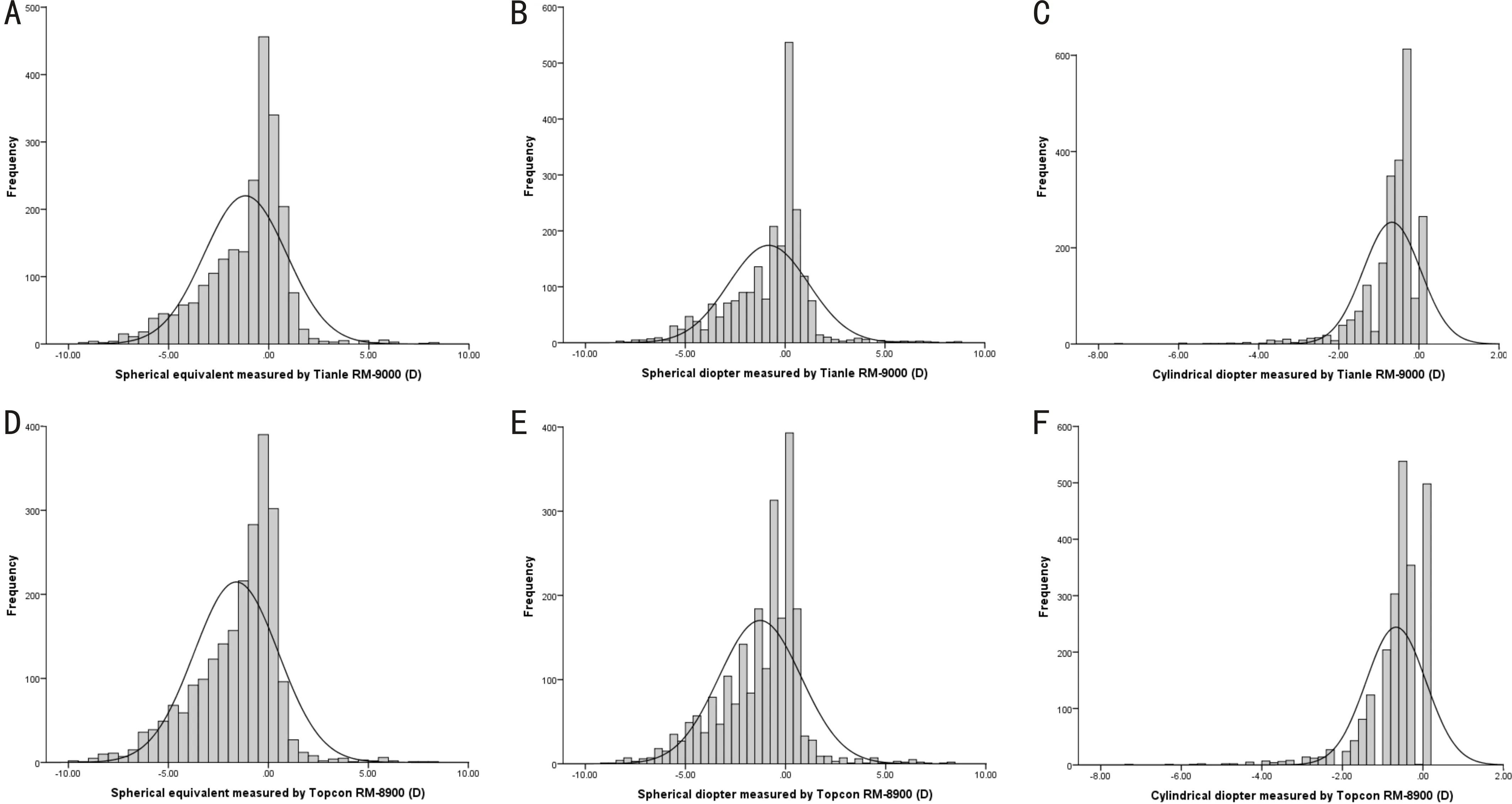
Figure 1 Distribution of the refractive errors measured by Tianle RM-9000 (A-C) and Topcon RM-8900 (D-F)A:All variables showed a non-normal distribution (n=2276).
Table 1 Comparison of measuring parameters of Tianle RM-9000 and Topcon RM-8900
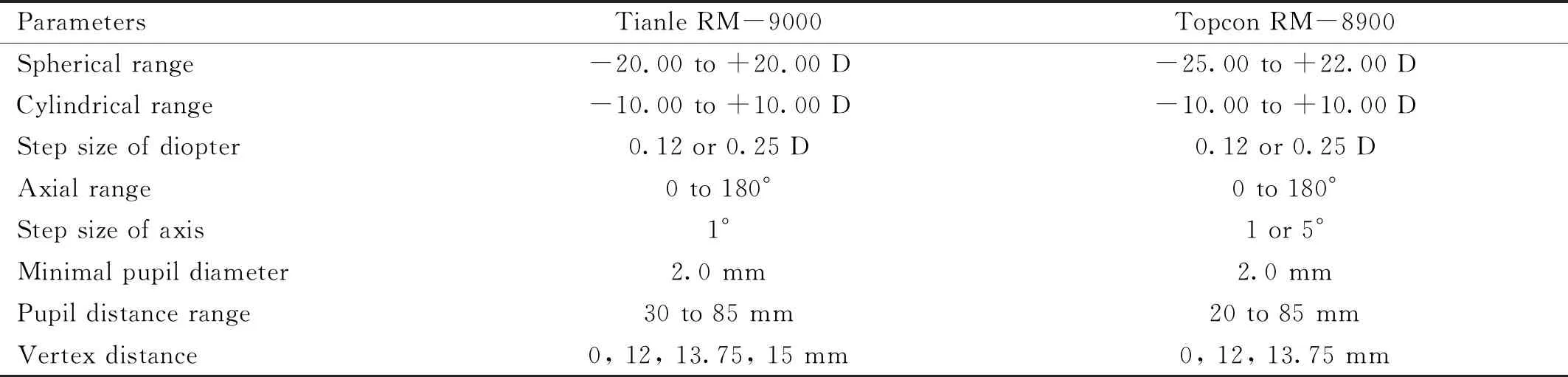
ParametersTianle RM-9000Topcon RM-8900Spherical range-20.00 to +20.00 D-25.00 to +22.00 DCylindrical range-10.00 to +10.00 D-10.00 to +10.00 DStep size of diopter0.12 or 0.25 D0.12 or 0.25 DAxial range0 to 180°0 to 180°Step size of axis1°1 or 5°Minimal pupil diameter2.0 mm2.0 mmPupil distance range30 to 85 mm20 to 85 mmVertex distance0, 12, 13.75, 15 mm0, 12, 13.75 mm
RESULTS
Of the 1216 children screened, 1138 participants (2276 eyes) were finally enrolled with a mean age of 10.49±2.66 (median: 11; range: 6-16) years. Among the 1138 children, 615 (54.0%) were boys and the other 523 (46.0%) were girls while 746 (65.6%) were elementary school students and the other 392 (34.4%) were secondary school students. Figure 1 illustrates the distribution of refractive errors including SE (spherical equivalent), spherical diopters and cylindrical diopters among the 2276 eyes measured by Tianle RM-9000 and Topcon RM-8900. The distribution of all parameters mentioned above were non-normal with a tail drifting toward myopia in spherical equivalents and spherical diopters.

Table 2 Comparison of the noncycloplegic refraction measured by Tianle RM-9000 and Topcon RM-8900(n=2276)
M: Median; Q1: The 25thpercentile; Q3: The 75thpercentile; SE: Spherical equivalent.
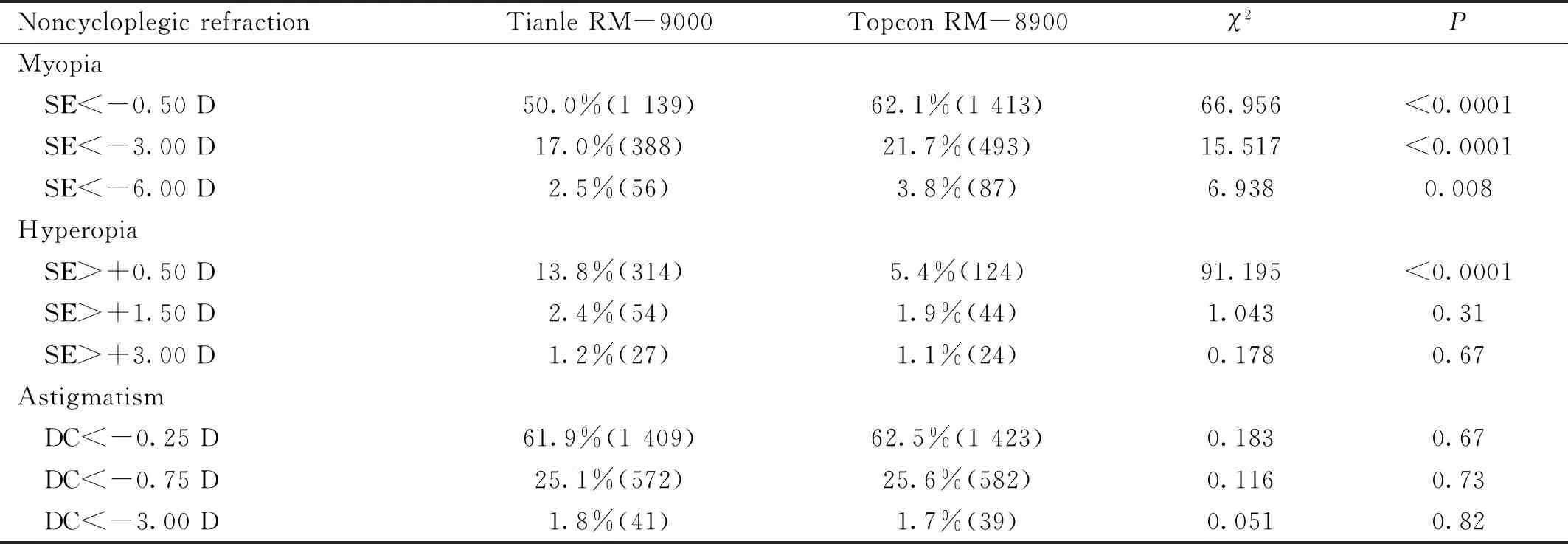
Table 3 Prevalence estimates based on noncycloplegic refractive errors measured by Tianle RM-9000 and Topcon RM-8900(n=2276)
SE: Spherical equivalent; DC: Diopters of cylinder.
Table 2 compares the noncycloplegic refraction of 2276 eyes measured by Tianle RM-9000 and Topcon RM-8900. The median of SE obtained from Tianle RM-9000 (-0.51 D) was significantly more hyperopic than that from Topcon RM-8900 (-1.00 D) (P<0.0001). Similarly, the median of spherical diopters measured by Tianle RM-9000 (-0.25 D) was significantly more hyperopic compared to that measured by Topcon RM-8900 (-0.75 D) (P<0.0001). However, no significant difference was found between the median of cylindrical diopters measured by Tianle RM-9000 (-0.50 D) and that measured by Topcon RM-8900 (-0.50 D) (P=0.83). Furthermore, J0and J45both displayed no statistics significance between Tianle RM-9000 and Topcon RM-8900 (P=0.55,P=0.20, respectively).
Table 3 shows the prevalence estimates of noncycloplegic refractive errors measured by the two machines. According to the results of Tianle RM-9000, the prevalence of myopia in different degrees and low hyperopia was significantly lower than that of Topcon RM-8900 (allP<0.01), while the prevalence of middle and high hyperopia as well as astigmatism of different degrees was not significantly different from that of Topcon RM-8900 (allP>0.05).
Spearman correlation analysis was performed firstly to evaluate the relationship between measuring results from Tianle RM-9000 and Topcon RM-8900. As shown in Figure 2, significant association could be demonstrated between the refractive results measured by Tianle RM-9000 and those by Topcon RM-8900 including spherical equivalent values (r=0.962,P<0.0001), spherical diopters (r=0.958,P<0.0001) and cylindrical diopters (r=0.769,P<0.0001).
Before analyzing the biases between the results obtained from the two machines, we found that the measuring difference on refractive errors including spherical equivalents, spherical diopters, cylindrical diopters, as well as J0and J45between the two autorefractors approximately fitted normal distribution (Figure 3).
Table 4 showed the mean difference (Meand) and corresponding 95%CIof refractive errors including spherical equivalent, spherical diopters, cylindrical diopters, J0and J45between the two methods. Bland-Altman plots were drawn to compare refractive errors measured by Tianle RM-9000 with those measured by Topcon RM-8900 (Figure 4). The Meandof SE was 0.44±0.37 D (95%CI=-0.29, 1.17) with 95.4% (2172/2276) dots located within the 95%CI. However, the maximum of the absolute values of SE difference within the 95%CIwas 1.13 D, which showed poor consistency of SE results between the two autorefractors.
As for the comparison of spherical diopters measured by the two machines, the result was similar. The Meandof spherical diopters was 0.44±0.37 D (95%CI=-0.27, 1.16) with 96.0% (2186/2276) dots located within the 95%CIwhile the maximum of the absolute values of spherical difference within the 95%CIwas 1.13 D, which displayed poor consistency of spherical results between the two autorefractors.

Figure 2 The relationship between the refractive errors measured by Tianle RM-9000 and those measured by Topcon RM-8900A: Spherical equivalent; B: Spherical diopter; C: Cylindrical diopter (n=2276).
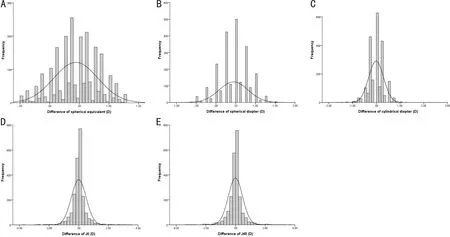
Figure 3 Distribution of the difference of refractive errors measured by Tianle RM-9000 and Topcon RM-8900A: Spherical equivalent; B: Spherical diopter; C: Cylindrical diopter; D: J0; E: J45. All variables showed an approximately normal distribution (n=2276).
Table 4 Meandand corresponding 95%CIof refractive errors measured by Tianle RM-9000 and Topcon RM-8900

(n=2276)
Meand: Mean of the differences; SD: Standard deviation; N: The number of dots located within the 95%CI; Mind: The minimum of dots located within the 95%CI; Maxd: The maximum of dots within the 95%CI; SE: Spherical equivalent.
In contrast, the consistency of the cylindrical difference turned to be better. The Meandof cylindrical diopters was -0.01±0.31 D (95%CI=-0.62, 0.61) with 95.7% (2179/2276) dots located within the 95%CIwhile the maximum of the absolute values of spherical difference within the 95%CIwas 0.62 D, which was close to 0.50 D and could be accepted in clinical examination. In terms of J0and J45, the Meandand 95%CIwas 0.00 D (95%CI=-0.98, 0.98) for J0and -0.01 D (95%CI=-0.96, 0.94) for J45, respectively; the maximum of the absolute values within the 95%CIwas 0.98 D for J0and 0.96 D for J45, respectively. Spearman correlation analysis was applied to analyzing the associated factors of SE difference between the two autorefractors. As indicated in Figure 5, the difference of SE decreased significantly with more hyperopic spherical equivalent measured by Topcon RM-8900 (P<0.0001;r=-0.295). Based on multivariate linear regression analysis (Table 5), the lower difference of SE was associated with more hyperopic spherical equivalent measured by Topcon RM-8900 (P<0.0001; standardized regression coefficientβ: -0.302; regression coefficientB: -0.053; 95%CI: -0.061, -0.045), followed by older age (P<0.0001;β: -0.153;B: -0.022; 95%CI: -0.028, -0.015). There was no significant relationship between the difference of SE and gender (P=0.49).
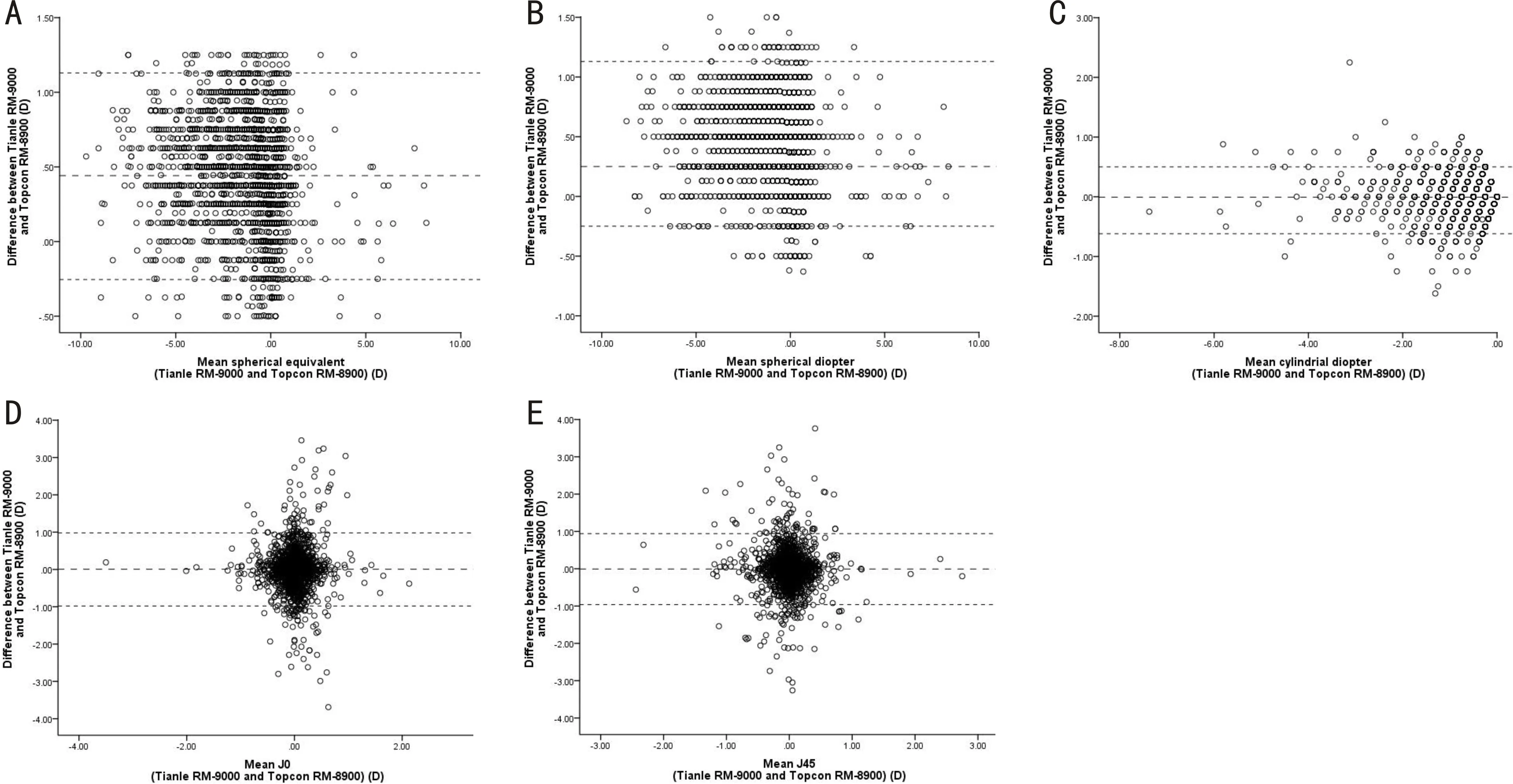
Figure 4 Bland and Altman plots showing the mean of the differences and corresponding 95%CIof refractive errors measured by Tianle RM-9000 and Topcon RM-8900A: Spherical equivalent; B: Spherical diopter; C: Cylindrical diopter; D: J0; E: J45(n=2276).
Table 5 Multivariate linear regression analysis of the association of the SE difference between Tianle RM-9000 and Topcon RM-8900 with systemic and ocular parameters

ParametersPStandardized correlation βRegression coefficient B95%CIVariance inflation factorAge(a)<0.0001-0.153-0.022-0.028, -0.0151.356Gender0.490.0141.003SE(Topcon RM-8900, D)<0.0001-0.302-0.053-0.061, -0.0451.356
SE: Spherical equivalent.
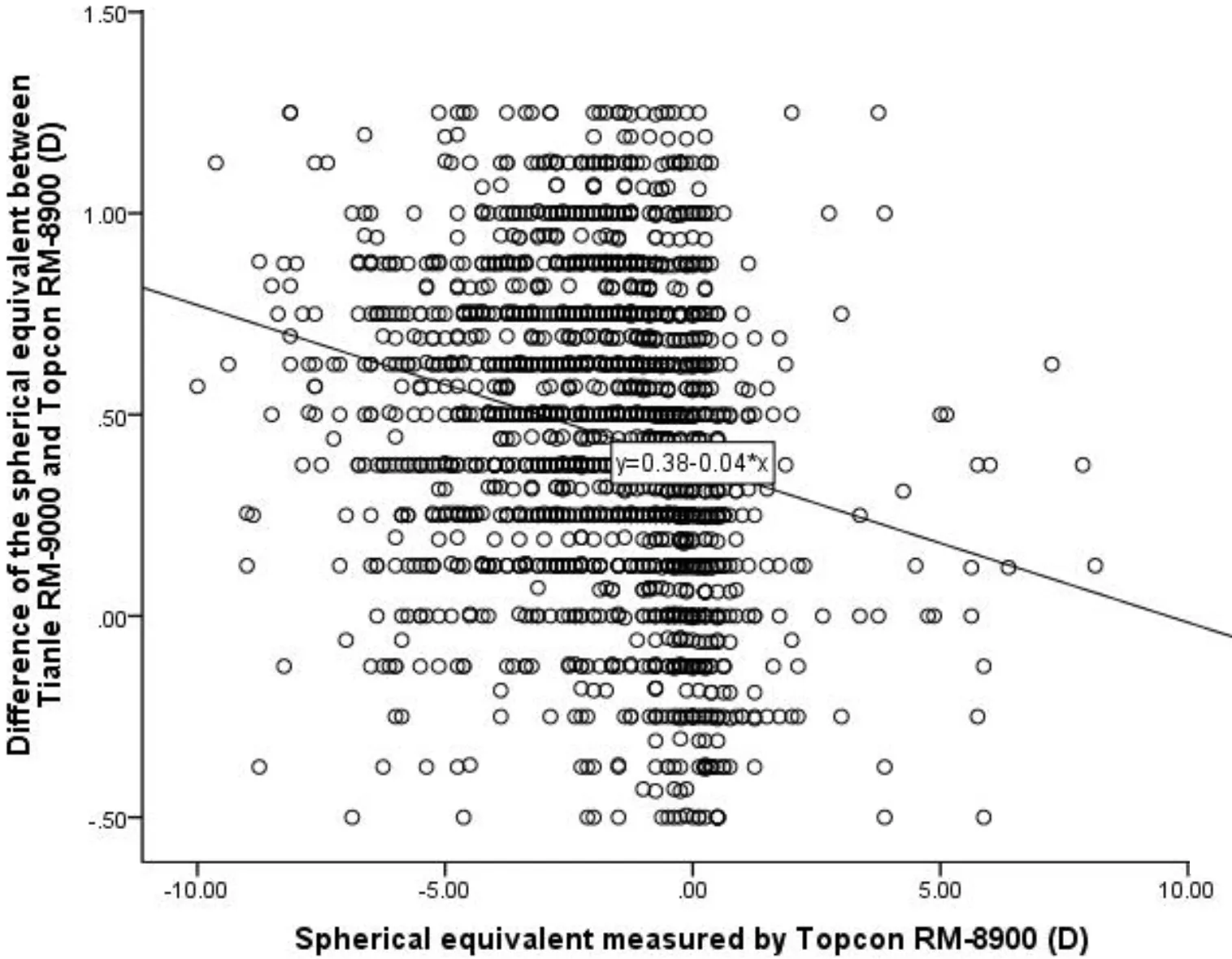
Figure 5 The association of the difference of the spherical equivalent (between Tianle RM-9000 and Topcon RM-8900) with the spherical equivalent measured by Topcon RM-8900 (n=2276).
The consistency of cylindrical axes detected by the two machines can be observed in Table 6 and Figure 6. The mean of axial differences was -0.06±20.46° among the eyes with cylinder ≤-0.25D (n=1777) while the mean value was 1.21±10.36° among the eyes with cylinder ≤-0.75 D (n=885). The axial differences of the two groups mentioned above were both distributed in a nearly normal fashion. When all of the astigmatic eyes (cylinder ≤-0.25 D) were involved in the result analysis, axial differences of 84.6% (1503/1777) eyes were within ±20°. If only the eyes with cylinder ≤-0.75 D were enrolled, the value could rise up to 96.4% (853/885) and the fluctuation of the difference could be much smaller (Figure 6).
DISCUSSION
In the current study, we have evaluated the difference between the refractive results from the two autorefractors (Tianle RM-9000 and Topcon RM-8900) in school-age Chinese children and adolescents. The results demonstrated close relationship both in the spherical and cylindrical refraction between the two machines but better consistency in cylindrical refraction than spherical refraction.
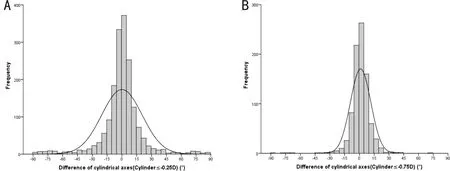
Figure 6 Distribution of the difference of cylindrical axes measured by Tianle RM-9000 and Topcon RM-8900A: Cylinder≤-0.25 D (Mean±SD=-0.06±20.46,n=1777); B: Cylinder≤-0.75 D (Mean±SD: 1.21±10.36,n=885).
Table 6 Comparison of cylindrical axes measured by Tianle RM-9000 and Topcon RM-8900

Difference of cylindrical axesCylinder ≤-0.25D (n=1777)Cylinder ≤-0.75D (n=885)±5°773 (43.5%)520 (58.8%)±10°1174 (66.1%)737 (83.3%)±15°1376 (77.4%)818 (92.4%)±20°1503 (84.6%)853 (96.4%)
The correlation was great(r=0.958,P<0.0001) between spherical results from Tianle RM-9000 and that from Topcon RM-8900. Compared with the results measured by Topcon RM-8900, there was a hyperopic bias of 0.44 D (Table 4) in the SE and spherical refraction obtained by Tianle RM-9000. In the previous studies, Pesudovsetal[15]found a myopic bias of 0.14 D in SE measured by Nidek ARK-700K, compared with SE measured by Topcon KR-8000. Xiongetal[12]reported a smaller myopic bias of 0.01 D in SE measured by Nidek ARK-510A and a hyperopic bias of 0.06 D in SE measured by Huvitz HRK-7000A, compared with that measured by Topcon KR-8900. The difference varied among different studies, however, none of the bias was clinically significant (over 0.50 D) in those studies. Still, the higher spherical bias in current study implied the larger difference in the ability to relax accommodation between Tianle RM-9000 and Topcon RM-8900. Under the same conditions, Tianle RM-9000 tended to relax more accommodation than Topcon RM-8900. Interestingly, the principle of the two autorefractors was similar except the fogging pictures including a red balloon in the Tianle RM-9000 and a red house with greensward in the Topcon RM-8900. According to previous studies, instrument myopia will be induced when the eyes focus on the near target in the autorefractor. Thus, we speculated that the different fogging pictures could partly contributed to the spherical bias between Tianle RM-9000 and Topcon RM-8900. In detail, the further red house with near greensward might provide different defocus signals, compared with the simple large balloon. However, as far as we konw, few studies demonstrated whether the difference of fogging pictures played a different role in relaxing the accommodation under the noncycloplegic condition. Therefore, our study might provide a new perspective on this issue, which requires further studies. Furthermore, according to multivariate linear regression analysis (Table 5), the refractive error and the age played great roles in the measurement deviation of SE between Tianle RM-9000 and Topcon RM-8900. The larger SE difference was accompanied by younger age and more myopic SE. This could be partly due to the intervention of accommodation and poor cooperation during measurement especially for younger children[7,16-17]. Another reason was that the measuring error increased with myopia deepening according to the principle of the autorefractor[18]. Specifically, high myopic eyes could be accompanied by eyeball shape changes such as posterior staphyloma, which might dramatically raised the measurement error of autorefraction.
Besides, the deviation of SE or spherical refraction could be up to 1.13 D within the 95%CIbetween Tianle RM-9000 and Topcon RM-8900, which indicated great fluctuation in measurement of the spherical refraction between the two methods. In Xiong’s study[12], the maximal deviation with in the 95%CIof SE differences between any two autorefractors of Topcon KR-8900, Nidek ARK-510A and Huvitz HRK-7000A was closed to 0.50 D, which was much smaller than the deviation reported in the current study. One of the most important resons was that cycloplegic autorefraction was used in Xiong’s study[12], which made the difference much more narrower. In addition, the prevalence of myopia in different degrees was all significantly lower according to the SE measured by Tianle RM-9000 than that by Topcon RM-8900. In contrast, the prevalence of low hyperopia was significantly higher based on the noncycloplegic refraction from Tianle RM-9000 than that from Topcon RM-8900. In Xiong’s study[12], the prevalence of myopia or hyperopia was nearly the same based on the cycloplegic SE measured by Topcon KR-8900, Nidek ARK-510A and Huvitz HRK-7000A. Therefore, the two autorefractors are not suitable to be applied to the same vision screening under noncycloplegic conditions.
As for astigmatism measurement, the results showed great correlation (r=0.769,P<0.0001) and consistency (Figure 4) between Tianle RM-9000 and Topcon RM-8900. The mean difference of cylindrical refraction between Tianle RM-9000 and Topcon RM-8900 was -0.01±0.31 D (95%CI=-0.62, 0.61), similar to that between Huvitz HRK-7000A and Topcon KR-8900 (-0.01±0.32 D, 95%CI=-0.64, 0.63) and that between Nidek ARK-510A and Topcon KR-8900 (0.07±0.26 D, 95%CI=-0.44, 0.57) reported by Xiong’s study[12]. Besides, the maximal deviation was only 0.62 D in the 95%CIof the cylindrical differences and the proportion of the differences within ±0.50 D in cylindrical refraction reached 94.6% (2152/2276) between the two methods in current study, indicating that the deviation of astigmatism can be accepted clinically between Tianle RM-9000 and Topcon RM-8900. Moreover, no significant difference (less than 1%) was found between the prevalence of astigmatism base on the cylindrical refraction obtained by the two autorefractors in current study, which implied that Tianle RM-9000 and Topcon RM-8900 had the similar detection ability for astigmatism under noncycloplegic conditions. Xiongetal[12]revealed that the prevalence of astigmatism (cylinder ≤-0.75 D) was significantly larger based on the cylindrical refraction from Topcon KR-8900 than that from Nidek ARK-510A or Huvitz HRK-7000A, with the difference reaching up to 10% between Topcon KR-8900 and Nidek ARK-510A in children aged 10-15 years. The poor consistency of axis measurements among different autorefractors might partly explain the result in Xiong’s study[12].
In terms of J0and J45, the mean differences between Tianle RM-9000 and Topcon RM-8900 were both closed to 0.00 D and the 95%CIwere both within ±1.00 D, which was similar to those between Nidek ARK-700A and Topcon KR-8000 and those between Huvitz HRK-7000A and Topcon KR-8000 in the Xiong’s study[12]. The result indicated discrepancy between Tianle RM-9000 and Topcon RM-8900 in axis measurements including astigmatism with the rule and astigmatism against the rule as well as oblique astigmatism. However, Xiongetal[12]did not make further analyses on the consistency of astigmatic axes measured by different autorefractors.
When it comes to the axial difference, the clockwise deviation was equivalent to the counter-clockwise deviation. Therefore,the ratio but not the average was utilized to show the consistency of axial measurement in current study. The proportion of the axial deviation within ±20° was much higher in eyes with cylinder ≤-0.75 D than that in eyes with cylinder ≤-0.25 D (96.4%vs84.6%), which indicated better consistency between Tianle RM-9000 and Topcon RM-8900 in measuring the astigmatic axes of eyes with large astigmatism. One possible explanation was that the variation of refractive power in eyes with smaller astigmatism was less apparent among different meridian directions and this resulted in greater volatility in the measurement of cylindrical axes. Another reason might be that measurements of astigmatic axes in eyes with smaller astigmatism were more susceptible to instability of tear film.
There are some limitations in this study. Firstly, refractive errors were obtained without cycloplegia, which couldn’t avoid intervention from accommodation during measurement[19-20]. Therefore, the optometrists had tried to direct subjects’ attention to the fogging picture and make the eyes relaxed as much as possible during each examination. However, we found the difference between the two machines in relaxing accommodation and this result was independent of cycloplegia. Secondly, interobserver bias inevitably exists on account that two operators carried out the autorefraction simultaneously. However, the interobserver bias was in a low level because we adopted an automatic measurement mode in current study. Thirdly, binocular interaction couldn’t be ignored when both the eyes were uncovered during measurement. However, the prevalence of clinically significant anisometropia (over 2.50 D) was less than 3% in our study, which made binocular interaction in a minor level. Another limitation is that the conclusion may be available only for Chinese children and adolescents with an age range of 6-16 years but not for those in different age and race groups.
In conclusion, spherical equivalents and spherical refraction measured by Tianle RM-9000 cannot replace those measured by Topcon RM-8900 without a certain corrected value in the same vison screening while the two instruments are equally effective for screening of astigmatism. Spherical results measured by Tianle RM-9000 under noncycloplegic conditions tend to be more hyperopic than those by Topcon RM-8900, and the spherical deviation is enlarged with more myopic refraction and younger age.