風過懸肉掩梅香
2020-06-21 15:08:40三川
文化交流 2020年6期
三川
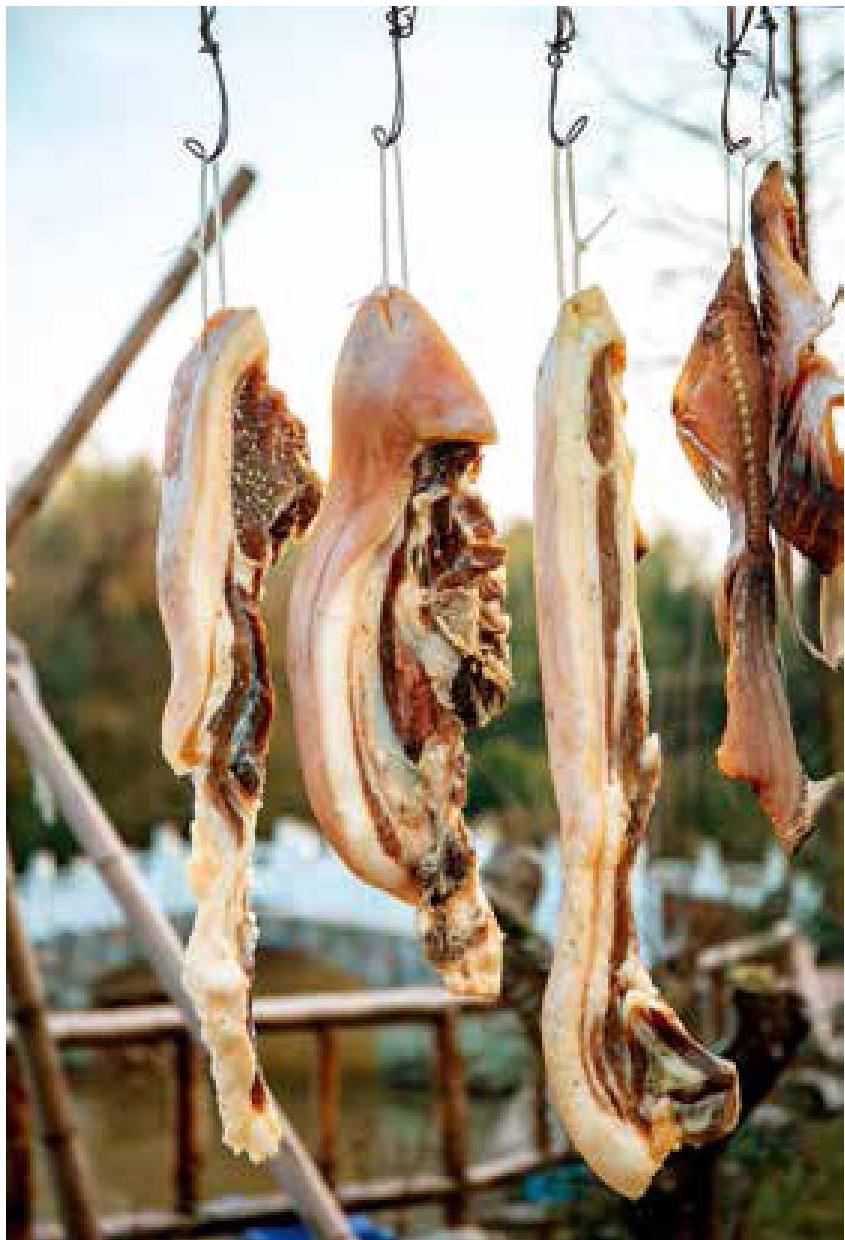
蘭溪風肉是個地理名稱。就像東陽蔣腿、浦江戌腿是金華火腿的珍品一樣,“轉輪巖”風肉亦是蘭溪風肉中的翹楚。
金華人頗有口福。撇開地理環境、物價指數、交通物流等宜居條件不論,光豐富的肉食就讓人垂涎不已:焐肉、風肉、出缸肉……
焐肉,多以金華兩頭烏燜制,油而不膩,哪個不愛?出缸肉來自“博士之鄉”東陽,油亮咸鮮,配飯下酒俱佳。而風肉則是蘭溪特產,聲名雖不及焐肉、出缸肉響亮,顏值卻頗高。在我的眼里,風肉肌紅脂白,紋理鮮明,顫悠悠地懸掛在青瓦檐頭,窗前閣口,美得就像一幅唯美油畫。
關于風肉的江湖傳說
蘭溪風肉是個帶地理名稱的特產。就像東陽蔣腿是金華火腿中的珍品一樣,“轉輪巖”風肉則是蘭溪風肉中的翹楚。
轉輪巖乃金華山余脈,山不高峻,也無奇秀,然頂若旋盤,山風掠過,呼呼有聲,故名轉輪巖。
轉輪巖雖說籍籍無名,但這個以山命名的風肉卻是浙江省知名品牌,其生產工藝已被列入省級非物質文化遺產名錄。為了避嫌,姑且隱去一些基本元素,但仍繞不開蘭溪風肉第五代傳人陳道響。
聽陳道響說,“轉輪巖”風肉在南北朝時便已出現,俗稱“干肉”,雅名“風肉”則出于蘭溪鄉賢舒元輿之口。
舒元輿(791~835年),字升遠,唐東陽郡蘭溪純孝鄉人,官至宰相,著有《舒元輿集》等,曾與白居易互為唱和,有作品收錄于《全唐詩》,名句“寶劍鋒從磨礪出”便出自其手。
在蘭溪能被稱作鄉賢的,皆非泛泛之輩,諸如貫休、李漁、趙一荻等等。據坊間傳聞,朱元璋與蘭溪亦頗有淵源。元末,朱元璋戰敗后逃至轉輪巖,有幸嘗到了當地名產風肉。明朝開元不久,朱元璋便按圖索驥,將轉輪巖風肉封為貢品。百十年之后,朱元璋第八代孫朱厚照游歷蘭溪,親見先祖愛吃的蘭溪風肉,情不自禁地寫下“蘭蔭深處,風肉飄香”八字。
記憶是一根柔韌的線索,將酸甜苦辣的時光碎片串聯在一起。美食需要傳承,但諸如此類的歷史故事,多為好事者的演繹,只能姑妄聽之。
江南才子袁枚曾寫道:“殺豬一口,斬成八塊,每塊炒鹽四錢,細細揉擦,使之無微不到。然后高掛有風無日處……”(《隨園食單》)不少蘭溪人如獲至寶,頻頻拿來豐富風肉的文化內涵。在我看來,且不說誤人子弟,總有些牽強附會,不太嚴謹。因為袁枚所說的“八塊”,明明是江南農家常見的臘肉——宰了年豬,剖為兩爿,每爿切成四塊(后腿、前腿各一只,腹部再一分為二),共計“八塊”。
臘肉,是鹽腌的咸肉,在烘房中經火烘或煙熏而成。《易經》說:“于陽而煬于火,曰臘肉。”說明我國在2000余年前已有臘肉。臘肉在南宋《歲時廣記》、明《丹船總錄·飲食》中也多有記載。
當然,烘肉或者熏肉多見于中原腹地。到了江南,腌肉用水泡一泡,退一退鹽分,即懸掛于老房子的門梁下、窗臺邊,任由山風、陽光和時間的催化……
鹽會讓肉不易變質。風肉無疑是臘肉,但較之于臘肉,它有鮮明的特質——低鹽。也許,這是風肉從臘肉中分離出來的緣由,也更符合現代人的飲食習慣。
風肉背后的天時地利
風肉紅白相間,是風干的五花肉。兩爿百把斤的鮮肉,僅有十來斤好用。剔除肋骨,去凈皮質上的毛發和雜質,擠出血管內的淤血,快刀切成兩厘米寬的肉條,再給它綁上新鮮棕櫚葉,涂抹適量花椒鹽,“高掛有風無日處”。如此,掛了洗,洗了掛,往復五六次,才算大功告成。
顧名思義,“風”乃風肉之“魂”。江南孟冬,小雪來臨,“天氣”上騰,“地氣”下沉,空氣干燥,最宜風干。
風肉懼濕,但亦不喜干;懼熱,但亦不喜寒。太濕,容易使懸肉生蟲變質,太干又極易導致肉質硬化;天寒可防腐,但太寒則凍徹懸肉,腌味難以入肉,氣候太暖和雖味能入肉,卻又不能久放。
“道可道,非常道。名可名,非常名。”曾問道響,如何解決這一“二律背反”矛盾?“地利。”道響實誠,一語中的。
天不幫忙,風肉亦不美。一條上佳風肉必定熟知白雪的氣息,吸收了陽光的氣味,肉質結實緊致,既可獨烹,也可吊湯,更可煉油混炒。
風肉怎么做才最鮮美
“蒸”有真味。上鍋隔水蒸半小時,滿屋子都是濃濃的肉香。趁熱切片,金黃色的是皮,透明粉白的是肥肉,棗紅色的是精肉。
有人說,花生米、豬油渣、醬爆螺螄是俗人下酒之“妙物”。殊不知,等你嘗過風肉,“三兄弟”恐怕就要變成“四金剛”。
有一回,我將農家烤豆腐配上剛蒸熟的風肉,居然亦是門當戶對——豆腐切片,兩面烤黃,風肉薄片與金黃豆腐齊整地碼在橢圓形盤子的兩端,中間置放一碟土蜂蜜。豆香、臘香,交相混香;一硬一軟,一咸一淡,相得益彰。
“糖蘸風肉”,據說是朱元璋愛吃的御宴珍品,是否屬實,且不管它。蘭溪也有一款“蜜汁風肉”,風肉薄如蟬翼,糖霜替代蜜汁,蘸而食之,咸甜交錯,嘎嘣有聲。
筷夾“刀板香”,心想農家樂。“刀板香”是我杜撰的菜名,自忖有點點創意。因為它讓人想起“小橋、流水、人家”,想起“桃花源里人家”,想起“炊煙裊裊香黃粱”的農家大廚房,想起農家切菜的大砧板,更讓人想起農家純情待客的大塊臘肉香。
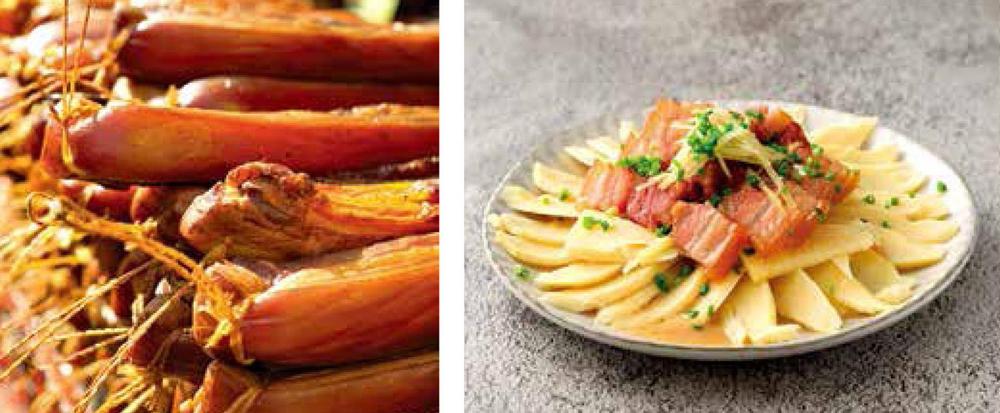
風肉與竹筍是一對歡喜冤家。冬筍鮮美,愛耍小脾氣,單獨清炒,舌頭會有些發麻。但如果和風肉混燉,它的那點小脾氣就蕩然無存。
“腌篤鮮”乃江南名饌,頻現餐桌。春筍以時令之鮮,風肉以內化之鮮,鮮鮮相印,“篤”就了咸肉燉春筍的靈魂。而蘭溪人棄“篤”愛“蒸”,亦是別出心裁——春筍切成滾刀塊,風肉切薄片,覆蓋其上,猛火蒸十分鐘,俗稱“風肉蒸筍”。
風肉燉蘿卜也是不錯的選擇。蘿卜切塊,一條風肉對半切斷,一塊兒入鍋。先急火猛燉,再文火慢烀;大火轉小火,慢慢熬煮,好聽的聲音——咕嘟,咕嘟,透出曼妙風味。燉時,你可以在廚房里,望望遠,聽聽歌,還可以隨手點開幾段折子戲:陳美蘭的“穆桂英掛帥”,吳光煜的“小和尚下山”、張建敏的“三請樊梨花”……
婉轉的歌聲來自靈魂的吟唱,和現實當中愈來愈濃的肉香交織,精神的物質的,豐沛之至,真讓人不知怎樣安然消受這豐腴的幸福。
風肉過老酒,鄉情暖人心。近代著名記者、作家曹聚仁乃蘭溪梅江人,特別珍惜親友團聚的愜意時光。那一年,他回歸闊別多年的故里,信手寫下切身感受:“蘭江兩岸三寸雪,風過懸肉勝梅香!”
(本文圖片來自視覺中國)
Lanxi, a county-level city under the jurisdiction of Jinhua in central Zhejiang, boasts the preserved pork, a specially pickled local delicacy, despite the fact that Jinhua is famed for many other brands of bacons and hams.
The preserved pork of Lanxi is also known as air-dried pork. In Lanxi, there are a number of brands of the air-dried pork. My favorite is “Wheel Rock” preserved pork. The rock itself is little known to people beyond Lanxi, but the Wheel Rock Preserved Pork is a time-honored brand of Zhejiang.
Unlike Jinhua Ham which is dried by fire or smoke inside a well-designed and well operated workshop, the preserved pork of Lanxi is dried outdoors, usually under eaves, getting cured by wind, temperature and time. The meat for air-dried pork comes from sides of slaughtered pigs, with ribs removed. The meat is cut into long slices about two centimeters wide. The slices are pickled with salt commingled with the powder of Sichuan peppercorn. The slices are then wrapped up in the palm fronds before they are hanged out under eaves. After a period of time, the pork is washed to remove some salt. And then it is air-dried again. This dry-and-washing process must be repeated at least five times. This process creates an outstanding feature that distinguishes the preserved pork of Lanxi from all other bacons and hams: it is not annoyingly salty. In Lanxi, the appropriate time to pickle and air-dry pork is early November when it is relatively dry and cold. If the weather is too humid or too dry or too cold, the meat will not cure well.
According to Chen Daoxiang, the fifth-generation master of the air-dried pork of Lanxi, Lanxi boasts a full range of opportune weather advantages for preserving pork well. He says that the preserved pork of Lanxi dates back to the Northern and Southern Dynasties (420-589) and it was Shu Yuanyu (791-835), a prime minister of the Tang Dynasty and native of Lanxi, who first called the delicacy air-dried pork.
Some folk historians in Lanxi eagerly circulate a story about the preserved pork of Lanxi. According to these historians, Zhu Yuanzhang, the founding emperor of the Ming Dynasty (1368-1644), enjoyed the preserved pork of Lanxi after his army of insurgents was routed and he went into hiding in Lanxi. After he founded the dynasty, he ordered the preserved pork to be shipped as tribute from Lanxi to the court every year. Many years later, Zhu Houzhao, an eight-generation grandson of Zhu Yuanzhang and the tenth emperor of the Ming, visited Lanxi and wrote a short inscription in praise of the pork his forefather loved so much. Whether the story is true or not, the pork is indisputably and charmingly delicious.
There are many ways to cook and enjoy the Wheel Rock Preserved Pork. For some gourmets, the preserved pork of Lanxi tastes best after it is steamed for half an hour. Additionally, the steamed preserved pork gives a pleasant odor and looks nice, adding a hedonic pleasure to the deliciousness. The steamed pork can also be served with fried tofu. The delicacy is most enjoyable if it is served with a small bowl of honey. The diner can dip the pork into honey. It offers a thrilling mouth feel. The preserved pork, when cut into extremely thin slices, can be a great treat if the diner dips the slices into fine sugar. The preserved pork, if cut into chops, can go well with fried tofu, also cut into chops. The chops of winter bamboo shoot and preserved pork are a perfect mix. The sliced preserved pork can be best enjoyed if steamed with chopped spring bamboo shoot. Radish chops and preserved pork can also be stewed together and it is popular with many local residents in Lanxi.