MONUMENTAL MEMORY
2020-06-19 08:51:54BYTINAXU徐盈盈
漢語世界 2020年3期
BY TINA XU (徐盈盈)
Yan Lianke’s memoir is a vivid meditation on life, death, and dignity in rural China
作家閻連科傾情講述他與父輩的故事
Some historical eras “leave tangible traces like knife marks, while others pass by like rain and clouds,detectable only by a faint scent,” muses 61-year-old author Yan Lianke on the years of his childhood in the opening pages of his memoir.
More poetic than didactic, much more scent than scar, Three Brothers:Memories of My Family does not aim for a comprehensive history of China in the 1960s and 70s, but sketches richly sensory vignettes of rural families weathering political storms.
The three brothers of the title refer to the three father figures who influenced Yan’s formative years: his father, First Uncle, and Fourth Uncle,who live, work, and die in Henan province. By the time Yan began his memoir in 2007, his father had been dead for 25 years, First Uncle for three, and Fourth Uncle for one.The first chapter, titled “Preliminary Words,” sets the tone for the rest of the book. As they kneel before Fourth Uncle’s coffin, Yan’s sister prods him, “You’ve written so many books, why don’t you write one about our family?”
With one chapter devoted to each brother, the book’s framing is sparse,but Yan’s depth of field is ambitious:“I wanted to write about how they had lived their lives and how they had confronted death.” Yan recounts his memories of his father, who busies himself building terrace-roofed houses so his children can marry, and exhausts himself to the point of illness.
Meanwhile, First Uncle gives handfuls of candy to children, and runs his family into debt by gambling.Fourth Uncle leaves the village to find work in the city, and is unable to fit back into rural life. Through their strivings, and despite their shortcomings, Yan likens his father’s generation to “a strong old tree” that“gives the entire forest shape and form,spirit and character.” Yan, a Kafka Prize-winning author best known for magical realism and political satire, is a practiced storyteller, with an eye for the human tendency to skirt between generosity and destruction. Shortly after the “‘so-called’ Three Years of Natural Disasters,” whenever First Uncle felt hunger pangs, he would take his loom and wander off, calling out:“Knitted wool socks!” in order to earn money to buy sweets for the village children.
Yet the pressures of raising a large family weighed heavily on First Uncle,as Yan proclaimed he was “tortured by the promises he made, but it was for the sake of these promises that he lived.” One day, First Uncle reaches his limit and suddenly starts beating his children for talking back to him,then cursing them for existing: “If I kill all of you, I’ll finally be able to relax…”
The reconstruction of memory is a deliberate act, one that invites the memoirist to conjecture,romanticize, and grasp at meaning.Yan is no exception. As sweetness and bitterness chase each other’s tail,Yan interrogates what it was that gave value to the lives of his father and uncle, who spent an entire lifetime tending to their fields, carrying stones across rivers to sell for extra income, and sweating in factories.When his father develops insomnia in old age and endlessly paces the courtyard, Yan wonders, “And the faint red sound of flowers blooming in the quiet sky—is this not the silent murmuring of my illiterate father,a true peasant, facing the endless night?”
Central to the memoir is Yan’s meditations on what makes a “true peasant” like his father. The author paints rural life as claustrophobic,and sought to escape it in his youth by joining the army. Yet he also waxes of his father’s spiritual wholeness: “Why wouldn’t he be reluctant to leave this world?” asks Yan. “The footpath through the fields still demanded that he stroll down it; his neighbors’arguments still called for him to go and mediate.” Comforted by the lazy dogs of summer, and watching the geese fly south in the autumn, Yan realizes how his father’s years were watered by the “drizzle-like warmth and moisture that is produced by a combination of material and spiritual sustenance.”
THE RECONSTRUCTION OF MEMORY IS A DELIBERATE ACT, ONE THAT INVITES THE MEMOIRIST TO CONJECTURE,ROMANTICIZE, AND GRASP AT MEANING
This sets the foil for the third sibling’s story, in which Yan examines the spiritual fracturing of the growing tides of rural folks who seek work in the city. Fourth Uncle, a shift leader at a Xinxiang cement factory, returns home one day with a new polyester shirt. The young Yan is dazzled,and the shiny fabric becomes his childhood symbol of “the difference between life and living.” Yan becomes convinced that “living” is something rural people do, a process of monotonous endurance; whereas city people have “life,” a shimmering and colorful experience shaped by their own will.
Yan deftly describes the unmasking of illusions. When he takes a job as a teenager in the same cement factory as his uncle, he sees how the lure of extra money drives Fourth Uncle to the brink of physical collapse, and leads him to forsake his family. Asking Fourth Uncle why he doesn’t return home to help his wife and young children with the backbreaking harvest, Fourth Uncle replies, “Twelve cents. I mean, if I were to pick up two tattered leather cement sacks from the side of the road…I could earn as much money as a peasant who has slaved away in the fields all day.” Meanwhile, even as they eagerly perform the “dirtiest and most exhausting work” in the city,migrant workers are mocked by city folk for “sacrific[ing] their dignity for the sake of a tiny profit.”
Unable to fit in either world, the deficit between material and spiritual comfort is only aggravated when Fourth Uncle returns to the village after retirement. Although he had been looked down on as a “bowedhead” in the city, he realizes that the urban malls and cinemas he rarely stepped inside had become part of the landscape of his self. Now condemned to live as “a monk who has lost his monastery,” while the village empties of young people who follow his example to find work in the city, Fourth Uncle becomes “an old man guarding a cemetery in the wilderness,” keeping watch over the hollow houses, silent streets, and“stillness itself.”
Yan nods to the question: After a generation ends, what remains of their skeletal dreams? As Yan’s narrative fast-forwards to the present, his father’s generation takes on a ghastly veneer. The threeroom tile-roofed house First Uncle constructed for his children, once the pride and envy of the whole village, now sits like “the children of fallen aristocrats” among trendy imitations of urban apartments. Yet,Yan insists, the house First Uncle“built with his own flesh and blood”remains a “stone monument to his life.”
The beating heart of the memoir,and perhaps Yan’s ultimate verdict,is an extended metaphor wedged between thickets of prose: Yan compares the popular timepieces of each era from the 60s to the 90s, from cheap copper Zhongshan watches to exquisite Shanghai models to ultra-slim Japanese imports. Yet “the actual time they keep remains the same,” Yan notes.“This is even more the case with dignity.” People may have “differing amounts of dignity, but not of difference in the essence of dignity.”
The spiritual portrait of his father’s generation in rural Henan becomes an informal portrait of a time and place, a “vast historical void” from which “appear tiny details like wildflowers.” In Three Brothers, tales of an ordinary family bloom in the wilderness of Yan’s luminous memory and take root in the annals of history and literature,with prose mirroring the simple and honest craftsmanship of a terraceroofed house. What his forebears left behind in stones, Yan leaves behind in a monument of words.
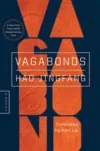
VAGABONDS
Ken Liu’s translation of the Hugo award-winning sci-fi author Hao Jingfang is set four decades after the Martian war of independence from Earth. A group of Martian youths return home after studying on Earth for five years, but are unable to readapt to Mars, a society driven by technology and the sharing of ideas, after living on Earth, which is driven by profit and free trade.Caught between two worlds, these youths begin to reconsider the future of humanity.
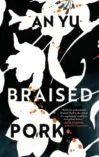
BRAISED PORK
Beijing-based author An Yu, who obtained an MFA in creative writing from NYU, centers her debut novel on Jia Jia, a young woman who finds her husband mysteriously dead in the bathtub one morning in their Beijing apartment, leaving behind a pencil sketch of a fish with a man’s head.Trying to make sense of the sudden tragedy, Jia Jia, now released from a marriage based more on pragmatism than passion, begins a journey of self-discovery that takes her from Beijing to Tibet.The novel’s magical realism evokes the work of Haruki Murakami.

THE CHILE PEPPER IN CHINA
The chili pepper, a plant native to the Americas,made its way to China as late as the 1570s, and is now an indispensable ingredient in many regional Chinese cuisines. With extensive research, this book explores the history of the chili’s arrival in China, and the impact it had on Chinese cooking and medicine. Cultural connotations of the chili are explained with intriguing real-life examples and citations from literary texts and artworks,making the book an informative and fun read.
- LIU JUE (劉玨)