基于改進(jìn)傅里葉變換的電子音樂(lè)信號(hào)降噪算法
2020-06-15 06:42:00趙晶晶張曉娜
現(xiàn)代電子技術(shù)
2020年7期
趙晶晶 張曉娜
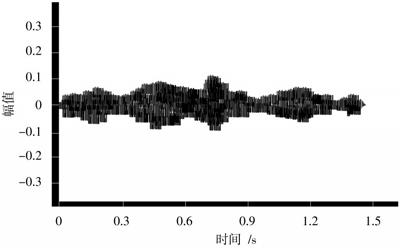
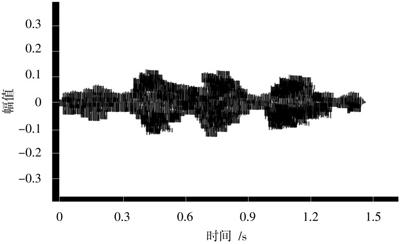
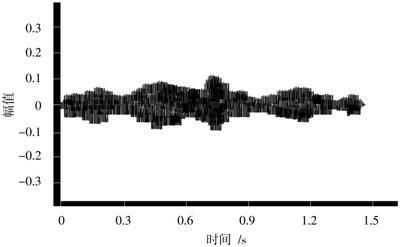
摘 ?要: 針對(duì)以往電子音樂(lè)信號(hào)降噪算法因未在降噪處理前分離無(wú)噪聲電子音樂(lè)信號(hào)以及噪聲信號(hào),導(dǎo)致無(wú)法全面清除噪音,提出一種基于改進(jìn)傅里葉變換的電子音樂(lè)信號(hào)降噪算法。該算法對(duì)電子音樂(lè)信號(hào)進(jìn)行魯棒主成分分析,將電子音樂(lè)信號(hào)轉(zhuǎn)化為低秩矩陣以及稀疏大噪聲矩陣之和,通過(guò)核范數(shù)優(yōu)化方法優(yōu)化以上矩陣之和,有效分離無(wú)噪聲電子音樂(lè)信號(hào)以及噪聲信號(hào),利用改進(jìn)傅里葉變換算法即小波變換算法進(jìn)行電子音樂(lè)信號(hào)降噪處理時(shí),通過(guò)經(jīng)典閾值方法選取最優(yōu)閾值,依據(jù)該閾值選取閾值濾波法進(jìn)行電子音樂(lè)信號(hào)的小波系數(shù)處理,去除噪聲信號(hào)的小波系數(shù),通過(guò)小波逆變換濾波后的信號(hào)獲取降噪后電子音樂(lè)信號(hào)。實(shí)驗(yàn)結(jié)果表明,該算法可以清晰地將電子音樂(lè)信號(hào)與噪聲信號(hào)分離,并有效去除噪聲信號(hào),信號(hào)還原度高,且對(duì)10種電子音樂(lè)信號(hào)進(jìn)行降噪能量損失量均低于2%。
關(guān)鍵詞: 電子音樂(lè); 信號(hào)降噪; 傅里葉變換; 矩陣優(yōu)化; 閾值選取; 小波系數(shù)處理
中圖分類(lèi)號(hào): TN911.7?34; TP391 ? ? ? ? ? ? ? ? ? 文獻(xiàn)標(biāo)識(shí)碼: A ? ? ? ? ? ? ? ? ? ?文章編號(hào): 1004?373X(2020)07?0043?05
An electronic music signal denoising algorithm based on improved Fourier transform
ZHAO Jingjing, ZHANG Xiaona
(Shijiazhuang University, Shijiazhuang 050035, China)
Abstract: The previous electronic music signal noise reduction algorithm failed to separate the non?noise electronic music signal and noise signal before noise reduction, so the noise could not be completely removed. A kind of electronic music signal noise reduction algorithm based on the improved Fourier transform is put forward. By this algorithm, the robust principal component analysis for the electronic music signals is carried out, and the electronic music signal is converted into the sum of low rank matrix and sparse big noise matrix. Then, the sum of above the matrixes, the effectively?separated electronic music signal and noise signal are optimized via the nuclear matrix norm optimization method to without noise. When the electronic music signal noise reduction processing is performed by using the improved Fourier transform algorithm, that is, wavelet transform algorithm, the optimal threshold is selected with the classical threshold method. According to this threshold value, the threshold value filtering method is selected for wavelet coefficient processing of the electronic music signal to remove the wavelet coefficients of the noise signal. The denoised electronic music signal is obtained by means of the signal after wavelet inverse transformation filtering. The experimental results show that this algorithm can clearly separate electronic music signal from noise signal, effectively remove noise signal (the denoised signal has high reduction degree), and make the energy loss less than 2% while 10 kinds of electronic music signals are denoised.
Keywords: electronic music; signal denoising; Fourier transform; matrix optimization; threshold value selection; wavelet coefficient processing
0 ?引 ?言
電子音樂(lè)是指由電子樂(lè)器創(chuàng)造,利用電子音樂(lè)技術(shù)制作的音樂(lè)。電子音樂(lè)以其獨(dú)特的音樂(lè)風(fēng)格吸引了大批愛(ài)好音樂(lè)的人,隨著電子音樂(lè)的普及,人們?cè)絹?lái)越重視電子音樂(lè)的質(zhì)量,電子音樂(lè)信號(hào)降噪近年來(lái)得到學(xué)者以及專(zhuān)家的極度重視[1]。電子音樂(lè)信號(hào)降噪是保留具有價(jià)值的音樂(lè)信號(hào),消除噪聲對(duì)電子音樂(lè)信號(hào)的干擾。……
登錄APP查看全文