
THEBUSINESS OF BEING BORN
2020-04-29 09:53:48BYTANYUNFEI譚云飛
漢語世界 2020年2期
關鍵詞:素質
BY TAN YUNFEI (譚云飛)
after Dr. Zhang retitled her project to emphasize “quality births,” or yousheng(優生, eugenics), instead of fertility,and was granted funds by the National Natural Science Foundation of China to continue IVF research. Though“eugenics” in English has highly negative historical associations, yousheng is a neutral term in Chinese, and improving the “quality” or suzhi (素質)of the population in terms of health,education, and behavior has been a driving force behind Chinese health and social policies since the 1950s.
One notion for improving suzhi “is very explicitly to work to identify any problems before birth,” Ayo Wahlberg,professor of anthropology at the University of Copenhagen and an expert on China’s ART development,explains to TWOC. According to Wahlberg, the one-child policy(1979 - 2015) left a residual focus in Chinese society on having healthy babies who will grow up to be competitive in their education and career, which, along with greater availability of the technology, is Louise Brown, in the UK in 1978,China implemented its restrictive national family planning regulation,also known as the one-child policy.In a 2013 interview with CCTV,gynecologist Zhang Lizhu, who delivered the Chinese mainland’s first IVF-conceived baby, Zheng Mengzhu,in 1988, recalled that her research at the Peking Medical College Third Hospital was frequently questioned in the early 1980s for undermining the one-child policy.
The situation improved in 1984,driving China’s recent boom in ART.Domestic media also report many older parents who’ve lost their only child turning to ART to have another child.
Over the last 30 years, ART has gone through ups and downs within the framework of China’s family planning policy. In 1989, Hunan’s provincial Family Planning Regulation prohibited artificial insemination;10 years later, the article was revised to allow the procedure in nationally or provincially approved research institutions.
In 2001, after China’s Ministry of Health (MOH) issued its “Guidelines on Regulations for Human Assisted Reproduction,” the number of ART clinics was cut from over 200 to fewer than 100 due to stricter licensing requirements. From 2007 to 2012, the number surged again from 95 to 356,as the MOH granted provincial health

A researcher prepares a fertilized egg for preservation
KUANG BELIEVES THAT A CHILDLESS MARRIAGE CANNOT BE AS STRONG AS A MARRIAGE WITH CHILDREN authorities the right to approve new clinics, but the approval process was temporarily halted in 2013.
Despite controls on the number of IVF clinics, the technology has developed rapidly. Ma Xiaowei,deputy director of the National Health and Family Planning Commission, boasted of the“maturity” of domestic IVF technology at a press conference in March 2016, stating that 700,000 IVF cycles were performed annually in China. The birth of Zheng Mengzhu’s naturally conceived son last April brought China’s first ART success story full circle, and was hailed as further proof of the safety of the technology.
Having a child with technological assistance is not easy. “It’s suffering.The shots and surgeries hurt,” Kuang recalls, “but the toughest was the anxiety during the wait, worrying about any possible failure in each procedure while being eager to have our child quicker.” In the summer of 2016, Kuang and her husband went to CITIC-Xiangya Reproductive and Genetic Hospital in Changsha, Hunan province, China’s largest fertility clinic.What followed were travels from and to the hospital for over six months for dozens of health examinations, drug injections, invasive ultrasounds, and surgical oocyte retrieval before an embryo was transferred to Kuang’s womb (this, plus the blood test to check the status of pregnancy 14 days later, is known as an IVF “cycle”).Despite this, Kuang considers herself“surprisingly lucky,” since it only took her one cycle to conceive.
She has heard of other families that failed to conceive after several cycles,leading to hospital bills totaling over 400,000 RMB. Kuang believes that a childless marriage cannot be as strong as a marriage with children. “IVF has saved many families,” she says.
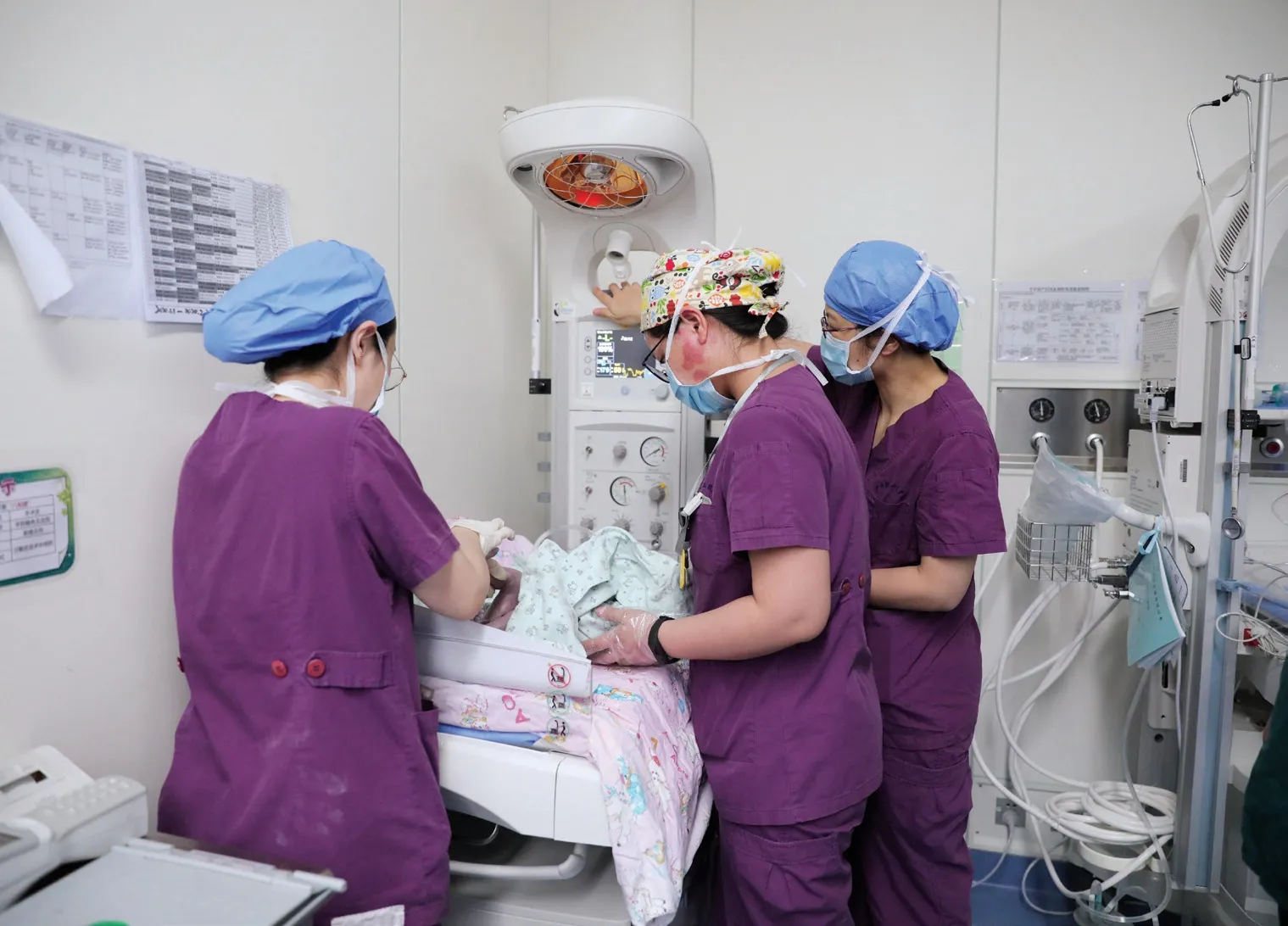
Doctors in Sichuan take care of the province’s first infant born through third-generation ART
Such views are prevalent in many parts of the world. “In societies where marriage is very important, having children is very important to your sense of identity, to your sense of becoming an adult, to your marriage,to your family lineage, to your sense of old age care,” Marcia C. Inhorn,a professor of anthropology at Yale University specializing in infertility and ARTs, tells TWOC. “It’s a human crisis, so that’s why people are going to seek a solution to infertility.”
In Chinese society, traditional norms emphasize that “there are three filial disobediences, but having no child is the most serious one (不孝有三,無后為大)” and “children are born to provide security in old age (養兒防老).” In Kuang’s experience,childlessness is one major reason that married couples separate. In her village, there have been seven infertile women who had IVF and prepared to divorce if the treatment failed, so as not to “hinder their partners” (though husbands don’t tend to reciprocate, as women were traditionally blamed for childlessness).
Shenzhen resident Xiao He(pseudonym) also wonders how things may be different if she were the one responsible for her and her husband’s childlessness. Her in-laws are anxious to have grandchildren,but they’re patient, even though the 33-year-old has not become pregnant after four years of marriage and three years of infertility treatment for her husband. She is now undergoing the IVF procedure in a Guangzhou hospital with pre-implantation genetic diagnosis (PGD) and pre-implantation genetic screening (PGS), which are known as “third-generation ARTs”that can ensure implantation of a healthier embryo.
Xiao He says, “It’s tiring,” when recalling the days travelling to Guangzhou for the necessary examinations and surgeries on her days off from work, sometimes getting up as early as 4 a.m. for appointments,while doing the injections on her own in Shenzhen. She has also heard that patients like her could wait for as long as two years for the treatment.
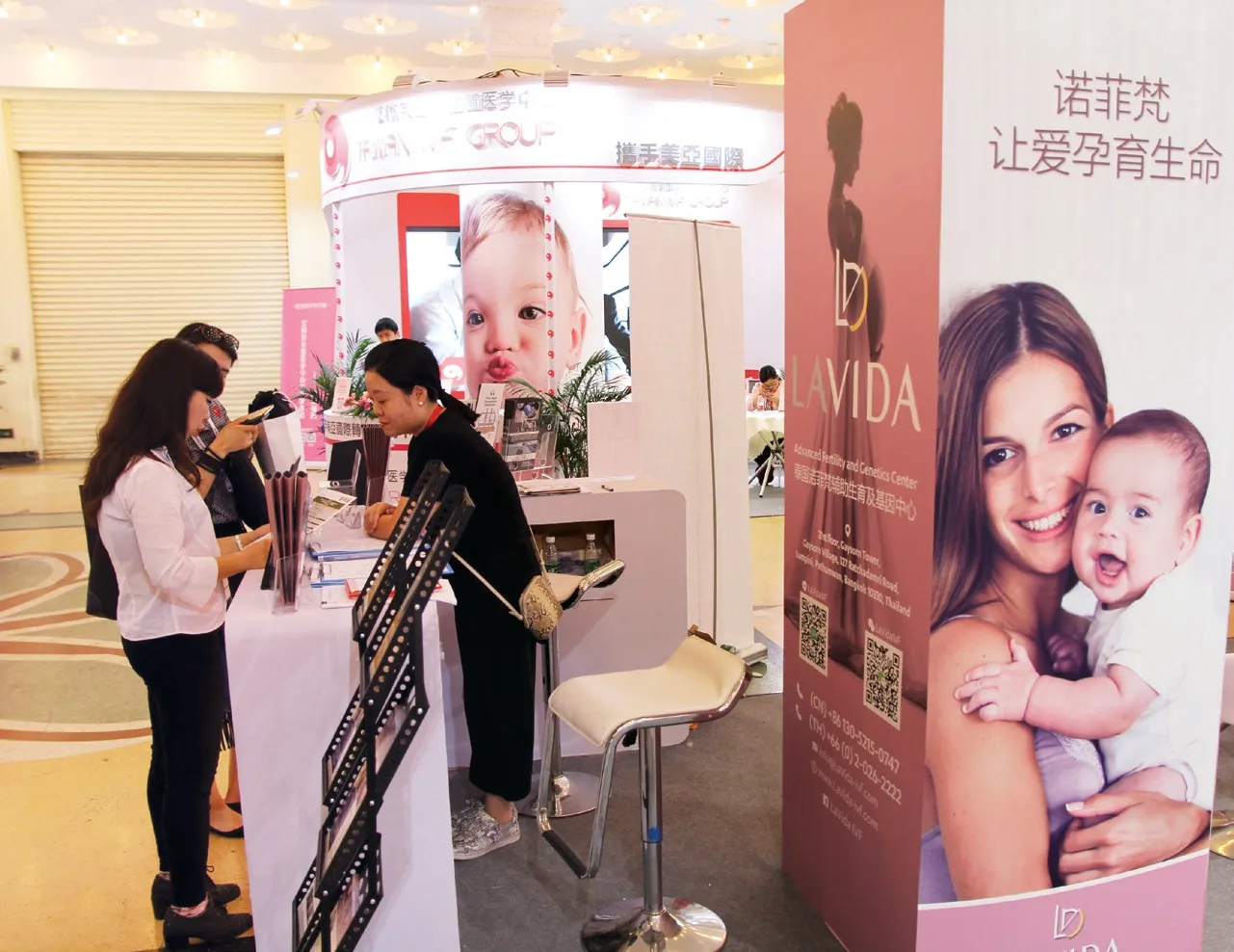
An assisted reproduction clinic in Thailand displays ads in Chinese
THE AVAILABILITY OF IVF SERVICES HAS NOT KEPT PACE WITH DEMAND FROM A GROWING INFERTILE POPULATION
The availability of IVF services has not kept pace with demand from a growing infertile population.According to government statistics in 2016, the infertility rate of China’s childbearing population increased from 2.5 percent to 15 percent over the last two decades, amounting to over 40 million infertile couples; only around 80 percent of these conditions can be treated clinically. Women are also marrying and having children later on average, and experiencing natural decline in fertility with age.
As of 2017, only 327 of the 451 ART clinics in China had been licensed to practice IVF; less than 40 have thirdgeneration services. Meanwhile, the largest 20 percent of clinics attracted 80 percent of the patients, as shown in a 2018 report by health media outlet VCBeat. According to Nature magazine, CITIC-Xiangya performed over 41,000 cycles in 2017, equal to one quarter of the total number of cycles in all of the US that year.
Last summer, Xiao He learned that her IVF treatment had been brought forward from November to July. The shortened wait was due to the fact that more hospitals are becoming licensed for PGS/PGD services, and because many Chinese are seeking IVF treatment overseas. It is estimated that over 1.5 million Chinese took such trips in 2017, partly because it’s legal in some countries to use PGD for gender selection, which is banned in China, as Bangkok-based healthcare consultant Paul McTaggart told China Daily.
Meanwhile, the use of PGS/PGD techniques in China, estimated in 2017 to grow up to five times quicker than in the US, has worried bioethicists. According to Nature,some are concerned that its application can “devalue the lives of those who are disabled,” “widen the divide between the rich and poor”because of the cost and accessibility,and encourage families to “select for non-disease-related traits, such as intelligence or athletic ability.”
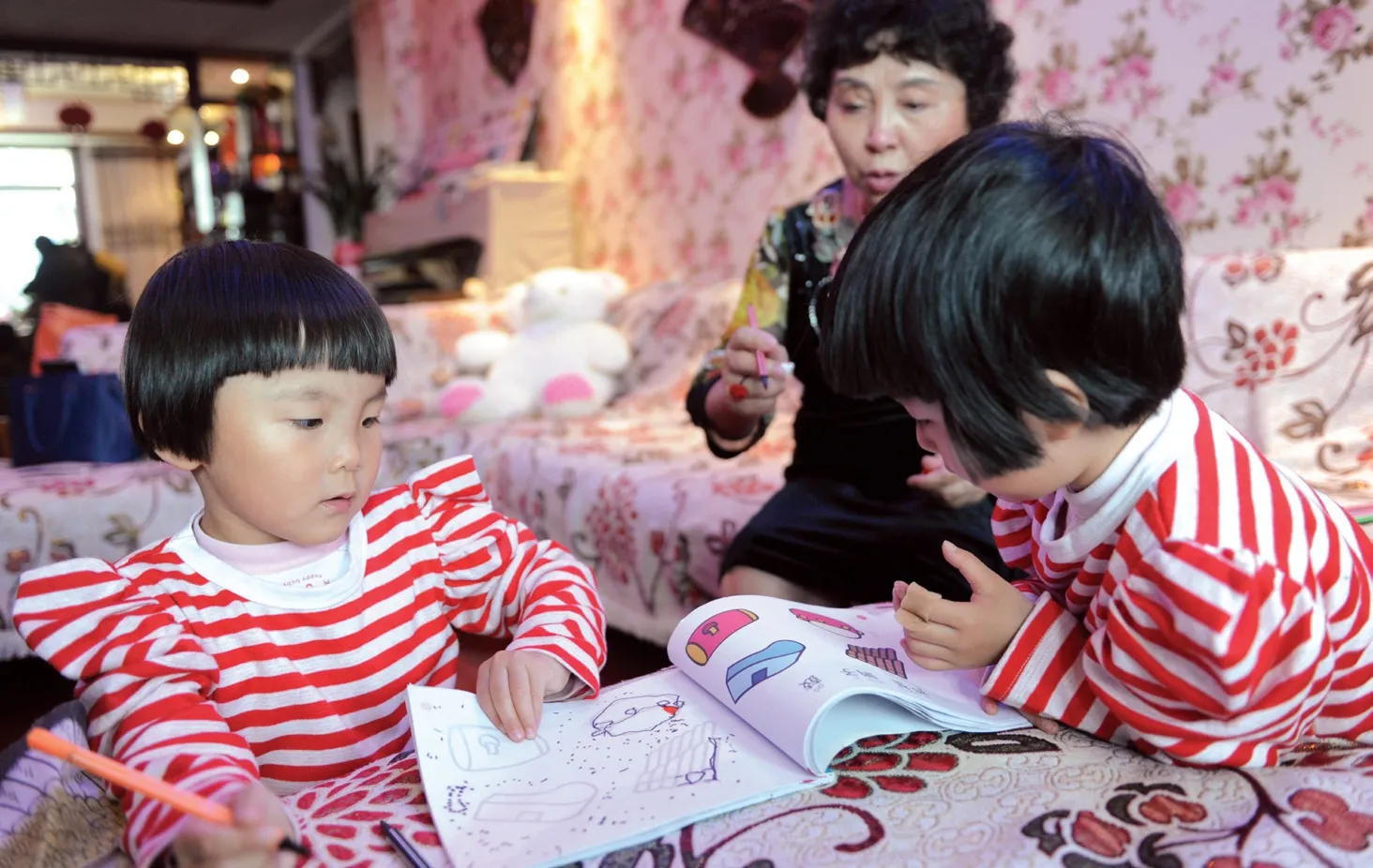
Shen Hailin, China’s oldest mother by ART, gave birth to twins at age 60 after losing her only daughter in a traffic accident
Wahlberg thinks these fears are overblown. “The technologies are just not there yet,” he says. “I don’t think many people use this technology to make ‘super-babies’; really, their main interest is just to have a baby. There’s a little bit too much hype around assisted reproductive technologies; it’s very limited what they can do.”
Nevertheless, ART has already created ethical dilemmas that China’s existing legal and social frameworks are not equipped to handle. One concerns the disposal of “spare embryos” that clinics create in case implantation fails, which are often left behind by former patients who can no longer be reached. According to CCTV, Chinese fertility hospitals are reaching their full capacity of liquid nitrogen containers that can preserve embryos for up to 30 years, and they must maintain unclaimed ones at their own cost.
Though hospitals can discard these“ownerless” embryos if patients sign a consent form before the IVF treatment, they seldom do. “It’s kind of murder, as embryos can grow into humans,” Yu Qi, head of the obstetrics and gynecology department at Peking Union Medical College Hospital, explained to CCTV in 2018.As Shanghai lawyer Chen Tingting tells TWOC, no existing laws in China define whether preserved embryos ought to be considered“alive.” Even the draft of the PRC’s new civil code last December only made basic provisions for medical and scientific research on embryos,stating it “should not harm human health or violate ethics.”
Another hot-button debate concerns single women’s lack of access to ART;most hospitals require a marriage certificate and a “birth permit” from China’s family planning authority before providing IVF treatment. The issue came to a head last December,when a woman identified as Xu Zaozao sued a Beijing hospital that refused to freeze her eggs because she was unmarried.
Despite widespread public support—99 percent of 50,000 netizens polled by China Daily agreed that unmarried women should have the right to have a child through ART—Xu’s case is currently suspended, and lawyer Chen tells TWOC, “Personally, I’d be shocked,and respect the court very much, if Xu wins.”
In 2018, several members of the National People’s Congress submitted proposals to relax the egg-freezing policy and grant single women access to the technique. In response, the National Family Health and Public Planning Commission insisted on its website that Chinese laws do not “deny” single women’s fertility rights, but paradoxically added that legalizing their access to fertility treatment goes against Chinese traditional values and customs.
THE GOVERNMENT STATED THAT LEGALIZING SINGLE WOMEN’S ACCESS TO FERTILITY TREATMENT GOES AGAINST TRADITIONAL VALUES
Unmarried women with financial means, as well as LGBTQ couples,have gotten around the restrictions by seeking ART services or surrogacy abroad, but the underlying problems persist. “In a sense, China is exporting the legal and ethical dilemmas abroad,” Wahlberg says.“If the government is interested in addressing low fertility, then assisted reproductive technologies are inevitably something they need to take into account, and who can access them needs to be discussed and debated in a culturally relevant way.”
Finding a solution is likely to take time, as Wahlberg says China’s situation is “unique” in the world. “In 40 years, it just flipped from one side to the other…[Before], there was not so much investment in ARTs, because a lot of focus was on preventing birth, and now you’re in an opposite situation,” he says. “It’s almost an ironic paradox, shifting from abortion to assisted reproduction. It’s a massive change in China, and it’s quite astounding.” - Additional reporting by Hatty Liu
猜你喜歡
河北畫報(2020年8期)2020-10-27 02:55:14
新聞傳播(2018年21期)2019-01-31 02:42:26
中國生殖健康(2019年5期)2019-01-06 09:16:32
中國音樂教育(2016年12期)2016-05-20 10:17:40
公民與法治(2016年18期)2016-05-17 04:17:55
公民與法治(2016年12期)2016-05-17 04:14:18
唐山文學(2016年11期)2016-03-20 15:25:52
肇慶學院學報(2016年5期)2016-03-11 18:09:18
新聞傳播(2015年11期)2015-07-18 11:15:03
孩子(2009年1期)2009-01-22 08:34:30
