
A QUESTION OF TASTE
2020-02-14 15:11:54BYTANYUNFEI譚云飛
漢語世界 2020年1期
BY TAN YUNFEI (譚云飛)
Food scandals and new health trends are turning Chinese consumers against MSG
為什么人們對味精如此警惕?
“W hy doesn’t everyone in China have a headache?” food critic Jeffrey Steingarten asked in his 1999 essay of the same title in Vogue magazine,hoping to debunk the popular claims that have circulated in the US since the late 1960s that monosodium glutamate, or MSG, is harmful to health.
Steingarten might not have foreseen,though, that the world’s largest producer and consumer of this food additive would have its own version of the “MSG scare” two decades later. According to Southern Weekly,the number of MSG manufacturers in China dropped from more than 200 in 2003 to less than 10 in 2019.Domestic MSG consumption dropped from 1,146,000 tons in 2013 to 922,000 tons in 2017, and is expected to further decrease to 789,000 tons in 2022, according to the market research firm Euromonitor.
This has coincided with a trend in factoids alleging the “harms” of MSG circulated on social media platforms and by word-of-mouth, connecting the food additive to health issues ranging from weight gain to hair loss, amnesia,and even cancer. “When I go out to give lectures now, I always get asked if MSG is bad,” says Cao Yanping, food and health professor at the Beijing Technology and Business University.“Existing studies have found no adverse effects of MSG consumption.But because the media is claiming it’s harmful, it has made the public cautious about MSG.”

“EXISTING STUDIES HAVE FOUND NO ADVERSE EFFECTS OF MSG CONSUMPTION. BUT BECAUSE THE MEDIA IS CLAIMING IT’S HARMFUL,IT HAS MADE THE PUBLIC CAUTIOUS ABOUT MSG.”
MSG, a chemical variant of glutamic acid, is a naturally occurring substance in many foods, such as tomatoes and mushrooms. The glutamic acid was first isolated from kombu seaweed, or kelp, by Japanese chemist Kikunae Ikeda in 1908. Ikeda patented his discovery and coined the term umami for its savory flavor, calling it the “fifth taste” after sweet, salty, sour, and bitter. The following year, he began mass producing powdered MSG under the brand name Ajinomoto, or“essence of taste,” a meaning it shares with MSG’s generic name in Chinese,weijing (味精).
By the 1930s, MSG was ubiquitous in Japanese restaurants, and came to the US via military rations and canned soup. However, in 1968, the New England Journal of Medicine published a letter by a Chinese-American doctor claiming to experience headaches, numbness,heart palpitations, and other symptoms he attributed to eating at Chinese restaurants. Letters began pouring in from other members of the public who claimed to experience the so-called “Chinese Restaurant Syndrome,” and the journal’s editors offered MSG as the culprit.
THE POPULARITY OF MSG WAS NATURAL, BECAUSE IT CAN ENHANCE THE SAVORY TASTE INHERENT IN THE INGREDIENTS OF FOOD AND BALANCE FLAVORS SUCH AS SALTY AND SOUR
In 1973, the Codex Alimentarius, an international food standard body coestablished by the United Nations Food and Agriculture Organization (FAO)and the World Health Organization(WHO), categorized MSG as a safe food additive. Chinese studies in 1999 reached the same conclusion. Even the US Food and Drug Administration considers MSG “generally recognized as safe,” though its 1995 report found adverse effects on a small number of“sensitive individuals” when exposed to large amounts of the condiment on an empty stomach.
Despite those repeated scientific findings, two out of five American consumers still actively avoided MSG as of 2018, according to the nonprofit organization International Food Information Council. Many historians,researchers, and catering professionals like Steingarten attribute persistent MSG-aversion in the US to anti-Asian prejudice, but this does not explain MSG’s decline in China.
In 1923, Tien Chu Ve Tsin factory in Shanghai began producing China’s first MSG brand, Foshou, after chemical engineer Wu Yunchu figured out the components of Ajinomoto MSG and discovered a cheaper way to manufacture it. The factory’s techniques were later patented in the US, the UK, and France, and its products grew popular in China and Southeast Asia.
The popularity of MSG was natural,explains Cao, because it can enhance the savory taste inherent in the ingredients of food and balance flavors such as salty and sour. “It is also more convenient to use and preserve than traditional flavor enhancers, which were mainly broths of bones, meat,mushroom, and bamboo shoots.”
The concept of the “savory” taste in China can be traced back at least 2,000 years to the creation of the character 鮮 (xiān), which has the exact same meaning as the Japanese umami.As early as the Northern Wei dynasty(386 - 534), the agricultural text Qimin Yaoshu (《齊民要術》) recorded a method for making bone soup as a“delicious additive” for dishes.
However, MSG became available to the general Chinese public only after it began to be mass produced in the late 1970s, with the founding of the predecessors to today’s major domestic MSG brands such as Xihu (West Lake)and Lianhua (Lotus Flower). The savory taste quickly caught on among a population that was emerging from memories of chronic food shortage,for whom the xian taste was still associated with unaffordable luxuries like meat and fresh vegetables.
Ms. Xie, a 73-year-old farmer from Hengyang, Hunan province, tells TWOC her family first tasted the flavor additive in the early 1980s,when a small package of MSG cost 1 RMB, about the same price as 500 grams of pork. “At that time, we could afford meat only a couple of times per month, mainly for holidays or to treat guests,” Xie reminisces. “But we added weijing often, because it made dishes taste better, and we could make a pack of it last a long time.”
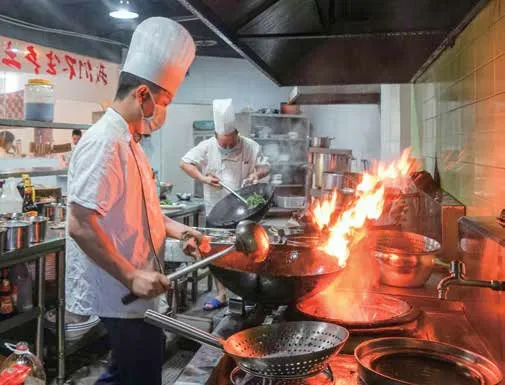
MSG has been an indispensable flavor-enhancer for many Chinese chefs
In 1992, China became the largest MSG producer in the world. From 1983 to 1997, the annual production of Lianhua alone increased from 400 to 80,000 tons, but the company began to experience financial losses in 2003. In 2014, its new CEO, Xia Jiantong, promised to bring back Lianhua’s glory days by investing in organic food and health products,but failed to turn things around: The company was reported to be on the verge of bankruptcy as of November 2019.
Zeng Lulin, a 32-year-old from Hengyang, recalls when her own family lost their taste for MSG. “When I was a child and we cooked at home,I never saw anyone use soy sauce,cooking wine, or vinegar, but we always added weijing. When I was in high school, the adults started saying it was bad, so we stopped using it,”she tells TWOC. “Now when I eat out and it’s not too busy in the restaurant,I’ll remind them to only add oil and salt in small amounts, and no other flavoring.”
In 2016, Shunji Restaurant at the four-star Oriental Hotel in Taizhou,Zhejiang launched a “No MSG Kitchen” campaign, promising not to add weijing to any of its dishes since customers dislike it and “numerous explanations cannot convince them that MSG is not harmful,” it explains on its webpage. However, head chef Peng Yongjian tells TWOC that this decision was questioned at the time by his sous-chefs, who thought their cooking lacked taste without MSG.Likewise, the 2016 “No MSG”experiment of Sichuanese food restaurant chain Meizhou Dongpo,saw resistance from cooks and failed within months because customers preferred the previous weijing-infused taste, company vice-president Guo Xiaodong told Jiemian in 2018.Guo believed the challenge lay in reconciling the public’s two conflicting perceptions: On one hand, the belief that MSG is unhealthy, and on the other, a reluctance to give up the savory taste they’ve grown used to.
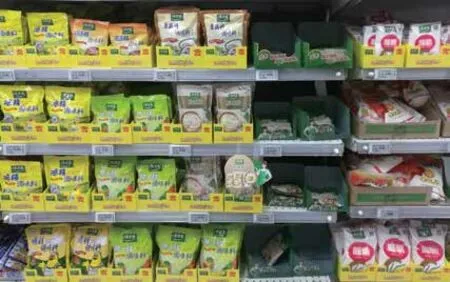
Jijing, or chicken bouillon, is being touted as a more nutritious alternative to MSG
Even those acquainted with the scientific studies still have concerns.Liu Xiao, a marketing expert in her 30s, from Inner Mongolia, dismisses social media fearmongering about MSG’s links to cancer and dementia as “complete nonsense,” yet believes there should be more research into the appropriate dosage and the manufacturing process of MSG.“How much of it is healthy? What are the consequences of eating too much?Do MSG makers add other stuff to it?” she asks.
Duan Yongping, executive chef of middle-to-high-class restaurant chain Mystic South Yunnan Ethnic Cuisine, admits that inexperienced cooks may overuse MSG and other condiments. “Many people don’t know how to produce the ‘savory’taste [naturally],” he says, adding that his company has been “MSG free”since 2009 due to consumer demand.“When cooks overuse condiments,the dish starts tasting like the artificial additives…and gives consumers a bad impression.”
MSG dosage has been a major global concern. In 1987, the Joint FAO/WHO Expert Committee on Food Additives (JECFA) lifted the
maximum limit for MSG use. In 2017,the European Food Safety Authority reevaluated the safety of MSG, and derived an acceptable daily intake(ADI) of 30 milligrams per kilogram of body weight per day. It noted that an ADI above this amount may be associated with symptoms such as headaches, high blood pressure, and increased insulin level.
Currently, China does not stipulate a limit on MSG use. However, many online dietary guidelines recommend“less MSG,” along with less oil and salt consumption. Wu Jia, a registered dietitian at the the NGO China Nutrition Society (CNS), an industrial association, advises diners to reduce their sodium intake, which is associated with high blood pressure, weight gain,and other illnesses. “Similar to the case of high-sodium salt, we’re concerned about MSG intake mainly because of its sodium component.”
However, there is more distrust about MSG than salt. IHS Markit’s 2018 survey of urbanites in first, second, and third-tier Chinese cities showed that 42 percent are trying to reduce their MSG intake, while 35 percent would like to reduce their salt intake. “That’s because salt is considered a natural element, but MSG is man-made,” Wu suggests.
“OVER 80 PERCENT OF RESPONDENTS IN ONE OF OUR SURVEYS BLAMED CHINA’S FOOD SAFETY ISSUES ON FOOD ADDITIVES, WHICH IS FAR FROM THE OBJECTIVE TRUTH-ACTUALLY THE OPPOSITE”
This, in turn, reflects a deep-rooted aversion to food additives, as Sun Baoguo, a food-additive expert and member of the Chinese Engineering Academy, pointed out during a lecture in Guangzhou in 2017. “Food additives have been demonized in China,” he declared. “Over 80 percent of respondents in one of our surveys blamed China’s food safety issues on food additives, which is far from the objective truth—actually the opposite.”
He claims that food additives have been confused for illegal additives,such as melamine, that featured in recent food safety scandals, and emphasized that, as with any other substance, whether an additive is harmful depends on the degree or quantity of exposure. According to chef Duan, a 2010 Ministry of Health regulation on food additives had a direct impact on starting the“No MSG” trend among restaurants,though weijing was not one of the controlled substances.
Chefs Duan and Peng both believe that more and more consumers are refusing MSG because they attach increasing importance to their health,corresponding with current health fads for organic food and dietary supplements among urban Chinese and millennials. The government has also been trying to encourage healthier dietary habits, with the Ministry of Health aiming to halve China’s meat consumption by 2030.
In 2011, Beijing Easteat Research Institute think tank launched the“Naked Cooking” initiative, calling on catering companies and restaurants to avoid the use of non-natural and unsafe additives, including MSG.On December 3, 2012, 101 Chinese food and beverage industry leaders—including those from Meizhou Dongpo, Mystic South, and the centuries-old Quanjude Peking Duck chain—jointly issued a declaration of their commitment to the initiative.
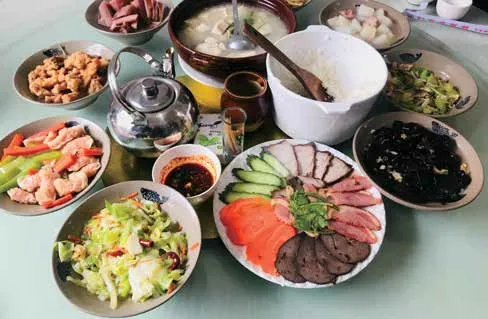
Nutritionists warn that children who grow up eating MSG may not be used to natural tastes
Since then, in the place of MSG,many restaurants and cooks have been using granulated chicken bouillon, or jijing (雞精, “essence of chicken”), soy sauce, oyster sauce, and broth. IHS Markit reported in 2016 that sales of jijing in China had grown on average 19.5 percent annually over the previous five years. “A few years ago,I heard that weijing wasn’t good for the stomach and intestines, but jijing was more nutritious, so I’ve started using that instead, and occasionally oyster sauce,” says Ms. Xie, the farmer.
Dietitian Wu, though, points out that jijing actually contains MSG—the MSG content in jijing must be at least 35 percent, according to national standards—and it’s impossible to avoid glutamates entirely in modern food products like instant noodles or even organic foods like tomatoes. “We encourage people to eat natural flavors, but don’t demonize MSG—it’s just a flavoring agent like soy sauce and vinegar that’s best used in moderation.”
Chef Duan agrees. “Chinese people like to follow fads when it comes to dining. Personally, I think if you want to make a good cold dish, nothing else compares to weijing in terms of taste and cost,” he says. “But, you should rely on the xian of the natural ingredients, and let MSG do the additional work—making the dish even more savory, more delicious.”
