
Nanoemulsified Mentha piperita and Eucalyptus globulus oils exhibit enhanced repellent activities against Anopheles stephensi
2019-12-14 02:39:08RahmanMohammadiMehdiKhoobdelMaryamNegahbanSolmazKhani
Rahman Mohammadi, Mehdi Khoobdel?, Maryam Negahban, Solmaz Khani
1Health Research Center, Life Style Institute, Baqiyatallah University of Medical Sciences, Tehran, Iran
2Iranian Research Institute of plant protection, Tehran, Iran
3Faculty of Agriculture, Department of Plant Protection, University of Tabriz, Tabriz, Iran
Keywords: Essential oil N,N-diethyl-m toluamide Nanoemulsion Eucalyptus Mentha Mosquito repellent
ABSTRACT Objective: To formulate nanoemulsion from essential oils of Mentha (M.) piperita L. and Eucalyptus (E.) globulus L. and to compare their repellant activity with normal essential oils and N,N-diethyl-m toluamide (DEET) as a standard chemical compound.Methods: In this study, protection time of essential oils and DEET was evaluated on four human subjects using test cage, and their values were determined against Anopheles stephensi. Furthermore, ED50 values for the above essential oils were determined using the ASTM E951-94 method. The compositions of essential oils were determined using GC-MS, and droplet size and zeta potential of the nanoemulsion were measured with dynamic light scattering. Results: The results (expressed as mean±SD) showed that protection time of M. piperita 50%, M. piperita Nano 50%, E. globulus 50%, E. globulus Nano 50%, and DEET 25% was (2.89±0.45) h, (4.17±0.28) h, (0.96±0.27) h, (5.51±0.02) h, and (6.10±0.47) h, respectively. ED50 values were 29.10 (95% CI: 23.36-36.06) μg/cm2 for Mentha, 19.39 (15.35-23.99) μg/cm2 for Mentha Nano, 36.10 (28.70-48.01) μg/cm2 for Eucalyptus, 18.50 (14.65-23.23) μg/cm2 for Eucalyptus Nano, and 3.62 (2.68-4.55) μg/cm2 for DEET, respectively. E. globulus Nano and M. piperita Nano provided significantly longer protection than normal essential oils E. globulus and M. piperita (P<0.01). Conclusions: The preparation of nanoemulsion from the essential oils of M. piperita and E. globulus, significantly increases the protection time and reduces ED50 values of these essential oils, hence, M. piperita Nano and E. globulus Nano can be good alternatives to DEET and other chemical compounds.
1. Introduction
About 36% of the world's population, mostly children under the age of five years, is affected by malaria[1,2]. There are about 447 860 fatal cases every year because of malaria, which is one of the deadliest mosquito-borne diseases[3]. Anopheles (An.) stephensi mosquitoes are recognized as the most important cause of malaria in central and southern Asia[4]. Continuous use of chemicals to control malaria-transmitting mosquitoes causes resistance in these mosquitoes, and also contaminates the environment[5,6]. One of the widely used insect repellents is the chemical compound N,Ndiethyl-m toluamide (DEET), which is considered as a “gold standard” in the experiments due to its long-term provision of protection[7]. Various studies on DEET have shown that DEET is highly detrimental (including skin toxicity, seizure, or acute manic syndrome), causing equipment defects, including glasses and cell phones, as well as dissatisfaction among consumers[8]. Therefore, various researchers are trying to reduce such complications and improve the effectiveness of different and safe materials, thereby, providing more satisfaction among consumers.
Essential oils of many herbs extracted from different plant parts (flowers, tubers, leaves, fruits, branches, and roots) contain compounds with toxic, insect-repellant properties[9]. Results obtained from various studies on mint (Teucrium leucocladum), citronella (Cymbopogon nardus), basil (genus Ocimum and their cultivars), thyme (Thymus vulgaris L.), neem (Azadirachta indica A. Juss), and lemongrass (Cymbopogon citratus) have shown their repellent properties on various insects, especially mosquitoes[10-12]. It is normally clear that the repellent effects of herbal essential oils are less than those of such synthetic substances as DEET, but their effectiveness can be increased by modification of essential oils or combination of several essential oils[13,14].
To maintain the biological activity of essential oils and prevent the evaporation of their constituents, it is necessary to formulate essential oils[15,16]. Nanoformulation of herbal essential oils leads to a small droplet size, a high physical stability, and high bioavailability of the emulsion[17,18], with sizes often ranging from 20 nm to 500 nm according to different criteria of researchers[19]. Different studies have shown that nanoemulsion based on herbal essential oils has a high potential for controlling mosquitoes[8,20,21]. Therefore, this study aimed to provide nanoemulsion from the essential oils of Mentha (M.) piperita L. and Eucalyptus (E.) globulus L, and to compare the repellency effects of these nanoemulsion compounds with normal essential oils and DEET aginst An. stephensi.
2. Materials and methods
2.1. Materials
Essential oils were prepared from aerial parts of M. piperita L. (Batch Number: 002-361-18), and from the leaves of E. globulus L. (Batch Number: 001-184-34) obtained from the Zardband Medicinal Plants Inc. (Iran). DEET with CAS NUMBER 3-62-134 and a density of 0.99 g/mL, ethanol, polysorbate 80, polyethylene glycol, and butanol were procured from Merck Chemicals Inc. (Germany). Mature female mosquitoes were obtained from the insectarium of mosquito nursery (Baqiyatallah University of Medical Sciences) where they have been raised at (27±3)℃, a relative humidity of (80±10)%, and a photoperiod of 16 h light: 8 h dark.
2.2. GC-MS analysis
In this study, essential oils of M. piperita L. and E. globulus L. were analyzed by GC-MS (Agilent 6890N) coupled with a mass spectrometer (Agilent 5973) with a strong library for identification of isolated substances, located at the Faculty of Chemistry, Tabriz University. The gas chromatograph is equipped with a hairpin column. The mass range is detectable in the range of 2-800 amu. Helium gas (He 99.99%) was used as the carrier gas. The ionization system of the MS is an electron ionization type with a relatively high electron energy of 70 electron volts, and the use of this system leads to direct ionization of molecules. The filter used in this system is quadrupole. Only the masses that match the parameters of this filter pass through the filter at a specific time and arrive at the detector. Column specifications of this GC-MS: HP 5973, Capillary Column, Model Number: Agilent 19091S-433, HP-5MS, 0.25 mm × 30 m × 0.25 μm, Max temperature: 350 ℃, Nominal length: 30.0 m, Nominal diameter: 250.00 μm, Nominal film thickness: 0.25 μm, Mode: constant flow, Initial flow: 1.0 mL/min, Nominal init pressure: 8.76 psi, Average velocity: 37 cm/sec, Inlet: Front Inlet, Outlet: MSD, Outlet pressure: vacuum.
2.3. Preparation of nanoemulsion 50% from essential oils of mint and eucalyptus
First, 13 mL (21%) of polyethylene glycol (Bipolar and Emulsifier) was poured into a beaker and homogenized by a homogenizer (MICCRA D9 45043) at 11 000 rpm. Then, 10 mL (16%) of polysorbate 80 (Bipolar and Emulsifier) was instilled into polyethylene glycol under the homogenizer to dissolve well at a speed of 11 000 rpm for 5 min. Next, 5 mL (8%) of Sesamum indicuml L. oil (carrier and synergist oil) was added. The synergist oil was instilled on the two previous substances and homogenized for proper mixing. Then, 30 mL (50%) of pure peppermint or eucalyptus essential oil was added and the mixture left until these ingredients were combined well under the homogenizer. After about 10 min, 2 mL (5%) of butanol (Bipolar and Emulsifier) was added due to its bipolarity and better dissolution of the compounds, and then placed under a homogenizer at 11 000 rpm and 25 ℃ for 5 min.
2.4. Measuring droplet size and zeta potential of the nanoemulsion
Droplet size and zeta potential of the nanoemulsion were measured by a dynamic light scattering device of Nanotrac Wave model (Microtrac Inc.) with a measurement range of (8-6 500) nm, and a zeta potential measurement range of (20-200) mV in the Central Laboratory of Tabriz University.
2.5. Repellency tests
This research employed four male volunteers aged 26-32 years (29 years on average) to determine the protection time, failure time, and effective doses. The volunteers were recommended to avoid the use of perfume, colognes, chewing gum, cigarettes, caffeinated materials (e.g. tea and coffee) as well as hair gel, fragrant soap, and redolent chocolate 12 h prior to and during the test[22,23].
It should be noted that before the test, informed consent was obtained from all volunteers. This research was approved by the Ethics Committee of Baquiato-Allah University of Medical Sciences, Tehran, Iran (Approval ID: IR. Bmsu. REC. 1396.202).
2.5.1. Skin allergy test of human volunteers
The volunteers' arms were first disinfected using 72% alcohol. For skin allergy test, a circle with a surface area of 6.6 cm2was drawn at the upper arm of each volunteer using a standard model. Subsequently, 50 μL of essential oils and DEET were spread on the drawn circle by a sampler. Then, the test candidate was advised not to contact the test area with water for 2 d[22]. After 3 d, no symptoms of skin allergy (such as burning, itching, inflammation, and skin redness) were seen in all the volunteers.
2.5.2. Important conditions for mosquitoes used in the repellency test
Adult female, non-blood fed, and nulliparous mosquitoes of 7-8 days old were kept in cages [(50×50×50) cm] and not fed 10-12 h prior to repellency tests by removing 10% sugar solutions from the mosquito cage. Then, in the event of sitting or fleshing the snout or biting without blood feeding, the presence of 10-20 mosquitoes on the forearm of the volunteer for 30 sec showed the suitability of mosquitoes to start the test[23].
2.5.3. Estimation of protection and failure time
The protection and failure time were estimated for the repellents on essential oils from M. piperita 50%, M. piperita Nano 50%, E. globulus 50%, E. globulus Nano 50%, and also for DEET 25%. As solvents, absolute ethanol alcohol was used for non-formulated essential oils and DEET, and distilled water for nanoemulsion oils. The volunteer's hands were then impregnated with the repellants (1.5 mL-2.0 mL) from the elbows to the wrists by a sampler. The volunteer's hand was covered by latex gloves to prevent mosquitoes from biting in the area below the wrists and fingers not impregnated with the repellents. After 5 min of hand impregnation with the repellents, the volunteer placed his forearm in a cage containing about 200 blood-deprived mosquitoes for 3 min. Any biting, probing, and sitting of mosquitoes on the skin were recorded during the above 3 min. Thereafter, the volunteers were kept without any activity and contact of impregnated parts with various surfaces for 30 min. The 3-min test and 30-min rest periods continued until two bites occurred in a 3-min test or two bites in two common 3-min tests at 30 min intervals. If the bite was not confirmed within subsequent 3 min after a bite in a 3-min test, the test continued until a bite was confirmed. To determine the failure times of the substances, the test confirmation did not stop after receiving a bite and continued until the 10th bite. After each test, the mosquitoes used in the previous test were discarded and not used for subsequent tests. To determine the protection time and failure time, each repellent was used for four volunteers with three replications[22,23].
2.5.4. Estimation of effective doses
The effective doses of repellents were estimated through ASTM E951-94 method using a Plexiglas kit with dimensions of (22 ×5) cm and five cells measuring (3×4) cm. Of the five cells plotted on the volunteer's forearm, four cells were meant for preparation of serial concentrations of repellents based on absolute ethanol or distilled water made from the repellents. A final cell was considered as a control (pure ethanol or distilled water). The control cell was impregnated (by a 45 μL sampler) with distilled water as a control for nanoemulsion essential oils, and pure ethanol as a control for common essential oils and DEET. Each of the other four cells received successively 45 μL of a repellent of various concentrations. After impregnation, there was a 5-min rest, then the ASTM test cage was closed on the volunteer's hand. Under each five cells, there was a sliding drawer that opened and closed. In each cell, five mature female mosquitoes aged 7-8 days, which were not blood fed and kept hungry for 12 h, were introduced using an aspirator. By pulling the drawer, the mosquitoes were simultaneously in contact with the skin impregnated with different concentrations of repellents. The number of bites was recorded within 5 min of contact and every 5 min accounted for a test.
2.5.5. Statistical analysis
To determine the effective dose of each repellent material, four volunteers were used with three replications. After recording the results, ED50and ED90values in the tested compounds were estimated by probit regression analysis in SPSS 21 software. Dose-effect lines of these compounds were also drawn with Excel software.
Values of protection and failure time were expressed as mean±standard deviation (SD); Also means of them were compared by the ANOVA, Tukey test. The 1% level was employed in tests of significance.
3. Results
3.1. GC-MS analysis
The GC-MS results of essential oil analysis for M. piperita showed that the three main components of this essential oil were D-Limonene (19.72%), thymol (19.02%) and carvacrol (12.37%) (Table 1). The results of GC-MS analysis for the essential oil of E. globulus revealed that the main components of this essential oil were 1,8-cineole (59.45%) and terpinene <γ-> (10.91%) (Table 2). GC/MS profile of essential oil from leaves of E. globulus and aerial parts of M. piperita are presented in Figure 1A and 1B.
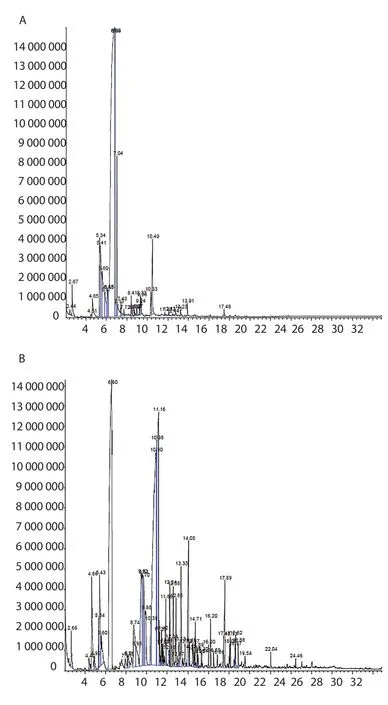
Figure 1. GC/MS profile of essential oil from (A) leaves of Eucalyptus globulus L; (B) aerial parts of Mentha piperita L.

Table 1. GC-MS analysis of Mentha piperita essential oil.
3.2. Droplet size and zeta potential of nanoemulsion
The results obtained from the analysis of droplet size and zeta potential of the nanoemulsion showed a mean droplet size of about 11.32 nm (Figure 2A) with a zeta potential of 9.50 mv for the essential oil of M. piperita. Particle size distribution profile of the M. piperita Nano and E. globulus Nano essential oils are presented in Figure 2A and 2B by number. Droplet size was approximate 103.90 nm (Figure 2B) with a zeta potential of 27.00 mv for E. globulus Nano essential oil.
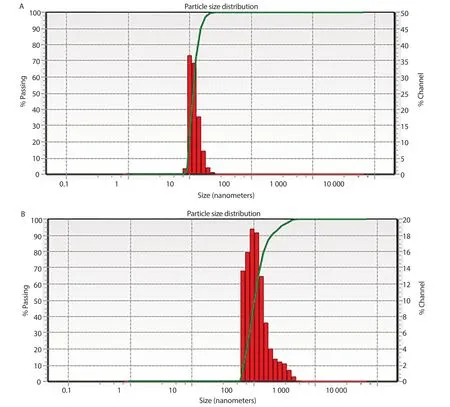
Figure 2. Particle size distribution profile: (A) Mentha piperita Nano essential oil; (B) Eucalyptus globulus Nano essential oil. Size distribution is presented by number.

Figure 3. Dose-response line for DEET and normal and nanoemulsion essential oils aginst Anopheles stephensi.
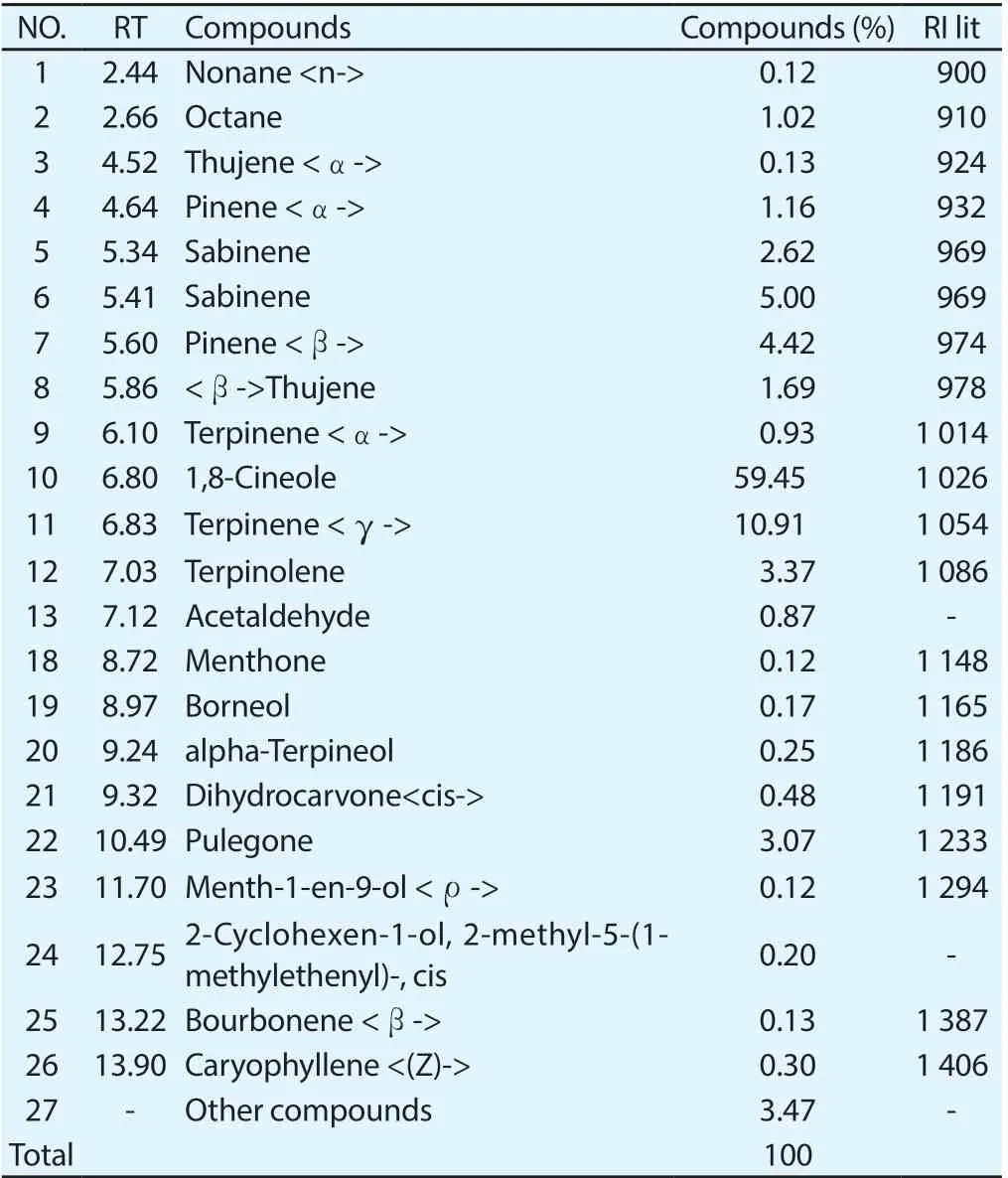
Table 2. GC-MS analysis of Eucalyptus globulus essential oil.
3.3. Protection time
The protection time analysis showed that the essential oils provided protection with an average of (2.89±0.45) h for M. piperita 50%, with an average of (4.17±0.28) h for M. piperita Nano 50%, with an average of (0.96±0.27) h for E. globulus 50%, with an average of (5.51±0.02) h for E. globulus Nano 50%, and with an average of (6.10±0.47) h for DEET 25% (Table 3). Comparing the protection time, E. globulus Nano and M. piperita Nano are significantly higher than protection time for essential oils of E. globulus and M. piperita (P both <0.01). It's also observed that the protection time (mean±SD) of DEET was significant longer compared to M. piperita, M. piperita Nano, E. globulus, and E. globulus Nano (P all <0.01).
3.4. Failure time
The failure times obtained showed their effectiveness with an average of (3.99±0.45) h for M. piperita 50%, with an average of (5.09±0.45) h for M. piperita Nano 50%, with an average of (2.06±0.27) h for E. globulus 50%, with an average of (6.51±0.02) h for E. globulus Nano 50%, and with an average of (7.12±0.47) h for DEET 25% (Table 3). Statistical comparison of the data revealed that failure time for E. globulus Nano and M. piperita Nano are significantly longer than failure time for essential oils E. globulus and M. piperita (P both <0.01). It's also observed that failure time (mean±SD) of DEET was significant longer compared to M. piperita,
M. piperita Nano, E. globulus, and E. globulus Nano (P all<0.01).
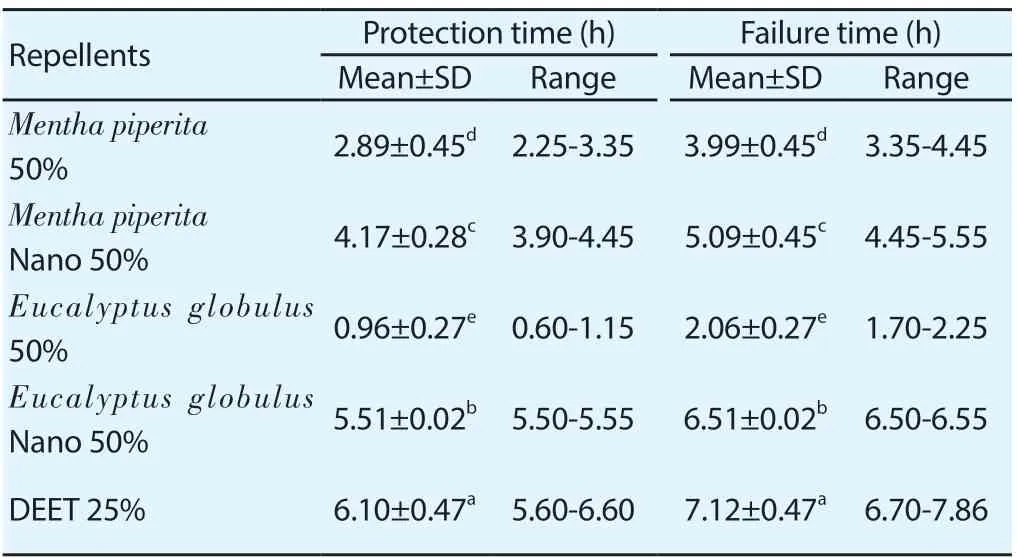
Table 3. Comparison of protection time and failure time for normal and nanoemulsion essential oils 50% with DEET 25% aginst Anopheles stephensi at 1% probability level.
3.5. Effective doses
The results obtained for different compounds showed that ED50and ED90values for the essential oils were 29.10 μg/cm2and 139 μg/ cm2in M. piperita, 19.39 μg/cm2and 94 μg/cm2in M. piperita Nano, 36.10 μg/cm2and 199 μg/cm2in E. globulus, 18.50 μg/cm2and 98 μg/ cm2in E. globulus Nano, and 3.62 μg/cm2and 19 μg/cm2in DEET, respectively (Table 4). In the case of comparing ED50and ED90in essential oils and DEET, the results showed that, ED50and ED90in E. globulus Nano and M. piperita Nano were significantly lower than ED50and ED90for essential oils E. globulus and M. piperita. Comparison of 95% CI also showed that ED50and ED90in DEET were much lower than ED50and ED90for M. piperita, M. piperita Nano, E. globulus, and E. globulus Nano (Table 5 and Figure 3). The equations and dose-response lines for tested compounds are shown in Figure 3. Logarithmic scale was used for x (concentration) and probit scale was used for y (percent of repelled insects). Slope of the related lines indicate the tested population of An. stephensi was homogenous.
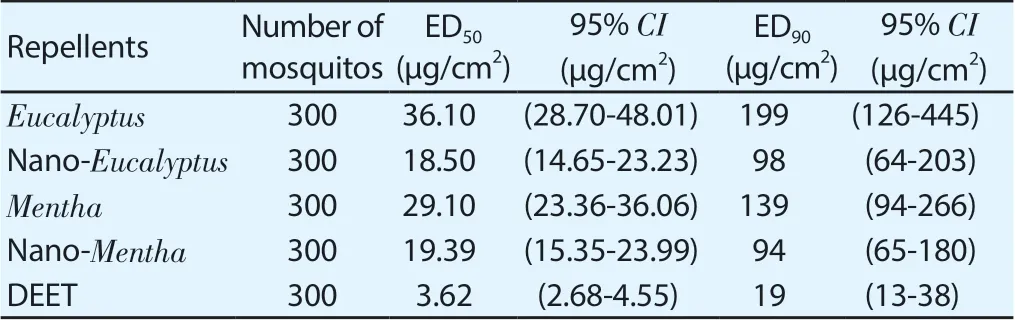
Table 4. Determination of the repelling indicators (ED50 and ED90) of DEET, normal and nanoemulsion essential oils aginst Anopheles stephensi on human volunteers.
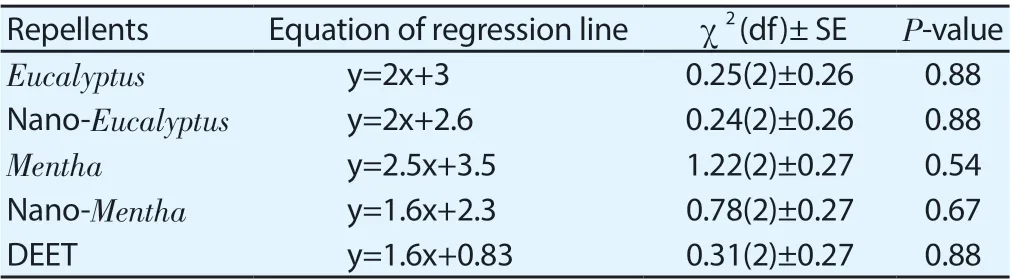
Table 5. Equation of regression line and χ2 (df)± SE for effectiveness of DEET, and normal and nanoemulsion essential oils aginst Anopheles stephensi on human volunteers.
4. Discussion
Of 33 Anopheles species known from Iran, seven species play an important role in malaria transmission in Iran, of which An. stephensi is one of the most important species[24-26]. The main method to control mosquitoes is the use of synthetic insecticides that have harmful effects on human and animal health and the environment. Therefore, the use of natural products, including essential oils, is of paramount importance as being environmentally compatible and degradable[27,28]. The results of this study showed that nanoformulated M. piperita 50% essential oil increased its protection time from 2.89 h to 4.17 h and the failure time from 3.99 h to 5.09 h. Also, the protection time of E. globulus 50% essential oil rose from 0.96 h to 5.51 h and its failure time from 2.06 h to 6.51 h. Effective dose determination revealed that the nanoformulated essential oils also reduced the ED50values of these compounds from 29.10 μg/cm2to 19.39 μg/cm2, and ED90values from 139 μg/cm2to 94 μg/cm2in M. piperita essential oil. In E. globulus essential oil, ED50decreased from 36.10 μg/cm2to 18.50 μg/cm2, and ED90from 199 μg/cm2to 98 μg/cm2. In a similar study[29], a nanoemulsion was prepared from the essential oil of citronella plant and the repellent effect of this nanoemulsion compound was compared with the normal compound. The results showed that addition of glycerol improved the physical appearance and stability of the nanoemulsion, and also increased the protection time of nanoemulsion compounds, which is completely in line with those of this research. In another study by Nuchuchua et al[8], the results showed that preparation of nanoemulsion essential oils from citronella, hairy basil, and vetiver could enhance the protection time of these essential oils up to 4.7 h. Nuchuchua et al.[8] reported that the droplet size of nanoemulsion and the composition of repellents play an important role in determining the protection time, and that a smaller droplet size of nanoemulsion improves physical stability, and improves protection time and the efficacy of the compounds due to forming an integrated coating on the human skin.
In this study, protection time of 6.10 h and failure time of 7.12 h were obtained for DEET 25%. Tavasoli et al. 2011[23] reported a protection time of 6.23 h and a failure time of 7.30 h, which are almost the same as those in here. Fradin and Day[30] reported that protection time, failure time, and DEET depend on the concentration, formulation, and the tested mosquito species and can vary in different conditions[31].
ED50and ED90values of 3.62 μg/cm2and 19 μg/cm2, respectively, were obtained for DEET in this study. Tavasoli et al. 2011[23] reported ED50and ED90values of 2 μg/cm2and 9 μg/cm2, respectively, for DEET. Vatandoost and Hanafi-Bojd[6] found an ED50value of 5 μg/cm2for DEET, which is approximately the same as that of this study. Therefore, according to the results obtained from this study, it can be concluded that M. piperita Nano and E. globulus Nano can be a good alternative to DEET and other chemical compounds.
Overall the results of this study show that preparation of nanoemulsions from M. piperita essential oil increased its protection time about two times and reached its to 4.2 h; also about the protection time of E. globulus essential oil, this increase was fivefold and reached it to 5.51 h. Effective dose determination revealed that the preparation of nanoemulsions from essential oils reduced the ED50values of them, hence, M. piperita Nano and E. globulus Nano can be a good alternative to DEET and other chemical compounds.
Conflict of interest statement
We declare that we have no conflict of interest.
Authors' contributions
RM. prepared the manuscript; RM. MK. did the lterature search; RM. MK. MN. made clinical studies; RM. MK. MN. SK. did concepts, design, definition of intellectual content, data acquisition, statistical analysis, manuscript editing, manuscript review, guarantor.
 Asian Pacific Journal of Tropical Medicine2019年11期
- Asian Pacific Journal of Tropical Medicine的其它文章
- Efficacy of diurnal BG-Sentinel traps to capture nocturnal adult Armigeres subalbatus mosquitoes and impact of altitudinal variations in forests
- Molecular characterization of Echinococcus granulosus in paraffinembedded human tissues from Southwest Iran
- Influence of geographic, knowledge and behavioral factors on Opisthorchis viverrini infection in the Northeast of Thailand
- Phytopharmacological potential of the natural gift Moringa oleifera Lam and its therapeutic application: An overview
- Fatal case of human rabies infection: A case report
- Fatal cases of animal-mediated human rabies: Looking beyond sectoral prism to One Health