
If you are physically fit,you will live a longer and healthier life:An interview with Dr.Steven N.Blair
2019-11-21 01:18:06WeimoZhu
Weimo Zhu
Department of Kinesiology and Community Health,University of Illinois at Urbana-Champaign,Urbana,IL 61801,USA Received 15 September 2019;revised 18 September 2019;accepted 19 September 2019 Available online 24 September 2019
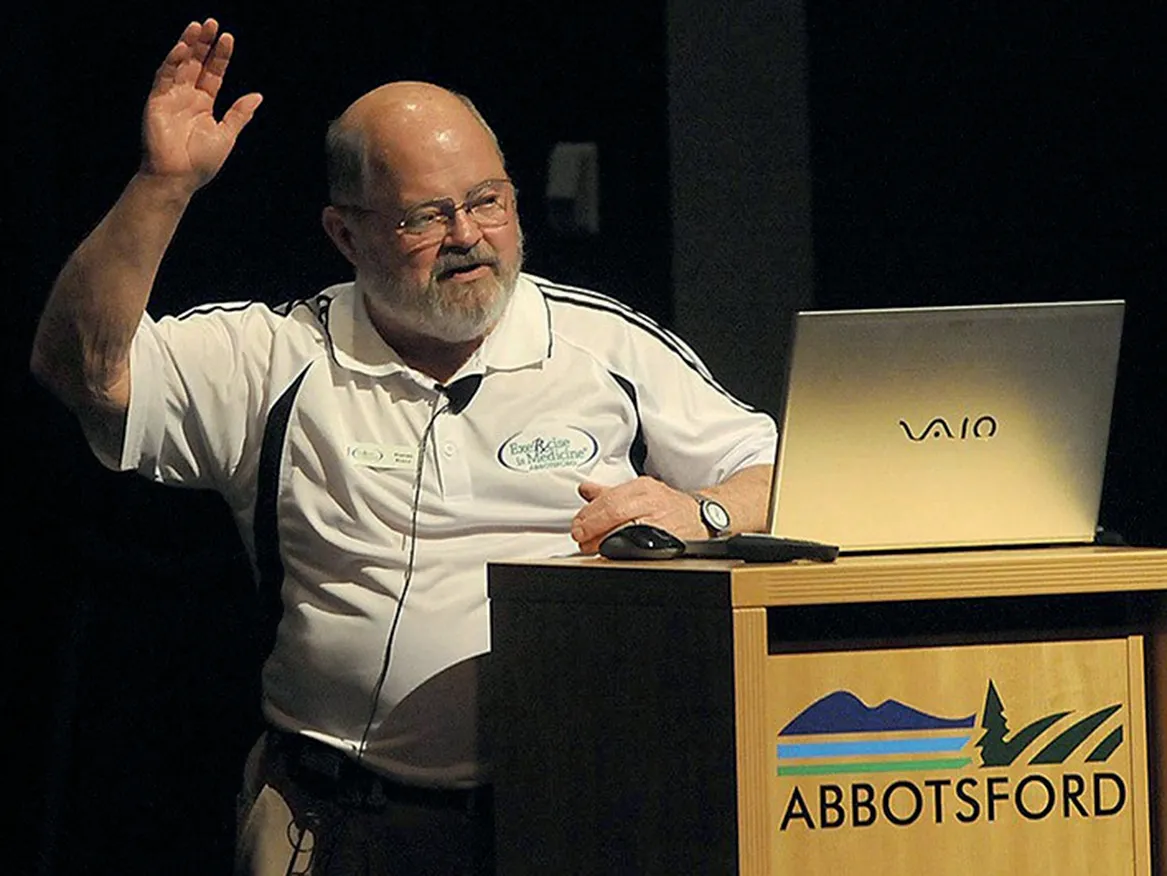
Dr.Steven N.Blair
Exactly 30 years ago,a benchmark study published in The Journal of the American Medical Association(JAMA)titled“Physical fitness and all-cause mortality.A prospective study of healthy men and women”1sharpened our view of the importance of physical fitness in health and helped create a new era of“exercise is medicine”.The authors of that study were a group of pioneers and leaders in the area of physical fitness/activity and health.The group included Steven N.Blair,Kenneth H.Cooper,Ralph S.Paffenbarger Jr.,Harold W.Kohl III,Debra G.Clark,and Larry W.Gibbons.The study has been cited more than 2000 times.
I first got to know Dr.Blair,the first author of that study,in 1999,when we held our 9th Measurement and Evaluation Symposium in conjunction with the Cooper Institute Conference Series in Dallas,TX,with a focus on the measurement of physical activity(PA).I still remember one of the well-known Australian scholar's complimentary comments about Dr.Blair at the symposium:“When Steve talks,the(fitness)world listens”.I got to know Dr.Blair better after I joined the scientific board of FitnessGram?,the youth fitness assessment and education program of the Cooper Institute,in 2002,when Dr.Blair was the president and CEO of the Cooper Institute.
There is no question that Dr.Blair is a great scholar,thinker and game changer!He has published more than 800 papers and chapters in the scientific literature and is one of the most frequently cited exercise scientists,with over 65,000 citations of his work, and he is currently being cited more than 5000 times a year.His h-Index is 122,and 14 of his articles have been cited more than 1000 times.
Dr.Blair's works have been well recognized and appreciated by those in the field of PA and health.He is a Fellow of the National Academy of Kinesiology,American College of Epidemiology,Society for Behavioral Medicine,American College of Sports Medicine(ACSM),and American Heart Association;and he was elected to the membership in the American Epidemiological Society.
He has received awards from many professional associations,including the Honor Award from the ACSM,the Population Science Research Award from the American Heart Association,and the Stunkard Lifetime Achievement Award from The Obesity Society.He also was granted a MERIT Award from the National Institutes of Health and is one of the few individuals outside the U.S.Public Health Service to be awarded the Surgeon General's Medallion.In addition,he is the recipient of 4 honorary doctoral degrees:Doctor Honoris Causa degree from the Southern Denmark University,Denmark;Doctorem Medicinae Honoris Causa,Free University of Brussels,Belgium;Doctor of Health Science degree from Lander University,SC,USA;and Doctor of Science Honoris Causa,University of Bristol,UK.
More important,Dr.Blair is a very kind person and has always provided his support to graduate students,young scholars,and colleagues.I took advantage of the 30th anniversary of his famous JAMA paper to conduct an interview with Dr.Blair.
Zhu:It is hard to believe that 30 years have passed since the publication of your well-known 1989 JAMA paper,which helped to create several subfields and interests in kinesiology:PA and health,PA epidemiology,and exercise is medicine,to name just 3.Would you please let us know how the study was developed and share any interesting stories behind this famous study and publication?
Blair:Dr.Kenneth Cooper started the Cooper Center in 1970 and focused on preventive-medicine examinations and clinical evaluations.He included maximal exercise tests for all patients and created the Aerobics Center Longitudinal Study(ACLS)by saving all the data.This approach created a very unusual database because maximal exercise testing was not widely used in those days.This testing allowed us to estimate maximal oxygen uptake,and we called it cardiorespiratory fitness(CRF).We published papers on CRF and cardiovascular disease risk factors in women and men in Circulation and American Journal of Epidemiology in 1983.We then obtained information on deaths in the cohort,which led to research on CRF and mortality,which was the focus of the 1989 JAMA paper.
Zhu:The 1996 Surgeon General's report on PA,for which you served as the senior scientific editor,is another historic document that changed the public's view about the importance of PA in one's health.How did you and other leaders in the field convince the Surgeon General to agree to issue a report on this topic?
Blair:I do not know what led the Surgeon General to decide to develop the report on PA and health.My best guess is that it was based on the paper by Russ(ell)Pate and others.2This paper was from a meeting at Centers for Disease Control and Prevention(CDC)organized by Russ and scientists at CDC,which included many national and international leaders in exercise research.It is one of the most highly cited articles on the topic of PA and health and currently has more than 4500 citations.
Zhu:Rooted in your 1989 JAMA paper,the American Heart Association published a very important scientific statement in December 2016 in the journal Circulation to declare that aerobic fitness should be considered a vital health-fitness sign,which moved the importance of fitness and PA to another level.Again,you played a leadership role in that statement.How did that happen?Was it initiated by those in exercise science or by the American Heart Association?
Blair:This effort was initiated by many exercise scientists,mostly those who were coauthors of the paper.We argued for several years that the American Heart Association needed to increase their focus on PA and also the importance of including cardiorespiratory fitness.
Zhu:Interestingly,while you are one of the most important leaders in PA and health,your original training was really in physical education(PE).What made you change from the traditional PE track to a more health-and medicine-related area?
Blair:My original plan was to get a master's degree in PE and become a football coach at a liberal arts university,like Kansas Wesleyan University.I played football,was injured,and then my coach let me be an assistant coach.I also taught PE at Kansas Wesleyan for a year and then went to graduate school at Indiana University.After being exposed to research and statistics,I decided I would rather be a professor and do research.So I stayed at Indiana University and got my PE degree;then the University of South Carolina gave me a job in the PE department.I taught some classes but also had the responsibility of developing an exercise laboratory.
Zhu:I know you were a postdoctoral scholar in preventive cardiology at the Stanford University School of Medicine from 1978 to 1980.Was that training one of the driving forces to help you move from PE to PA and health?
Blair:No,I had started going to the American Heart Association and began to focus on PA and health.I was fortunate to get one of the centers for the Multiple Risk Factor Intervention Trial and got even more involved with health promotion and disease prevention.I was fortunate to get a sabbatical from the University of South Carolina,and Stanford invited me to come to their preventive cardiology program.This allowed me to focus even more on PA and health.
Zhu:From reading,I learned that you also worked with 2 PA epidemiology giants,Drs.Jeremy Morris and Ralph S.Paffenbarger Jr.How did you get to know them and how have their works impacted your PA and health-research tracks?
Blair:I met Dr.Paffenbarger at American Heart Association meetings.We spent time together,and that included running.Of course,when I was at Stanford University,we had much more contact.I helped him teach an epidemiology class to medical students.Both Paff and Jerry were part of the CDC meeting that led to Russ's paper mentioned earlier,so I had a great opportunity to work with them on that project and publication.When I was getting ready to leave Stanford and return to South Carolina,Dr.Paffenbarger recommended me for a position at the Cooper Institute.They offered me a position,but I had to return to South Carolina after the sabbatical.Dr.Cooper gave me a grant and the ACLS database,and that is when I started publishing with these data.Both Paff and Jerry were major founders of work on PA and health epidemiology,and it was always a pleasure to talk with them and work on projects.
Zhu:Talking about the changes in our field,while the field of PA and health has expanded so well,traditional PE is shrinking and struggling.As an example,many research universities have closed their PE pedagogy programs due to low enrollment.Meanwhile,we see an urgent need to combat childhood obesity through school PE programs.So,what is your advice to the field of PE?
Blair:I certainly think we need to devote more effort to increasing PE pedagogy and train talented teachers to help our children become and stay more active.It is a major public health problem.
Zhu:I also enjoyed very much reading your 2004 paper,“The evolution of PA recommendations: how much is enough?”Now that 15 years have passed since that paper was published,would you please provide a quick summary of your latest view of“how much is enough?”
Blair:I think that our PA recommendations in the Pate paper are still applicable,and they have not changed much in the most recent PA recommendations.One of the things I always remember is a statement from Dr.Ken Powell.At the time of the Pate paper,for which he also was a major leader,he said:“Some activity is better than none,and more is better than less.At least up to a point.”I think this is still very relevant.
Zhu:By the way,I heard that you were an excellent runner when you were young.What is your daily PA now?
Blair:I was never an“excellent runner”.I ran my first marathon in 1969,and my best time was about 3.5 hours.I continued to run most days until I was in my late sixties,and then it became more walking.My exercise is now just walking and resistance exercise.On my seventieth birthday,on July 4,2009,I followed a goal set by one of my colleagues,which was to take 5 million steps per year.I have made the 5 million steps goal every year since then and am well ahead on meeting it this year.
Zhu:You have been a great thinker who often challenged the beliefs and/or myths that had little scientific evidence.I heard that you recently argued that“the health risks of obesity have been exaggerated”.What are the main points that support your argument?
Blair:We published our first paper on fitness and fatness in 1995 and have since published many papers on this topic.In the ACLS we have measures of CRF,body mass index,and body composition.A general summary is that obese individuals who are at least moderately fit,which can be achieved by meeting the PA guidelines,have one-half the risk of dying in the next several years when compared to normal-weight individuals who are unfit.I have been often criticized on this point,but my response is:do some research with good measurements of PA,obesity,and health outcomes,and show that we are wrong!
Zhu:By sharing your booklike vitae with my graduate students,they were all,“Wow!”and surprised by your great productivity.How did you achieve this?What is your secret?
Blair:I have been very fortunate to have many opportunities to write scientific papers.But my secret is that I have been very good at finding outstanding collaborators!
Zhu:You have been so kind and supportive of young scholars.I have a small story to tell here.Six years ago,when I became the editor in chief of Research Quarterly for Exercise and Sport(RQES),Dr.James Morrow sent me a very helpful book titled How to Edit a Scientific Journal by Claude T.Bishop.Dr.Morrow told me that it was a book you gave him when he became the editor of RQES.In fact,you wrote in the book to Dr.Morrow:“Jim,Best wishes for an outstanding career as RQES editor.”I was really moved by the kindness and great support you and Dr.Morrow shared.That book became part of a great collection of mine.I hope that some day I will share it with my students or perhaps a young scholar when he or she becomes editor of RQES.In addition,I know you have established a scholarship fund at the Epidemiology Interest Group of ACSM to support graduate students and young scholars.Would you please share your view on the importance of and the best ways to build a systematic way for the mentorship so that young scholars in the field can evolve in a very healthy way and,in return,help the growth of the field?
Blair:I will make one correction in your question.I did not establish the ACSM scholarship fund.This was done by Dr.Greg Hand,and I am very honored by this effort.We certainly must continue to identify students and young scholars and find ways to help them advance their careers.I have told many people that the greatest pleasure I get at this time of life is to help these people be successful in publishing a good paper or get a grant to support their research.
Zhu:Talking about Dr.Morrow and publishing,you are the founding editor of the Journal of Physical Activity and Health,a leading PA and health research journal now.What is your advice on the keys to creating and maintaining a great research journal?And,for young scholars,what is your advice to them when they prepare a manuscript for a top research journal?
Blair:Jim Morrow and I were coeditors of the Journal of Physical Activity and Health.I don't think I would have taken this responsibility if he had not agreed to work with me.He had experience as editor of RQES,and I knew I could learn from him about how to proceed with this new journal.I am pleased with its development over the years.My major advice to young scholars is,“Be creative and don't be afraid to challenge existing information”.
Zhu:For the past 30 years,the field of PA and health has expanded so much,thanks to your efforts and excellent contributions.Yet,there are still many unsolved problems.Would you please list your top 5 research questions in PA and health so that doctoral students and young scholars can devote their energies to address those problems?
Blair:My last big idea was to get$6 million in contributions to establish our Technology Center to Promote Healthy Lifestyles.We were fortunate to hire Professor Delia West as an endowed professor to lead the center.She is an outstanding behavioral scientist,and the center is doing splendid work.I think we must learn how to use modern technology to help people adopt and maintain healthful lifestyles.Delia and others are making good progress,but we must continue to focus on this topic.The other 4 problems and challenges are:
1.We need to focus on how to use government policies to encourage more PA.What works and what does not?
2.How can we make environmental changes to promote more PA?
3.How can we improve PE in schools?
4.I am sure that there are very important research topics in chemistry,physiology,and other biological sciences that need focus,but I am not knowledgeable enough to make specific recommendations.
Zhu:Finally,you have been a great supporter of Chinese students and scholars and have visited China and given lectures there several times.While China has enjoyed a rapid economic growth during the past several decades,we also now see an increase in chronic diseases.What is your advice to the field and researchers in the PA and public health fields in China in terms of handling the coming health crisis?
Blair:I think China is doing a lot to promote PA in the population.They have excellent universities focusing on projects.I do not have specific recommendations for them,but I encourage them to keep up the current efforts.
 Journal of Sport and Health Science2019年6期
- Journal of Sport and Health Science的其它文章
- Acknowledgment to reviewers—November 2018 to September 2019
- Corrigendum to“Spinal and supraspinal control of motor function during maximal eccentric muscle contraction:Effects of resistance training”[J Sport Health Sci 7(2018)282-293]
- BRICS to BRICSCESS—A perspective for practical action in the promotion of healthy lifestyles to improve public health in five countries
- Physical activity and prevention of chronic disease in Chinese youth:A public health approach
- BRICS nations and the opportunities for community physical activity interventions
- Commentary on“The BRICS Council of Exercise and Sport Science(BRICSCESS)—A new era has dawned”that has been published on JSHS