
GETTING SMART
2019-11-11 07:35:22韓儒博譚云飛
漢語世界(The World of Chinese) 2019年5期
韓儒博 譚云飛
Students are abusing prescription drugs, touted as “brain enhancers,” with dangerous consequences
“聰明藥”是個偽命題,不僅無用,而且有害
It was one of the strangest cases of addiction that Xu Jie had ever seen.
A specialist at the Beijing High Tech Rehabilitation Center (BHTRC) for over a decade, Dr. Xu has treated hundreds of patients with drug dependency over the years, yet the case of high-school student “Xiao He” (pseudonym) was exceptional, centering around the growing abuse of so-called “smart drugs.”
Three years ago, Xiao He was among the top-ranked students of her class. As her college entrance exams neared, though, her scores began to slip. Dispirited, Xiao He overheard her peers discussing the use of congming yao, also known as “smart pills” or “study drugs,” and pitched the idea to her grades-obsessed father.
After a quick online search, Xiao Hes father obtained a bag of white pills, believing them to be “brain nourishing” supplements similar to those advertised as homeopathic or traditional Chinese medicine (TCM). In the beginning, the pills seemed to help Xiao He concentrate and improve her academic performance, but she gradually had to increase the dosage to maintain the same effect, eventually taking 8 to 10 tablets per day.
“The severity of the case impressed me the most,” Dr. Xu tells TWOC. “Six months later, when [Xiao He] came to me, she was very thin, with an impaired liver, and suffering hair loss, insomnia, anxiety, and even hallucinations, believing all her neighbors intended to kidnap and kill her.”
Xiao Hes father had inadvertently procured Ritalin—a prescription medicine typically given to children diagnosed with attention deficit hyperactivity disorder (ADHD). As Dr. Xu emphasizes, such prescription medicines are “only to be taken under the guidance of a physician, and absolutely not by people whose brain functions are normal.” (Besides Ritalin, Xiao He later bought her own pills online that were found to contain methamphetamines, a cheap but highly addictive form of speed.)
Though Xiao He was one of Dr. Xus first encounters with domestic smart-drug abuse, cases like hers are no longer exceptional. In the two years since she came to the hospital, Dr. Xu has treated over 60 patients with similar conditions.
Du, a 20-year-old college student in Sichuan who asked to be identified by his surname only, was a typical user. During a difficult period in his junior year of high school, “I learned about smart pills via Wikipedia and some books. At that time, one of my friends was using Armodafinil [a stimulant used to treat narcolepsy and shift-work sleep disorder] to stay alert,” Du tells TWOC. “I used some Armodafinil and then Ritalin, both of which were easy to buy through QQ [online chat] groups. The pills helped me concentrate.”
Du eventually stopped using the drugs after telling his parents about the problem. They took him to a doctor, who properly diagnosed him with Attention Deficit Disorder (ADD) and prescribed him medication. Du claims, though, that at least three of his classmates also turned to congming yao for assistance.
Dr. Xu confirms that the number is on the rise. “I had about 20 patients of this kind in 2017, and over 30 in 2018,” he says. “Most of them are students and new graduates in their first jobs, while the rest are starting their own businesses.”
He partially blames parental pressure for the phenomenon. “[Parents] often have high expectations...but dont have time to take care of their children, and try to make up by offering them financial support. Its like those parents think, ‘I spent money on you, so you need to do well.”
Meanwhile, “Young people are eager for quick success and instant benefits, and they believe advanced technology such as pills can help them achieve that,” says Dr. Xu.
His former patient Mr. Wang, the 36-year-old owner of a construction business from Hebei province, was an example: “I felt so much pressure [from my job]…you need a lot of energy to drive around doing business,” Wang tells TWOC.
In July 2017, Wang heard about smart pills from a friend and bought some from a WeChat group, believing them to be similar to health products such as Naobaijin (“Brain Platinum”), a melatonin supplement frequently advertised on TV as a memory enhancer for the elderly. “The seller sent me the pills in small vacuum-sealed bags [without the original packaging], and told me to take one per day.”
After an initial boost to his memory and concentration, Wang says he developed anger problems, and “had to increase the dose to three to four pills to prevent insomnia, depression, and poor memory.” After Wangs family intervened and took him to the BHTRC, he learned the products were, in fact, a blend of methamphetamine and caffeine known as magu.
As elsewhere, drugs like methamphetamine and magu are illegal in China—where they are controlled under Article 357 of the Criminal Law along with opium, heroin, morphine, marijuana, and cocaine.
Laws for prescription medicines, however, are more complicated. While Adderall is strictly controlled as an amphetamine, drugs like Ritalin can be prescribed by qualified professionals in China as a non-amphetamine called methylphenidate (produced by a subsidiary of Johnson & Johnson, with the Chinese brand name “Focus”) to treat ADHD.
There is also a vast gray market for congming yao online, where searches on WeChat and Baidu for certain key words, such as “smart medicine” and “hyperactivity disorder,” reveal a mass of potential suppliers.
Although the distribution of domestically produced versions like Focus are strictly controlled by laws, which require local and state regulatory approval for sale only to hospital pharmacies, an investigation by the National Business Daily found at least one supplier who purchased Ritalin pills directly from an official factory in Turkey, then smuggled them into the mainland via Hong Kong.
After making some inquiries, TWOC was invited to join a WeChat group called “Medicines4All,” which purported to supply “diet pills,” Viagra, cancer and HIV treatments, and other hard-to-obtain drugs directly from India. The administrator offered TWOC a cheap, generic version of Ritalin, but recommended a more expensive “top quality” Swiss variety at 1,800 RMB for 30 pills (although TWOC didnt take advantage of this deal, the groups bona fides were confirmed by other users).
The dealers, as the National Business Daily confirmed, may stipulate different types of price, quantity, and quality upfront, delivering within a week of purchase (usually made via traceable e-payment). Buyers, though, are unlikely to know the difference between types of medication. Many unwittingly consume unregulated, fake, or dangerous substances like magu—and “some may not even know its possible to abuse prescription pills,” not just hard drugs, says Dr. Xu.
“In the West, knowledge of medicine is a part of citizen education and a [popular] science subject, but this is lacking in China,” claims Ji Lianmei, a former pharmacist at Beijing United Family Healthcare, who now writes books about drug safety and founded “Ask a Pharmacist,” an online consulting platform on Weibo with over 2 million followers.
Ji says this educational deficit, coupled with an overstrained and inefficient healthcare system and a cultural reliance on family networks, results in widespread ignorance that can easily result in abuse and addiction.
Compared to their Western peers, “Chinese are more likely to be influenced by relatives, friends and other acquaintances, because of the difficulty of getting medical services,” Ji points out. “They have far fewer opportunities to access reliable [medical] sources and some dont trust doctors.”
Wang proposes that the government should promote awareness of drug abuse through the media and mandatory school lectures. “If I had known what so-called ‘smart pills were, I would have never taken them,” he declares.
Wangs high school-age nephew and primary school-age son both have classes about drug abuse at school, “but Im not sure how widespread that is in China,” he says.
Du confirms that such courses, even if available, may not be emphasized in the curriculum. His high school “provided a few lectures about drugs, but didnt require all classes to attend,” he recalls. “Due to academic pressure, many students brought their homework along and didnt pay attention to the lecture.”
Online dealers, as well as often ill-informed articles on “self media” platforms such as WeChat, purport to fill these knowledge and trust gaps. Users, meanwhile, may have grown up with the idea, enthusiastically promulgated by some branches of TCM, that certain natural substances are cognitive enhancers: “‘Brain nourishment has been a traditional recourse in China,” acknowledges
Dr. Xu.
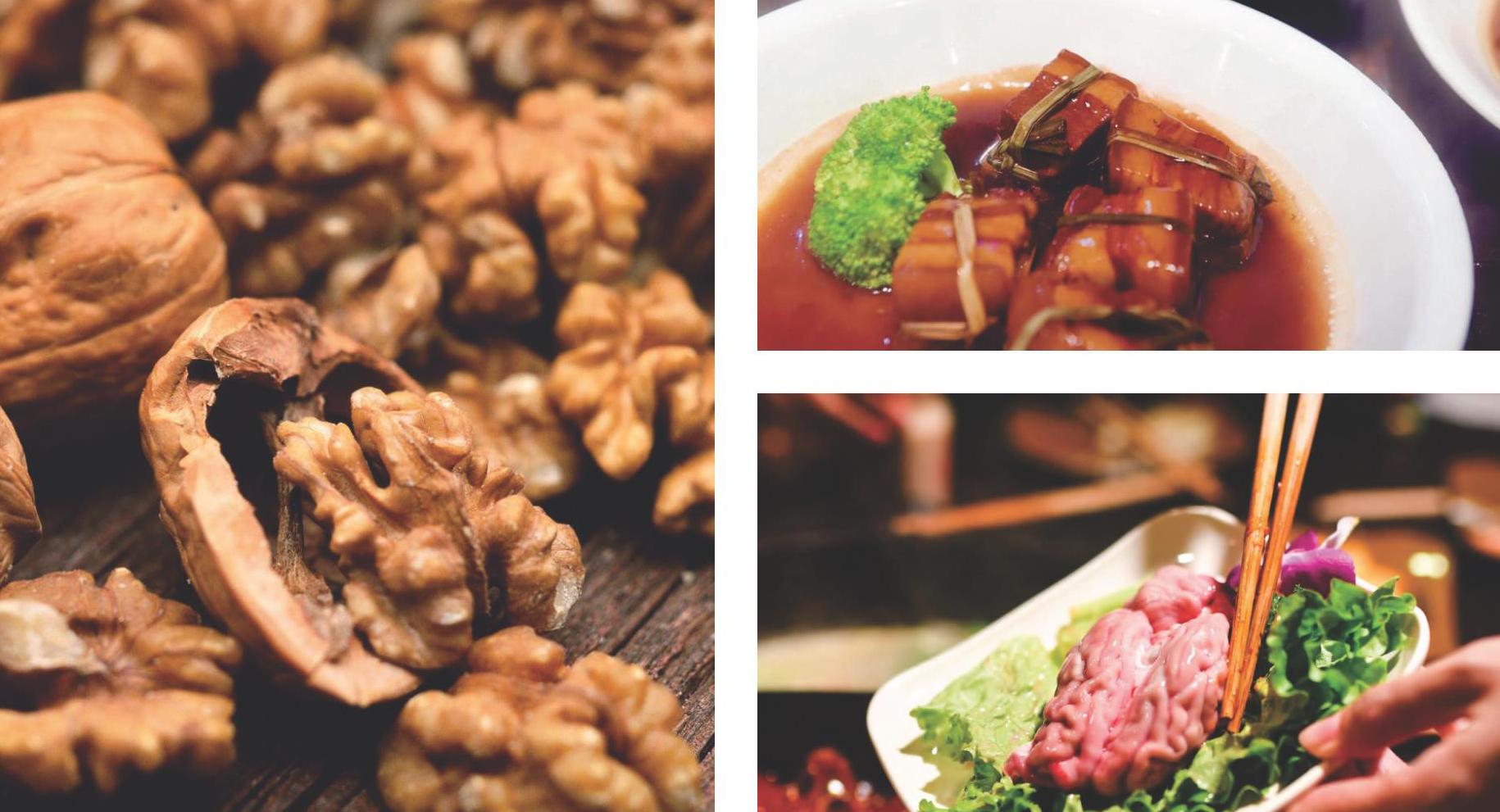
Walnuts, for example, are considered to be mentally nourishing for their amino acids as well as their physical resemblance to brains; Chairman Mao was said to credit his intellect to an insatiable appetite for fatty pork. Although Dr. Xu says that there arent any Chinese herbs that are able to quickly improve cognition, unsubstantiated folklore has led many parents to believe that the congming yao sold online are simply modernized updates to the supplements that have been peddled as miracle cures throughout Chinese history.
Some of these herbal ingredients have even become popular abroad—the fungus known as “lions mane” (hericium erinaceus), for example, is often used as an ingredient in “brain-boosting supplements,” also known as adaptogens, in the US. Theres even some research that suggests it can promote nerve growth in Alzheimers patients, and some small samples among post-menopausal women have claimed that its use can reduce anxiety and depression.
Such findings have been treated with guarded skepticism in the Western medical community, and there is little research on the Chinese mainland on either “brain nourishing” supplements or smart drugs. Instead, experts seeking information as to the prevalence of smart drugs must point to studies conducted abroad. A 2014 survey of Ivy League students by the US National Institute on Drug Abuse found that one in five admitted to misusing ADHD medication to help with their studies, and a third did not consider this to be cheating.
In 2018, the same institute found that nearly five percent of US 12th- graders had taken non-prescribed Adderall. Anecdotal evidence suggests the number is similarly rising in China—the ex-pharmacist Ji says that parents have begun to ask her about the efficacy of smart drugs to improve their childrens exam performance.
Ji says that she has been contacted by increasing amounts of provincial and state media outlets to comment on the functions and side effects of smart drugs. Investigative reports on their use and supply chain, as well as confessional articles on WeChat, have also proliferated in the past year—and may, ironically, have increased interest and trade in the drugs.
One March report on smart-drug abuse by KanKan News was subtitled “Doctors say overmedication is equal to drug abuse,” but the associated hashtag on Weibo simply read “Girl Becomes Genius After Taking ‘Smart Drugs.” Such headlines can mislead parents and students into thinking that taking small amounts of medication is fine, says Dr. Xu. “The media should really be saying, ‘There is no such thing as a drug that can make you smart.”
The story of Xiao He—who required two months rehabilitation, and later gave up her studies to volunteer at the drug rehabilitation center that helped cure her—has been featured in numerous reports.
Few others, though, are as fortunate to get all the help they need. Only two of Dr. Xus 60 patients have stayed the course of their treatment at his rehabilitation center; the rest, fearful of “contamination” from other patients they consider to be involved in more hard-core substances, often choose to recover at home or in outpatient clinics.
Lingering shame over mental health and drug dependency issues in Chinese society means few are able to diagnose addiction, or associate its symptoms with the medication. Media attention may have helped increase recognition of the problem, but has also occasionally stirred hysteria and misinformation among a public with little understanding of drug issues. “Chinese people tend to put all drugs, whether its marijuana or meth, into the same box, which if they open, will unleash havoc,” a former user tells TWOC.
Experts like Ji and Dr. Xu have called for greater publicity and oversight of smart pills, and for the government to crack down on the black market, fearful that negative media coverage might impact the pills proper medical administration.
Ex-patient Wang often returns to BHTRC to share his story with other patients, believing this can help reduce the stigma around the problem. “When we get addicted, we need to face our mistakes and receive treatment. Ive never hidden my treatment from my son, and instead told him how to be cautious about drugs,” he says.
“Meanwhile, I would not force
my wishes and expectations
[for success] on him,” Wang says. “[Hed be] much better off eating and resting well.”
 漢語世界(The World of Chinese)2019年5期
- 漢語世界(The World of Chinese)的其它文章
- Summer coastal scene
- YOU’VE GOT QUESTIONS? SHE’S GOT ANSWERS
- 養
- ROYAL ROAST
- THE FAREWELL
- Genius Loci