Differences Between Eastern and Western Architecture
2019-10-10 06:31:38ByJiangDexing
Special Focus 2019年9期
關鍵詞:建筑
By Jiang Dexing
Typical traditional Chinese architecture is made of wood and bricks, while its Western counterpart is mainly stone. There are several distinctive differences between the Eastern and Western architecture.
Single Building VS Unit Building
Firstly, Westerners seem to love single residential buildings, in which each is separate and independent. While in China, people are fond of unit building; The quadrangle style is the best example.
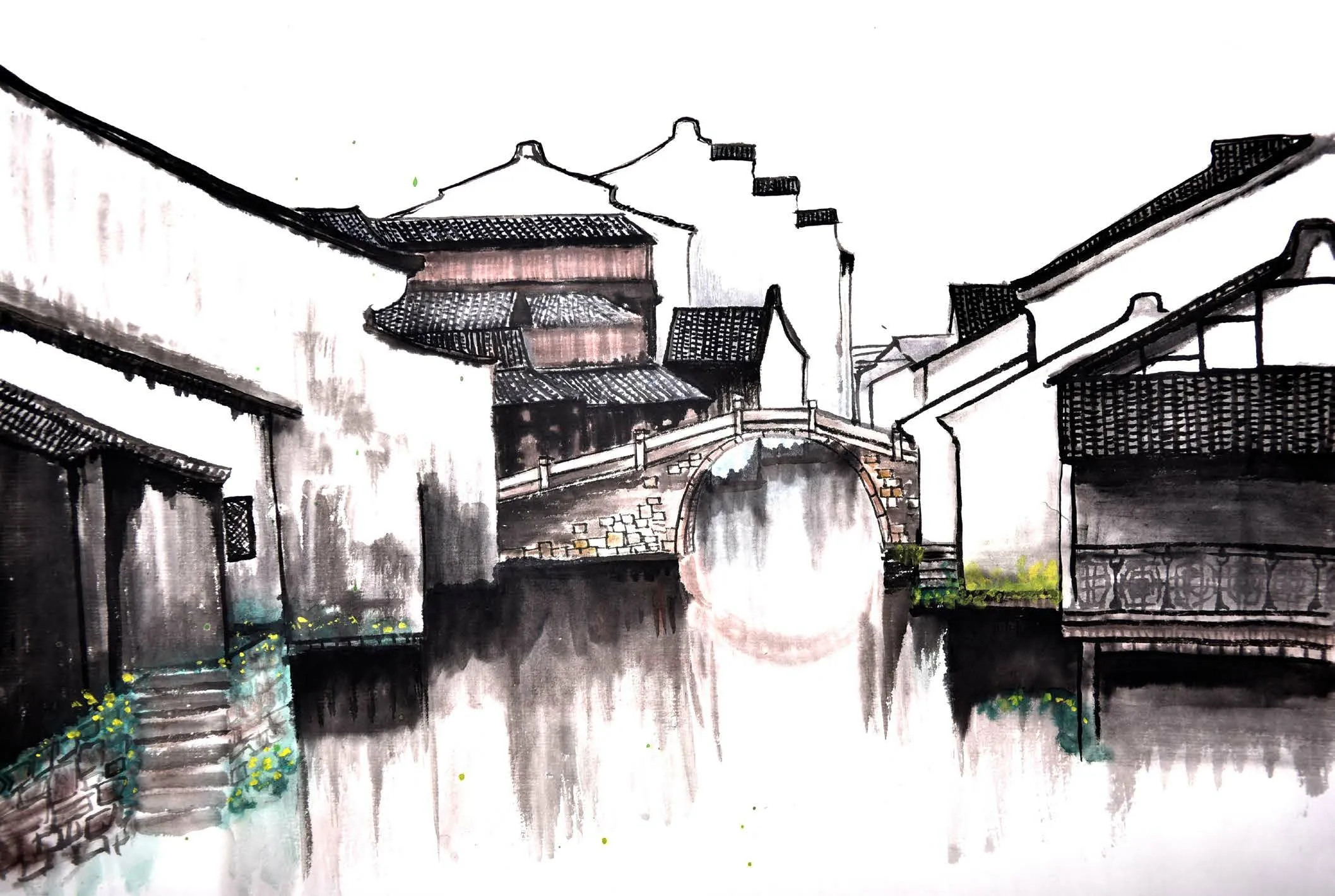
Quadrangle is a good representative of ancient Chinese architecture, in which four houses are connected with each other around a central yard. I was born in the alleys of Suzhou City, where there are many ancient residences respectively belonging to men of letters, ruling bureaucrats, and local residents. These residences are formed in a chain of houses and usually have five or six units. Each single unit is a quadrangle. Normally, a wealthy five-generation family may own a large house-group, characteristic of several quadrangle and green yards in middle.
Why the quadrangle style has been popular in China, which is so different from the Western single-residence architectural style? In my opinion, it has something to do with the different life values of the two societies. In the eyes of Westerners, a man is an independent individual and even owns a separate world. As a building is made in different societies, it should be a carrier of one's culture and values. The traditional Chinese people gave priority to harmony, which means that people should help each other and grow together as a whole.
中國建筑是木結(jié)構(gòu)的體系,西方建筑是石結(jié)構(gòu)的體系。東西方建筑有幾個基本的差異。
單體與群體
第一個差異是,西方建筑單體的多,一棟一棟,很獨立;而中國建筑是群體建筑,如四合院。
四合院是中國古代建筑的一個單位。我老家是蘇州的,蘇州小巷里有很多古民居,文人的、官僚的、普通百姓的。進深很深,五進六進,一進就是一個單位,就是一個四合院。大戶人家無非是若干個四合院串聯(lián)起來的大宅子,很大的一個建筑群,庭院深深。
為什么中國會形成四合院樣式,而西方是獨立的單體建筑樣式?這跟東西方的價值觀念、跟整個社會的價值取向有關。在西方人看來,人都是一個一個獨立存在的,每個人都是獨立的個體,都是獨立的世界。建筑是人造的,所以,建筑就應該跟人一樣。而中國傳統(tǒng)強調(diào)人和,應該互助共生,是一個整體。
立面的處理
第二,西方建筑非常注重立面處理,中國傳統(tǒng)建筑在外觀上不做過多裝飾,大體跟周圍建筑保持一致。
中國傳統(tǒng)小巷里的建筑大體都差不多,青磚灰瓦,風格一體。條件好一點的人家最多砌個門樓。像蘇州、上海一帶基本上砌石庫門,一個石庫門里面就是一戶大戶人家。中國建筑的富麗堂皇,只有進了門才能發(fā)現(xiàn),從外面一般看不出這戶人家的家底。
蘇州東山有個雕花大樓,從外面根本看不出其壯美,跟普通民居差不多,只有進大門來,才能看到其精細的磚雕、木雕、石雕……富麗堂皇。亦如北京故宮,在宮墻外根本看不到三大殿,只有移步宮里,才能看到太和殿等,皇家氣概撲面而來。
Fa?ade Decoration
Secondly, while Western architecture lays emphasis on the delicate decorations of the fa?ade, the ancient Chinese architects tend to add less decoration to the exterior of a house for the purpose of keeping in line with the style of the surrounding buildings.
Most traditional Chinese houses, located in the alleys or in the streets, have uniform gray bricks and tiles, and look quite similar—though the richer families may build gatehouses. In the cities of Suzhou and Shanghai, there are many Shikumen (stone gatehouses) through each of which lies a row of houses owned by a large family. The great splendor of some Chinese architecture or the astounding wealth of a family can not be known until you go into their houses.
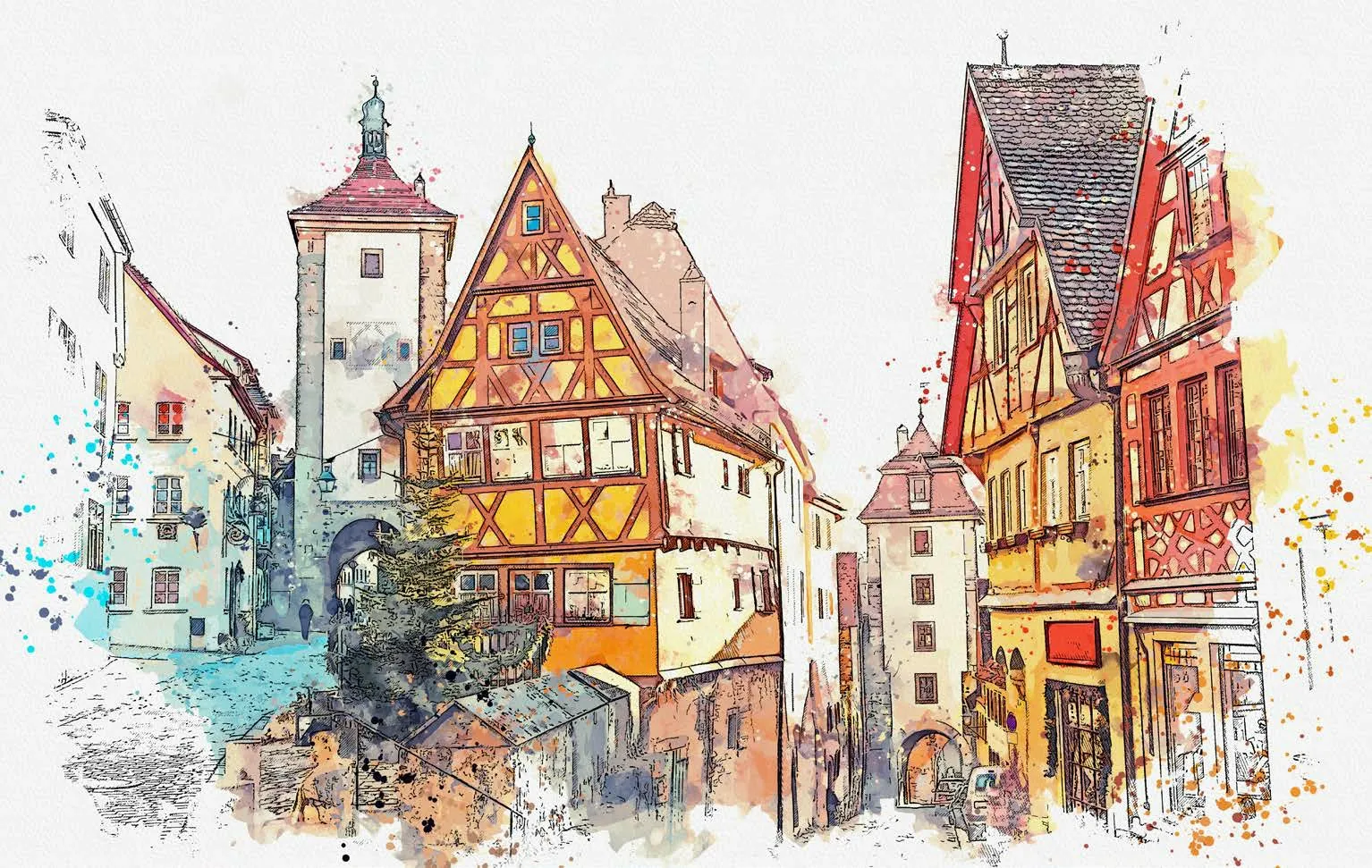
There is a wood carved building in East Mountain, a scenery spot in Suzhou City. Looking from the outside, you will feel it is similar to other ordinary residential buildings; only when you go inside—those delicate and splendid carvings of brick, wood and stone will capture your eyes. Take the Forbidden City in Beijing for example. Only by stepping into the palaces can we see such a wonderful place as the Hall of Supreme Harmony, while from the outside you can never get a glimpse of these halls, let alone feel the royal grandeur.
On the contrary, Western architecture is mainly single building and begins with individuality and diversity. Everyone has his own unique world outlook and style, so he should pursue a unique architecture style. Therefore, in the Middle Ages, some cities even stipulated that two similar buildings could not be built in a city in laws and regulations.
Square as the City Center
The third difference is more fascinating. In the Western society, squares have been built in the cities since ancient Greece, serving as a shared place for public use.
At that time in Greece, democracy was prevalent. A general assembly of citizens was held in square, rather than in auditoriums. And in a square, Greek citizens could easily communicate with each other and even engage in all kinds of business. It has become a symbolic trait that Westerners are committed to public life and social communication. That is also one of the reasons why Napoleon would declare,“it is one of the most beautiful living rooms in Europe,” when conquering Italy and finding its grand squares.
相反,西方建筑雖然單體為主,但強調(diào)個性,風格多樣。建筑是人造的,每一個人都有自己獨特的世界觀,有獨特的風格,所以建筑也應該追求獨特的風格。因此,到了中世紀,甚至有的城市立下相應法規(guī),規(guī)定同一座城市不能建造兩座相似的建筑。
廣場為中心
還有一個很有意思的差別,西方從古希臘開始,城市里基本上都建有廣場。
廣場,就是一個城市公共使用的場所,叫作共享空間。因為當時的民主是直接民主,開全體公民大會,就要有場所,沒有現(xiàn)在的大禮堂,就是在廣場上開的。在廣場上,人們互相交流,做各種各樣的買賣,由此發(fā)展出西方人比較注重公共生活、注重社會交往的特質(zhì)。所以,拿破侖打到意大利,發(fā)現(xiàn)意大利的廣場,就說“這是歐洲最美麗的一個客廳”。
而中國城市大多不存在西方意義上的廣場。城市里當然也有公共集會的場所,但往往跟某種廟觀相聯(lián)系。南京古有夫子廟,今有鼓樓廣場,但鼓樓廣場實際上根本不能算廣場。傳統(tǒng)社會,大家集會的地方大概就是夫子廟。上海有個老城隍廟,蘇州有個玄妙觀。傳統(tǒng)集會都是通過廟會或者跟宗教活動有關的場所來進行的。所以中國歷來的城市,重點不在中心,而在街道。
對西方城市來說,廣場就是一個市中心。到了中世紀,廣場周邊就建起了很多教堂。到了資本主義社會,又建立了市政廳,建了很多購物大廈、賓館。所以,市中心集中了一個城市標志性的建筑,是一個城市的核心。
一個城市同另一個城市的區(qū)別,主要在于市中心。很多人到了國外,老外通常帶你去看兩個他們覺得很驕傲的地方。一個是廣場,一個是郊區(qū)。特別是歐洲一些發(fā)達國家,城鄉(xiāng)差異基本消失,鄉(xiāng)鎮(zhèn)也建得非常漂亮。
特色在小巷
中國過去的城市是以衙門為中心,比如北京以皇宮為中心。如今,中國城市建設中的設計理念汲取西方建筑學特點,特別是城市的市中心,都千篇一律。你到南京新街口(南京市中心)看到的就是幾個大商場,幾個大賓館。寧波市中心也是幾個大商場、大賓館,走在北京王府井,感受不到這是北京,無非是比別的地方繁華一點,到四川成都市中心走走,跟南京也差不了多少。
中國傳統(tǒng)文化里,城市特色是在小街小巷。假如你到成都的小街小巷,看到那么多茶館,最好到里面去喝喝茶,跟四川人擺擺龍門陣,這樣你才能感受到這是到了四川成都。你到北京,你走在后海的胡同里,看到那么多四合院,才能感受到這是北京。
很多南京人想到蘇州玩,很喜歡蘇州的小巷,煙花三月,天上下著綿綿細雨,走進那幽深幽深的小巷,正好對面走來一個撐著花雨傘的姑娘,是無比天作的意境。過去還有賣花姑娘,喊著一口蘇州話。這時候,你心都醉了。就像大家讀過的戴望舒的《雨巷》,看到一個像丁香一樣結(jié)著愁怨的姑娘,這就是蘇州。
(摘自《三北講壇》甘肅人民出版社)
In most Chinese cities, however, no such square can be found. There are, of course, places for public gatherings in a city, which are mostly the temples. People visit the Nanjing Confucius Temple and the Drum Tower Square when they come to the city. Yet the latter can hardly be regarded as a square for gathering. Instead, the Nanjing Confucius Temple has been the place of public gathering. So are the Town God Temple in Shanghai and the Temple of Mystery in Suzhou. In China people normally gather in the temple fairs or in some religious places. So the ancient Chinese cities focus more on the streets, not on the center.
The city center of the Western society is mostly in a square. In the Middle Ages, many churches were built near the square. Even in the capitalist-dominated age, the city hall, shopping centers, and hotels have been erected around the square. Therefore, the age-old square is now accompanied by the city's iconic buildings and naturally becomes its center.
The difference between one city and another lies in the city center. When Chinese people travel abroad, locals usually take them to visit two places they are proud of. One is the square, the other is the suburbs. Now, in some European countries, the line between urban and rural areas have been vague, and the villages and towns are also quite beautiful.
The True Beauty of a City
In ancient China, Yamen (the headquarter of local government) is considered as the center of a city. For instance, the Forbidden City (imperial palace) is the center of Beijing. Nowadays, China's urban construction learns a lot from Western architectural philosophy. As a result, almost all the Chinese big cities (especially the city centers) look similar in appearance and structure. When you visit Nanjing's city center, Xinjiekou, you can see big shopping malls and hotels; when you visit the city center of Ningbo, the very same buildings will meet your eyes. Walking on the street of Wangfujing, Beijing's city center, it is hard for one to feel the unique charm of this great city, although the place maybe a little more prosperous than other city centers. And when you drive 1,600 kilometers westward to visit the center of Chengdu, you may feel that you have never left Nanjing.
In fact, the true beauty of a traditional Chinese city lies not in its center but in its small streets and narrow alleys. When you go along the streets and alleys of Chengdu, you can see many teahouses. Go inside for a tea and talk with the locals, you'll feel the real lifestyle of Chengdu City and even of Sichuan Province. When you go to Beijing, take a walk in the hutongs of Houhai and visit those quadrangles. In this way, you'll perceive the true grace of Beijing.
Many people in Nanjing like to take a visit to Suzhou for its narrow alleys. It would be a wonderful moment in March, when you walk into a deep alley in a drizzling rain, and a girl carrying a colorful umbrella comes from the far end. In the past, there were flower-selling girls whose charming Suzhou accent could intoxicate your heart. Suzhou City is “a girl like a bouquet of lilacs” in Dai Wangshu's poem,Rain Alley. This is the essence of Suzhou.
(FromSanbei Forum, Gansu People's Publishing House. Translation: Wang Xiaoke)
猜你喜歡
北方建筑(2021年6期)2021-12-31 03:03:54
文苑(2020年10期)2020-11-07 03:15:36
現(xiàn)代裝飾(2020年6期)2020-06-22 08:43:12
現(xiàn)代裝飾(2020年4期)2020-05-20 08:55:08
攝影之友(影像視覺)(2019年2期)2019-03-05 08:27:16
藝術家(2017年3期)2018-01-26 08:54:49
文學自由談(2016年3期)2016-06-15 13:01:16
福建農(nóng)業(yè)科技(2016年10期)2016-03-07 09:46:49
少兒科學周刊·兒童版(2015年6期)2015-11-24 03:49:38
中國工程咨詢(2015年4期)2015-02-14 03:49:56