
固定污染源廢氣二氧化硫4種監測方法對比
2019-09-10 13:14:32倪廣樂鄭強強李馥星
河南科技
2019年26期
倪廣樂 鄭強強 李馥星
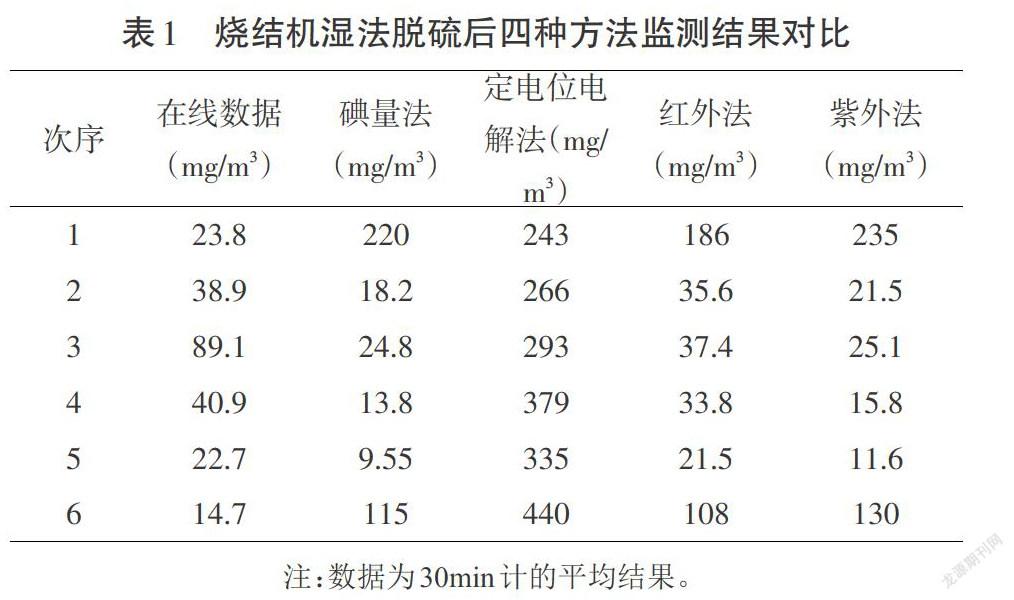
摘 要:目前,固定污染源廢氣二氧化硫的監測方法主要有碘量法、定電位電解法、非分散紅外法和紫外差分吸收光譜法。本文重點綜述了這4種監測方法的原理、現場監測過程和注意事項,并提出了一些現場監測經驗做法。同時,對4種監測方法的現場監測數據進行對比分析,探討了數據變化趨勢及方法的適用性,結果發現,定電位電解法和非分散紅外法不適合高濃度一氧化碳和高含水率的煙氣二氧化硫的測量,而碘量法和紫外差分吸收光譜法能夠取得滿意結果,這為后續固定污染源廢氣二氧化硫的監測提供了借鑒。
關鍵詞:固定污染源廢氣;二氧化硫;碘量法;定電位電解法;非分散紅外法;紫外差分吸收光譜法
中圖分類號:X831 文獻標識碼:A 文章編號:1003-5168(2019)26-0147-03
Comparison of Four Monitoring Methods for Sulfur Dioxide
from Stationary Source Emission
NI Guangle1 ZHENG Qiangqiang2 LI Fuxing2
(1. Xuzhou Environmental Monitoring Center,Xuzhou Jiangsu 221002;
2. Kuitun Environmental Monitoring Station,Kuitun Xinjiang 833200)
Abstract: At present, the monitoring methods of sulfur dioxide from stationary sourceemission mainly include iodimetry, fixed-potential electrolysis, non-dispersive infrared absorption and ultraviolet differential absorption spectrometry. This paper summarized the principle, process and points for attention of four monitoring methods in this paper, and then put forward some experiences. At the same time, This paper also compared the monitoring datas of four monitoring methods and analyzed the trends of datas change and applicability of these methods. It was found that the fixed-potential electrolysis and the non dispersive infrared method were inappropriate to situation of high concentration carbon monoxide and high moisture, while the iodimetry method and the ultraviolet differential absorption spectrum method could gain satisfactory results, which could provided reference of monitoring concentration of sulfur dioxide from stationary source emission.
Keywords: stationary source emission;sulfurdioxide;iodimetry;fixed-potential electrolysis;non-dispersive infrared absorption;ultraviolet differential absorption spectrometry
通常,生產生活過程中大量使用含硫的能源或原料,會產生二氧化硫等氣體污染物,二氧化硫的危害較大。首先,二氧化硫會被氧化成硫酸霧或硫酸鹽氣溶膠,形成酸雨,破壞土壤環境,影響植物生長;其次,高濃度的二氧化硫會使人出現不同程度的中毒癥狀甚至窒息死亡。所以,長期以來,各地均嚴格控制二氧化硫的排放濃度和排放總量,隨著國家對環境保護的日益重視,二氧化硫粗放式排放得到有效遏制。而固定污染源監測作為控制二氧化硫污染的主要途徑之一,結果的準確性也直接關系到環境執法和環境管理等工作的有效開展。目前,固定污染源二氧化硫的監測方法主要有碘量法[1]、定電位電解法[2]、非分散紅外法[3]和紫外差分吸收光譜法[4]。……
登錄APP查看全文
