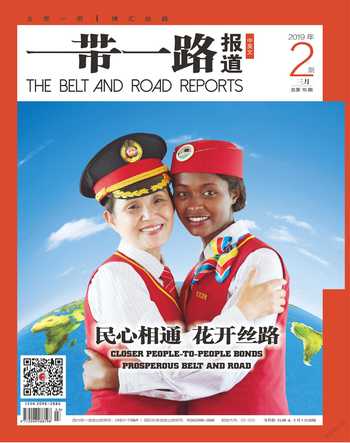
超越傳統發展援助 增進民心相通
2019-09-10 07:22:44
一帶一路報道 2019年2期
“一帶一路”作為全球治理創新模式的積極探索,非常注重沿線國家渴望經濟發展和改善民生的實際訴求。中國的實踐經驗表明,以教育促就業、以產業促發展,才能真正幫助受援國擺脫貧困,實現經濟社會可持續發展。“一帶一路”倡議實施5年多以來,大量惠民工程已在沿線國家產生積極社會效果,如中國援建的穆桑澤職業技術學校成為盧旺達北方省最大的職業技術培訓中心;云南民族大學與騰沖共建的瀾湄職業教育基地,為湄公河五國培養了上萬名專業技術人才,有效提升了當地的勞動生產力水平。
此外,中國投資企業注重本地化經營,許多基建項目本地化用工比例達到60%,部分制造業企業的比例高達90%,極大促進了所在國就業。中巴經濟走廊早期收獲項目已創造3.8萬個工作崗位,其中75%以上為當地就業;泰中羅勇工業園已吸引105家中國企業入駐,解決當地就業3萬多人;西哈努克港經濟特區入駐企業125家,解決當地就業2萬多人。截至2018年,“一帶一路”已經為沿線國家創造了數十萬個就業機會,創造了幾十億美元的稅收,為沿線國家的經濟增長和民生改善做出了顯著貢獻。
促進經濟發展、增進人民福祉是“一帶一路”沿線國家當前的首要任務,更是中國同沿線國家的利益交匯點。“一帶一路”倡議是建立在各方平等互利基礎上的新型合作平臺,不存在任何附加條件和從屬關系,更能帶動當地民眾參與,更容易獲得當地民眾支持。“一帶一路”倡議下各國的互利合作,打破了發達國家傳統資金援助的“輸血模式”,積極探索以培育發展中國家內生發展動力的“造血模式”,超越了傳統的北南發展援助,真正做到了“授人以漁”,是經濟全球化背景下南南發展合作的新典范。
——北京大學新結構經濟學研究院、北京大學國家發瓞研究院 趙祚翔
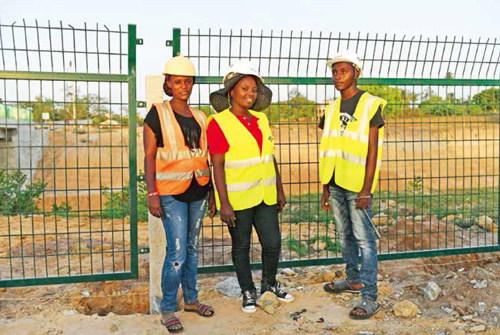
參與建設蒙內鐵路的肯尼亞女工程師

來自“一帶一路”沿線國家的留學生體驗徽州竹雕(本版圖片/新華社 供圖)
As an active effort in exploring a new global governance model, the Belt and Road InitiatiVe attaches greatImportance to the practical needs of the Belt and Road countries for economic development and better livelihoodof their peoples. China has learned from its own practice and experience that only education-based employmentand industry-based development can help recipient countries to eliminate poverty and realize sustainableeconomic and social progress.Over the five-plus years since the Initiative was proposed,a great number ofpeople-oriented projects have delivered tangible social benefits to the Belt and Road countries: The MusanzeIntegrated Polytechnic Regional Colleague built by China for Rwanda has grown into the bjggest professionaltrainino center inthe Norhem Province; the Lancang-Mekong Vocational Education Base, jointly built byYunnan Xinzu University and Tengchong County, has trained thousands of technical personnel for Myanmar,Laos,Thailand,Vietnam and Cambodia, effectively enhancing local labor productivity.
What's more, Chinese investors value localized operation. Local labors account for 60% in the infrastructureconstruction field and up to 90% in the manufacturing industry in some cases,greatly boosting the employmentof the host countries. Earlv-harvest projects of the China-Pakistam Economic Corridor have created 38,000jobs, more than 75% held by local people; in theThai-Chinese Rayong Industrial Zone. 105 Chineseenterprises have settled down, offering jobs tomore than 30,000 locals; the Sihanoukville SpecialEconomic Zone (SSEZ) is home t0 125 enterprises,employing more than 20,000 local labors. As of theend of 2018, the Belt and Road Initiative had offeredhundreds of thousands of jobs and generated severalbillion U.S. dollars of tax revenue, making significantcontributions to the economic growth and people'slivelihood of the Belt and Road countries.
Economic growth and better livelihood arethe priorities of Belt and Road countries, and theconverging interests between China and thesecountries. The Initiative is a new cooperation platformbased on the equality and mutual benefit of all parties, with no additional conditions or subordinate relationship.That is why it has encouraged the participation of local people and won their support. Under the framework ofthe Initiative, cooperation among countries is mutually beneficial and has tumed from the conventional "bloodtransfusion" model that developed countries provide capital aid to developing countries to "blood generation"model where China explores ways to help developing countries develop their own endogenous growth driver.This "teach a man to fish" cooperation model has transcended the traditional North-South development aid andset up a new model of South-South cooperation against the backdrop of economic globalization.
——Zhao Zuoxiang, Institute of New Structural Economics at Peking University, National School of
Development at Peking University
“一帶一路”不僅是經濟全球化、經濟發展的路線圖,也是一個文化發展的路線圖。五通當中最重要的是民心相通,如果沒有民心相通,彼此之間沒有了解,那么其他的通都無法談起,所以文化必須先行。我們必須強調文化自信。文化自信就是中國特色社會主義文化自信,這種文化源自于中華五千年文明發展史當中所培育的中華優秀傳統文化,黨領導人民在和平建設改革當中所創造的革命文化和社會主義先進文化,植根于中國特色社會主義偉大實踐。
——中國文化軟實力研究中心主任、中央馬克思主義理論研究和建設工程首席專家 張國柞

The Belt and Road Initiative is not onlv a roadmap for economic globalization and development, but also aroadmap for cultural progress. People-to people bonds top among "policy coordination, facilities connectivitv,unimpeded trade, financial integration, and people-to-people bond", without which mutual understanding isimpossible and the other four aspects are groundless. That is whv we must give top priority to culture. We mustemphasize cultural confidence. Cultural confidence means that we should be confident in the socialist culturewith Chinese characteristics. The socialist culture originates from the fine traditional Chinese culture nurturedthrough the five thousand years of Chinese civilization, the revolutionary culture and advanced socialist culturecreated in Chinese people's peaceful construction and reform led by the CPC, and is rooted ul the great practiceof socialism with Chinese characteristics.
——Zhang Guozuo, Director of China's Cultural Soft Power Research Center and chief expert of Central
Marxist Theory Research and Construction Project
共建“一帶一路”是不同民族、不同國家、不同政治制度、不同文明、不同宗教信仰、不同地域、不同經濟發展水平國家的大合作,沒有一定的文化交流、文化認同、文化價值的包容,是不可能做到民心相通的,也不可能有廣泛的社會共識。
——清華大學新聞傳播學院院長、原新聞出版總署署長 柳斌杰
The co-building of the Belt and Road is a great cooperation project among different ethnic groups, nations,political systems, civilizations, religions, regions, and countries of different economic growth levels. Therefore,cultural communications and recognition, and inclusiveness of cultural values are essential to people-to-peoplebonds and extensive social consensus.
——Liu Binjie, Dean of the School of Journalism and Communication, Tsinghua University, former
Minister of the General Administration of Press and Publication
“一帶一路”不僅注重經濟合作等方面的“硬聯通”,更注重民心共振、溫暖人心的“軟聯通”。近6年來,民心相通建設為共建“一帶一路”奠定了堅實的民意基礎。下一步,中國與合作伙伴國有必要加強民心相通建設的整體布局,突出工作重點,打造活動品牌,創新合作形式,拓展人文交流的寬度和深度,共建“一帶一路”精神家園。
——中共中央對外聯絡部當代世界研究中心主任、“—帶一路”智庫合作聯盟秘書長 金鑫
Not only focusing on "hard connectivity" such as economic cooperation, the Belt and Road Initiative alsoattaches importance to "soft connectivity" like people-to-people exchanges. Over nearlv six years, the programof people-to-people bonds has laid a solid foundation of popular will for the Initiative. Going forward, it isnecessary for China and its partners to intensify the overall layout of people-to-people bonds, highlight workingpriorities, shape activity brands, create new forms of cooperation, and broaden and deepen cultural exchanges, toco-build the spiritual home for the Initiative.——Jin Xin, Director of China Center for Contemporarv World Studies of the International Department
of the CPC Central Committee and Secretarv General of the Belt and Road International Think Tank
Cooperation Alliance
中國企業在“一帶一路”沿線開展項目建設時,保護環境是必須注意的重要問題。同時,企業還應注意履行社會責任,加強與當地政府、企業、民眾等各界的溝通與聯系,了解和尊重當地文化、宗教和風俗習慣;盡可能多地使用當地人員,為當地創造更多的就業機會;積極為當地的教育、衛生、科技、體育、社區發展事業作貢獻,使當地人民得到實實在在的收益,做好共建“一帶一路”中的形象大使。
——北京師范大學“一帶一路”研究院院長 胡必亮
For Chinese enterprises engaging in project construction along the Belt and Road, it is important to protectthe environment. Meanwhile, they should fulfill their social responsibilities, strengthen communications andcontacts with local oovemments, enterprises, people,and other circles of society, and leam and respect localcultures, religions, and customs; employ local people as manv as possible and create more jobs for localcommunities; make active efforts to contribute to local education, health, technology, sports, and communitydevelopment, and bring tangible benefits for local communities, building the image of China in the Belt andRoad countries.
——Hu Biliang, Dean of the "Belt and Road" Research Institute, Beijing Normal University
猜你喜歡
湖北教育·綜合資訊(2022年4期)2022-05-06 22:54:06
金橋(2022年2期)2022-03-02 05:42:50
中國核電(2021年3期)2021-08-13 08:56:36
小天使·一年級語數英綜合(2018年9期)2018-10-16 06:30:16
小天使·一年級語數英綜合(2018年6期)2018-06-22 10:25:54
華人時刊(2017年21期)2018-01-31 02:24:01
華人時刊(2017年23期)2017-04-18 11:56:38
北方交通(2016年12期)2017-01-15 13:52:53
小學閱讀指南·低年級版(2016年1期)2016-09-10 07:22:44
汽車零部件(2014年9期)2014-09-18 09:19:14