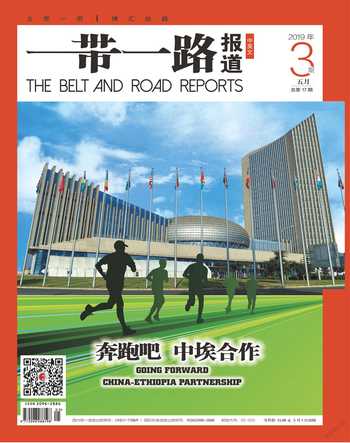
民生:在“非洲屋脊”共筑希望
2019-09-10 07:22:44李卉嬪
一帶一路報道 2019年3期
李卉嬪
People's livelihood: building dreams together on the "roof ofAfrica"
“十年”這個時間段,對埃塞俄比亞來說,有著非同尋常的意義:十年是埃塞義務教育的起點:是徹底消除瘧疾的終點;是經濟騰飛、GDP平均增長10%的節點,是成為東非第一大經濟體的蛻變。
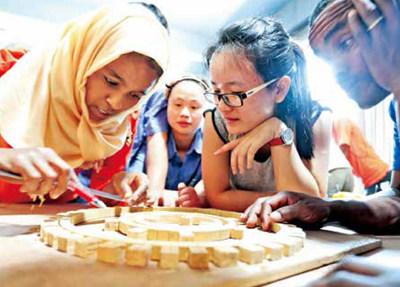
埃塞是非洲最大的竹林國家,竹制品是其重要的外匯來源之一。2018年9月,四川省瀘州市納溪區白節鎮,迎未了不遠萬里而來的38名埃塞俄比亞學員。他們來這里學習竹產品生產加工技藝:將藤條扭成適合的形狀,連接接頭,切割機去料,紗布打磨等一系列工序下來,小巧的吊燈、臺燈,實用的餐墊、精美的竹藤家具便誕生了。師傅手把手教,學生一點一滴學,短短一周時間,埃塞學員進步神速。學員們感慨,沒想到竹木藤能做出這么多東西,希望通過這次學習,把優秀的技藝帶回家鄉。
十年來,從手工藝品、服裝、鞋等輕工業品制作,到火車駕駛、鐵路運營、飛機駕駛等大型工種,中國有針對性地為埃塞俄比亞開展各種職業技能培訓、援建學校。2008年開始投入使用的埃塞一中國職業技術學院是中國援助非洲的最大教育項目。
十年來,中國向埃塞俄比亞派遣教師、捐贈教學設施、提供培訓課程,發展職業教育以促進經濟發展和人力資源開發,成績斐然。在埃塞的中國企業為當地人提供技能培訓,提供實習機會,埃塞已成為中國援外培訓資源的最大受益國之一。
隨著兩國教育合作愈加緊密,“留學”不再是夢想,越來越多埃塞年輕人選擇到中國“圓夢”。操著一口流利普通話的納必永是一名埃塞留學生。2012年,他在父親的鼓勵下,來到天津大學建筑學院開始本科學業。幾年后,對中國文化的喜愛讓他繼續留下攻讀碩士學位。“對我來說,天津大學是我的第二個家,當我18歲來到這里時,還是個懵懂的少年,但當我即將離開時,已對自己有了清晰的人生規劃。”納必永說。
十年前,埃塞俄比亞的中學課本載入了這樣的一課:中國在近代也貧窮落后,但近幾十年通過勤奮創造了經濟奇跡;既然中國能由窮變富,那么我們埃塞俄比亞也能創造經濟奇跡。中國奇跡來自其人民都受過基本的教育,渴望用自己的勤奮努力獲得更好的生活。這篇課文在埃塞俄比亞青年中產生了極大的震撼,希望學習中國模式、到中國學習的年輕人越來越多。
埃塞俄比亞曾經瘧疾肆虐,人民深受其害,為此,埃塞制定了“醫療十年”計劃,計劃在2030年前徹底消除瘧疾。
十年消除瘧疾計劃來源于中國對抗瘧疾的成功經驗:過去十年里,中國在非洲設立了幾十個防治瘧疾中心,幫助馬拉維實現了瘧疾零死亡,以清除傳染源為核心的中國原創青蒿素復方在非洲很多國家證明了其可行性。
十年消除瘧疾計劃的完成也與中埃40年醫療合作打下的堅實基礎密切相關。
45年前,中國首批援助醫療隊來到季馬,心血管專家梅庚年擔任醫療隊隊長,期間他的團隊攻克了多個醫療難題。次年8月,埃塞俄比亞發生嚴重旱災,參與救災的梅庚年不幸遭遇車禍、以身殉職。他被譽為非洲的“中國白求恩”。埃塞政府在梅庚年墓前立起三座大理石墓碑,以紀念他的國際主義精神。
40多年來,一批批援助埃塞的中國醫務人員,踏著梅庚年的足跡,奉獻在埃塞俄比亞高原。尤其是在“一帶一路”倡議的推動下,中國對埃塞的醫療援助力度越來越大。
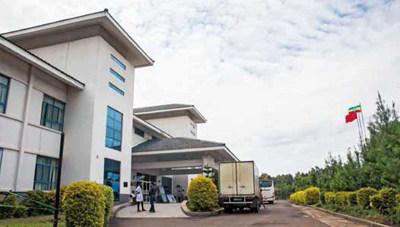
2018年8月,在首都亞的斯亞貝巴的中國一埃塞俄比亞友好醫院,來自河南省平頂山市第二人民醫院的外科副主任醫師張天鵬正在與當地醫生溝通患者的病情。時年37歲的他隨中國援埃塞第20批醫療隊在這里已經工作一年了。
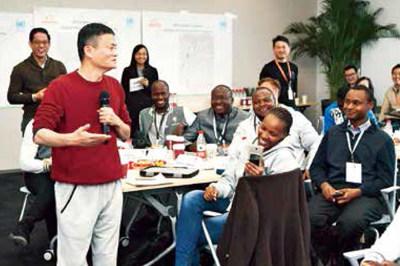
張天鵬說,“這一年的經歷對我一生都是一種很難得的歷練。”走在醫院會有人突然說“你好!” “China!”。有一次手術做到一半,發現后面圍了一圈當地的醫生在拍照觀察。“也有家屬緊緊地握著我們的手,雖然很多當地話我們聽不懂,但能看出他們眼神中帶著由衷的感激。”張天鵬回憶道。
一年多里,張天鵬所在的這支醫療隊在受援醫院共開展各類手術512臺次:日常門診病人共11647人次;麻醉386人次;×光檢查11151人次,B超檢查9759人次,化驗檢查1370人次,針灸治療9356人次,帶動了埃塞醫療水平的提高。
埃塞衛生部國務部長凱貝德·沃爾庫表示,“中國幫助我們健全完善了醫療體系,援建了現代化醫院,并配備藥品和急需的醫療設備,我們期待著更多的雙邊合作。”
十年教育鑄魂,十年醫療強身,前者為發展指路,后者為發展護航。未來十年,還有更多如梅庚年、張天鵬一樣的中國醫生將奉獻于埃塞俄比亞高原,為其無數個十年醫療計劃的如期完成添磚加瓦。
For Ethiopia, a decade implies particular importance.In the past decade, the country has witnessed itseconomic take-off, with its annual GDP growth reaching10%; in the upcoming decade, it will fulfill its medicalplan to eliminate malaria; one decade also represents thetime span forits compulsory education.
Education: "we can also create miracles"
Etlriopia has the largest bamboo forests in Africa,with bamboo products as one of its important sourcesof foreign exchange. In September 2018, Baijie Town,Naxi District, Luzhou Sichuan, embraced 38 Ethiopianapprentices who came from afar to learn the productionand processing skills of bamboo products, fromwrenclung rattan into desired shapes to connectingwith joints, from deflashing with cutters to polishingwith abrasive paper. From such small ornaments asceiling lamps and table lamps to practical placematand exquisite rattan furniture, the masters taught thestudents hand by hand, while the students learned littleby little. In such a short period of one week, theseEthiopian students made rapid progress. The studentssighed with emotion that they never thought they couldmake so many objects with rattan, and hoped to bringback excellent skills through this training session.In the past decade, from the production of suchlight industry products as handicrafts, apparel, andfootwear to such major professions as the operationof trains, railways, and aircrafi, China has providedvarious kinds of vocational skill trainings to Ethiopiaand assisted in building schools there. Ethio-ChinaPolytechnic College, which has been in operation since2008, is the largest education project aided by China inAfrica.
During the past decade, China sent teachers,donated teaching facilities, and provided trainingcourses to Ethiopia, aiming to boost the developmentof economy and human resources by developingvocational education, which has recorded remarkableachievements. Chinese enterprises in Ethiopiaalso provided locals with skill trainings and internopportunities, making Ethiopia the largest beneficiaryofChina's training resources for foreign countries.
With the closer cooperation in education betweenChina and Ethiopia, "studying abroad" is no longeronly a dream for Ethiopians, and more and moreEthiopian youngsters choose to "fulfill their dreams" inChina. Nabiyong, who speaks Mandarin fluently, is anEthiopian student in China.Encouraged by his father,he came to pursue his bachelor's degree in the Schoolof Architecture, Tianjin University. As interested inChinese culture, he continued to study for the master'sdegree a few years later. "For me, Tianjin University ismy second home. When I came here at 18 years old, Iwas still an innocent teenager, but when I am about toleave here, I have a clear life plan,"said Nabiyong.
Ten years ago, there was a lesson in the text bookfor secondary school students in Ethiopia, which read:China used to be a poor underdeveloped country inmodern times too, but has created economic miraclesthrough diligent work in recent decades; as long asChina can develop from a poor country to a rich one,then Ethiopia can also create economic miracles.China's economic miracles result from the fact thatmost of its people have received basic education, andare eager to live a better life through hard work. Thistext shocked many Ethiopian youngsters, and thenan increasing number of them hoped to learn fromChina's development mode and study in China.
Medical care: fighting against malaria and
safeguard health
Ethiuopia was once a malaria-endernic countrywith its people deeply suffered. Therefore, Ethiopiaprepared a "ten-year" medical plan namely the plan toeliminate malaria before 2030.
The "ten-year" malaria elimination plan comesfrom China's successful practice of fighting againstmalaria: in the past decade, China has set up dozensof malaria prevention centers in Africa, helpingMalawi realize the goal of zero death from malaria;"China's malaria prevention program", the core ofwhich is using artemisin in compound to eliminateinfection sources, has proved its feasibility in manyAfrican countries.
The completion of the "ten-year" malariaelimination plan is closely related to the solidfoundation laid by the 40-year China-Ethiopiamedical cooperation.
45 years ago, the first Chinese medical aid team,which was led by angiocarpy expert Mei Gengnian,came to Jimma. During their stay there, the teamovercame many medical difficulties. In the nextAugust after their arrival, Ethiopia was hit by severedrought. Mei Gengnian participated in the disasterrelief, and unfortunately died at his post in a caraccident. He has been reputed as "Chinese Bethune"in Africa. The Ethiopian government set up threemarble tombstones in front of Mei Gengnian's tombto commemorate his spirit of intemationalism.
Over the past over 40 years, groups of Chinesemedical aid workers followed the footsteps of MeiGengnian, devoting themselves on the EthiopianHighlands. Especially with the boost ofthe Belt andRoad Initiative, China is providing more and moremedical aids to Ethiopia.
In August 2018, in the Ethio-China FriendshipHospital in Addis Ababa, the capital of Etluopia,Mr. Zhang Tianpeng, associate chief surgeon fromPingdingshan the Second People's Hospital ofHenan was talking about patient's conditions withlocal doctors. He, 37-year-old at that time, had beenworking with the 20th batch of the Chinese medicalteam in Ethiopia for one year.
Zhang Tianpeng said, "This is a valuableexperience in my life." When he was walkingin the hospital, someone would suddenly say"Hello!""China!". Once when he was performingan operation, he found himself surrounded by localdoctors who were taking photos and observing."Some patients' family members would hold ourhands tightly. Although we cannot understand manylocal words, we can see the gratitude in their eyes:'Zhang Tianpeng recalled.
In the past year, the medical team which ZhangTianpeng belongs to has performed 512 0perations inthe aided hospitals; received 11,647 person-times ofroutine outpatients; anaesthetized 386 person-times;performed X-ray examinations for 11,151 person-times;performed medical ultrasound examinations for 9,759person-times; performed laboratory examinations for1,370 person-times; acupunctured 9,356 person-times,improving the medical services in Ethiopia.
Kebede Worku, State Minister of Health ofEthiopia, said, China helps us improve our medicalsystem, aids the construction of modem hospitals,and supplies medicines and medical equipmentneeded badly. We are looking forward to morebilateral cooperation.
A decade of education aid shapes the soul, and adecade of medical aid improves physical fitness. Theformer shows the direction of development, whilethe latter guarantees the development. In the comingdecade, there will be more doctors like Mei Gengnianand Zhang Tianpeng devoting themselves on theEthiopian Highlands, and helping Ethiopia completeits several "ten-year" medical plans.