
setting the Score
2019-09-10 07:22:44
漢語世界(The World of Chinese) 2019年6期
關鍵詞:歷史
BY Emily Conrad
A touring production about
中文歌劇《拉貝日記》亮相海外,
一段苦難與溫情交織的歷史感動
無數觀眾
Grand operas are no small feats—it’s right there in the name. Typically calling for an 80-member orchestra and an 80-member chorus, in addition to elaborate scenery and ornate costumes, it’s little wonder they once required patronage from royalty, and are infrequently staged these days in the West, besides audience favorites by composers like Giuseppe Verdi and Richard Wagner.
“Works in the tradition of grand operas just aren’t being composed anymore,” laments 36-year old American baritone Jose Rubio about declining budgets for the genre in his country. By contrast, in China, state-funded theaters in outlying provinces and cities are making an effort to grow audiences by commissioning a flurry of grand operas in Mandarin, based on Chinese stories.
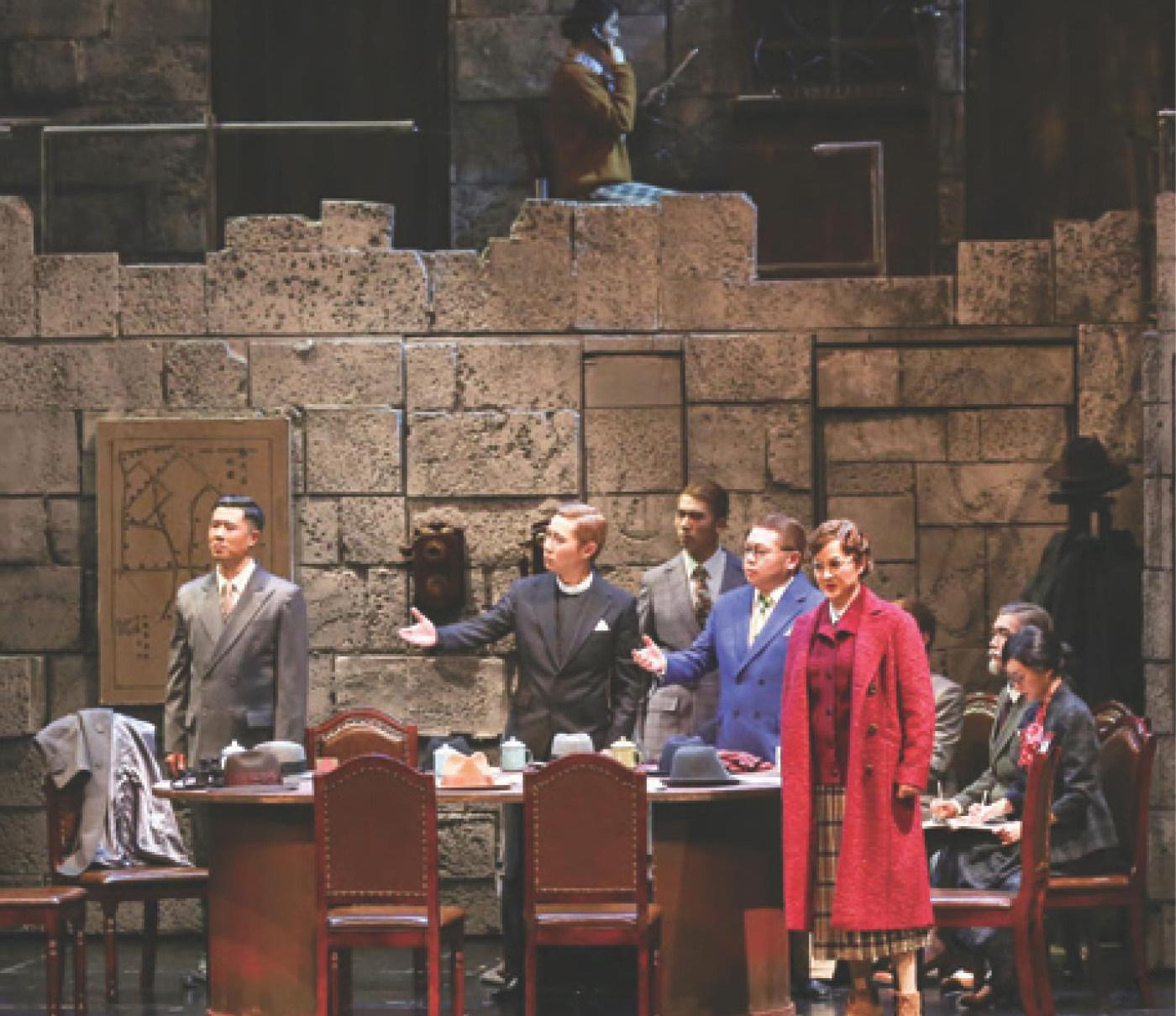
Rubio performed in one such opera, , over the summer in Berlin, Hamburg, and Vienna. Its composer, 64-year-old Jilin native Tang Jianping, seems to harken the heyday of Italian opera in the 19th century, having composed five operas within five years.
As the first Mandarin opera staged on the famed Berlin Staatsoper, ?proves an interesting case in point for opera’s cross-cultural possibilities. Despite dozens of Chinese documentaries and books dedicated to it, the opera’s 82-year-old subject matter remains largely unknown outside the mainland. Neither Rubio, who played the missionary W.P. Mills, nor Guatemalan soprano Ana Isabel Lazo, 32, who took the role of American educator Minnie Vautrin, had ever heard of the 1937 Nanjing Massacre—let alone John Rabe—when invited to audition.
In 1937, during a six-week campaign of raping and pillaging by Japanese invaders in the city of Nanjing that left an estimated 300,000 civilians and soldiers dead, Siemens businessman and Nazi Party member John Rabe spearheaded the creation of an International Safety Zone that sheltered over 200,000 Chinese. This earned him the sobriquet of the “living Buddha of Nanking,” along with comparisons to Oskar Schindler, a fellow Nazi member who saved over 1,200 Jewish people from Poland’s ghettos.
Such a remarkable and morally complex tale comes with inevitable if understated propagandist overtones. But ?soul-searching plot appears to have touched Western music lovers, earning it a place on the shortlist for the 2018 Opera Awards’ Best World Premiere.
“Looking out into the audience at the end, I saw so many people with tears in their eyes,” said Yue Peng, director of piano accompaniment at Beijing’s National Center for Performing Arts, who worked on the opera’s European tour. Online, many operagoers expressed surprise that they hadn’t heard the story before, calling it an “emotional” and “inspiring” experience.
“This opera allows us to experience history from a global perspective, not just from a Western perspective,” said Rubio. He believes that the opera might have staying power in the West due to its World War II-related plot, which resonates more with Western audiences than the plots of previous Chinese productions—the sacrifices of Soviet female soldiers in Tang’s , or the warlord chaos and feudalist undertones in Guo Wenjing’s .
Much of the opera’s two-and-a-half-hour score pays homage to Rabe’s German roots with musical quotes from Bach, such as his “Passacaglia” and violin concerto, and includes details which help make the history come alive. During scenes of conflict, brass mirrors the percussion, imitating rapid gunshots; when Japanese soldiers enter, ?drumbeats set a somber tone, as do the melodies, which Yue describes as utilizing “the Japanese minor—with half-tones, rather than full tones.”
Many of the most poignant scenes in Zhou Ke and You Weizhi’s libretto mirror historical events. In one emotionally exhausting 20-minute scene, based on an event that took place on Christmas Eve in 1937, a group of Japanese soldiers break into Vautrin’s school, which sheltered some 10,000 women and children inside the Safety Zone, and demand 100 women as sex slaves. After Vautrin makes the heartbreaking decision to agree in order to “guarantee” of the safety of the other refugees, a Chinese version of “Silent Night” plays—“not the melody we all know and love, [but] in a minor key [so] the audience knows that danger is coming,” says Yue.
In addition to its cross-cultural storyline, ?contracted international singers to sing in Mandarin. Most classical opera singers in international troupes learn foreign-language lyrics phonetically, then memorize the meaning, but Lazo still found singing ?difficult due to what she believes is the “choppiness” of Mandarin. As for Rubio, “There are lots of opinions on how to sing Mandarin,” he recalls. “If I work from a vocal coach from Beijing, they tell me to pronounce it a certain way, but a vocal coach from Shanghai will say something different.”
Both Lazo and Rubio hope to return for a revival of ?this December in Nanjing, and look forward to the opportunity to break into the Chinese opera scene, believing it will help sustain the art form in the face of dwindling ticket sales in Europe and the Americas. Having recently seen a Guangzhou Grand Theatre production of?which featured an Italian tenor singing Mandarin in the lead, Lazo hopes that there will continue to be opportunities for Western singers on Chinese stages. “I think that Chinese opera houses are starting to open up Western roles to Western singers. Of course, we have accents when we sing in Chinese, but our accents make sense in context.”
“This music is so difficult from a technical and musical standpoint,” explained Yue, who is more cautious about the future for large-scale cooperation. “It is difficult for Chinese singers, let alone foreign singers dealing with the language.” Although he ranks ?alongside Zhang Yiqian’s ?as one of his favorite operas composed in Mandarin, Yue ironically thinks the wartime epic might face more resistance at home. “For the Chinese audience, this musical style might be hard to accept—at least, for now. The music is not the most traditionally beautiful, nor is it simple.”
While having a Nazi as the titular “good guy” may not be that controversial in China (where humanizing the Japanese characters would be the genuine challenge), the nuanced subject matter of ?elevates it far above the mainland’s usual “Red Opera” output, making its triumph on the German stage particularly remarkable—and one that may pave the way for future cross-cultural productions.
猜你喜歡
小天使·一年級語數英綜合(2022年2期)2022-03-30 11:38:17
環球時報(2022-03-16)2022-03-16 12:17:18
作文大王·笑話大王(2019年8期)2019-09-09 07:34:21
全體育(2016年4期)2016-11-02 18:57:28
小天使·四年級語數英綜合(2016年9期)2016-10-09 22:40:45
科普童話·百科探秘(2015年6期)2015-10-13 07:21:18
科普童話·百科探秘(2015年9期)2015-09-22 07:36:52
科普童話·百科探秘(2015年8期)2015-08-14 07:13:06
科普童話·百科探秘(2015年7期)2015-07-25 07:42:53
科普童話·百科探秘(2015年5期)2015-05-26 07:28:14
 漢語世界(The World of Chinese)2019年6期
- 漢語世界(The World of Chinese)的其它文章
- Tall Tales
- Demolition Dolls
- Permanent Revolution
- Ode to the ou
- Audio Attraction
- Tracks Across TIME