
Changes in a Remote Village School
2019-08-08 02:09:22ByHeFan
Special Focus 2019年7期
By He Fan
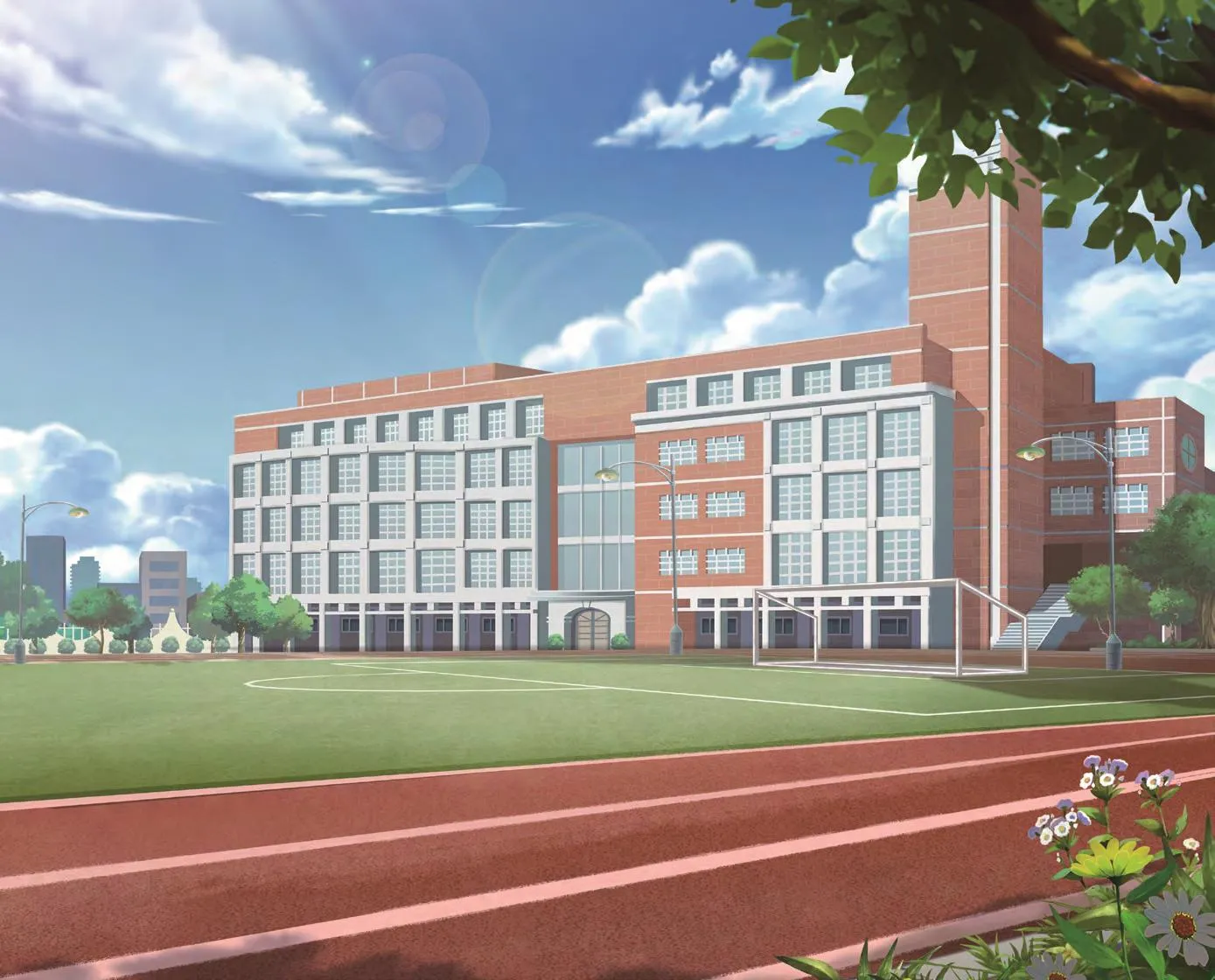
Driving along a narrow bumpy mountain road in the suburb of Guangyuan City in Southwest China's Sichuan Province, you may easily lose sight of the Fanjia Primary School on the roadside.
A Day in the School
Fanjia Primary School is of a small scale, consisting of 71 students (28 kindergarten kids and 43 pupils)and 12 teachers in total, among which 35 students (3 kindergarten kids and 32 pupils) are boarding at school. All of the students are from 23 groups1of 5 neighboring villages. Goucun, the nearest village to the school, was once inhabited by four to five hundred villagers. However, its population has dwindled to less than a hundred due to its backwardness and poor economic conditions.
There used to be roughly four to five hundred students from the surrounding villages. But now,more and more children have left because their parents, who work in the cities, choose to take them away from their hometown.Worst of all, some women who had got married to the local young men were intimidated by the backwardness here and fied away after giving birth to the babies.
Though every child at this very school has a story to recount,an air of utmost happiness and confidence still shines on their faces.
I attended the school opening ceremony in the morning. There were no tedious speeches made by various officials, and the participants were mostly the elderly from the surrounding villages. The required procedures was quite simple: the teachers helped the students tidy themselves up and the students offered tea to their teachers.While the pupils all stood up and bowed three times to their teachers, the kindergarten kids,though bewildered, followed suit.A great part of the ceremony was devoted to awarding students all sorts of certificates.
Students were prepared to attend classes after the ceremony. A normal class has only six to seven students, and in some classes, four to five. Each classroom is equipped with a couch, a bookshelf, and a newlyinstalled LCD projector, and decorated with the children's drawings on the walls. No bell rings for the class. Students of lower grades take a break about every 20 minutes whereas those of higher grades have a rest every 40 to 50 minutes.
I audited a Chinese class,only to find that the teacher was making a fruit salad with the students, which was no more than pouring the yogurt over the diced fruit, but the children had a great time. After the class, they gave away the salad to the students of other classes. Several of them who happened to run past me offered me a salad as well. Their eyes were brimming with passion and kindness, with no trace of timidity. They proudly told me that their greatest fun was the time when they made the boiled fish with pickled cabbage and wolfed it down.
In another classroom, the teacher was lecturing on a text titled “How Lucky I Am Today.”Each student went in turn to share his or her own ideas in front of the classroom, confident and focused.The whole class applauded heartily the moment the speaker finished.
In the afternoon, students of various grades attended an art workshop. The older ones would take care of the younger ones, passing them the palettes and supplies. The teacher demonstrated the process of drawing a traditional blue and white porcelain design, but some students let their imagination run riot and drew a variety of things such as crabs and irregular toothshaped patterns. In spite of that,the teacher watched with a smile.
Before long, the children were all playing in the schoolyard,making the Mount Huaguo2out of the Fanjia Primary School.

Note:2. Mount Huaguo, a major area featured in the novel Journey to the West, is populated by many boisterous and wild monkeys.
Story of Principal Zhang
Zhang Pingyuan, born in December of 1968, is the principal of the Fanjia Primary School.He had been a head teacher for fifteen years in six different schools. When a leader of the local education bureau recommended him to manage the Fanjia Primary School, Mr. Zhang felt a little hesitant at first because of its remoteness and backwardness.But the leader frankly told him that it was the only position vacant, owing to its geographical isolation. Mr. Zhang agreed,though he hesitated to tell his family his transfer at the first few days. He tossed and turned all night, with his mind occupied,that is, how to run a village school as remote and underdeveloped as this?
Somehow the pros and cons of a village school can coexist. In other words, breakthroughs in management might begin from the weakest points.
Note:1. China's administrative units are currently based on a three-tier system, which divides the nation into provinces, counties and townships. The townships are divided into villages, and the villages are subdivided into groups.
Almost all schools in the city, being of a large scale, are characteristic of their militarystyled and delicate management.However, it is the teacherstudent relationship that matters in school management. At this village school, the teachers and students have forged strong bonds and enjoyed harmonious relationship. The teachers would children. They all answered that happiness should be a given priority. When asked whether or not they expected their children to go to university, they all gave me a positive answer, but responded with reservations that the children would make their own decision. Without assigning any life-altering meaning to the College Entrance Examination,parents in rural areas are less concerned about test scores,pat the children's rosy cheeks gently now and then while the children would rush to the teachers' arms passionately.

I asked the parents about the expectations they had on their which, quite unexpectedly, allows their kids a better chance to receive education for all-round development.
The educational objective of the school can be seen on the bulletin board: “Bringing up the young generation that is optimistic and confident in this beautiful village school.” Students here are expected to accomplish several tasks, such as developing an interest in reading, writing with beautiful handwriting, reading texts fluently, expressing their own ideas confidently in public,staying positive and active, paying attention to personal hygiene,and taking interest in two sports and one particular art. Among the expectations to be fulfilled,achieving academic excellence ranks last.
The educational philosophies of this village school stem mostly from Mr. Zhang's personal experiences. He is among those who no longer believe in the idea that the College Entrance Examination will change your fate. Nevertheless, they still rely on the homespun philosophies of life, including staying industrious and hardworking, showing filial piety to your parents,always being kind and helpful to others, and ardently loving your hometown and motherland.Such time-honored philosophies constitute the trunk and roots of the big tree of our Chinese culture.In a sense, what education needs is not innovation, but rectification.
Peer Groups MatterWhy is school bullying out of the question in this village school?How could these children who come from broken families live with such optimism and confidence?
Those who are prejudiced against the left-behind children have misinterpreted educational theories and believed that absentee parents will make the left behind-children a new group of problem children.
Judith Harris, an American psychologist, writes in her bookThe Nurture Assumptionthat it is the social environment constituted by various peer groups rather than the parental influence that makes a greater difference—the former will exert great impacts on the development of a child. Children are inclined to pay considerable attention to their identity among peer groups. Furthermore, they tend to learn more from their peers rather than from their parents, whose advice they may take selectively. A teacher also plays a significant role in the growth of a child, for a school is like a tribe: the teacher is a chief of the “tribe” and contributes profoundly to the formulation of the tribal codes of conduct.
It reminds me of an African proverb: “It takes a village to raise a child.” Fanjia Primary School is exactly such a village. It is true that most of the students here come from a dysfunctional family, but this village school entitles those children with the equal, inclusive, confident, and optimistic peer groups they need.
Children want peer groups as much as adults do. Only when we rebuild sustainable peer groups for them will our children grow up optimistically and confidently. Also, parents who value the importance of peer groups will have much more penetrating insights on rearing a child.
It dawned on me that, if one must select a school that has adopted the most advanced educational philosophies in China, perhaps the honor would not be bestowed to the prestigious public schools or international schools in Beijing or Shanghai, but to this village school located in the remote mountains of Sichuan.
