
一份文化遺產,怎樣驚艷世界
2019-07-26 03:17:44
文化交流 2019年7期

2013年,科林·倫福儒首次來杭,他被良渚博物院的展品吸引。
“良渚古城遺址”靠什么征服了世界呢?其入選又意味著什么?
符合兩條價值標準載入世遺名錄
ICOMOS專家在評估報告中認為:“良渚古城遺址符合世界遺產第3和第4條價值標準,建議將良渚古城遺址列入《世界遺產名錄》。”
按照聯合國教科文組織的要求,價值標準一共有10條,前6條標準針對文化遺產,后4條給自然遺產用,第7條可以共用。文化遺產只要滿足前六條中的一項,就夠格,可成功申遺。良渚古城遺址則符合兩項標準:第3條和第4條標準。
第3條是:“能為延續至今或業已消逝的文明或文化傳統,提供獨特的或至少是特殊的見證。”
良渚是如何見證的?來看ICOMOS的解讀——

反山遺址出土的玉器上有冠狀飾。
良渚古城遺址作為良渚文化的權力與信仰中心,建造了距今5000年前的規模宏大的城址,功能復雜的外圍水利系統,分等級墓地(含祭壇)等一系列相關遺址,以及以具有信仰與制度象征的系列玉器為主的出土物,揭示了中國新石器時代晚期在長江下游環太湖地區曾經存在過一個以稻作農業為經濟支撐的、出現明顯社會分化和具有統一信仰的區域性早期國家,并以其時間早、成就高、內容豐富而展現出長江流域對中華文明起源階段“多元一體”特征所作出的杰出貢獻,填補了《世界遺產名錄》東亞地區新石器時代城市考古遺址的空缺,為中華5000年文明史提供了獨特見證。
再看第4條標準:“可作為一種建筑或建筑群或景觀的杰出范例,展示出人類歷史上一個或幾個重要階段。”
ICOMOS在報告中這樣說——
良渚古城遺址在空間形制上展現出的向心式三重結構——宮殿區、內城與外城,成為中國古代城市規劃中進行社會等級“秩序”建設、凸顯權力中心象征的典型手法,揭示出長江流域早期國家的城市文明所創造的“藏禮于器”和“濕地營城”的規劃特征;以及作為城市水資源管理工程的城址外圍水利系統,在工程的選址、規模、設計與建造技術方面展現出世界同期罕見的科技水平,展現了5000年前中華文明、乃至東亞地區史前稻作文明發展的極高成就,在人類文明發展史上堪稱早期城市文明的杰出范例,符合世界文化遺產標準。

2017年,來自全球的20多位國際考古大咖實地考察良渚古城遺址。
古城遺址四大要素跨過國家“門檻”
良渚古城遺址此次派出了4位種子選手參與評審——01號瑤山遺址,02號谷口高壩區,03號平原低壩——山前長堤區,04號古城區遺址。
這四者身上蘊含了絕對的競爭力,也就是最終被ICOMOS寫進報告的良渚古城遺址四大價值要素是:“城址、外圍水利系統、分等級墓地(含祭壇)和以良渚玉器為代表的出土器物。”
首先,城址。眾志,可以成城。城邦,是文明社會到來的重要標志。
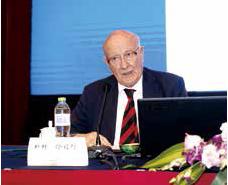
2017年,倫福儒考察良渚遺址后作學術報告。?
1936年,施昕更發現良渚黑陶,開啟序幕;1959年,夏鼐提出“良渚文化”的命名;1986年,反山發掘出貴族大墓;1987年,瑤山發現祭壇及埋于其上的貴族墓地;1992年,發掘出莫角山遺址,推測是王者的宮殿……
“這些發現僅指向原始的小聚落,并不能確切證明城的存在。”浙江省考古所所長劉斌說,良渚遺址區是否有“城”的疑問,曾一度在考古界縈繞。
直到2006年,余杭葡萄畈西城墻初露,2007年南城墻、北城墻、東城墻依次顯露。“中華第一城”良渚古城被發現。
隨著考古發掘和研究不斷深入,古城的空間格局、功能分區及各類遺存的內涵日漸清晰。2010年,外城初步確認;2015年,外圍大型水利系統確認。
造城,是巨大的工程,需凌駕于社會之上的國家政權來完成。
聆聽城址的介紹,我們會發現,當時的筑城技術已相當成熟。城墻的黃土,由人工取自山上;底部地基石頭尖銳,為人工開鑿。已知城址的土方工程量,就超過1000萬立方米。假設參與建設人數為1萬人,每3人每天完成1立方米,需持續工作8年。
家是最小國,國是千萬家。遙遠的良渚時代,是一支怎樣有序、團結的隊伍,夜以繼日地協力建設家國?
“良渚不僅僅是一座城,更是一個輝煌的古代王國。它讓中國找到了與之相對應的家國文化!”劉斌這樣說。
一千年前看北京,兩千年前看西安,五千年前看杭州良渚。中華文明的燦爛之光,映照出我們的文化自信。
第二是外圍水利系統。

反山二十號墓中部象牙器與琮、璧、鉞等玉器的疊壓出土情形。
良渚古城外圍大型水利系統是古城建設之初,就規劃好的城市水資源管理工程,由11條人工壩體和天然山體、溢洪道構成。整個水利系統形成面積約13平方公里的水庫,庫容量超過4635萬立方米,直接保護范圍達100多平方公里。
先于“大禹治水”千年,良渚水利系統是中國迄今發現最早的大型水利工程遺址,也是世界上迄今發現最早的堤壩系統之一,開啟了世界史前水利考古研究的新領域。
至今沿用的先人智慧,令浙江省考古所研究員王寧遠驚嘆不已。他說:“幾年前,老虎嶺還沒被發現為水壩。當地還因其泥土質地合適,搬去筑壩。‘草裹泥的修堤工藝在后世水利工程中被廣泛應用,與當代沙袋筑堰原理一致。”
民溫飽,國富庶。良渚先民以稻米為主食,宮殿區遺址曾發現超過10萬公斤的碳化谷堆積。“稻作文明是良渚文明區別于中國及世界其他文明的重要特征,它比麥作對水資源利用的要求更高。”王寧遠強調。
穿越時空,回望那一派生機景象:筑堤防洪、蓄水灌溉、摸螺打漁……一群先民在江南水鄉繁衍生息。
城址內外分布著若干處不同等級的墓地。良渚人的墓地,就是身份的象征,可以從多個角度去判斷,你到底是王,還是平民,比如分布位置、選址特征、營建體量、墓葬的排列方式、埋葬規制、隨葬品的數量、類別、組合以及用玉制度等等。這構成良渚社會高低懸殊、層級復雜的階層分化,為環太湖地區區域性早期國家的出現,提供了重要的證據。
最后是玉器,這是良渚文明的一個重要特征。良渚玉器數量巨大、種類豐富、工藝精美,是史前玉文化發展的最高峰。
“玉器不僅是裝飾品,更是物質文化與精神文化的雙重代表,說明當時已形成一套不同階層人群的用玉制度和社會規范。”劉斌認為,玉禮器系統及神徽是維系良渚社會政權組織的主要手段和紐帶,顯示良渚文化有著極強的社會凝聚力,存在一致的神靈信仰。
相距千里,時隔千年。良渚玉器影響了大半個中國。同期的廣東石峽文化、甘青地區的齊家文化、成都的金沙遺址等出土的玉器,明顯受到良渚文化的影響;之后的青銅時代,二里頭、殷墟等許多夏商時代的遺址中,也都發現有吸收和繼承良渚文化元素的玉器。
“玉從一個側面反映出,良渚文化在中華民族共同體形成的過程中,一定起過非凡的作用。”劉斌說。
8000多年前,玉器從中華大地起源;5000年前,良渚成為“世界絕無僅有,中國只此一家的玉文化殿堂”;而今,玉文化在中華大地賡續,向世界傳遞“仁、義、禮、知、信、天、地、道、德、忠、樂”的中華氣質。

發掘前的反山。
From City to State, How Liangzhu Civilization Was Internationally Recognized
The inscription of Archaeological Ruins of Liangzhu City onto the UNESCOs World Heritage List is owed to the fact that the nominated property meets the selection criteria iii and iv. it is the center of power and belief of an early regional state
The criteria for selection list ten benchmarks. The first six are for cultural heritage and the last four for natural heritage. Number 7 criterion applies to both. A property that meets any of the first six criteria qualifies for inscription onto the cultural heritage list. Archaeological Ruins of Liangzhu City meet number 3 and number 4 criteria.
Number three criterion reads: to bear a unique or at least exceptional testimony to a cultural tradition or to be a civilization which is living or which has disappeared.

瑤山遺址出土的玉牌飾。
A report of ICOMOS elaborates Liangzhus full compliance with criterion iii as follows:
As the center of power and belief of Liangzhu culture, Archaeological Ruins of Liangzhu City are characterized by the large-scale City Site built between 3,300 and 2,300 BC, the Peripheral Water Conservancy System with complex functions, the graded cemeteries (including altar) and a series of other related sites, as well as exhumed objects represented by a series of jade artifacts symbolizing the belief and system, which corroborate the existence of one early regional state sustained by rice farming with obvious social differentiation and unity of belief in the area around Taihu Lake in the lower reaches of the Yangtze River in late Neolithic China. Its early time of formation, great achievement and rich diversities show the outstanding contribution made by the Yangtze River Basin to “Diversity in Unity” feature of the origin of Chinese civilization. Archaeological Ruins of Liangzhu City also fill the blank of Neolithic city sites in East Asia in the World Heritage List, offering unique evidences for the 5,000-year history of Chinese civilization.
Number four criterion reads: to be an outstanding example of a type of building, architectural or technological ensemble or landscape which illustrates (a) significant stage(s) in human history.
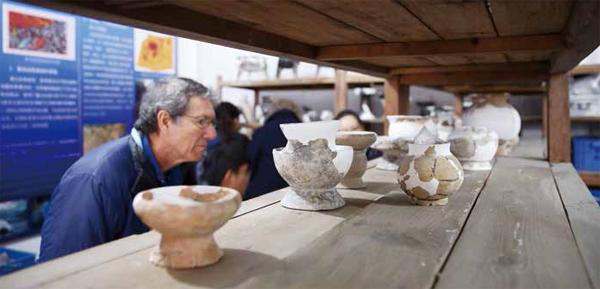
2017年,來自全球的20多位國際考古大咖在良渚博物院觀賞玉器。
In the same report, ICOMOS elaborates Liangzhus full compliance with criterion iv as follows:
The centripetal triple spatial pattern adopted by Archaeological Ruins of Liangzhu City, including the Palace Area, the Inner City and the Outer City, is a typical technique to establish the social class order and highlight the symbolism of power centers in ancient China, and also has revealed the planning characteristics created by the urban civilization of the early state in the Yangtze River Basin, which can be frequently seen in the capital planning of the ancient Chinese ritual society. The “water city” planning pattern and construction technology demonstrated by Archaeological Ruins of Liangzhu City reveal the characteristic landscape of city and architecture created by people in the wetland environment. Especially with the Peripheral Water Conservancy System as the urban water resources management project that represents outstanding scientific level rarely observed at that time across the world in terms of project scale, design and construction, it also reveals the great achievement of Chinese civilization as well as prehistoric rice-cultivating civilization developed in East Asia, which can be outstanding examples of early urban civilization in the history of human civilization.
Area of Yaoshan Site (01), Area of High-dam at the Mouth of the Valley (02), Area of Low-dam on the Plain-Causeway in Front of the Mountains (03), and Area of City Site (04), which are four key archaeological ruins of Liangzhu Culture, fully support Liangzhus compliance with the two criteria.
The archaeological projects since 1936 led to the step-by-step discovery of the city site, which is the very basis of the conclusion that the city is the center of power and belief of an early regional state.
The City Site

聯合國教科文組織助理總干事班德林在良渚博物院參觀。
In 1936, Shi Xingeng discovered black pottery in Liangzhu, which turned the first page of archaeological projects in Liangzhu. In 1959, archaeologist Xia Nai suggested the name Liangzhu Culture. In 1986, the aristocratic cemetery at Fanshan was discovered. I 1987, an altar and an aristocratic cemetery on the altar were discovered at Yaoshan. In 1992, the Mojiaoshan Site was uncovered and it was conjectured that it was the palaces for the supreme ruler. These discoveries, however, pointed to primitive settlements and were not necessarily evidence of a city. For a long time, the archaeological community was doubtful whether there existed a city within the zone of Liangzhu Site.
In 2006, the western city wall was discovered at Putaofan, Yuhang. In 2007, the southern city wall, northern city wall, and eastern city wall were excavated. Archaeologists knew for certain that there was a city in Liangzhu. More excavation projects revealed that the citys functions were located in different areas. In 2010, archaeologists concluded that there was an outer city. In 2015, archaeologists discovered a peripheral water conservancy system.
The design and construction of the gigantic city pointed to the existence of a state power. Liangzhu, it is convincingly concluded, is more than a city. It is a regional early state.
The Peripheral Water Conservancy System with Complex Functions
The Peripheral Water Conservancy System is an urban water resources management project with unified planning. It is composed of the High-dam at the Mouth of the Valley Low-dam on the Plain and the 11 artificial dam bodies and natural dam bodies as well as spillway at the Causeway in front of the Mountains, with a total earth volume of 2,880,000 m?. It is by far the earliest large-scale water conservancy project site discovered, and also one of the earliest dyke systems ever discovered in the world.
The Peripheral Water Conservancy System is strongly scientific in terms of dam site selection, foundation treatment, selection of dam materials, filling process and structural design, with multiple functions such as flood control and water storage, irrigation and transportation, as well as water adjustment. It is an outstanding example of peoples development and exploitation of wetland in East Asia in the early period.
Graded Cemeteries

2017年,科林·倫福儒二度參觀良渚遺址。
Graded cemeteries are the main material evidence to obvious social differentiation of the Liangzhu Culture and are composed of 5 cemeteries distributed in different areas. According to the site selection characteristics, tomb arrangement pattern as well as the quantity and grade of burial objects, it can be divided into four or more grades, which indicate that there were at least four or more classes in the Liangzhu culture period.
Unearthed Objects with Jade Artifacts in the Majority
Unearthed objects of Archaeological Ruins of Liangzhu City include jade artifacts, lacquerwares, potteries, stone artifacts, bamboo and wooden artifacts, bone and horn artifacts, etc. These objects display various combinations of shapes and ornamentation motifs, different quantities, and preserve the information of production, thus bearing significant witness to the technology, culture and living of Liangzhu period. Jade artifacts made in Liangzhu were discovered in a big part of China, some places being more than 1,000 kilometers apart from Liangzhu. Bronze objects unearthed from sites of subsequent cultures reflect the characteristics of jade objects made in the Liangzhu. From this can be safely said that the Liangzhu Culture must have played an extraordinary and historic role in the history of the Chinese Civilization.
猜你喜歡
湖北教育·綜合資訊(2022年4期)2022-05-06 22:54:06
金橋(2022年2期)2022-03-02 05:42:50
銀潮(2021年8期)2021-09-10 09:05:58
水利建設與管理(2020年6期)2020-07-08 08:37:34
水利建設與管理(2020年6期)2020-07-08 08:32:40
農村百事通(2020年11期)2020-06-27 14:05:13
河南水利年鑒(2020年0期)2020-06-09 05:43:40
小天使·一年級語數英綜合(2018年9期)2018-10-16 06:30:16
作文周刊·小學一年級版(2016年42期)2017-06-06 22:20:27
小天使·一年級語數英綜合(2016年5期)2016-05-14 12:21:05
