
Association of hypoglycaemia in screening oral glucose tolerance test in pregnancy with low birth weight fetus
2019-06-11 07:36:46AnanthNayakArunVijayRadhaIndusekharSushumaKalidindiVenkataKatreddyLakshminarayananVaradhan
World Journal of Diabetes 2019年5期
Ananth U Nayak,Arun M A Vijay,Radha Indusekhar,Sushuma Kalidindi,Venkata M Katreddy,Lakshminarayanan Varadhan
Abstract
Key words: Hypoglycemia; Glucose tolerance test; Low birth weight; Pregnancy
INTRODUCTION
It is estimated that 700000 women give birth in England and Wales each year and 5%of these are complicated by diabetes mellitus.Gestational diabetes mellitus (GDM)accounts for the vast majority of this cohort (87.5%)[1].A 2-h 75 g oral glucose tolerance test (OGTT) is undertaken at 24-28 wk gestation in women at high risk as a screening test for GDM,in line with National Institute for Health and Care Excellence (NICE)recommendations[1].Women diagnosed with GDM based on this test have specialist antenatal intervention during pregnancy with improved maternal and neonatal outcomes[2].
A small proportion of women experience hypoglycaemia during the screening OGTT in pregnancy,which on a routine basis is not considered abnormal,and does not usually have an impact on antenatal care.This is despite such women being deemed “high risk” based on initial NICE risk stratification to necessitate an OGTT in the first place.Maternal hypoglycaemia during pregnancy in women with preexisting diabetes mellitus is associated with intrauterine growth retardation and preeclampsia[3,4].Low maternal glucose might hinder growth-promoting aspects of the fetus’ environment,a mechanism that is not clearly understood,that could potentially explain the lower birth weight fetus in women with hypoglycemia during pregnancy.Low levels of human placental lactogen has been linked to intra uterine growth retardation and other suggested mechanism include a reduced insulin level in fetus of a mother with low blood sugar levels[4].It is unclear if hypoglycemia during a screening OGTT in high risk women is associated with adverse perinatal outcomes with some studies potentially suggesting such an association[3-8].Maternal hypoglycaemia during a glucose challenge test has been linked to intra uterine growth retardation and low birth weight (LBW) as early as 1970’s[5,6]and a number of subsequent studies have shown similar link[7-9],however,a study by Weissmanet al[10]showed no increase in small for gestational age infants in this group.
We aimed to determine the prevalence of hypoglycaemia on OGTT (both fasting and 2-h PG) in women screened for GDM at 24-28 wk gestation in our hospital and explore the association between maternal hypoglycaemia during OGTT screening and birth weight.
MATERIALS AND METHODS
Patient selection
We reviewed all deliveries in the maternity unit of our University hospital over a consecutive 4-year period between years 2009 and 2013,identifying 24154 women without pre-existing diabetes mellitus.Utilising the risk stratification recommended by National Institute of Clinical Excellence (2008),7207 women were categorized as at“high risk” for GDM,who were then offered an OGTT at 24-28 wk as part of GDM screening.HbA1cestimation is undertaken simultaneously with all OGTTs as per the local trust guidelines[11].Laboratory data that was obtained from the clinical biochemistry department was thereafter linked to the clinical information that was taken from the electronic patient records in the obstetric registry on the dataset.
Those women with singleton pregnancy delivered on or after 37-wk gestation were identified (n= 6716) for the purpose of this study to avoid the impact of the preterm deliveries on birth weight during analysis.No other selection criteria were used however complete demographic and clinical data was available in 3537 women and these women formed the cohort used for analysis.
Categorisation by birth weight and glycaemic parameters
Birth weight definitions:LBW: ≤ 2500 g[12]; Normal birth weight: 2501- 4499 g;Macrosomia: ≥ 4500 g[13].
Glycaemic parameters:A fasting plasma glucose (FPG) ≥ 5.6 mmol/L and/or a 2 h plasma glucose (2-h PG) post 75 g glucose load ≥ 7.8 mmol/L in the OGTT were the cut offs used to diagnose GDM.Blood glucose value ≤ 3.5 mmol/L was classed as hypoglycaemia.Based on the 2-h PG,the cohort was categorised into “low” 2-h PG (≤3.5 mmol/L),“normal” 2-h PG (3.6-7.7 mmol/L) and “high” 2-h PG (≥ 7.8 mmol/L).
Analytical methods
OGTT was performed after a minimum of 8-h overnight fast as per standard protocol.A blood sample for FPG was obtained each participant was given a glucose drink (75 g of D-dextrose powder dissolved in 200 mL of water).Samples for FPG and 2-h PG were obtained by taking 2 mL of venous blood in tubes containing sodium fluoride.A sample for HbA1cestimation was obtained along with the sample for FPG.HbA1cwas measured using high performance liquid chromatography on a Tosoh G7 analyser(Tosoh Bioscience Ltd.,Worcestershire,United Kingdom).The performance scores in the United Kingdom National External Quality Assurance Scheme were: A scores <100 and B scores < 2%.The between-batch coefficient of variation was 1.8% and 1.4%for an HbA1cof 5.7% and 9.5% respectively.
The International Federation of Clinical Chemistry (IFCC) units for HbA1clevels were introduced in the United Kingdom since 1stJune 2009.Locally,the IFCC reference system was adopted and the dual reporting of HbA1cwith IFCC units and the corresponding calculated Diabetes Control and Complications Trial value was available during the period and utilised for the analysis of data among the participants.
Statistical analysis
Data were analysed using SPSS version 21 (SPSS Inc.,Chicago,IL).Data are presented as mean ± SD unless otherwise stated.All statistical tests were considered significant atP< 0.05.Comparison between multiple group means was by one-way ANOVA and the differences between frequency/proportions by Chi-square test.Binary logistic regression analysis was undertaken to determine the association of independent factors with dichotomised variable (birth weight).
RESULTS
The demographic details and the glycaemic parameters of the cohort (n= 3537) of women are shown in Table 1.The proportions of women with LBW and macrosomic babies were each 2.7%,and remaining 94.6% had babies with normal birth weight.Intotal 130 women (3.7%) had hypoglycaemia (blood glucose ≤ 3.5 mmol/L) on the OGTT,majority on the 2-h PG value (n= 107 (3.0%)).
Women who delivered LBW fetus had a significantly lower FPG compared to women delivering babies with normal birth weight or macrosomic babies (Table 1).The mean 2-h PG was similar in the three cohorts by birth weight,however the proportion with 2-h PG ≤ 3.5 mmol/L in the LBW cohort was significantly higher compared to the other two cohorts (8.3%vs2.8%vs4.2%;P= 0.007).
On binary logistic regression independent predictors of LBW were FPG (OR=0.52,95%CI: 0.32-0.86;P= 0.010,B = minus 0.654),Asian ethnic origin (OR = 2.36,95%CI:1.45-3.84;P= 0.001) and 2-h PG ≤ 3.5 mmol/L (OR = 2.52,95%CI: 1.11-5.72;P= 0.028).Maternal age,2-h PG ≥ 7.8 mmol/L and HbA1cwere not significant predictors of LBW.
Comparing the “low”vs”normal”vs”high” 2-h PG cohorts (Table 2),women in”low” 2-h PG cohort,compared to ”normal” and ”high”,were younger (27.2 ± 5.8vs28.4 ± 5.7 and 30.6 ± 5.5 years,P< 0.001),with more Caucasians (86%vs82% and 73%,P< 0.001).Birth weight (mean ± SD) for ”low”,”normal” and ”high” 2-h PG cohorts were 3357 ± 591vs3480 ± 515vs3349 ± 459 g,being significantly lower in ”low”cohort compared to ”normal” (mean difference in weight = -122.9 g,Std.error 50.33 g;P= 0.015),but comparable to the ”high” 2-h PG cohort.”Low” 2-h PG cohort had a significantly higher proportion of LBW compared to those with ”normal” and ”high”2-h PG (7.5%vs2.6%vs2.5%; χ2=13.9,P= 0.008).The still-birth rates were similar in the three cohorts of 2-h PG.
DISCUSSION
Our study on a large cohort of pregnant women at high risk of GDM,delivered at 37 wk gestation or later,demonstrates that low FPG and/or 2-h PG ≤ 3.5 mmol/L on OGTT at 24-28 wk gestation,both independently predict LBW baby.This supports the previous smaller studies that found a relation between maternal hypoglycaemia during OGTT and LBW[7-9].Melamedet al[12]have calculated that a threshold of 88.5 mg/Dl (4.9 mmol/L) following 100 g glucose challenge will predict a birth-weight <10thpercentile.In a recent study[13]on women who had postprandial hypoglycaemia on OGTT comparing with GDM and normoglycaemic groups,when subsequently monitored with self-monitoring of blood glucose,nearly half of them had elevated FPG readings above 5.1 mmol/L on at least 2 occasions in the 1-wk period were in the GDM range when using the Australian Diabetes in Pregnancy Society criteria.However,the study did not find any differences in the pregnancy outcomes amongst the groups studied or enough evidence to recommend use of self-blood glucose monitoring in this cohort[13].
Women who had babies with a LBW were more likely to have blood glucose of ≤3.5 mmol/L compared to those who had babies with normal birth weight or macrosomia.This highlights the importance of not dismissing this important finding in a pregnant woman with a low blood glucose value detected on OGTT.
This study also highlights the importance of ethnicity when assessing risk,as we have found that the women of Asian ethnicity were at a greater risk of delivering a baby of LBW babies (29%).A study of pregnant women in India showed a higher incidence of LBW in those with fasting hypoglycaemia and this increased risk was found across different nutritional and pre-eclamptic statuses[14].Therefore,women of Asian ethnicity may be a sub-group who require more closer follow-up.
In our analysis maternal age did not appear to a be a factor associated with LBW,contrary to the previous study[15]which found that the women with hypoglycaemia were younger and had lower pre-pregnancy body mass index (BMI).Maternal BMI is associated with increase in insulin resistance predominantly in the skeletal muscle and adipose tissue potentially increasing risk of impaired glycaemia on OGTT and risk GDM.
The findings of our study may have implications in terms of obstetric follow up and further investigations for growth and assessment of those mothers identified with low blood glucose values on their OGTT.This would hold particularly true for those women of Asian descent and this group should have lower threshold to investigate fetal growth and optimize neonatal outcomes.The findings of our study and the fact that these women are considered ”high risk” as per NICE criteria for needing the OGTT screening,this cohort of ”high risk” women with hypoglycaemia may need appropriate intensive antenatal care with fetal growth monitoring,rather than being discharged due to the fact that OGTT does not suggest GDM.
One of the limitation of this study is that body mass index was not available andcould potentially impact on the association we report.Shinoharaet al[16]studied the pre-pregnancy BMI in the context of hypoglycaemia in OGTT and found that the hypoglycaemia was significantly associated with small for gestational age babies among underweight women(BMI < 18.5 kg/m2).
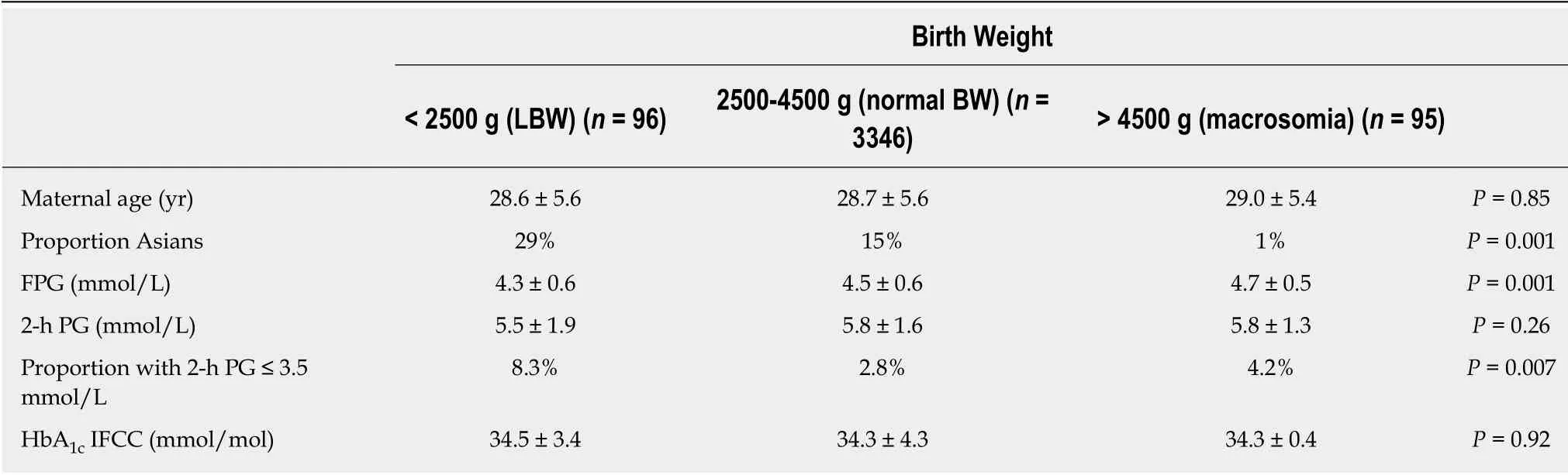
Table 1 Demographics and glycaemic parameters for the cohort categorised by birth weight
In conclusion,low FPG and/or 2-h blood glucose ≤ 3.5 mmol/L on 75-g OGTT is significantly associated with LBW in women identified as high-risk for GDM.Women of ethnic backgrounds (Asian) appear to be more susceptible to this increased risk and may serve as a separate cohort in whom we should offer more intensive follow up and screening for complications may need to be offered.Cost implications and resources for follow up would need to be looked at in further detail to support these findings.
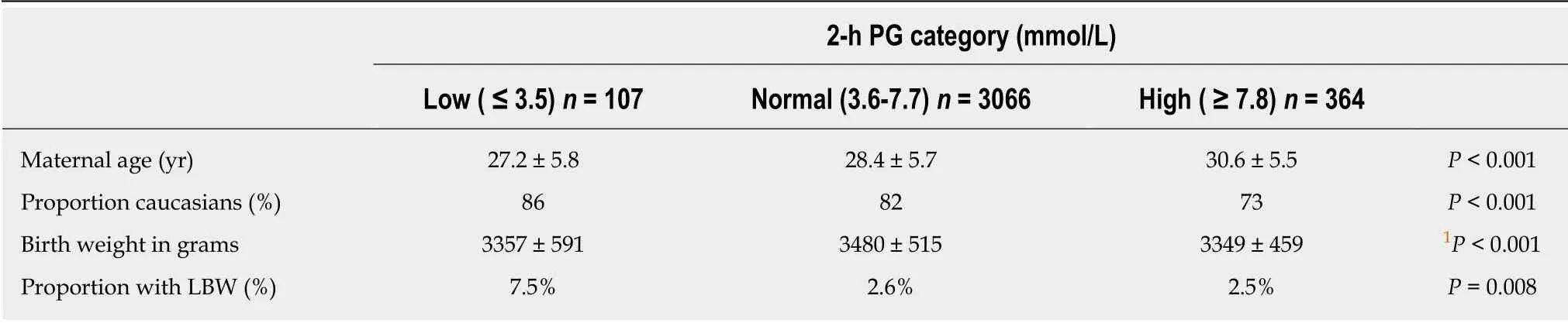
Table 2 Demographics and clinical parameters for the cohorts categorised by 2-h plasma glucose
ARTICLE HIGHLIGHTS
Research background
Screening for gestational diabetes in high risk women during pregnancy is undertaken with oral glucose tolerance test (OGTT).This paper is an observational study auditing the prevalence of significant hypoglycaemia on the screening OGTT during pregnancy and exploring its impact on the birth weight,if any association with low birth weight (LBW).Currently those women identified as with hypoglycaemia on OGTT do not have any additional antenatal monitoring.Any association of such hypoglycaemia noted on the screening OGTT with LBW might help in targeting antenatal care in such women towards improving pregnancy outcomes.
Research motivation
The results of our study support allocation of resources for antenatal monitoring of women noted to have hypoglycaemia,especially the Asian ethnic cohort who appeared to be at higher risk of having babies with low birth-weight.
Research objectives
This study was undertaken to determine the prevalence of hypoglycaemia on the OGTT during screening for gestation diabetes in high risk women and explore any association with fetal birth weight.
Research methods
We audited data on all woman deemed high risk and had the screening OGTT during pregnancy identifying 3537 women who met the criteria and had the required complete data for analysis.Having defined hypoglycaemia (blood glucose ≤ 3.5 mmol/L) and categorizing birth weight as low (≤ 2500 g),normal (2500 to 4499 g) or Macrosomia (≥ 4500 g) we analysed the prevalence of hypoglycaemia on the OGTT screening and its association with birth weight using ANOVA to compare group means and logistic regression analysis to assess the factors independently predicting the low birth-weight.
Research results
In this audit on 3537 women deemed high risk as per NICE criteria and who had the OGTT screening,the proportion who has hypoglycaemia was 3.7%,majority of the hypoglycaemia being on the 2-h plasma glucose (2-h PG) value.2.7% women had babies with LBW and this cohort had significantly lower fasting glucose (4.3 ± 0.6 mmol/L,P = 0.001) and a higher proportion of this cohort had 2-h PG ≤ 3.5 mmol/L compared to the cohorts with normal and macrosomic babies (8.3% vs 2.8% vs 4.2%; P = 0.007).The factors which predicted LBW were fasting plasma glucose,Asian ethnicity and 2-h PG ≤ 3.5 mmol/L.Maternal age,2-h PG ≥ 7.8 mmol/L and HbA1c were not significant predictors of LBW.
Research conclusions
We observed the prevalence of hypoglycaemia in the screening OGTT during pregnancy to be about 3.7%.Such hypoglycaemia appears to be independently associated with risk of fetal LBW,and Asian ethnic origin being another risk factor for fetal low birth.
Research perspectives
This study on a large cohort of high risk women may improve awareness amongst clinicians about the potential impact of hypoglycaemia on birth weight and potentially help in considering assessment of fetal weight with serial growth scans as a part of antenatal care towards improving pregnancy outcomes.Future studies incorporating other risk factors associated with the fetal birth weight and studies looking at resource implications to implement the required fetal growth monitoring for such at-risk women with hypoglycaemia would be recommended.
 World Journal of Diabetes2019年5期
- World Journal of Diabetes的其它文章
- Association between sarcopenic obesity and higher risk of type 2 diabetes in adults: A systematic review and meta-analysis
- Novel pharmacological therapy in type 2 diabetes mellitus with established cardiovascular disease: Current evidence
- Management of diabetic dyslipidemia: An update
- Evolving spectrum of diabetic nephropathy