
Antimalarial activities of butanol and ethylacetate fractions of Combretum nigricans leaf
2019-05-09 06:00:52EnegideChineduPeterAkahDabumJacobIfeomaOnahChimereUkegbuChukwumaChukwuemeka
Enegide Chinedu, Peter A. Akah, Dabum L. Jacob, Ifeoma A. Onah, Chimere Y. Ukegbu, Chukwuma K.Chukwuemeka
1Department of Pharmacology & Toxicology, Faculty of Pharmaceutical Sciences, University of Nigeria, Nsukka, Nigeria
2Department of Human Physiology, Faculty of Medical Sciences, University of Jos, Jos, Nigeria
3Department of Pharmaceutical Microbiology & Biotechnology, Faculty of Pharmaceutical Sciences, University of Nigeria, Nsukka, Nigeria
4Department of Biochemistry, Faculty of Biological Sciences, University of Nigeria, Nsukka, Nigeria
5Department of Plant Science & Biotechnology, Faculty of Biological Sciences, University of Nigeria, Nsukka, Nigeria
Keywords:Antimalarial Combretum nigricans Butanol fraction Ethylacetate fraction In vivo
ABSTRACT Objective: To evaluate the antimalarial activity of the ethylacetate and butanol fractions of Combretum nigricans (C. nigricans) leaf extract in mice.Methods: C. nigricans solvent (butanol and ethylacetate) fractions were screened for their phytochemical constituents using standard procedures illustrated by Harborne and Evans.The Peters’ 4-day suppressive test against early malaria infection, Rane’s curative test against established malaria and prophylactic test for residual activity were employed for evaluating the antimalarial potential in mice.Results: The phytochemical screening revealed the presence of alkaloids, terpenoids, saponins,and flavonoids in both fractions at different intensity. Both fractions exhibited significant antimalarial activity in all test models (P<0.05). The ethylacetate fraction of C. nigricans had better chemosuppressive and curative effects compared to the butanol fraction, which however,elicited a better chemoprophylactic effect. The chemosuppressive effect of C. nigricans ethylacetate fraction (200-800 mg/kg) was 77.6%, 69.1% and 86.1%; curative effect was 62.3%, 71.3% and 72.4%; while the chemoprophylactic activity was 32.1%, 48.6% and 61.2%respectively. C. nigricans butanol fraction (200-800 mg/kg) had 40.3%, 54.1% and 69.1%chemosuppression; 26.2%, 36.9% and 34.5% curative effect; and 48.4%, 70.0% and 87.4%chemoprophylaxis.Conclusions: Both solvent fractions of C. nigricans possess antimalarial activity, and may be useful at different stages of malaria therapy.
1. Introduction
Malaria, an acute febrile illness, remains among the top global health challenges with about 250 million annual cases and over 600 000 annual mortalities[1]. Recent report by the WHO shows that the sub-Saharan African region accounts for an unprecedented proportion (about 90%) of global malaria cases and mortality (about 91%)[2]. Though much resources and efforts are being put in place to eradicate the disease, the constant rise in resistance of the culprit parasite (Plasmodium sp.) to currently available antimalarial agents stands as a remarkable challenge[3]. In fact, resistance to antimalarial agents by Plasmodium parasites (especially Plasmodium vivax andPlasmodium falciparum) has increased globally over the past halfcentury[4]. However, this phenomenal increase in resistance to available agents is not being compensated by introduction of new effective agents; no new antimalarial agent has been introduced into the market for more than a decade now[5]. Hence, there stands the risk of global spread of Plasmodium strains which are not susceptible to available agents, if urgent steps are not taken to introduce new,effective antimalarials. In Africa, apart from conventional medicines,several medicinal plants are employed in the management of diverse diseases. Statistics shows that about 80% of the African population employs herbal medicine for the management of several ailments including malaria[6]. Though several of these plants have been said to be effective, scientific evaluation of their acclaimed activities is vital to ascertain their efficacy. Also, pharmacological evaluation of medicinal plants can lead to the discovery of novel agents. In fact, medical history has proven that plants are a vital source for the discovery of new drugs[7]. Combretum nigricans (C. nigricans) is one of the several medicinal plants employed in ethnomedicine in North-Central Nigeria for the management of malaria. This study aims at evaluating the antimalarial activity of butanol and ethylacetate fractions of C. nigricans in mice.
2. Materials and methods
2.1. Plant materials
C. nigricans leaves collected from Jos-North, Plateau state, Nigeria were identified and authenticated by Mr. Jeffrey Azila, a taxonomist at the Federal College of Forestry, Jos, Nigeria.
2.2. Extraction
The plant leaves were air-dried (at room temperature) for two weeks, and pulverized into fine powder. The pulverized leaves were macerated in hydro-methanol (methanol-water 1:1 v/v) using standard procedures described by Handa et al[8]. The obtained mixture was filtered after 48 h, using muslin cloth followed by Whatman filter paper (No.1), and concentrated. Bioactivity guided fractionation of the leaf extract with butanol and ethylacetate was carried out by solvent-solvent partitioning, following standard procedures illustrated by Kupchan et al[9]; Pollack and Mansoor[10].The obtained butanol and ethylacetate fractions were stored in a refrigerator at 4 ℃ till use.
2.3. Phytochemical analysis
Butanol and ethylacetate fractions of C. nigricans were screened for their phytochemical constituents using standard procedures illustrated by Harborne[11] and Evans[12].
2.4. Animals
Both sexes of Swiss albino mice [with average weight (19.8±0.8) g]housed at the animal facility of the Department of Pharmacology and Toxicology, University of Nigeria, Nsukka were used for the study.The animals were housed in mice cages, under standard laboratory conditions at room temperature and humidity, with free access to water and mice feed. Animal studies were performed in conformity with the “NIH revised guidelines for laboratory animal care and use”[13] and the University of Nigeria ethical codes and regulations for laboratory animal use.
2.5. Rodent parasite
The rodent malaria parasite, Plasmodium berghei (P. berghei) was obtained from the Faculty of Veterinary Medicine, University of Nigeria. The parasite was maintained alive in mice by serial intraperitoneal passage of blood from donor mouse to another mouse.
2.6. Parasite inoculation
Standard inoculum containing about 1 × 10⁷of P. berghei infected erythrocytes per mL was prepared from the parasitized mouse. Each experimental mouse was inoculated intra-peritonealy with 0.2 mL of the inoculum.
2.7. Experimental design/ grouping and dosing of animals
The experimental animals (Swiss albino mice of both sexes)were divided into eight groups, comprising five animals each. The treatment schedule was as follows:
Group Ⅰ: Control (received distilled water 10 mL/kg b.w. p.o.)
Group Ⅱ: treated with C. nigricans butanol fraction 200 mg/kg b.w.p.o.
Group Ⅲ: treated with C. nigricans butanol fraction 400 mg/kg b.w.p.o.
Group Ⅳ: treated with C. nigricans butanol fraction 800 mg/kg b.w.p.o.
Group Ⅴ: treated with C. nigricans ethylacetate fraction 200 mg/kg b.w. p.o.
Group Ⅵ: treated with C. nigricans ethylacetate fraction 400 mg/kg b.w. p.o.
Group Ⅶ: treated with C. nigricans ethylacetate fraction 800 mg/kg b.w. p.o.
Group Ⅷ: treated with the standard antimalarial drug, artesunate 10 mg/kg b.w. p.o.
Same grouping and treatment were employed in the three test models used in the study.
2.8. Antimalarial studies
2.8.1. Activity on early malaria infection (suppressive test)
The activity on early infection was evaluated against P. berghei in mice, using the Peter’s 4-day suppressive test[14]. On the first day of the study (D0), the animals were inoculated intraperitoneally with 0.2 mL of standard inoculum of parasitized erythrocyte as described above. The mice were grouped (as shown above), and treated for 4 consecutive days (D0- D3). Treatment was initiated within 3 hours of post-inoculation of mice with the parasite. On the 5th day of study(D4), thin film was made from each experimental mouse tail blood,on microscope slide. The slides were examined with a microscope as described by Cheesbrough[15], to determine mean parasitaemia.The percentage chemosuppression of parasitaemia was calculated as (A–B/A) × 100, where A is the mean parasitaemia in the negative control group and B is the mean parasitaemia in treated group.
2.8.2. Activity on established infection (Rane’s test)
The curative potential of C. nigricans butanol and ethylacetate fractions against established infection was evaluated using the procedure outlined by Ryley and Peters[16]. On the first day of the study, the animals were assigned into eight groups, inoculated intraperitoneally as described above and left untreated until the fourth day of study (D3). On the fourth day (D3), thin film was made from each experimental mouse tail blood to determine the pre-treatment parasite count. The mice were treated for four days (D3- D6). On the eighth day (D7), thin film was made from each experimental mouse tail blood to determine the post-treatment parasite level. The percentage erythrocyte parasite clearance was calculated as (X – Y/X)× 100, where X is pre-treatment (day 3) mean parasitaemia, while Y is post-treatment (day 7) mean parasitaemia.
The mice were placed under further surveillance to ascertain the mean survival time (days) of the animals across each group. The animals in each group were daily monitored for mortality from D0,this was continued after the treatment period till mortality of all the animals.
2.8.3. Evaluation of prophylactic activity (repository test)
The residual infection procedure illustrated by Peters[17], was employed in assessing the prophylactic activity of C. nigricans butanol and ethylacetate fractions. On the first day of the study (D0),the animals were grouped as illustrated above. The animals were pre-treated daily for four days (D0- D3) before parasite inoculation.On the fifth day of the study (D4), the mice were inoculated with 0.2 mL standard inoculum containing P. berghei infected erythrocytes as shown above. After 72 hours of post treatment (D6), blood smear was made from each mouse tail and examined with a microscope to determine parasitaemia level. The chemoprophylactic effect (percent chemoprophylaxis) was calculated as (A – B/A) × 100, where A is mean parasitaemia in the negative control group and B is mean parasitaemia in treated group.
The body weight of the animals in the treated groups and control group was taken on the first day of study (D0) before commencement of treatment, and on D6, using a sensitive digital weighing balance.The change in body weight (g) was calculated as (mean body weight on D6- mean body weight on D0).
2.9. Statistical analysis
Data obtained from the study was expressed as mean ± standard error of mean (SEM). One way analysis of variance (ANOVA) and Dunnet’s post hoc test were used to test for significance, difference was considered significant at P<0.05. GraphPad Prism for windows(version 7.0), San Diego California USA was used for the analysis.
3. Results
3.1. Phytochemical screening
The phytochemical screening revealed the presence of alkaloids,terpenoids, saponins, flavonoids, and other phytochemicals in butanol and ethylacetate fractions of C. nigricans. The phytochemicals were present at different intensity in both fractions (Table 1).
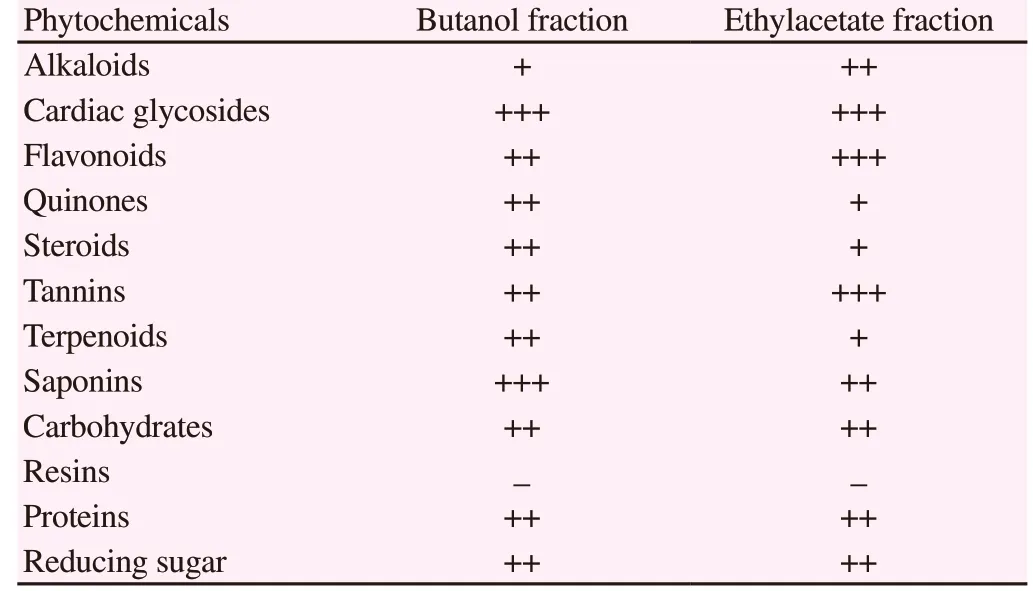
Table 1. Phytochemical constituents of C. nigricans butanol and ethylacetate fractions.
3.2. Antimalarial studies
3.2.1. Activity on early malaria infection (suppressive test)
The butanol and ethylacetate fractions of C. nigricans at all test doses elicited significant (P<0.05) chemosuppressive effect (Table 2).
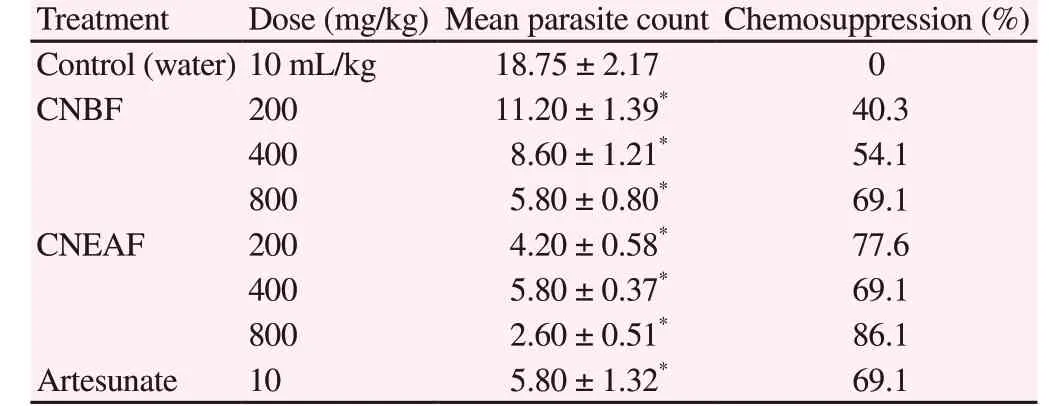
Table 2. Chemosuppressive activity of C. nigricans butanol and ethylacetate fractions.
Values expressed as Mean ± SEM, n=5,*compared with control group,difference is significant at P<0.05, CNBF = C. nigricans butanol fraction,CNEAF = C. nigricans ethylacetate fraction.
3.2.2. Activity on established infection (Rane test)
Both solvent fractions of C. nigricans demonstrated significant(P<0.05) antimalarial activity (Table 3). C. nigricans butanol fraction at doses of 400 and 800 mg/kg and ethylacetate fraction at all doses prolonged the mean survival time of the animals (Table 3).
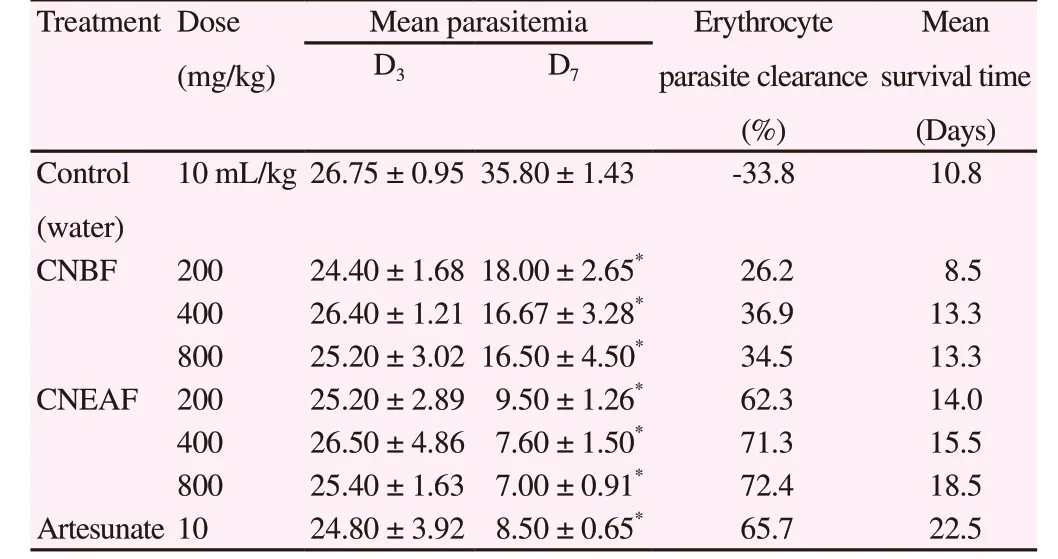
Table 3. Curative effect of C. nigricans butanol and ethylacetate fractions.
3.2.3. Prophylactic activity (repository test)
Both C. nigricans fractions had significant (P<0.05)chemoprophylactic effect in a dose-related trend. The fractions prevented decrease in body weight at doses of 200 and 400 mg/kg,while a slight decrease weight was observed at 800 mg/kg. Artesunate also had a preventive effect against loss in mice body weight, while the control group mice had a remarkable decrease in body weight(Table 4).
4. Discussion
The result from the phytochemical study revealed that several secondary metabolites are present in both the butanol and ethylacetate fractions of C. nigricans, which are known to elicit antimalarial effect.In the antimalarial study, C. nigricans butanol fraction exhibited a doserelated chemosuppressive activity against the rodent malaria parasite (P.berghei). C. nigricans ethylacetate fraction had a better chemosuppressive effect, with the dose of 800 mg/kg eliciting the highest suppressive activity (86.1%) compared to the optimum chemosuppressive activity of the butanol fraction (69.1%) and that of the standard drug, artesunate(69.1%). C. nigricans ethylacetate fraction also gave a better curative effect compared to that of C. nigricans butanol fraction and artesunate,with the dose of 800 mg/kg eliciting the highest erythrocyte parasite clearance (72.4%) during the study. However, there was an increase in erythrocyte parasite by 33.8% in the control group; this thus shows that just as in humans, Plasmodium parasite will multiply in mice except it is intercepted by an effective antimalarial agent. This progression will lead to the manifestation of the clinical signs of malaria and eventually death of the animals in a shorter time (i.e., short survival time). Potent antimalarial agents at therapeutic doses are expected to prolong the survival time of P. berghei infected mice, hence prospective agents capable of prolonging the survival time of P.berghei infected mice above 12 days from the day of infection are considered to be potent antimalarial agents[5,18]. C. nigricans butanol fraction at doses of 400 and 800 mg/kg, and C. nigricans ethylacetate fraction at all doses prolonged the mean survival time of the animals in their respective groups. This thus indicates the presence of therapeutic activity in C. nigricans solvent fractions. Artesunate gave a higher mean survival time, which is thus a verification of its potency as a standard agent currently used for standard care.C. nigricans butanol fraction elicited a better chemoprophylactic activity compared to that of C. nigricans ethylacetate fraction. The chemoprophylactic activity at 800 mg/kg (87.4%) was better than the activity exhibited by artesunate (83.4%). The low curative effect exhibited by the butanol fraction may be due to delayed onset of action compared to ethylacetate fraction. C. nigricans butanol fraction may have also augmented the immune system of the animals towards the extermination of the malaria parasite; thus it may possess an immune-modulatory effect. This may have been the reason for the low curative activity it exhibited compared to its chemosuppressive and prophylactic activities, since the immune system may have been over-powered by the parasite before initiating treatment in the curative test. Low metabolism rate or hepatic clearance, and longer plasma half-life of C. nigricans butanol fraction may be some of the pharmacokinetic properties that fostered the phenomenal chemoprophylactic activity[19]. However, the bioactive constituent(s) responsible for the antimalarial activity of both solvent fractions, and the mechanism of action have not been elucidated,but the implicated phytochemicals present are saponins, alkaloids,flavonoids, and terpenoids. These have been reported previously to possess antiplasmodial activity[20-22].
Furthermore, a remarkable decrease in body weight of control mice was observed. This may be due to the effect of the Plasmodium infection, since decrease in body weight is part of its clinicalmanifestation. However, this parameter is not a distinct characteristic of malaria infection, as other factors may also elicit a decrease in body weight. Though 200 and 400 mg/kg doses of C. nigricans solvent fractions prevented decrease in body weight, 800 mg/kg dose of both fractions had a slight body weight decrease, which however was substantially less than that noted in the control group.This decrease noted with C. nigricans solvent fractions may be due to catabolic activity on stored lipids or anorexogenic effect that may have led to decreased food intake, thus resulting in body weight decrease. Hence, apart from the antimalarial activity of both fractions, they may also be useful as anti-obesogenic agent at high doses up to 800 mg/kg. This is correlated with previous reports by other researchers stating the presence of anti-obesogenic activity in some plant agents, among which are also known to possess antimalarial activity. In their reports, they attributed this activity to the presence of flavonoids, saponins and some other secondary metabolites in such plant agents[23-25].
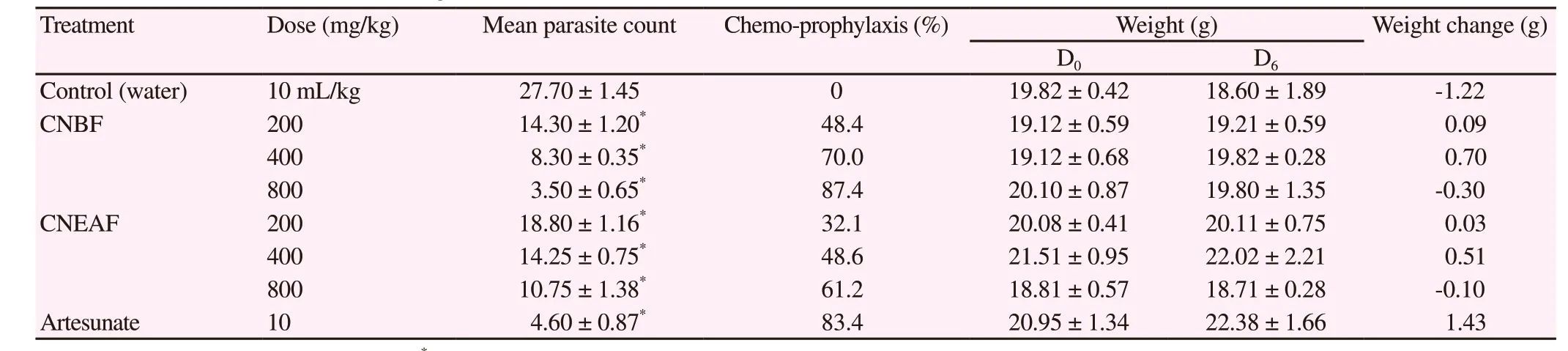
Table 4. Chemoprophylatic effect of C. nigricans butanol and ethylacetate fractions.
In conclusion, this study has shown that C. nigricans butanol fraction has a better chemoprophylactic activity against malaria infection; while the ethylacetate fraction has better chemosuppressive and curative antimalarial activities. Hence, both fractions may be useful at different stages of malaria therapy.
Conflict of interest statement
The authors declare that there is no conflict of interest.
 Asian Pacific Journal of Tropical Biomedicine2019年4期
- Asian Pacific Journal of Tropical Biomedicine的其它文章
- GC-MS analysis and anti-mosquito activities of Juniperus virginiana essential oil against Anopheles stephensi (Diptera: Culicidae)
- Antioxidant compounds and capacities of Gac (Momordica cochinchinensis Spreng) fruits
- Falcaria vulgaris extract attenuates diabetes-induced kidney injury in rats
- Keladi candik (Alocasia longiloba Miq.) petiole extracts promote wound healing in a full thickness excision wound model in rats
- Epidemiology, clinical features and transmission of re-emerging arboviral infection chikungunya