Understanding Chinese Characters: 刪
2019-04-11 06:57:24ByYouQiaorong
Special Focus 2019年3期
By You Qiaorong
Spring, like a robust youth, leads us to the promising month of March and invites us to take off our puffy winter coats. It is a time of refreshing, renewing, and casting off the old. When thinking of those characteristics, the word 刪(shān) immediately comes to mind.
This particular character composed of seven strokes is a verb in Chinese, which means deleting or striking out. To be more specific, it means taking, rubbing, striking, or cutting out (especially something written or printed). When it comes to its structure, the character刪 is composed of two parts on the left and right. The left part is冊,which denotes book or volume; the right part is刂,which denotes knife. It means that the action刪 (deleting) involves a book and a knife.
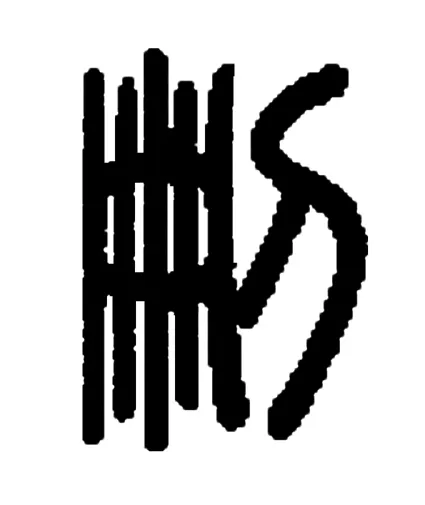
Today, it certainly doesn't. Book and knife combined in this character are two completely different things, which is an interesting puzzle for modern Chinese scholars. Interestingly, when ancient Chinese people carried out the action of deleting something in their books, they really needed a knife in the process. Studies indicate that the left part冊of the character刪 is a simplified version of its ancient pictogram. Chinese pictograms convey their meanings through their resemblance to the physical objects they signify. The early pictographic form of冊 is a simple drawing that represents the physical appearance of ancient books.
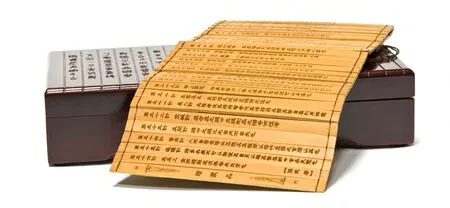
As early as the Shang Dynasty more than three thousand years ago, books came into existence. At that time, paper wasn't invented, so Chinese people cut bamboo or wood into pieces and wrote characters on them. They are called bamboo slips and wooden slips (簡 牘 jiǎndú). They were the main media for writing things in China before the widespread introduction of paper in the Eastern Han Dynasty.
Each strip of wood or bamboo is said to be as long as a chopstick and as wide as two. The bamboo or wooden strips were sewn together, and could be rolled together into scrolls. For longer texts, many slips were sewn together to make a kind of folding book.
In the pictographic form of 冊, the vertical strokes represent the bamboo slips or wooden slips that make up an ancient book. The horizontal oval stroke across the vertical strokes represents the ropes or narrow leather strips that string the bamboo or wooden slips together. The regular script 冊 is the result of this character undergoing slow changes from its ancient pictographic form.
Obviously, the left part 冊was the important semantic component of 刪. However, this part must be combined with its right part刂(knife) to complete the action of deleting.
Today, people easily delete the errors in a Word document on their computers just by pressing the “delete” key. And when they need to delete some mistaken characters in a paper book, they can use an eraser to erase the wrong part or apply some white out to mask their errors. If they used a knife to correct the mistakes in the books, the books would be spoiled or destroyed. But in ancient times, people did use a knife to correct their mistakes in books, because the books were made of bamboo or wooden slips. It was hard for ancient people to remove mistakes or redundant characters in the bamboo or wooden slips. Even water couldn't wash away the characters' ink. So, the only way to remove the errors in their books was to scrape them away with a knife and write the correct characters there. Clearly, the right part刂of 刪, is an important semantic component of the character, helping to establish its meaning.
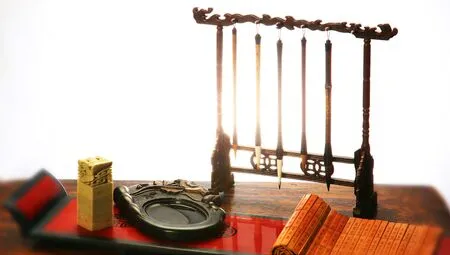
Bamboo and wooden slips, one of the oldest forms of books in China, were used for the longest period of time in Chinese history. Since writing often unavoidably involved correcting mistakes, in the distant past, when people made pamphlets or recorded historical incidents, writing brushes and knives were considered indispensable tools.
Note: You Qiaorong, Ph.D. of Literature, professor at School of Foreign Languages, Central China Normal University.