
Clinical efficacy of combined skin acupuncture and external washing therapy of Zhuang nationality medicine in the treatment of chronic eczema
2018-09-14 07:32:28ZuLingJiangAnHuangGuiYanDengJingXuJingTangFengZhenLiang
Traditional Medicine Research 2018年5期
Zu-Ling Jiang, An Huang , Gui-Yan Deng, Jing Xu, Jing Tang, Feng-Zhen Liang
1Ruikang Hospital Affiliated to Guangxi University of Chinese Medicine, Nanning, China. 2Institute of Chinese Minority Traditional Medicine of Minzu University of China, Beijing, China. 3The First Affiliated Hospital of Guangxi University of Chinese Medicine, Nanning, China. 4Guangxi University of Chinese Medicine, Nanning, China.
Background
Eczema is a common skin disease. Severe itching and recurrent skin lesions are its main clinical manifestations[1]. According to precipitating factors, eczema can be classified into three types: acute, sub-acute, and chronic eczema [2]. The definite etiology is still uncertain.Current mainstream doctrine maintains that heredity and environment are the main pathogenic factors [3]. Chronic eczema is caused by the repeated onset of acute or sub-acute eczema. Chronic eczema, which seriously affecting quality of life due to severe itching and easily relapses, is hard to treat.
According to Zhuang nationality medicine, there is a dragon road and a fire road in the human body. The dragon road, which can control the body’s blood flow, is used to deliver nutrition to the viscera and flesh. The fire road, which transfers sensations in the human body,causes people to feel outside information and stimulations,and enables them to react quickly in order to adapt to changes. Both the dragon road and the fire road have trunk lines and networks from head to toe. When people get sick, there is a reaction point in the body at a network node [4]. In Zhuang nationality medicine, chronic eczema is caused by the invasion of wind, dampness, heat, and toxins into body, and a blocking of the local network nodes of the dragon and fire roads. This causes the stagnation of Qi and blood.
Skin acupuncture of Zhuang nationality medicine is a common therapy. At an archaeological site in a tomb on the Yuanlong slope of Matou village in Wuming county in Guangxi province, two exquisite bronze needles belonging to the period between the Western Zhou dynasty to the Spring and Autumn Period (1046 B.C. -476 B.C.), were discovered (Figure 1).

Figure 1 Bronze needles
Because the needle’s end consisted of 6-8 stainless steel needles integrated into a bundle, it was also known as the star-shape needle [5]. The differences between traditional acupuncture and skin acupuncture of Zhuang nationality medicine can be listed as follows [6]: 1. The needle is different. A traditional needle has one needle,and the needle used in Zhuang nationality medicine has more than one needle. 2. The acupuncture depth is different. The needle used in traditional acupuncture usually pierces the skin and enters the muscle, whereas the needle in skin acupuncture of Zhuang nationality medicine only taps on the epidermis, and does not pierce the skin. 3. The acupuncture points are different.Traditional acupuncture follows the human meridian system, whereas skin acupuncture of Zhuang nationality medicine follows the dragon road and the fire road and mainly focuses on local lesions. In the present study, we analyzed the clinical efficacy of combined skin acupuncture and external washing therapy of Zhuang nationality medicine in the treatment of chronic eczema.
Materials and methods
Patient characteristics
The medical records of 120 patients with chronic eczema treated between April 2015 and December 2016 at Ruikang Hospital, affiliated with Guangxi University of Chinese Medicine, were retrospectively reviewed. After approval by the Ethics Committee of Ruikang Hospital,the patients were divided into two groups. Each group contained 60 patients. After the clinical observation and analysis of the gathered data, a total of 112 patients remained and were divided into the experimental group(58 patients) and the control group (54 patients).
The experimental group contained 30 men and 28 women, ranging in age from 28 to 55 years with an average age of 42.07 ± 12.30 years. The disease duration ranged from 3 to 36 months with an average duration of 29.74 ± 10.08 months. The control group contained 26 men and 28 women, ranging in age from 27 to 54 years with an average age of 41.94 ± 12.17 years. The disease duration ranged from 4 to 41 months with an average duration of 30.44 ± 9.10 months. There were no significant differences between the patients’ age and disease duration between the two groups (P > 0.05)(Table 1).
Diagnostic criteria
In this study, we diagnosed chronic eczema using the criteria found in the Clinical Dermatology of China [7].
Inclusion criteria
The inclusion criteria were as follows: meeting the diagnostic criteria for chronic eczema, age 18-65 years old, no systemic glucocorticoids or immunomodulators administered within 1 month prior to the treatment. The participants were volunteers who provided signed informed consent.
Exclusion criteria
The exclusion criteria were as follows: history of allergic reaction to skin acupuncture of Zhuang nationality medicine, external washing therapy of Zhuang nationality medicine, or mometasone furoate cream; severe infectious diseases, hypertension, diabetes, women in pregnancy or lactation, patients with poor clinical compliance, or patients considered by the researchers to be unsuitable for clinical trials.
Treatment

Table 1 Comparison of baseline characteristics between the two groups
Control group.The patients in the control group received treatment with mometasone furoate cream. The mometasone furoate cream was applied to the affected areas twice a day, 5 days a week. This treatment course lasted for 4 weeks, and the patients received one course of treatment each.
Experimental group.The experimental group was treated with skin acupuncture of Zhuang nationality medicine and external washing therapy of Zhuang nationality medicine.
The procedure for skin acupuncture of Zhuang nationality medicine was as follows: patients took a reasonable position to expose their skin lesions (tapping part). The doctors sterilized the skin lesions and then,holding the back end of the needle, used the index finger to press the mid-piece of the needle to apply the tip to the skin lesion. The doctor then used a wrist motion to place the tip straight on the skin and then removed it quickly,and this was done repeatedly. The tapping was even and smooth, at a rate of 70-90 taps per minute. The purpose of the tapping was to penetrate the epidermis and produce slight oozing of blood. After needle-tapping, the exudate was cleaned, the local skin was sterilized, and the external washing therapy was conducted. The patients were treated every five days. The course of each treatment was 2 weeks and the patients received 2 courses.
The external washing of Zhuang nationality medicine was performed with the following prescription:Hanliancao (Eclipta prostrata) 30 g, Shuiyangmei (Adina rubella h ance) 20 g, Zhuyehuajiao (Zanthoxylum armatum DC) 30 g, Mayingdan (Lantana camara L) 30 g,Dayeanye (Folium eu calypti robustae) 30 g, Kushen(Sophora f lavescens a it) 30 g, Huangbai (Cortex phellodendri chinensis) 30 g, and Baifan (Alum) 30 g.The abovementioned herbs were ground into powder and added to 2000 mL of boiling water. When the temperature dropped to about 40°C, the liquid was used to wash the skin lesion. The skin lesions were washed once a day,continuously for 2 weeks. The course of each treatment was 2 weeks and the patients received 2 courses.
Observed indicator
The observed indicators included: clinical total effective rate, pruritus score, erythema score, papules score, scales score, lichenification score, and the corresponding eczema area and severity index (EASI) score [8].
Curative effect standard
The nimodipine method was used to evaluate the overall improvement of EASI score according to the Chinese Medicine Clinical Research of New Drugs Guiding Principles of 2002 [9]. The nimodipine method formula was: (EASI scores before treatment - EASI scores after treatment)/EASI scores before treatment)*100%. Clinical recovery: decrease of patient’s EASI score ≥ 95%.Apparent effect: 95% > decrease of patient’s EASI score≥ 70%. In effect: 70% > decrease of patient’s EASI score≥ 30%. No effect: decrease of patient’s EASI score <30%.
Statistical method
Statistical analyses were performed using SPSS 20.0 software, and the data were expressed as mean ± standard deviationThe paired t-test or signed rank sum test were used to compare the effect before and after treatment in each group. The independent sample t-test or Wilcoxon rank sum test were used to compare groups.The curative effect between the two groups was analyzed using the Mann-Whitney U test. Comparisons with P-values less than 0.05 were considered to be statistically significant.
Results
The scores for pruritus, erythema, papule, scales, mossy lesion, lesion area, and EASI were collected for all of the patients in the experimental and the control group. The results showed there was no significant difference between the two groups before treatment (P > 0.05).There was a statistical difference in both two groups when comparing the scores of patients in the same group before and after treatment (P < 0.05, Table 2).Furthermore, there were statistical differences between the two groups after treatment (pruritus: P < 0.001,erythema: P = 0.001, papule: P = 0.008, scales: P = 0.002,mossy lesion: P < 0.001, lesion area: P = 0.002, EASI: P< 0.001, respectively).
Mann-Whitney U test was used to evaluate the clinical efficiency of the two groups. Results showed that the difference between the two groups after treatment was statistically significant (Z = -2.391, P = 0.017),suggesting that the clinical efficacy in the experimental group was better than that in the control group (Table 3).
Adverse reactions
During the treatment, 3 cases in the experimental group suffered local skin lesion thickening. We believe that it was caused by excessive skin-needle-tapping force. The force was decreased and after this adjustment, the skin lesion-thickening symptom disappeared. There were no adverse reactions in the control group.
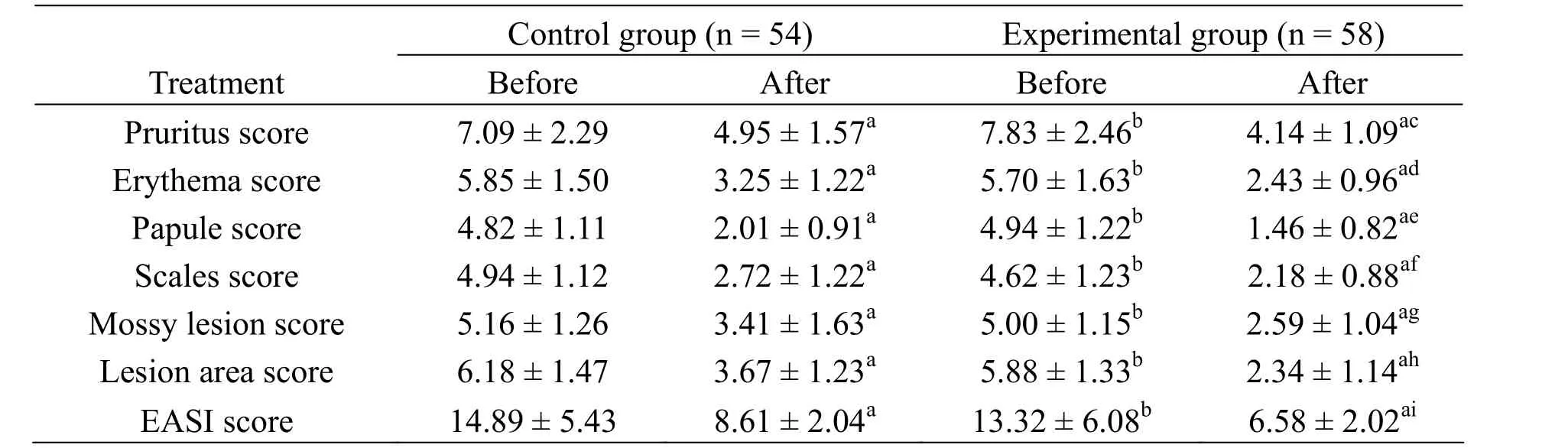
Table 2 Comparison of lesions related indicatorsin the two groups before and after treatment (錯誤!未找到引用源。± SD)

Table 3 Comparison of two groups of clinical efficacy (%)
Discussion
Chronic eczema is an inflammatory-related allergic disease caused by a variety of internal and external factors, and itching is its most important clinical symptom. In clinical practice, patients with chronic eczema cannot tolerate the itching, and they scratch the itch. Scratching not only increases itching but also leads to infection and results in a vicious cycle of“itching–scratching–skin moss” [10]. Western medicine uses orally administered antihistamines to control itching.These are always combined with glucocorticoid ointment to reduce skin lesions, softening, mossy lesions, and other symptoms [11]. Mometasone furoate cream is commonly used in the treatment of chronic eczema. It is a type of glucocorticoid drug with anti-inflammatory and immune suppression functions, and it is effective in relieving itching and improving skin lesions in the affected area.However, as patients with chronic eczema need a long period of therapy, side effects like folliculitis, skin atrophy, and drug resistance always appear [12, 13].Therefore, relieving itching effectively and reducing the side effects of long-term treatment is the key when treating chronic eczema.
External treatment combined with external washing therapy of Zhuang nationality medicine in the treatment of chronic eczema has the ability to improve symptoms,prolong remission, cause fewer side effects, and is also economical. Its clinical efficacy and security have been confirmed [14-16]. In the present study, we adopted combined skin acupuncture and external washing therapy of Zhuang nationality medicine to open up the body meridians, dispel wind, and arrest itching. As most patients with chronic eczema have lichenification, it is not easy for drugs to penetrate the thickening cuticles and provide an effective local treatment concentration [17].Therefore, skin acupuncture of Zhuang nationality medicine was adopted to tap the infected part. The broken skin induced by the needle-tapping could drive away wind, dampness, heat, and toxins. Zhuang nationality medicine’s prescriptions consist of main herbs, helping herbs, priming herbs, and antidotal herbs. According to the different pathological conditions of Yin and Yang,male herbs and female herbs were set up to treat the Yin and Yang disorders related diseases. Common prescription types include helping herbs increasing the therapeutic effects of main herbs, priming herbs helping main herbs arrive at lesions and the combination of main herbs, helping herbs, male herbs, and female herbs exert the opposite and complementary effects to each other[18].
The external washing prescription used in this study emphasizes the effect “Detoxify roads, and recuperate infirmity”, which is comprised of Hanliancao (Eclipta prostrata) as main herb, Zhuyehuajiao (Zanthoxylum armatum DC.), Mayingdan (Lantana ca mara L.),Shuiyangmei (Adina r ubella hance), Dayeanye (Folium eucalypti r obustae), Kushen (Sophora f lavescens ait),Huangbai (Cortex phe llodendri chi nensis) and Baifan(Alum) as helping herbs. Among them, Zhuyehuajiao(Zanthoxylum armatum DC.) can adjust the dragon road and fire road, dispel wind and arrest itching as a male herb in the prescription. Hanliancao (Eclipta p rostrata)can nourish Yin, moisten dryness, regulate the blood of dragon road, dispel wind, and arrest itching. Mayingdan(Lantana camara L.) can eliminate heat toxin and wet toxin, and arrest itching. Hanliancao (Eclipta prostrate),Mayingdan (Lantana c amara L.), Shuiyangmei (Adina rubella ha nce), Dayeanye (Folium eu calypti r obustae),Kushen (Sophora f lavescens ait), Huangbai (Cortex phellodendri chinensis), and Baifan (Alum) are the female herbs in the prescription. The combination of the main herb, helping herbs, male herbs, and female herbs can adjust the dragon road and the fire road, detoxify body,arrest itching, nourish blood, and dispel wind.
In the present study, the scores of the lesion, lesion area,pruritus, and EASI were lower in the two groups after treatment for 4 weeks; and the above indexes in the experimental group were lower than those in the control group. The results suggested that combined skin acupuncture and external washing therapy of Zhuang nationality medicine could reduce the lesion area and the degree of itching more than mometasone furoate cream.In addition, the total effective rate was 81.03% in the experimental group after treatment. This rate was higher than that in the control group (61.11%), and the adverse reactions were rare, which indicates that this combined treatment can achieve greater clinical efficacy than mometasone furoate cream. With respect to safety, 3 cases in the experimental group suffered local skin lesion thickening, but no adverse reaction was observed with long-term use. Though the phenomenon of discomfort did not appear during the treatment in the control group,serious adverse reactions appeared with long-term use.The combination of skin acupuncture and external washing therapy of Zhuang nationality medicine could avoid these adverse reactions while also providing other advantages.
In conclusion, combined skin acupuncture and external washing therapy of Zhuang nationality medicine in the treatment of chronic eczema has a satisfactory clinical curative effect, which can be used to avoid drug assistance and hormone side effects. It can be used as the preferred clinical treatment. However, the results of this study are limited to a small number of cases and short follow-up period. Research results should be verified with a larger sample size and longer follow-up period.
1. Weidinger S, Novak N. Atopic dermatitis. Lancet 2016, 387:1109-1122.
2. Zhang XJ. Dermatovenereology. Beijing: People’s Medical Publishing House 2013:109-110.
3. Zuuren EJV, Fedorowicz Z, Lavrijsen A, et al.Emollients and moisturisers for eczema. The Cochrane Library. John Wiley & Sons, Ltd, 2017:CD012119.
4. Dou XS. Qin Bizhi applicated pricking therapy of Zhuang nationality medicine acupuncture in the treatment of hemorrhoids experience. J Med Pharm Chin Min 2012, 18: 35-36.
5. Lin C. Acupuncture of Zhuang nationality medicine in China. Guangxi Science and Technology Publishing House 2014: 173-175.
6. Huang HR. Chinese Zhuang nationality medicine.Guangxi Nationalities Publishing House 2000: 27-28.
7. Zhao B. Chinese Journal of Clinical Dermatology.Nanjing: Jiangsu Science and Technology Publishing House 2010: 725-732.
8. Zhao B. Score eczema area and severity index method. Chin J Dermatol 2004, 37:7-8.
9. Zheng XY. Chinese Medicine Clinical Research of New Drugs Guiding Principles. Beijing: China Medical Science and Technology Publishing House 2002: 346.
10. Gao H, Jiao ZH, Li RH, et al. Study on the influence of fire needle combined with acupuncture bloodletting on chronic eczema itching degree. Chin J Dermatovenereology Integr Tradit Western Med 2015, 14: 276-278.
11. Liu Y, Zhu SD, Shi LJ. Observation on the therapeutic erffect of decoction of Liangshu Tang Decoction combined with anti - itching oil in the treatment of chronic eczema. Tianjin Pharm 2017, 29:21-22.
12. Li LF. Expert consensus on the clinical application of Mometasic Fumarate cream. Chin J Dermatovenereology Integr Tradit Western Med 2017,16: 88-90.
13. Zhang WJ, Zhang XZ. Effect of Qingpeng ointment on chronic symmetrical eczema of lower extremities and its effect on skin barrier function. Chin J Dermatol 2017, 31: 115-117.
14. Feng Q, Wang ZP, Wang NX. Clinical observation of eczema lotion in the treatment of 100 cases of eczema. Chin J Ethnomed Ethnopharm 2015, 24:98-100.
15. Tan J, Wang BC. Experience of Huang Hanru, an expert in Zhuang nationality medicine, in treating eczema. J Med Pharm Chin Min 2015, 21: 26-27.
16. Ya TY. Treatment of 46 cases of anal eczema with medicated thread moxibustion combined with Zhuang nationality medicine. Yunnan J Tradit Chin Med Mate Med 2007, 28: 56.
17. Zhong JB, Yin X. Clinical observation on acupuncture combined with cupping therapy for chronic eczema and dermatitis. J New Chin Med 2013, 45: 119-121.
18. Pang YZ, Huang DL, Wei SJ, et al. Overview of basic theory of Zhuang nationality medicine. J Guangxi Tradit Chin Med Univ 2009, 12: 64-67.
 Traditional Medicine Research2018年5期
- Traditional Medicine Research的其它文章
- Theconcept of vaccinesfirst came from Chinesemedicine
- Rat model for study of the essence of spleen deficiency and dampness in Chinese medicine
- Evaluating theclinical efficacy of Thunder-Firemoxibustion combined with ovulation monitoring in thetreatment of adenomyosiscombined with infertility
- Can hip abduction reducetherisk of femoral head necrosisdeteriorated into osteoarthritis?A 3D finiteelement analysis
- Bioactive molecules in Siddha Polyherbal Nilavembu Kudineer alleviating symptoms of Dengue/Chikugunya
- Is Thunder-Fire moxibustion effective in the treatment of adenomyosis combined with infertility?