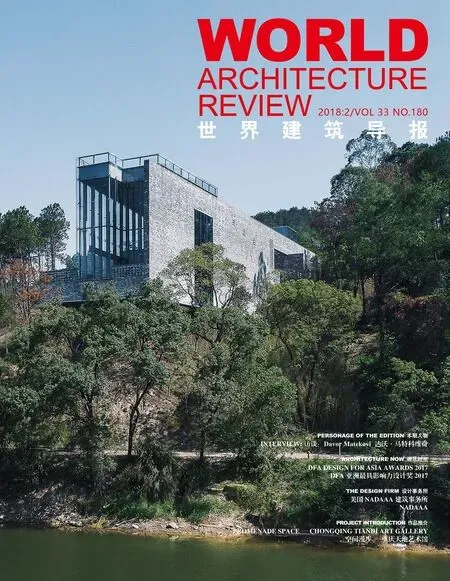
留云草堂,中國(guó)
2018-04-27 09:08:24設(shè)計(jì)公司普羅建筑工作室officePROJECT中國(guó)
世界建筑導(dǎo)報(bào) 2018年2期
關(guān)鍵詞:心理設(shè)計(jì)
設(shè)計(jì)公司: 普羅建筑工作室/ officePROJECT(中國(guó))
為畫家設(shè)計(jì)其工作室兼住所時(shí),設(shè)計(jì)團(tuán)隊(duì)提出一個(gè)不一樣的取向:一個(gè)心理空間示意圖。他們并沒(méi)有支配設(shè)計(jì)的過(guò)程,轉(zhuǎn)而詢問(wèn)客戶他真正想要甚么,換言之,是采用了心理分析的手法。“留云草堂”很大部分都是按照客戶的意愿而興建,小至在墻上放哪幅畫作,大至戶外庭園設(shè)計(jì),都由畫家決定。猶如中國(guó)傳統(tǒng)水墨畫的留白一樣,那祥和的白色結(jié)構(gòu),成為讓屋主表達(dá)自我的畫布。
When designing the artist’s studio-cum-residence,the team proposed an unconventional approach— a psychological space diagram. Instead of dictating the design process, architects turned to their client to ask what he truly wants, literally, through psychoanalysis. A great portion of the house is built accordingly to the client’s desire, from decision as minor as which painting to put on the wall to more permanent ones such as the landscaping of the outdoor garden. Like the blank space in traditional Chinese painting, the serenely white structure became a canvas for the client to express himself.


猜你喜歡
光明少年(2024年5期)2024-05-31 10:25:59
當(dāng)代陜西(2022年4期)2022-04-19 12:08:54
International Journal of Nursing Sciences(2022年1期)2022-02-08 03:23:58
現(xiàn)代裝飾(2020年7期)2020-07-27 01:27:42
流行色(2020年1期)2020-04-28 11:16:38
娃娃畫報(bào)(2019年11期)2019-12-20 08:39:45
藝術(shù)啟蒙(2018年7期)2018-08-23 09:14:18
海峽姐妹(2017年7期)2017-07-31 19:08:17
Coco薇(2017年5期)2017-06-05 08:53:16
舒適廣告(2008年9期)2008-09-22 10:02:48