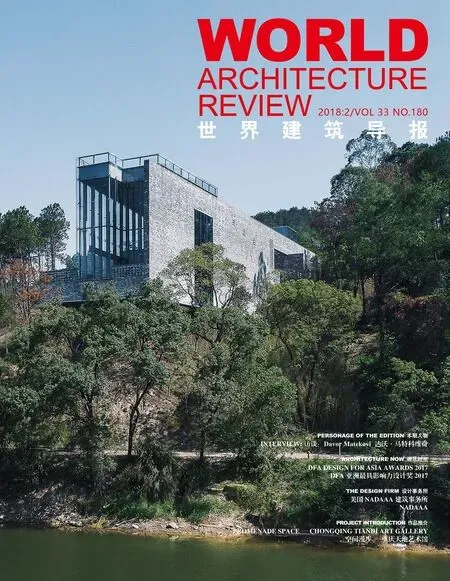
墨爾本大學設計學校澳大利亞墨爾本
2018-04-27 09:08:40KatieFaulkner,DanielGallagher,JamesJuricevich等
世界建筑導報 2018年2期
項目負責人:Nader Tehrani
項目經理:John Chow
設計協調:Arthur Chang
設計團隊:Katie Faulkner, Daniel Gallagher, James Juricevich, Parke MacDowell, Marta Guerra Pastrián,Tim Wong, Ryan Murphy, Rich Lee, Kevin Lee,
Ellee Lee, Amin Tadj
合作建筑師:John Wardle建筑師事務所
Principal in Charge: Nader Tehrani
Project Manager: John Chow
Design Coordinator: Arthur Chang, RA
Project Team: Katie Faulkner, AIA; Daniel Gallagher, AIA; James Juricevich,
Parke MacDowell, Marta Guerra Pastrián, Tim Wong, Ryan Murphy, Rich Lee,Kevin Lee, Ellee Lee, Amin Tadj
John Wardle Architects and NADAAA in Collaboration
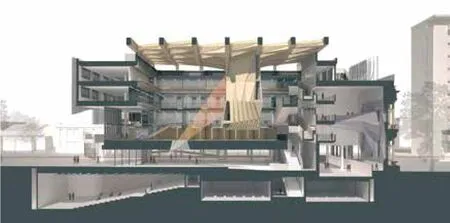
2009年舉辦的國際競賽成就了墨爾本大學的項目。除了墨爾本大學建筑系及其相關學科的新設施外,此次競賽的項目是重新思考建筑教育所面臨的整個挑戰,把“學術環境”、“懸空工作室”、“生活建筑”和“建筑教育學”四個主題放在優先地位,所有這些主題都涵蓋了當時的某些迫切需要,同時也展望了未來的各種愿望。在提供這四個主題的過程中,此次競賽也預見了跨學科工作導致的建筑教育的一些關鍵變化,以及教學空間如何響應和提供一個平臺,讓各個領域的人聚集在一起,形成1+1大于2的效果。此次競賽還確認,隨著新技術和在線教育的迅速興起,不僅需要重新界定空間,以優化個人空間,而且還需要重新界定集體互動空間、共享媒體和互動技術。此外,在經濟危機和生態脆弱并存時期,建筑將需要解決資源的使用問題,挑戰傳統的項目交付手段和方法,同時也需預測和了解對這種風險投資生命周期中各種可能存在的問題。最后,該項目還將作為一種教學模式,不僅提供新的學習創新空間,而且還作為一種已建成的藝術品,作為一種教學工具——以身作則,成為與其合作的媒體爭相討論的話題。
The Melbourne University project is the result of an international competition, organized in 2009. The focus of the competition, beyond housing the new facilities of the Melbourne University architecture department –and its related disciplines—was to rethink the entire challenge of architectural education to give priority to four themes: the ‘academic environment’, the ‘suspended studio’, the ‘living building’,and ‘built pedagogy’, all themes that cover certain urgencies of this time, while projecting forward various ambitions for the future. In offering these four themes, the competition foresaw some critical changes in architectural education that are the result of inter-disciplinary work, and how spaces of pedagogy can react to and accommodate a platform for various fields to come together and form something larger than the sum of their parts. The competition also acknowledged that with the rapid rise of new technologies and online education, that spatial needs need to be redefined not only to optimize personal spaces, but also collective spaces of interaction, shared media and interactive technologies. Further to this, in a time of both economic crisis and ecological vulnerability, the building would need to address the use of resources, challenging conventional means and methods of project delivery, while also projecting forth an understanding of the life cycle implications of such a venture.Finally, the project is also to serve as a pedagogical model, not only offering new and innovative spaces for learning, but also as a built artifact, to serve as a pedagogical instrument—to teach by example and radicalize the media with which it is working.
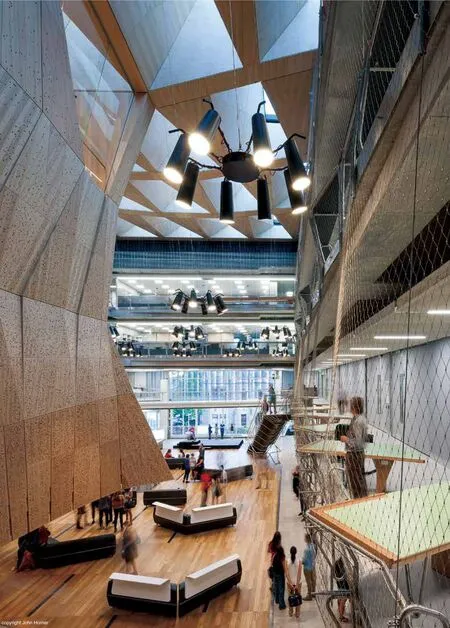
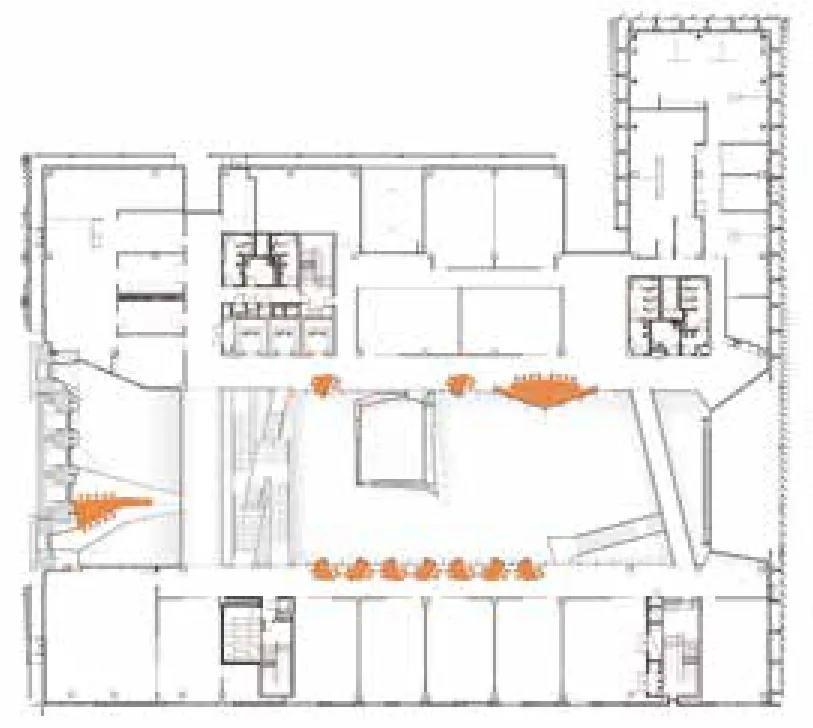
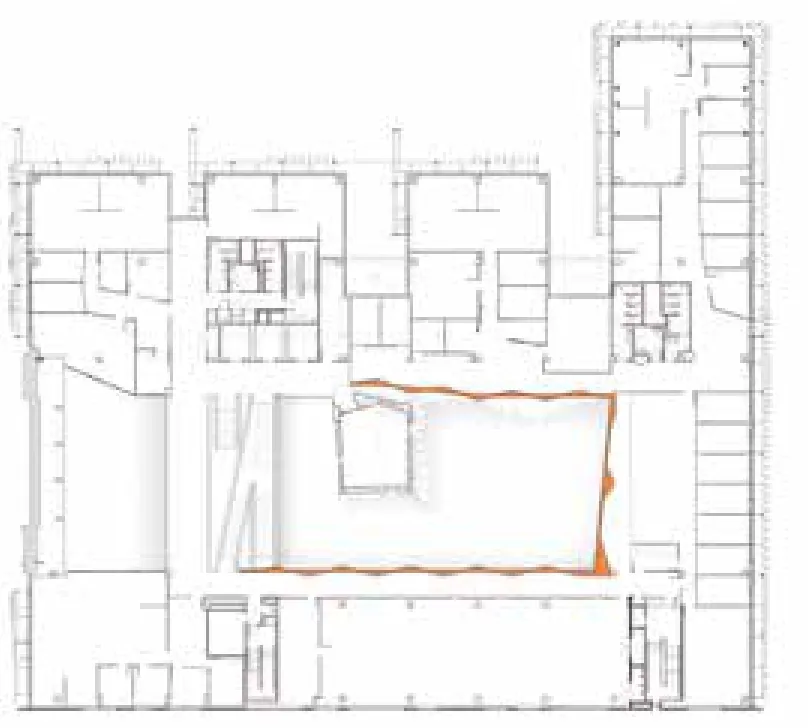
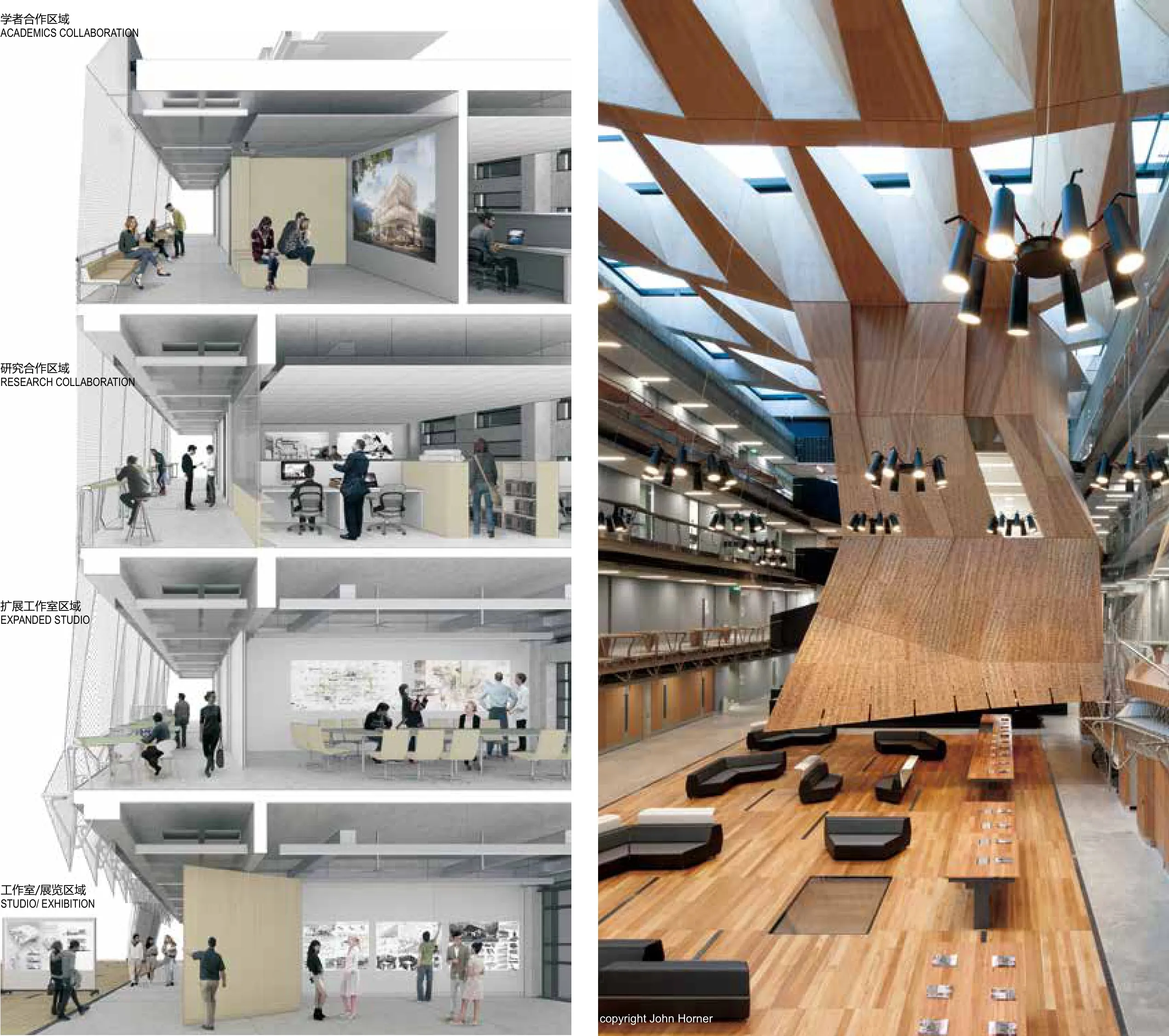
二層平面:走廊工作臺LEVEL 02: CORRIDOR WORK TABLES
三層平面:走廊工作柜LEVEL 03: CORRIDOR WORK COUNTERS
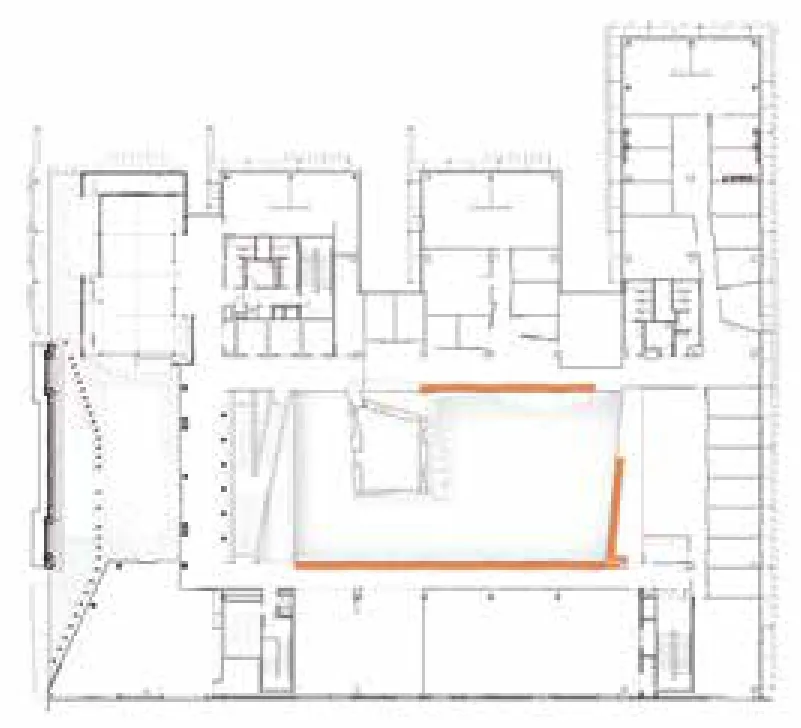
四層平面:走廊工作座LEVEL 04: CORRIDOR WORK SEATING
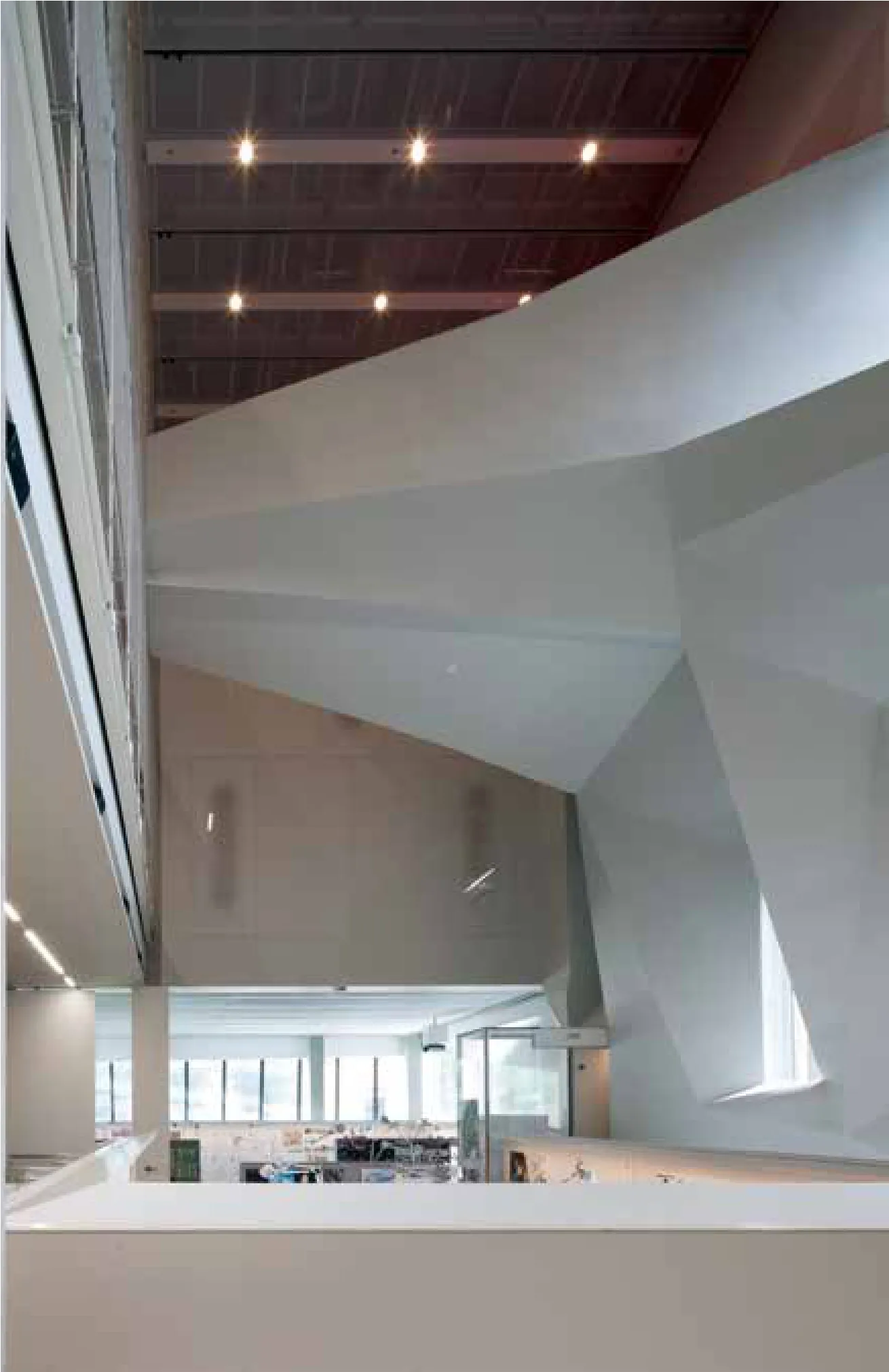
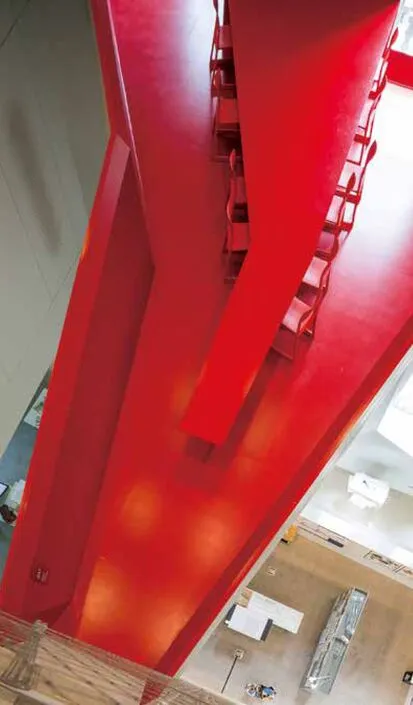
Y型樓梯:在每一個直道的中間著陸處,樓梯會分開成兩段,然后作為一個轉身樓梯返回,這樣就可以讓用戶選擇不同的路線,縮短他們到達目的地的路線,從而形成一個皮拉內西式的帶狀路徑。
Y-STAIR At each mid landing of each straight run the stair splits and turns back as a return stair thus allowing the user to choose alternate routes to shorten their path to their given destination resulting in a Piranesian lacing of pathways.
JREED MASK:一個多世紀前,約瑟夫?里德(Joseph Reed)設計了位于墨爾本市中心的柯林斯大街新南威爾士銀行的正立面。1938年,銀行正立面重新設置于校園中心,與它所依附的建筑沒有什么特別的關系。最新撥款進行的立面改建不設樓板,背面采用塑料且另設了出口,與第2層的西橋相接。
JREED MASK Joseph Reed designed the facade of the Bank of New South Wales to stand on Collins Street in downtown Melbourne over a century ago. The facade was re-located in 1938 on the center of campus with no particular relationship with the building it was attached to.The latest appropriation leaves the facade free of floor plates allowing the back to become plastic and morph it’s openings to meet the western bridge at level 02.


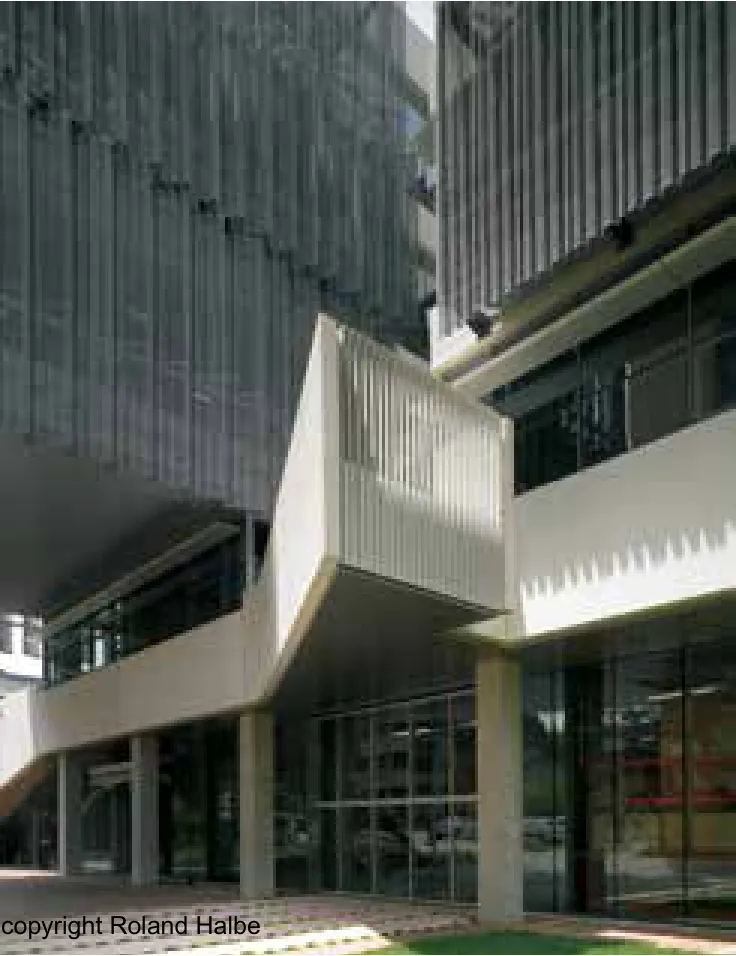
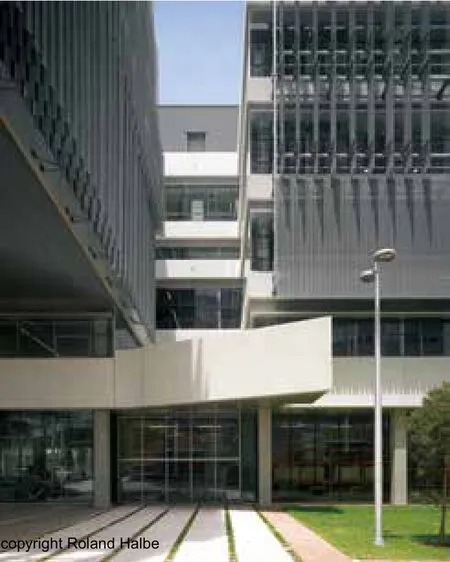
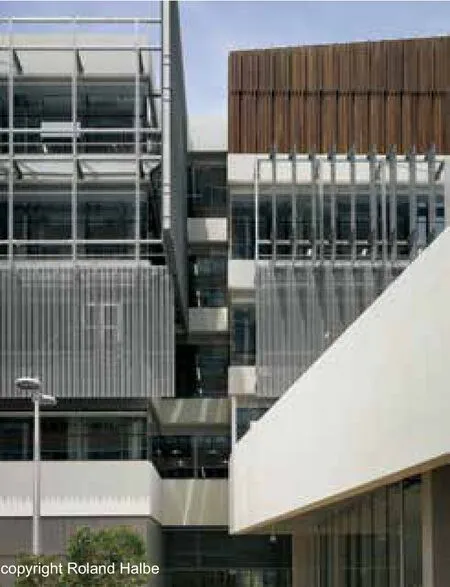
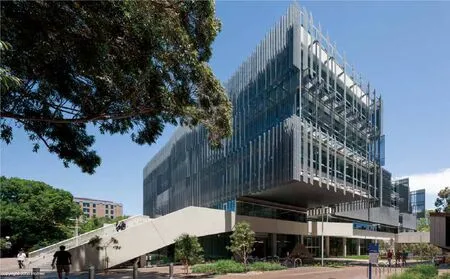
生活建筑:墨爾本大學設計學院建筑正立面考慮了場所細節和性能細節,分為兩個部分。第一部分是提供隔熱作用的防風雨外圍結構和用于視覺和通風的開口。第二部分是控制日光照射的幕墻。建筑外圍結構在太陽和氣候條件相互協調方面,可成為教學示范。
THE LIVING BUILDING The MSD building facade makes a distinct response to the specifics of place and the particulars of performance, in two parts. The first part is a weatherproof envelope that provides thermal insulation and punctuated apertures for vision and ventilation. The second part is a screen that controls solar access. The building envelope is a didactic demonstration of the mediation of solar and climatic conditions.
猜你喜歡
北方建筑(2021年6期)2021-12-31 03:03:54
文苑(2020年10期)2020-11-07 03:15:36
甘肅教育(2020年14期)2020-09-11 07:57:50
現代裝飾(2020年6期)2020-06-22 08:43:12
藝術啟蒙(2018年7期)2018-08-23 09:14:18
東方教育(2017年19期)2017-12-05 15:14:48
海峽姐妹(2017年7期)2017-07-31 19:08:17
Coco薇(2017年5期)2017-06-05 08:53:16
唐山文學(2016年2期)2017-01-15 14:03:59
少兒科學周刊·兒童版(2015年6期)2015-11-24 03:49:38