A.S.學校
2018-04-27 09:08:16
世界建筑導報 2018年2期

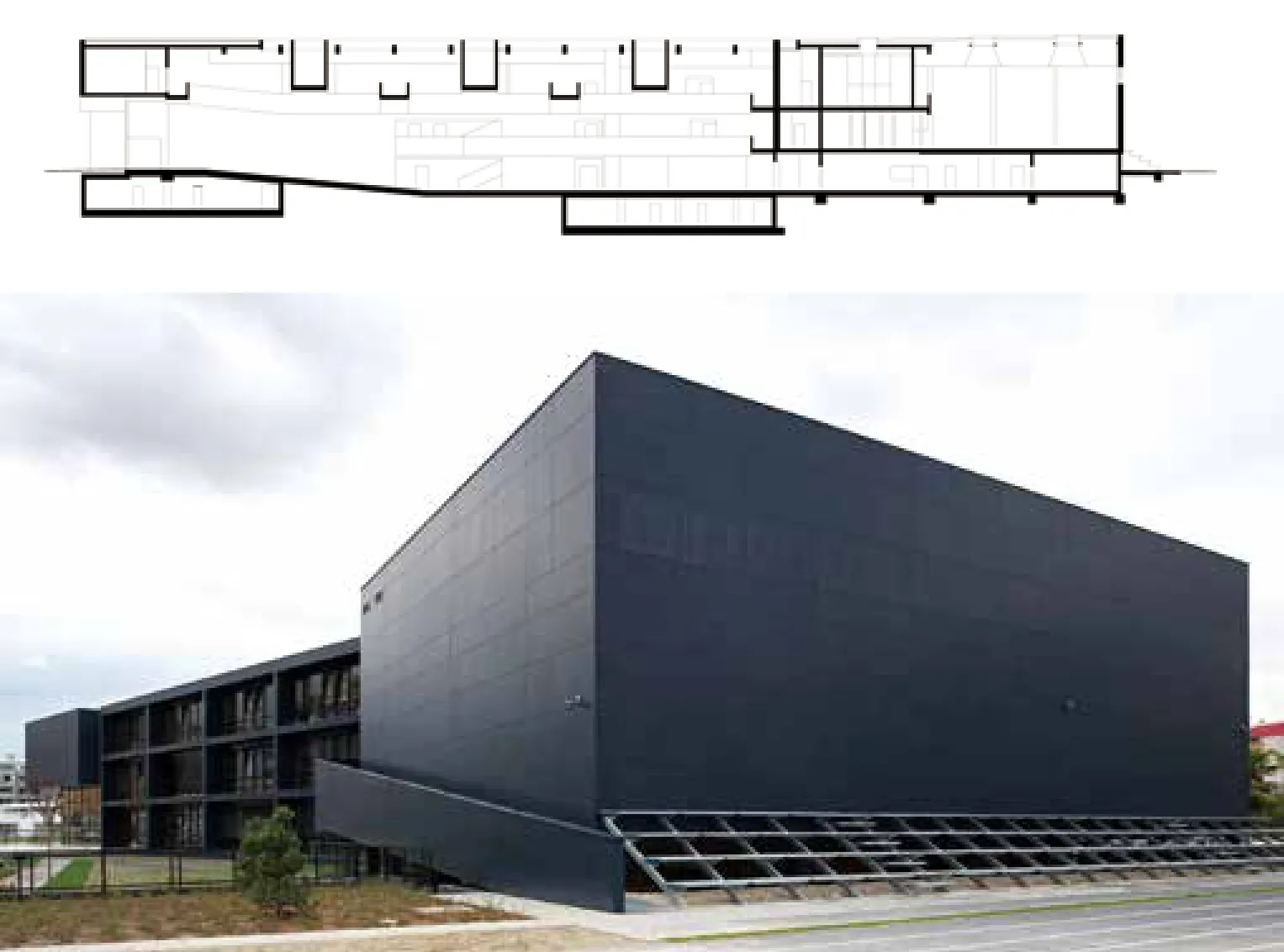
A. S.小學設計在一個住宅區(qū)密集的矩陣地塊上,這是一個狹窄和視覺收緊的地塊。
在消極個人化、物質主義和整體異化時代,“社會”觀念相對于以自我為中心的個人觀念而言,落后不少。因此,設計社會內容需在方法上承擔很大責任。
我們的想法是, “墻壁之間”設計,應從人的因素更多地轉到空間本身,即我們不設計空間形式,而是構建空間。程序要求、專業(yè)法律和規(guī)則成為某些固定要素的條件。這些條件與最初的想法一起規(guī)劃形成一個概念,創(chuàng)造一個持續(xù)的公共空間,強調教室以外的一切均是先驗的公共空間。
學校需建成一個滿足教育和體育場館集會不可分割的綜合體。雖然教育場館和體育場館結構和功能上相互分離,但同時,它們需要作為一個整體相互連接,整體布局,整合通信和所有集體空間。通過最佳方式轉換所需空間轉換,在“墻壁之間”形成一個垂直方格。這個風格是整個項目的核心,是一個不可分割的整體——產生負體積。
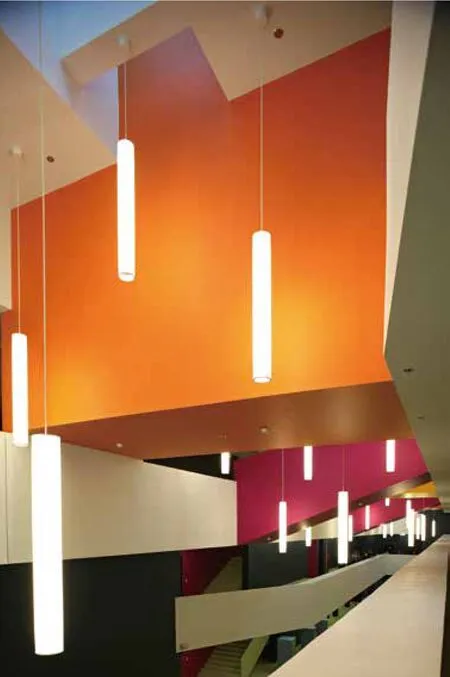
過道、走廊及三層多功能廳使人能夠體驗到一個視覺不可分割的空間,提供一個供不同代人交流的場所。
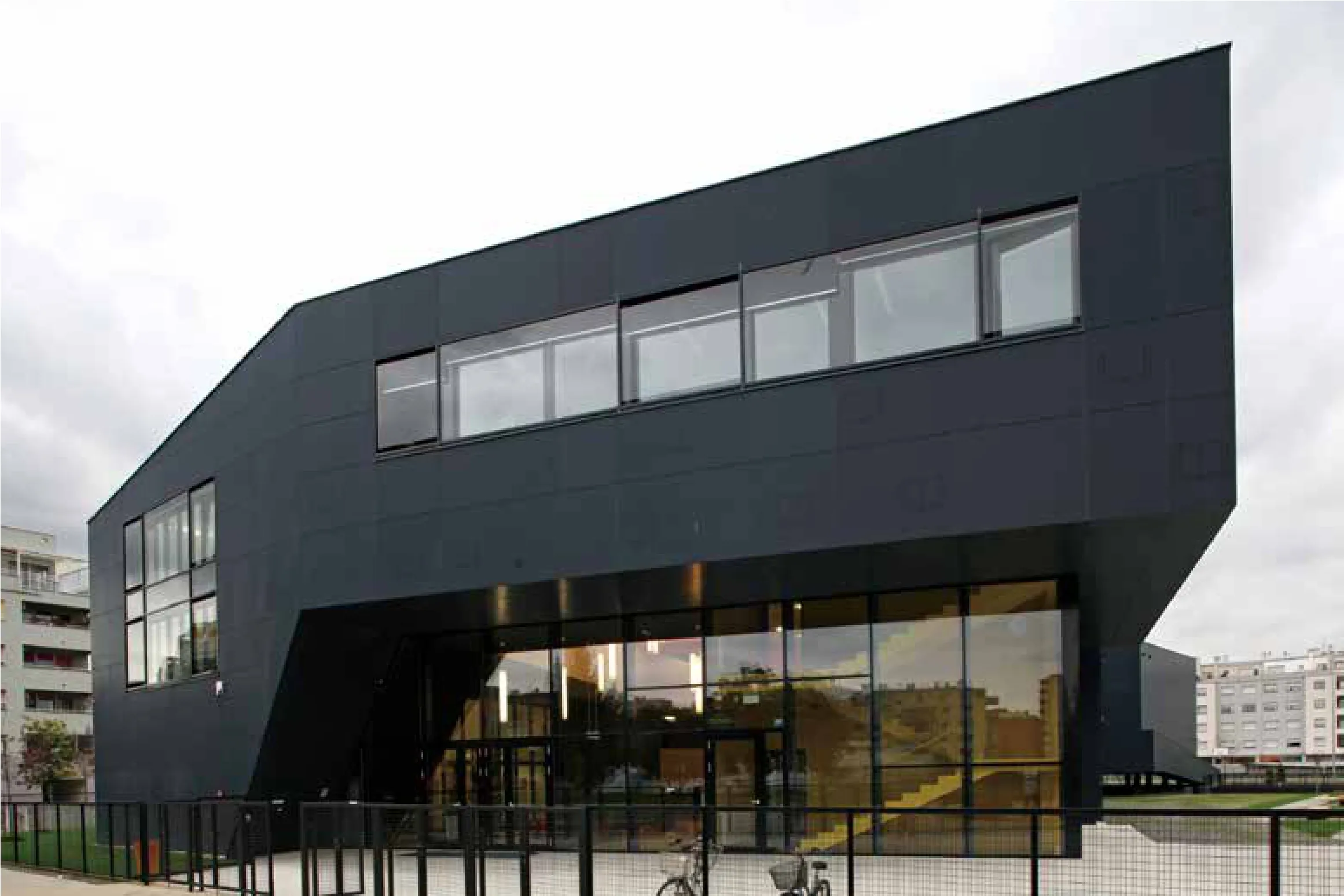
為了成為“防止控制已建元素代表其中空間成為主導的實例”(赫茲伯格)之一,這所學校以單色處理,自吸收式外層。這不僅是對自身建筑的否定,也與周圍建筑紛繁色彩形成鮮明對比。室內色彩鮮明的元素稱為建筑的重要對比元素,考慮到對孩子的吸引力,而不是對用戶的簡單形式屈從。
The primary school A. S. was designed in a dense matrix of residential housing area, on a ungratefully narrow and visually tightened plot.
In the times of negative individualization, materialism and overall alienation, the concept of 'social'becomes inferior in relation to the concept of self oriented individual. As such, designing social content, requires a great degree of responsibility in its approach.
The idea that imperative lays in what is in 'between the walls'- transfers from the human onto space itself – we do not design form of space , we form the space. The program requirements,laws and rules of the profession, condition certain fixed elements. Those are programmed along with the initial idea into a concept that creates a continued common space, with the emphasis that everything outside of the classrooms is a priori a public space.
It is formed as a monoshape-indivisible complex of educational and sports hall assembly, which are structurally and functionally detached but at the same time, they are connected to perform as a whole-layout consolidates comunications and all collective spaces into one. By translating needed spaces to the edge, a vertical square was generated in " between the walls'' . This square is the core, an indivisible whole - a negative volume.
The gallery corridors and three level multi purpose hall makes it possible to experience a visually indivisible space, a place of interaction for diあerent generations .
With the intention of being one of the 'examples that prevent domination of built up elements,in behalf of the space in between' (Hertzberger), the school is treated monochromatically, with a dark , self-absorbing skin, not just as a negation of its own construction, but also as a contrast to the uncontrolled colorfulness of the surrounding buildings. The chromatically vibrant elements of the interior are an important counter element, seductive to the children, without the literal subservience to the users.


猜你喜歡
北方建筑(2021年6期)2021-12-31 03:03:54
文苑(2020年10期)2020-11-07 03:15:36
現代裝飾(2020年6期)2020-06-22 08:43:12
藝術啟蒙(2018年7期)2018-08-23 09:14:18
海峽姐妹(2017年7期)2017-07-31 19:08:17
Coco薇(2017年5期)2017-06-05 08:53:16
留學生(2016年6期)2016-07-25 17:55:29
少兒科學周刊·兒童版(2015年6期)2015-11-24 03:49:38
小朋友·聰明學堂(2014年7期)2015-01-15 12:07:06
舒適廣告(2008年9期)2008-09-22 10:02:48