
《黃帝內經》核心文化術語“神”的詞性分類與語境差異化英譯研究?
2018-04-25 05:26:40張宗明
中國中醫基礎醫學雜志 2018年3期
李 蘋,張宗明
(1. 南京中醫藥大學中醫文化研究中心,南京 210023; 2. 河南中醫藥大學外語學院,鄭州 450008)
《內經》包括《素問》《靈樞》兩大部分各81篇,是我國現存最早的較為系統和完整的中醫典籍,集中反映了我國古代的醫學成就,創立了中醫學的理論體系,奠定了中醫學發展的基礎。“神”是中醫文化中的重要概念,更是《內經》的核心文化術語,其內涵十分深奧和豐富。本文正是從理論和實際意義出發,分析《內經》中“神”的涵義,研究《內經》兩個英譯本對“神”的翻譯策略,總結其中核心文化術語“神”的語境差異化翻譯方法。
1 《內經》中“神”的涵義分析和詞性分類
1.1 《內經》中“神”的涵義分析
有關對“神”的認識是人們在長期與疾病作斗爭的過程中,擺脫了巫術的束縛而逐漸形成的。在此之前的“神”一直被認為是存在于自然之外的、具有人格、意識能夠主宰物質世界的神靈[1]。受到當時樸素唯物主義的影響,《內經》堅持無神論的觀點,提出“拘于鬼神者,不可與言至德”。《內經》中“神”的涵義非常豐富,大致有以下幾種[2],一是神靈,二是自然規律,三是生命活動的總稱,四是精神、意識、思維活動及情感變化,五是人體正氣,六是人體的血氣,七是水谷精氣。
1.2 《內經》中“神”的詞性分類
《內經》中共出現“神”190次[3]。為方便討論“神”的翻譯方法,根據“神”所在的具體語境和搭配的詞語,將“神”分為名詞類、動賓類和形容詞類。名詞類“神”一般位于句首多單獨出現,也會搭配其他字構成特定的中醫名詞術語,如“神門”“神氣”“神機”“神明”“神藏”等。動賓類“神”多位于句中,搭配的詞匯多為“調神”“藏神”“養神”等。形容詞類“神”較少多位于句末,表示“聰慧、聰明至極”或“深奧微妙,變化不測”。
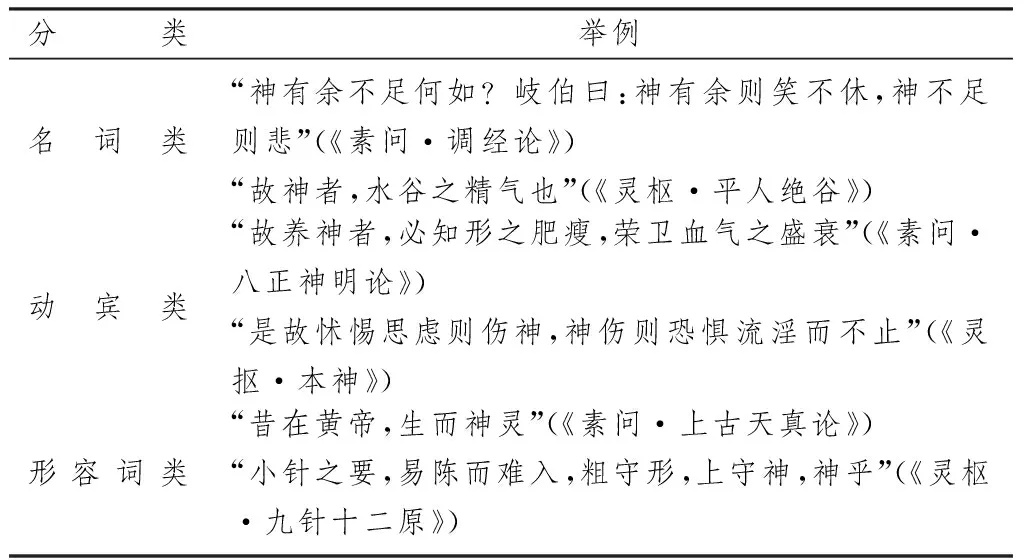
表 1 “神”的分類及舉例
2 《內經》英譯本的選擇
《內經》的翻譯已有近百年的歷史,翻譯者有醫史學家、從事中醫的美籍華人、中醫臨床醫生和中醫翻譯家等。譯者或將《內經》作為中醫學經典之作來譯介,或著重體現它的醫學價值,或向西方傳播和推廣中醫,或全面再現它的文化、歷史、哲學方面的價值,翻譯結果已趨多樣化[4]。選擇的兩部英譯本一是伊爾扎·威斯Ilza Veith的TheYellowEmperor’sClassicofInternalMedicine(簡稱威譯本),Ilza Veith翻譯了《內經·素問》的前34章;二是李照國的全譯本HuangdiNeijing-YellowEmperor’sCanonofMedicine(簡稱李譯本)。選擇這兩部譯本,是想比較在中西不同文化背景下,不同時期譯者對《內經》核心文化術語“神”涵義的理解和翻譯。
3 《內經》英譯本中“神”的英譯分析
3.1 形容詞類“神”的英譯分析
例1:昔在黃帝,生而神靈,弱而能言,幼而徇齊,長而敦敏,成而登天(《素問·上古天真論》)。
釋義:遠古時代的軒轅黃帝生來就非常聰明,幼小之時就善于言談,年少時就思維敏捷,長大后敦厚勤奮,乃至成年便登上了天子之位[5]。
威譯本:In ancient times when the Yellow Emperor was born he was endowed with divine talents; while yet in early infancy he could speak; while still very young he was quick of apprehension and penetrating; when he was grown up he was sincere and comprehending; when he became perfect he ascended to Heaven[6].
李譯本:Huangdi, or Yellow Emperor, was born intelligent. He was eloquent from childhood. He behaved righteously when he was young. In his youth, he was honest, sincere and wise. When growing up, he became the Emperor[7].
分析:神靈:張介賓:“聰明之至也。”張志聰:“智慧也”,是非常聰明伶俐的意思。在此句中“神”為形容詞,威斯將其翻譯為名詞“divine talents”,而李照國將其翻譯為形容詞“intelligent”,兩位譯者都很好地把握了“神”的含義,采取了意譯的翻譯方法,或保留形容詞詞性,或進行詞性轉換,將“神”的內涵翻譯出來。
3.2 名詞類“神”的英譯舉例分析
例2:拘于鬼神者,不可與言至德,惡于針石者,不可與言至巧(《素問·五藏別論》)。
釋義:凡是迷信鬼神的人,是不能與其談論至深的醫學理論的。對那些討厭針石治療的人,也不可能與其談論醫療技巧[5]。
威譯本:Those who would restrain the demons and the gods (good and evil spirits) cannot attain virtue by speaking about it; and those who dislike acupuncture cannot achieve ingenious results by speaking about them[6].
李譯本:Do not discuss medical theory with those who are superstitious; do not talk about the therapeutic skills with those who dislike acupuncture[7].
分析:此處“神”的涵義為神靈。威斯將其翻譯為名詞“demons and the gods (good and evil spirits)”,準確地傳達了原義。李照國采用意譯的方法,將其翻譯為形容詞“superstitious”,也很好地傳達了原義。
例3:清陽上天,濁陰歸地,是故天地之動靜,神明為之綱紀(《素問·陰陽應象大論》)。
釋義:陽氣輕清而升于天,陰氣重濁而降于地,天地的運動和靜止是由陰陽的神妙變化來決定的[5]。
威譯本:Yang, the lucid element, ascends to Heaven. Yin, the turbid element, returns to earth. Hence the Universe (Heaven and Earth) represents motion and rest, controlled by the wisdom of nature (the gods)[6].
李譯本:The Lucid-Yang rises to the heavens and the Turbid-Yin descends to the earth. So the heavens and the earth follow the principles of Shenming (mysterious changes) to move or to maintain static[7].
分析:“神明”:變化不測謂之“神”,品物流形謂之“明”。能使萬物顯露形象和變化的巨大力量,稱為“神明”。威斯采用意譯的方法,將“神明”翻譯為名詞“nature (the gods)”。李照國采用音譯加注釋的方法,翻譯為“Shenming (mysterious changes)”。
例4:食飲有節,起居有常,不妄作勞,故能形與神俱,而盡終其天年,度百歲乃去(《素問·上古天真論》)。
釋義:飲食有一定的節制,起居有一定的時間,不做過分的勞作,所以能使形體與精神都互相協調健康,而活到其生命能夠達到的年齡[5]。
威譯本:There was temperance in eating and drinking. Their hours of rising and retiring were regular and not disorderly and wild. By these means the ancients kept their bodies united with their souls, so as to fulfill their allotted span completely, measuring unto a hundred years before they passed away[6].
李譯本:[They were] moderate in eating and drinking, regular in working and resting, avoiding any overstrain. That is why [they could maintain a desirable] harmony between the Shen (mind or spirit) and the body, enjoying good health and a long life[7].
分析:在翻譯名詞類的“神”,威斯采用意譯的方法,將“神”翻譯為“souls”。 李照國采取音譯加注釋的翻譯方法,將“神”譯為“Shen (mind or spirit)”。
例5:血氣者,人之神,不可不謹養(《素問·八正神明論》)。
釋義:因為血氣是人之神的物質基礎,不可不謹慎的保養[5]。
威譯本:Constitution and breath determine man’s spirit and energy and one should not be heedless of their nourishment and care[6].
李譯本:Blood and Qi are the Shen (Spirit) of man and must be carefully cultivated[7].
分析:威斯采用意譯的方法,將“神”翻譯為“spirit and energy”。李照國采取音譯加注釋的翻譯方法,將“神”翻譯為“Shen (Spirit)”。
例6:神者,正氣也。客者,邪氣也(《靈樞·小針解》)。
釋義:“神”指正氣,“客”指邪氣[8]。
李譯本:Shen (Spirit) refers to Zhengqi (Healthy-Qi) and Xie (Evil-Qi)[8].
分析:李照國采取音譯加注釋的翻譯方法,將“神”譯為“Shen (Spirit)”。
例7:故神者,水谷之精氣也(《靈樞·平人絕谷》)。
釋義:因此,神氣是由水谷精微之氣所化生[8]。
李譯本:That is why it is said that the Spirit is transformed from the nutrients of food[8].
分析:李照國采取意譯的翻譯方法,將“神”譯為“Spirit”。
這里需要補充說明的是,因為威斯只翻譯《內經·素問》的前34章,例6例7出自《內經·靈樞》,因此只列舉了李照國的譯文。
3.3 動賓類“神”的英譯分析
例8:不知持滿,不時御神,務快其心,逆于生樂,起居無節,故半百而衰也(《素問·上古天真論》)。
釋義:不知道保持真元的充實,不善于統馭精神,只顧一時的快樂,違反正常的生活習慣。作息沒有一定的規律,所以50歲左右就衰老了[5]。
威譯本:They do not know how to find contentment within themselves; they are not skilled in the control of their spirits. They devote all their attention to the amusement of their minds, thus cutting themselves off from the joys of long (life). Their rising and retiring is without regularity. For these reasons they reach only one half of the hundred years and then they degenerate[6].
李譯本:[They] seldom [take measures to] keep an exuberance [of Jingqi] and do not know how to regulate the Shen (mind or spirit), often giving themselves to sensual pleasure. Being irregular in daily life, [they begin to] become old even at the age of fifty[7].
分析:“不時御神”時,善也。御,統攝、治理的意思。“神”,就是精神、精力。“不時御神”即指不善于把握和調養精神的意思。
威斯根據語境,采用意譯的方法將“不時御神”翻譯為“they are not skilled in the control of their spirits”。 李照國主要采取音譯加注釋的翻譯方法,譯為“do not know how to regulate the Shen” (mind or spirit)。
4 《內經》英譯本中“神”的英譯策略分析
4.1 李譯本中“神”的英譯策略分析
在翻譯名詞類和動賓類“神”時,李照國主要采取音譯加注釋的翻譯方法,譯為“Shen”(mind or spirit)或“Shenming”(mysterious changes),或者轉換詞性意譯為“superstitious”。在翻譯形容詞類“神”時,根據“神”所處的語境,保留形容詞詞性,將其翻譯為“intelligent”。
《內經·素問》共出現“神”108次,李譯本中翻譯為“Shen”(Spirit)44次,翻譯為“Shen”(mind or spirit)3次,翻譯為“spirit”38次。由此可見,李照國在翻譯“神”時以漢語拼音音譯加注釋和意譯的方法為主。這種翻譯方法可以保持譯名的統一,而且注釋隨語境差異性而行,注釋的內容是在具體語境中“神”的涵義解釋,也可能是在較大程度上能體現文化術語“神”內涵的英譯文[9]。但這種翻譯方法的缺點是譯語詞匯相對較為繁瑣,較之直譯或意譯連貫性不強,可讀性較差。
4.2 威譯本中“神”的英譯策略分析
威斯認為,《內經》文化術語“神”的涵義豐富,不能簡單翻譯為God或god。因為God/god一詞的主要含義為:1) The name God is given to the spirit or being who is worshiped as the creator and ruler of the world, especially by Jews, Christians, and Muslims.上帝;2) In many religions, a god is one of the spirits or being that are believed to have power over a particular part of the world or nature.神[10]。英語中并沒有與“神”完全對應的詞語。威斯在翻譯名詞類和動賓類“神”時,忠實于“神”的內涵,多采用意譯的方法,將其翻譯為“souls”或“mind”或“spirit”。個別情況下,根據語境將“神”直譯為“demons and the gods”(good and evil spirits),或翻譯為“nature” (the gods)。在翻譯形容詞類“神”時,結合語境和語義,威斯采用意譯的方法,翻譯為名詞“divine talents”。
威斯在翻譯“神”時以意譯的方法為主,使用直譯和意譯的區分點,不如李譯本中音譯和意譯的區分點明顯,說明他沒有在譯語中刻意保留“神”的文化內涵,翻譯等效性相對較差。威譯本中對《內經》文化術語“神”的譯文同一性低,在不同語境中,“神”的譯語往往不同。
5 《內經》中“神”的語境差異化英譯方法
5.1 使用既有的“普通語言對應詞”
“普通語言對應詞”就是沿用一般非專業人員所使用,其含義與原本中醫術語的含義相符的詞語,這一類的對應詞又可分為自然性(natural)與等化性(adapted)[11]。
“自然對應詞”就是指選來譯解的這些英文詞語,其所指的含義、現象對于英文語系的一般人而言,與中醫原詞語對于一般中國人而言并無二致。根據語境的差異化,可以選擇相應的“自然對應詞”。如在“拘于鬼神者”具體的語境中,“神”的含義為鬼神,就可以選用“自然對應詞”翻譯為“demons and the gods”。
“等化性對應詞”就是指英文字面上原本的含義相等于對應的中醫術語名詞字面上的含義,此類英文對應詞是較不嚴謹的,經過詞匯化的過程,它們被用來表達中醫原詞的概念。如在多數語境下,“神”的含義為精神,就可以選用“souls”或“mind”或“spirit”。
5.2 借用漢語拼音音譯加注釋
“神”是中醫特有的概念,在某些特定的語境下,無法找到精確的對應詞進行翻譯,此時可直接借用漢語拼音音譯來翻譯并加上注釋,更易于譯入語讀者理解在差異化的語境中“神”的含義。如將“神”翻譯為“Shen”(mind or spirit),“神明”翻譯為“Shenming”(mysterious changes)。
5.3 詞性轉換法翻譯
由于英漢兩種語言的差異,為了使譯文更加流暢自然,根據語境的差異性可以進行詞性轉換。如名詞類“神”轉換為形容詞,在“拘于鬼神者”這一具體語境中,“鬼神”是名詞,翻譯時可以轉換詞性,翻譯為形容詞“superstitious”。 在“生而神靈”這一語境中,“神”為形容詞,可以轉換詞性將其翻譯為名詞“divine talents”。
6 結語
《內經》中的“神”是中醫哲學的精髓,也是中醫文化最重要的核心術語之一。《內經》中“神”的含義豐富,根據詞性不同可以分為名詞類、動賓類、形容詞類。通過比較不同文化背景譯者所翻譯的《內經》英譯本,分析不同譯本對中醫文化核心術語“神”的翻譯策略,從而根據《內經》中“神”所在的語境差異性給出具體的翻譯方法,使用既有的“普通語言對應詞”、借用漢語拼音音譯加注釋和詞性轉換法翻譯。這種根據中醫術語所在語境的差異性進行翻譯的方法,對中醫術語翻譯具有重要而現實的指導意義。
參考文獻:
[1] 王慶其,周國琪. 黃帝內經專題研究 [M]. 上海:上海中醫藥大學出版社, 2002: 78.
[2] 張登本.論《黃帝內經》“神”的內涵及其意義[J]. 中華中醫藥學刊, 2008, 26(9): 1866-1870.
[3] 張登本,武長春. 內經詞典 [M]. 北京: 人民衛生出版社, 1990: 382.
[4] 邱玏.中醫古籍英譯歷史的初步研究[D]. 北京:中國中醫科學院,2011:146-147.
[5] 南京中醫學院. 黃帝內經素問譯釋[M].3版.上海:上海科學技術出版社, 1997: 97.
[6] ILZA VEITH. The Yellow Emperor’s Classic of Internal Medicine [M]. Taibei: Southern Materials Center. Inc. 1982: 101-177.
[7] 李照國. 黃帝內經·素問Yellow Emperor’s Canon of Medicine Plain Questions [M]. 西安: 世界圖書出版公司,2005: 2-895.
[8] 李照國. 黃帝內經·靈樞Yellow Emperor’s Canon of Medicine Spiritual Pivot [M]. 西安: 世界圖書出版公司,2009: 50-474.
[9] 陳海燕.淺析中華思想文化術語翻譯中的難點[J].中國翻譯, 2015(5):13-17.
[10] JOHN SINCLAIR柯林斯.COBUILD高級英漢雙解詞典[M].北京:高等教育出版社,2009:481.
[11] Nigel Wiseman魏迺杰.英漢漢英中醫詞典English-Chinese Chinese-English Dictionary of Chinese Medicine[M].長沙:湖南科學技術出版社, 1995: 16-17.
