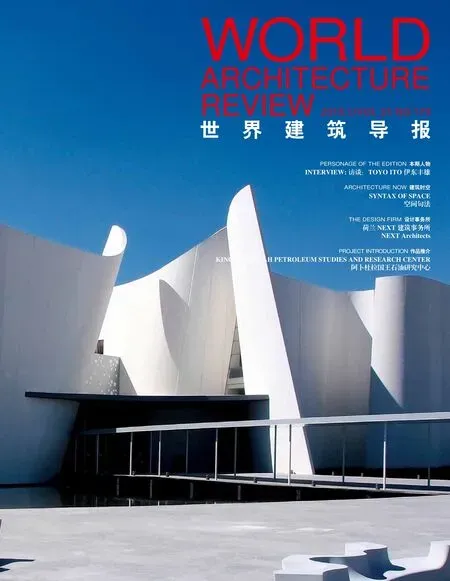
NEXT 建筑事務所 | 在中國“和”而不同
2018-03-05 02:03:53
世界建筑導報 2018年1期
事務所簡介 FIRM PROFILE
NEXT建筑事務所于1999年在荷蘭阿姆斯特丹正式成立。創始人為Bart Reuser、Marijn Schenk, Michel Schreinemachers 和John van de Water。NEXT以大規模創新型科研項目迅速贏得聲譽。如“都市形象”研究項目,四個月內走訪了全球最大的26個城市,研究全球化對都市生活的影響。
目前,NEXT建筑事務所承接的項目規模、類別不一,從產品設計到建筑設計(含室內設計)、城市設計、城市規劃和研究。通過思考“設計”在環境中的表現形式,NEXT在作品設計及施工方式上強調“關聯性”。我們認為NEXT的優勢在于它以開拓性思維實現在建筑設計中有說服力的創作。每一個項目都是獨一無二的,皆源自對項目的特點及所處地理位置的特殊性進行了綜合全面的評估。
NEXT建筑事務所于2004落地中國,其團隊由荷蘭建筑師約翰?范德沃特(John van de Water)和國內知名建筑師蔣曉飛主持。NEXT 中國團隊憑借得天獨厚的中西合璧的文化優勢和獨具匠心的設計風格,以國際化視野平衡文化、社會、功能、生態、經濟的多方需求,在城市規劃、商業綜合體、辦公建筑、酒店、文化建筑、住宅、室內設計、橋梁設計等多方領域開展可持續性設計。由此,NEXT在中國享有很高的聲譽,是在中國發展的外國建筑公司中最具代表性的公司之一。2017年,約翰?范德沃特和蔣曉飛同被《安邸AD》雜志評選為“中國最具影響力的100位設計師”之一。NEXT的作品曾入選“2016全球最具影響力十大博物館”以及“2016年世界十大與自然完美結合建筑”。


NEXT 人物
約翰 ? 范德沃特
1999年,約翰?范德沃特畢業于荷蘭代爾夫特理工大學。在作為建筑師初期,他先后走訪了全球最大的26個城市,致力研究國際大都市在全球化影響下的發展演變。2001年,他受聘作為客座教授和評論家,將其研究成果在清華大學和同濟大學展示。中國之行,引發了他對外國建筑師在中國執業的潛在附加值不斷探索的強烈欲望。約翰?范德沃特不僅致力于建筑設計,他還熱衷于寫作、研究、演講、評論,同時擔任幾個顧問委員會的成員。他于2010年著《你改變不了中國,中國改變你》一書(荷蘭101出版社),成為出版半自傳體書的作者中最年輕的一位。到目前為止,這本書已經被翻譯成三種語言出版發行 (荷蘭語、英語、漢語)。
蔣曉飛
蔣曉飛2003年畢業于清華大學,2010年獲得北京航空航天大學MBA學位,國家一級注冊建筑師。他是NEXT建筑事務所中方代表及合伙人。在加入NEXT之前,曾成立自己的建筑設計公司,具有廣博的專業知識和豐富的項目經驗,在建筑領域造詣頗深。
設計之外,蔣曉飛還涉足演講、項目咨詢和作品評判,并同他的搭檔約翰?范德沃特一起對建筑設計的創新思維進行研究,撰寫大量文獻,以此作為NEXT在中國持續發展的理論支撐。2015年,蔣曉飛受到荷蘭國王接見,國王對他為推動中荷文化交流作出的貢獻表示高度贊賞。


慵燈 Slow Glow
NEXT建筑事務所在2004年米蘭國際家具展中為Droog設計了一款脂肪燈,去展現“時光慢走,歲月靜好”的意象。這個產品最早以設計表象命名為“脂肪燈”,現在以設計內涵命名為“慵燈”,并面向市場出售。
燈的光源浸于脂肪之中。光源會讓脂肪隨著熱量的升溫漸漸融化,慵燈的有趣和獨特之處也隨之拉開帷幕。燈以舒緩的方式慢慢變得溫暖,脂肪的液態化會使光線從柔和轉向明亮通透。整個變化過程大概需要2個小時。關掉燈光,呈現逆向變化,油脂將漸漸凝固。
太空椅 Spacer Chair
太空椅的設計,NEXT建筑事務所與Samira Boon工作室合作,采用了雙層編織技術。這項技術常使用在毯子的生產中,即兩張毯子編織在一起,然后剪開形成絨邊。這啟發了我們以同樣的方式去設計椅子:兩匹布部分編織在一起,部分剪開。剪開布匹使得二維的布料變成了三維的物體。
通過雙層的結構以及曲線的造型設計來增強椅子的結構強度。同時以樹脂加工的方式實現“三維紡織”,實現太空椅獨特的造型設計,并賦予它良好的外觀品質。
太空椅 Spacer Chair

慵燈 Slow glow

現代建筑桌游 Modern Architecture Game
現代建筑桌游Modern Architecture Game
在游戲中,對于洞察建筑設計師、建筑物的知名度以及西方建筑的發展趨勢,自始至終都是一場擲骰子的冒險。目標單純:先人一步到達棋盤中心。你可以通過問6種類型的問題來實現這一目的:視覺、建筑師、項目、風格、影響和報價。
棋盤是由建筑圖紙制作而成的,棋子是六座著名建筑的微縮模型。游戲中,需要佩戴勒?柯布西耶的眼鏡,可以讓玩家輪流從游戲卡上讀到答案。形式服從功能。
NEXT architects was founded in 1999 in Amsterdam, The Netherlands by four partners Bart Reuser, Marijn Schenk, Michel Schreinemachers and John van de Water. The oきce quickly gained reputation by innovatieve large scale research projects like‘The Image of Metropolis’, a project that involved visiting 26 of the largest cities on earth in four months, researching the in fl uence of globalisation on urbanism.
Currently the office is involved in projects on vast variety of scales, from product design to (interior)architecture, urbanism, planning and research. By re fl ecting on the role design plays in the environment,NEXT incorporates 'connection' as a core theme in its portfolio and work method. We believe the strength of our oきce lies in its ability to develop strong ideas that become a persuasive part of the project's speci fi c context. Every project is developed as unique and a keen assessment of the speci fi c needs and qualities of the location.
This vision of expansion was realized in 2004, when NEXT set up an oきce in Beijing, China, with Dutch architect John van de Water and Chinese architect Jiang Xiaofei as it’s founding partners. Together they bring complimentary cultural backgrounds to the projects they work on. Over the years, they have established a strong reputation for creating design that is both innovative and imbued with cultural resonance. In 2017,they were awarded the prestigious ‘Two of the 100 most in fl uential designers in China’by AD Magazine.
NEXT’s approach is holistic and described by both partners as‘Cross Cultural Design’. In each assignment,a range of speci fi c conditions - cultural, social, functional, ecological, economical - are from an international perspective incorporated in the design process, in order to create site speci fi c and sustainable architecture.NEXT has cultivated a strong name of being one of the more experienced foreign architectural fi rms with in-depth China knowledge. NEXT is proud of its very diverse portfolio of realized projects, that include urban designs, mixed use buildings, oきces and hotels, cultural buildings, residential complexes, interiors and bridges. Among others, NEXT projects have been awarded among the ‘Top Ten Museums that most in fl uential in the World in 2016’and the‘Top Ten Architecture Projects that best integrated Nature in the World in 2016’by Designboom”.
John van de Water
John van de Water graduated from Delft University with distinction in 1999. In his early years as an architect, he conducted research on the changing appearances of world metropolises under in fl uence of globalization. Part of this research included visiting 26 of the largest cities on earth. The results of this research where exhibited at Qinghua and Tongji Universities in 2001, where John van de Water acted as a visiting professor and critic. This and earlier visits to China, sparked his ongoing search of the potentially added value of being a practicing foreign architect in China.
Next to creating architecture, John van de Water writes, researches, lectures, judges and is a member of several advisory boards. In 2010, he was one of the youngest architects ever to publish a semi-biography, titled: 'You Can’t Change China, China Changes You' (010 Publishers). The book has been released into three languages so far (Dutch, English, Chinese).
Jiang Xiaofei
Jiang Xiaofei graduated from Qinghua University in 2003 and received his MBA from Beihang University in 2010. He is China representative of NEXT architects and partner of NEXT architects Beijing. Before joining NEXT, he had his own company in Beijing. His extensive knowledge and experience in the profession is proven by a long trackrecord of realized projects tru-out China.On a regular basis Jiang is invited to lecture, advice and judge. Together with his partner John van de Water he writes and conducts research in order to develop the theoretical thinking of NEXT. In 2015 the Royal King of the Netherlands asked for his attendance and spoke his high appreciation about Jiang’s continuous contributions to the cultural exchange between China and the Netherlands.
NEXT architects designed the FAT Lamp for the Droog presentation‘Go Slow’ during the Salone del Mobile Milano 2004. Formerly known as FAT Lamp, this product is now for sale under the name‘Slow Glow’.
The light source is immersed in fat. As the heat from the lighting element slowly melts the fat, an intriguing process gradually unfolds.The light glows brighter and brighter and the lamp becomes warmer and warmer in a comforting way. This process takes about 2 hours.After turning it oあ the fat returns to its original solid state.
For the chair, NEXT architects, in collaboration with Studio Samira Boon, used a double weaving technique used in carpet production:two carpets are woven together and cut loose afterwards to create a velour side. This inspired us to design a chair along the same lines: two pieces of fabric are partly interwoven and partly cut loose. Cutting the fabric turns a two-dimensional cloth into a threedimensional object.
The chair derives its strength form both the double fabric and the curves: hardening so-called ‘three-dimensional’ fabrics by means of resins gives them constructive qualities.
Insights in the world’s most famous architects,buildings and trends of the Western architecture,all through the roll of a dice. The goal is simple: To reach the heart of the board before anyone else.This is done by moving your way through questions in six categories: Visuals, Architect, Project, Style,In fl uence and Quote.
The board is made out of a construction drawing and the game pins are miniatures of six famous buildings. Wearing Le Corbusier’s glasses isn’t only for the spectacle but also keeps the player at turn from reading the answers on the game card. Form follows function.

猜你喜歡
北方建筑(2021年6期)2021-12-31 03:03:54
文苑(2020年10期)2020-11-07 03:15:36
現代裝飾(2020年6期)2020-06-22 08:43:12
建材發展導向(2019年10期)2019-08-24 06:25:04
藝術啟蒙(2018年7期)2018-08-23 09:14:18
海峽姐妹(2017年7期)2017-07-31 19:08:17
Coco薇(2017年5期)2017-06-05 08:53:16
現代裝飾(2017年9期)2017-05-25 01:59:43
中國房地產業(2016年2期)2016-03-01 01:25:34
少兒科學周刊·兒童版(2015年6期)2015-11-24 03:49:38