流亡者歸來,一輛列車改變一個時代
2017-11-22 23:03:54ByStefanZweig
英語學習 2017年10期
關鍵詞:列寧
By+Stefan+Zweig
One day, it is March 15, 1917, the librarian of the Zurich(蘇黎世,瑞士地名)library is astonished. The hands of the clock point to nine o clock, and the seat is empty where this most punctual(準時的)of all book-borrowers sits every day. It becomes nine-thirty and ten o clock. The tireless reader does not come and will not come again. On the way to the library a Russian friend has approached him, or rather attacked him, with the news that revolution has broken out in Russia.
At first Lenin does not want to believe it. He is stunned by the news. But then he storms along with his short, sharp strides to the newsstand on the lake shore, and there and in front of the editorial offices of the newspaper he now waits hour after hour and day after day. It is true. The news is true, and everyday it becomes magnificently more real for him. At first only rumor of a palace revolt(反叛)and apparently only a change in ministers, then the removal of the czar(沙皇), the installation of a provisional(臨時的)government, the duma(杜馬,俄帝時代的國會), Russian freedom, the amnesty(大赦)for the political prisoners—everything he has dreamed of for years, everything for which he has worked for twenty years in secret organizations, in the dungeon(地牢), in Siberia, in exile(流亡), has been fulfilled. And all at once the millions of dead people that this war required seem to him not to have died in vain. They no longer seem to him to be people who were killed senselessly but martyrs(烈士,殉道者)for the new empire of freedom and justice and eternal peace that now begins. This otherwise so icily(冷冰冰地)clear and calculatingly(深謀遠慮地)cold dreamer feels like a drunken man. And how the hundreds of others, the ones who sit in their small emigrant rooms in Geneva(日內瓦,瑞士西南部城市)and Lausanne(洛桑,瑞士西南部城市)and Bern(伯爾尼,瑞士首都), now tremble and rejoice at the happy news: they can go home to Russia! Permitted to go home, not with false passports, not with borrowed names and in mortal danger, into the royal empire of the czar, but as free citizens into the free country. Now they all prepare meager(貧乏的)possessions, for in the newspapers stands Gorkis(高爾基)laconic(簡潔的)telegram: “Everybody return home!” In all directions they send letters and telegrams: “Return home, return home! Gather! Unite!” Now to risk themselves since their first conscious hour: for the Russian Revolution.
But dismaying(令人沮喪的)realization after a few days: the Russian Revolution, the news of which has lifted their hearts as if on eagles wings, is not the revolution of which they dreamed, and is not a Russian revolution. It was a palace revolt against the czar, instigated(被……煽動的)by English and French diplomats to prevent the czar from making peace with Germany, and not the revolution of the people that wants this peace and its rights. It is not the revolution that they have lived for and for which they are ready to die, but an intrigue(陰謀)of the parties involved in the war, the imperialists(帝國主義者)and the generals who do not want their plans to be disturbed.endprint
Through Germany: Yes or No?
Switzerland lies embedded(嵌在……之間)between Italy, France, Germany, and Austria. The way through the allied countries(協約國)is closed to Lenin as a revolutionary, through Germany and Austria as a Russian subject, as a representative of a hostile power. But it is an absurd situation: Lenin can expect more courtesy from Kaiser Wilhelms(德皇威廉二世)Germany than from Milyukovs(米留可夫,二月革命后俄國臨時政府之外交部長)Russia and from Poincares(雷蒙·龐加萊,時任法國總統)France. On the eve of the American declaration of war, Germany needs peace with Russia at any price. To them a revolutionary who will create difficulties there for the English and French ambassadors can only be a welcome helper.
But there is enormous responsibility in the step of suddenly entering into negotiations with the imperial Germany that he has insulted and threatened a hundred times in his writings. For within the context of all customary morality it is high treason(叛國罪), of course, to set foot on enemy land and cross it in the middle of a war and with the approval of the enemy general staff; and of course Lenin must know that in so doing he initially compromises his own party and his own cause, that he will be suspected of being sent to Russia as a paid and hired agent(特工)of the German government, and that if he realizes his program of immediate peace, he will always bear the blame in history for having prevented a real, a victorious peace for Russia.
And of course not only the softer revolutionaries but also most of Lenins supporters are horrified when he announces his willingness to follow even this most dangerous and most compromising path if necessary. In dismay they point out that negotiations have long since been underway through the Swiss Social Democrats(瑞士社會民主黨,是瑞士兩大主要黨之一)to bring about the return of the Russian revolutionaries through the legal and neutral path of prisoner exchange(交換戰俘). But Lenin recognizes how protracted(拖延的)this path will be, how the Russian government will artificially and purposefully delay their return home indefinitely, while he knows that every day and every hour is critical. He sees only the goal, while the others, less cynical(憤世嫉俗的)and less audacious(大膽的), do not dare to commit themselves to a deed that is treasonous(謀反的,犯叛國罪的)according to all existing laws and opinions. But Lenin has inwardly decided and opens negotiations with the German government for himself, on his own responsibility.endprint
The Pact(條約)
For the very reason that Lenin recognizes how sensational(引起轟動的)and provocative(煽動的)his step is, he acts with all possible openness. On his instructions the Swiss labor union secretary(工會書記)Fritz Platten(弗里茨·普拉廷)goes to the German ambassador who had already previously negotiated with the Russian emigrants in general, and presents Lenins conditions to him. This little, unknown refugee(難民,逃亡者,指列寧)—as if he were already able to anticipate his future authority—does not present a request to the German government at all, but presents to it the conditions under which the travelers would be willing to accept the cooperation of the German government: that the right of exterritoriality(治外法權)be granted to the railroad car. That no checking of passports or persons will be carried out upon entering or exiting. That they themselves will pay for their trip at the normal prices. That they will neither be required to leave the car nor be permitted to do so on their own initiative. Minister Romberg passes these statements on. They wind up in the hands of Ludendorff(魯登道夫,一戰時德國最高統帥部軍需總監), who doubtlessly support him, although there is no mention in his memoirs of this historically perhaps most important decision of his life.
The Sealed Train
Millions of destructive shells(炮彈)were fired off during the World War; the most massive, most powerful, most long-range projectiles(射彈)were devised by the engineers. But in recent history no shell was more far-reaching and fateful than that train, which, loaded with the most dangerous, determined revolutionaries of the century, raced from the Swiss border across all of Germany, to arrive in St. Petersburg(彼得格勒或列寧格勒,是圣彼得堡的前稱)and there shatter(粉碎,破壞)the order of the times.
In Gottmadingen(戈特馬丁根,位于德國南部邊境)this unique projectile(獨一無二的炮彈,指列寧乘坐的火車)stands on the tracks, one car with second and third class compartments(車廂), in which the women and children occupy the second and the men the third. A chalk mark on the floor forms a neutral border between the territory of the Russians and the section of the two German officers who accompany this cargo of living dynamite(活炸藥). The train rolls without incident through the night. Only in Frankfurt do German soldiers suddenly storm in, soldiers who have heard that Russian revolutionaries are passing through; and once an attempt by the German Social Democrats to communicate with the travelers is turned back. Lenin undoubtedly knows that he exposes himself to suspicion if he exchanges a single word with a German on German soil. In Sweden they are greeted festively. Famished(極其饑餓的), they rush to the Swedish breakfast table whose smorgasbord(豐盛的自助餐)seems to them like an improbable miracle. Then Lenin must first have new shoes bought for himself to replace his ponderous(笨重的)mountain boots, and a few clothes as well. The Russian border has finally been reached.endprint
The Projectile Strikes(彈藥炸響)
Lenins first gesture on Russian soil is characteristic. He does not see the individual people, but above all he throws himself at the newspapers(到處找報紙看). For fourteen years he has not been in Russia, has not seen its soil, nor the national flag and the uniforms of the soldiers. But this iron ideologue(思想家,政治家)does not break into tears like the others; he does not embrace the unsuspecting astonished soldiers like the women. The newspaper, the newspaper first, Pravda(《真理報》), to see if the newspaper, his newspaper, is resolute(堅決的)enough in presenting the international point of view. Angrily he crumples(揉成一團)the newspaper. No, not enough, still nationalism(民族主義), still patriotism(愛國主義), still not enough of the kind of pure revolution he wants. It is good, he feels, that he has finally come to seize the steering wheel and turn it and to push his idea forward toward victory or destruction. But will he still be able to do it? Final restiveness(狂躁不安), final worrying. Wont Milyukov have him arrested right there in St. Petersburg?
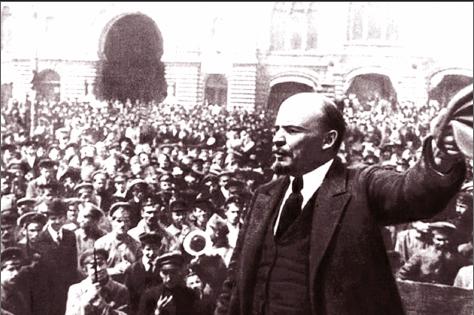
But then the answer is fantastic, the one that reality gives. When the train arrives at the Finnish railroad station, the enormous square in front of it is filled with tens of thousands of workers. Honor guards from all branches of the military await the man who has returned home from exile. The Internationale(《國際歌》)rings out(唱響). And when Vladimir Ilich Ulyanov(弗拉基米爾·伊里奇·烏里揚諾夫,列寧的原名)now comes out, the man who still lived in the shoemakers house the day before yesterday is grasped by hundreds of hands and lifted onto an armored truck(裝甲車). Spotlights are directed at him from the buildings and the fortress, and speaking from the armored truck he makes his first speech to the people. The streets tremble, and soon the “ten days that shook the world” have begun. The projectile has struck and shattered an empire and a world.endprint
猜你喜歡
環球時報(2023-02-08)2023-02-08 17:17:28
中外文摘(2022年15期)2022-11-21 14:50:39
中共云南省委黨校學報(2022年1期)2022-04-26 13:55:28
學術論壇(2018年4期)2018-11-12 11:48:36
中共南昌市委黨校學報(2018年1期)2018-04-18 05:53:27
湖南大眾傳媒職業技術學院學報(2017年1期)2017-04-17 06:42:12
領導文萃(2015年4期)2015-02-28 09:18:55
俄羅斯問題研究(2013年1期)2013-03-11 15:44:05
俄羅斯問題研究(2013年1期)2013-03-11 15:44:04
環球時報(2013-01-22)2013-01-22 17:43:57