基于農田無線傳感網絡的分簇路由算法
2017-09-15 07:43:49唐大衛鄔智俊韓光潔河海大學物聯網工程學院常州30常州市傳感網與環境感知重點實驗室常州30
農業工程學報 2017年16期
江 冰,毛 天,唐大衛,鄔智俊,韓光潔(. 河海大學物聯網工程學院,常州 30;. 常州市傳感網與環境感知重點實驗室,常州 30)
基于農田無線傳感網絡的分簇路由算法
江 冰1,毛 天1,唐大衛1,鄔智俊1,韓光潔2
(1. 河海大學物聯網工程學院,常州 213022;2. 常州市傳感網與環境感知重點實驗室,常州 213022)
由于無線傳感網絡節點的能量有限,如何有效地利用有限資源以及實現數據的有效傳輸,成為研究熱點問題。針對農田區域廣以及種植作物雜等環境特征,為延長農田無線傳感器網絡的生命周期,提高傳感網的數據包投遞率,構建了適用于農田信息采集的無線傳感器網絡架構,提出了一種混合式的分簇路由算法HCRA(hybrid clustering routing algorithm),研究了簇的形成、簇頭競選以及簇間路由過程,并對HCRA算法與低功耗自適應集簇分層型算法LEACH(low-energy adaptive clustering hierarchy),以及使用固定簇半徑的混合節能分簇算法HEED(hybrid energy-efficient distributed clustering)進行了仿真試驗。結果表明:在1 000次迭代周期下,采用HCRA算法的網絡生存時間要比LEACH算法長約28%,比HEED算法長約12%;采用HCRA算法的數據包投遞率要比LEACH算法高約34個百分點,比HEED算法高約16個百分點。該研究可為農田環境信息采集自動化監測系統提供參考。
無線傳感網絡;數據傳輸;算法;分簇路由算法;網絡生命周期;數據包投遞率;HRCA算法
0 引 言
中國傳統農業中,農戶往往是通過實地考察農作物生長環境,憑借經驗栽種農作物。這種傳統的人工監測辦法,容易造成判斷錯誤,導致農戶采取不當措施,造成農作物減產[1]。近些年來,農業領域出現了一些監測系統,然而大多為有線實時監測系統,其存在不足之處[2]:1)有線監測節點的布置需要大量地布線,在實際環境下操作不靈活;2)有線方式在實際的農業生產應用中,線纜容易損壞導致系統可靠性降低。而無線傳感網技術可以有效地解決有線監測系統中存在的問題[3-5]。因此,需要有效地利用無線傳感器網絡技術來改造傳統農業。
雖然無線傳感器網絡技術在農業上得到了一定的應用。如張波等[6]基于無線傳感器網絡的無人機農田信息監測系統;杜克明等[7]WebGIS在農業環境物聯網監測系統中的設計與實現;高峰等[8]基于無線傳感器網絡的作物水分狀況監測系統研究與設計。然而,無線傳感器網絡節點在使用過程中能量通常不能補給,因而如何高效利用能量以及延長網絡生命周期,成為無線傳感器網絡的首要設計目標。研究表明,采用合理的無線傳感器網絡分簇路由算法可以有效地延長網絡生命周期,提高網絡數據包傳遞率[9-11]。
為延長網絡生存周期,分簇是比較常用的一種辦法。LEACH (low-energy adaptive clustering hierarchy)是為WSN (wireless sensor networks)設計的低功耗自適應路由協議,其基本思想是網絡周期性地隨機選擇簇頭節點,其它的非簇頭節點就近地加入相應的簇頭,形成虛擬簇[12-14]。
PEGASIS(power efficient gathering in sensor information system)協議基本思想是從網絡中離匯聚節點最遠的節點開始,采用貪婪算法,將網絡中的所有傳感器節點形成一條鏈,使得節點只需要與離它距離最近的相鄰節點進行通信即可[15-17]。HEED(hybrid energy-efficient distributed clustering)協議是由Ossama等提出的。簇頭的選擇主要依據主、次2個參數。主參數依賴于剩余能量,用于隨機選取初始簇頭集合。具有較多剩余能量的節點將有較大的概率暫時成為簇頭,而最終該節點是否一定是簇頭取決于剩余能量是否比周圍節點多得多。考慮到分簇后簇內的通信開銷,HEED以簇內平均可達能量(AMRP,average minimum reachability power)作為衡量簇內通信代價的標準[18-20]。
近些年,國內外相關學者對路由分簇算法也有一定的研究。陳炳才等[21]提出了一種基于LEACH協議改進的簇間多跳路由協議,劉偉強等[22]對無線傳感器網絡中的PEGASIS算法進行了研究與改進,姚新兵等[23]提出了一種基于HEED的簇首多跳融合路由算法, Amirthalingam[24]、Sapna Gambhir[25]、Bennani Mohamed Taj[26]等對LEACH 算法進行了研究與改進,Mishra[27]、Ghosh[28]等對PEGASIS算法進行了研究與改進,Taheri[29]、Jain[30]等對HEED協議進行了研究與改進。
LEACH算法中,所有簇頭節點都直接與匯聚節點進行通信,這會使得離匯聚節點較遠的簇頭節點能量消耗嚴重;PEGASIS算法雖然減少了與匯聚節點直接通信的節點數,然而容易使網絡形成較長的鏈路,從而縮短網絡的壽命;HEED算法采用簇頭直接與匯聚節點通信也要消耗很大的能量[31]。基于農田監測范圍大,針對無線傳感網的能量消耗問題,參考LEACH算法和HEED算法的原理,本文提出了一種適用于農田信息采集的混合式分簇路由算法HCRA(hybrid clustering routing algorithm)。
1 網絡模型與能耗模型
1.1 網絡模型
本文研究的被監測對象是農田土壤,傳感器節點安置在農田里,為固定節點,研究所選的農田抽象成為圓形區域,節點信息可以在這片區域內按照一定的規則來傳遞。由于農田的監測范圍大,節點之間進行通信所需的能量消耗較大。此外,隨著農作物的生長,節點間傳輸消息所需的能耗也會越來越大,遠離匯聚節點的節點信息可能無法有效地傳輸給匯聚節點,因此網絡中需要多個匯聚節點。根據農田環境的特征,提出了具有以下特點的無線傳感器網絡模型:
1)傳感網所監測的區域為圓形,半徑為R(m);
2)傳感網由N個普通節點組成,均能正常工作,且具有完全相同的功能和能量,節點部署完成后其位置固定不變,節點均勻分布在區域內;
3)節點能感知自身的剩余能量,當節點能量低于節點收發數據實際可用的最大能量時,節點不能進行收發工作;
4)每個節點都有唯一的ID,可以通過接收到的信號強度估算出發送節點與自身的距離,并可以根據通信距離的長短調整發射功率的大小。
1.2 能耗模型
無線傳感器網絡節點的能量消耗模型[32]如圖1所示。

圖1 無線傳感網節點能量消耗模型Fig.1 Wireless sensor network node energy consumption model
根據此模型,假設節點X向與之距離為d的節點Y傳輸k比特數據,則發射節點和接收節點能量消耗分別如式(1)和式(2)所示。

式中a1和a2分別表示放大器在自由空間模型和多路徑衰減模型中將1 bit數據傳輸1 m2時所需的能量消耗。d0=為臨界距離。當傳輸距離d小于d0時,功率放大損耗采用自由空間模型;當傳輸距離d大于等于d0時,采用多路徑衰減模型。此外,從式(1)可以看出,無線傳感器網絡節點發送數據的能量消耗隨著其與接收節點之間的距離的增大而增大。
2 HCRA算法
基于農田無線傳感器網絡的分簇路由算法HCRA由簇的形成、簇頭競選、和簇間路由3個階段組成。
2.1 簇的形成
基于節點能量的利用率考慮,HCRA算法將整片農田區域劃分成若干小型區域。假定整個農田灌溉區域的基本形狀是一個圓形區域,共部署了N個傳感器節點。首先將中心節點sink置于圓心位置,然后從sink節點出發,以sink為圓心分別以r(m),2r,3r…為半徑將整個圓形區域劃分為m層,再將整個圓區域平均分為6部分(扇區)。每一個部分中的每個層分別再細分,例如,第一層分為1份,第二層分為2份…記Aijk,i(1~m)為節點所在層數編號,j(1~6)為扇區編號,k(1~m)為第i層第j個扇區中劃分的區域編號(按順時針進行編號),以此類推。每一層中的一小份區域即組成了無線傳感器網絡中的一個簇。算法中簇的形成如圖2所示。
由于每一層各簇面積相等,進而使得同層中的簇處于一種同等的水平。層與層之間具有相等的面積差,因而不同層中的簇也處于同一水平。為保證簇頭之間能夠進行通信,即扇形的相鄰環之間的簇能夠進行通信,需滿足條件2r〈d2(r(m)為層與層之間的距離,d2(m)為兩節點在農田環境下的通信距離閾值)。在某一區域出現異常的情況下,基于編號的機制,一方面可以通過編號對節點進行定位,能及時發現問題區域;另一個方面,可以減小因為節點定位而產生的能耗。
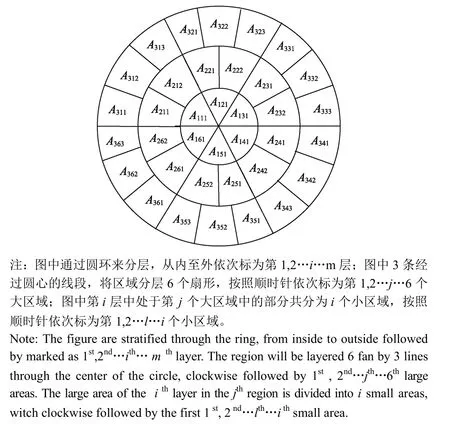
圖2 傳感器網絡分簇示意圖Fig.2 Sensor network clustering diagram
HCRA算法中,簇形成后不再改變,與LEACH這種每輪循環都要重新構造簇的算法相比,大大減少了構造簇的能量消耗。同時,此算法中,簇頭之間的通信僅局限于同一個扇形下的相鄰層之間,因此通信的距離較之HEED算法也相應地減小了,一定程度上減小了簇頭數據傳輸所需的能量消耗。
2.2 簇頭競選
在農田的無線傳感器網絡區域內,首先按照HEED算法選出每個簇的簇頭節點。HEED算法具有健壯性,能夠不依賴于網絡規模的大小,通過O(1)次迭代過程實現分簇過程[33]。初始階段,每個節點都需要確定同在一個簇范圍內的所有相鄰節點的集合,加以計算并進行廣播。初始化階段,節點之間競爭簇頭,并發送競爭的消息,簇頭的產生依據于各節點的初始化概率。初始化概率CHpmb的計算公式由式(3)確定。

式中Cpmb和Pmin是整個網絡統一的參量,Eresident/Emax代表節點剩余能量與初始化能量的百分比。當簇頭競選成功后,其他非簇頭節點依據在競爭階段中收集來的信息有選擇的加入簇。在每一次的迭代過程中,如果已有的臨時節點已經被挑選出,則其他的節點則會將選擇所有的臨時節點中代價最小的一個作為它的臨時簇頭。如果沒有臨時簇頭被挑選出,初始化概率將會加倍,繼而能夠以新的概率推薦自己成為臨時簇頭。如果成功,則將把自己已成為簇頭節點的消息進行廣播。
2.3 簇間路由
簇間路由是位于同一扇區不同層的簇頭節點之間進行通信的路徑,由此可以減小簇頭之間的通信距離,減少能耗。第i層第j扇區的第l(1≤l≤I)個簇頭節點需要將數據傳給下一跳即第i-1層第j扇區的第n(1≤n≤l)個簇頭節點,由簇形成的方式可知,下一跳有多個選擇,必須綜合考慮下一跳簇頭節點的剩余能量以及通信代價。根據式(1)可以得出,兩節點間的通信能耗與節點之間的距離平方成正比,因此兩簇頭之間的通信能耗同樣與簇頭之間的距離平方成正比。本文將簇頭節點的剩余能量與單位數據通信代價的比值定義為簇頭能耗比,并且選擇能耗比大的簇頭節點作為簇間路由的下一跳簇頭,簇頭能耗比的計算公式如式(4)所示。

式中Erem(ijl)是第i層第j扇區的第l個簇頭節點的剩余能量(J),D(cijl,c(i-1)jn)表示第i層第j扇區的第l個簇頭節點到第i-1層第j扇區的第n個簇頭節點的距離(m),由于節點間通信能耗與距離的平方成正比,所以D2(c,c)即代表通信代價。
ijl(i-1)jn
3 算法仿真試驗
本文使用MATLAB作為平臺,對提出的HCRA算法進行了仿真試驗,并將其與LEACH、HEED 2種算法在無線傳感網絡生存時間和能量消耗方面進行了對比,網絡仿真參數如表1所示。
3.1 網絡生命周期
從網絡生命周期上分析,仿真結果如圖3a所示。LEACH算法,在0~150次的網絡運行輪數中,節點死亡速率較快,100~700次,節點近乎全部死亡。HEED算法,在0~50次網絡運行輪數時,沒有節點死亡,在50~300次中,節點死亡速率較快,300~800次,節點死亡速率緩慢,近800次之后,節點幾乎全部死亡。而HCRA算法經過1 000次的迭代,在0~75次的網絡運行輪數中,幾乎沒有節點死亡,75~400次,節點死亡幅度較快,400~500次,節點死亡速率較75~400有所下降,500~900次,死亡幅度較慢,近900次之后,節點近乎全部死亡。據仿真結果分析可知,在迭代1 000次的情況下,采用HCRA算法的網絡生存時間在相同的條件下要比LEACH算法長約28%,比HEED算法長約12%。
3.2 數據包傳遞率
從數據包傳遞率上分析,所有節點發送4 000 bit數據,對比3種算法下基站收到的數據包數目,仿真結果如圖3b所示。基于LEACH算法時,在0~150次的網絡運行輪數中,基站收到的數據包數目在不斷增加,在200次時,投遞率達到33.7%左右,并且隨著節點全部死亡之后,基站收到的數據包數目不再增加。HEED算法在0~300次的網絡運行輪數中,基站收到的數據包數目在不斷增加,在500次時,投遞率達到51.2%左右,500次之后數據包數目不再增加。而HCRA算法在0~500次的網絡運行輪數中,基站收到的數據包數目在不斷增加,在600次時,投遞率達到67%左右,700次之后數據包數目不再增加。從仿真結果可以看出,在迭代1 000次的情況下,基于HCRA算法的數據包投遞率在相同條件下要比LEACH算法高約34個百分點,比HEED算法高約16個百分點。
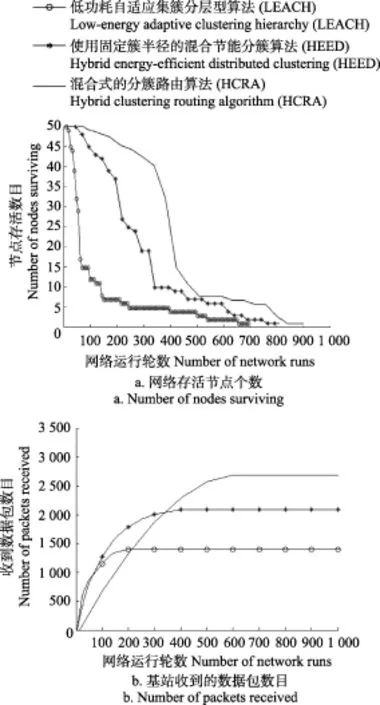
圖3 網絡運行輪數與各參數關系曲線Fig.3 Graph between number of running cycles of network and parameters
4 結 論
依據農田環境,構建了適用于農田信息采集的無線傳感器網絡架構,將農田劃分為無數個小的扇區,便于節點的定位,采用層次型路由形式,實現了傳感網簇頭節點的均勻分布以及能量消耗的減少。基于HCRA(hybrid clustering routing algorithm)算法的分析,詳細描述了傳感網分簇過程、簇頭的競選過程以及簇頭之間的路由,給出了仿真結果。根據仿真結果分析,在1 000次迭代周期下,采用HCRA算法的網絡生存時間要比LEACH(low-energy adaptive clustering hierarchy)算法長約28%,比HEED(hybrid clustering routing algorithm)算法長約12%;采用HCRA(hybrid clustering routing algorithm)算法的數據包投遞率要比LEACH算法高約34個百分點,比HEED算法高約16個百分點。
[1] 王若冰. 水稻生長環境遠程監控系統的研究[D]. 長春:吉林大學,2015. Wang Ruobing. Research on the Rice Growing Environment Remote Monitoring and Control System[D]. Changchun: Jilin University, 2015. (in Chinese with English abstract)
[2] 李光云,胡鋼,馬國玉,等. 基于無線傳感器網絡的土壤墑情監測系統[J]. 微處理機,2014(2):89-93. Li Guangyun, Hu Gang, Ma Guoyu, et al. Design of farm detection system based on wireless sensor networks[J]. Microprocessors, 2014(2): 89-93. (in Chinese with English abstract)
[3] 廖建尚. 基于物聯網的溫室大棚環境監控系統設計方法[J]. 農業工程學報,2016,32(11):233-243. Liao Jianshang. Design of agricultural greenhouse environment monitoring system based on internet of things[J]. Transactions of the Chinese Society of Agricultural Engineering (Transactions of the CSAE), 2016, 32(11): 233-243. (in Chinese with English abstract)
[4] 鄒金秋,周清波,楊鵬,等. 無線傳感網獲取的農田數據管理系統集成與實例分析[J]. 農業工程學報,2012,28(2):142-147. Zou Jinqiu, Zhou Qingbo, Yang Peng, et al. Integration and example analysis for farmland data management system of wireless sensor networks[J]. Transactions of the Chinese Society of Agricultural Engineering (Transactions of the CSAE), 2012, 28(2): 142-147. (in Chinese with English abstract)
[5] 鄧然,朱勇,詹念,等. 基于ZigBee技術的溫濕度數據采集系統設計[J]. 無線電通信技術,2017,43(3):81-84. Deng Ran, Zhu Yong, Zhan Nian, et al. Design of temperature and humidity data acquisition system based on zigbee technology[J]. Radio Communication Technology, 2017, 43(3): 81-84. (in Chinese with English abstract)
[6] 張波,羅錫文,蘭玉彬,等. 基于無線傳感器網絡的無人機農田信息監測系統[J]. 農業工程學報,2015,31(17):176-182. Zhang Bo, Luo Xiwen, Lan Yubin, et al. Agricultural environment monitor system based on UAV and wireless sensor networks[J]. Transactions of the Chinese Society of Agricultural Engineering (Transactions of the CSAE), 2015, 31(17): 176-182. (in Chinese with English abstract)
[7] 杜克明,褚金翔,孫忠富,等. WebGIS在農業環境物聯網監測系統中的設計與實現[J]. 農業工程學報,2016,32(4):171-178. Du Keming, Chu Jinxiang, Sun Zhongfu, et al. Design and implementation of monitoring system for agricultural environment based on WebGIS with internet of things[J]. Transactions of the Chinese Society of Agricultural Engineering (Transactions of the CSAE), 2016, 32(4): 171-178. (in Chinese with English abstract)
[8] 高峰,俞立,張文安,等. 基于無線傳感器網絡的作物水分狀況監測系統研究與設計[J]. 農業工程學報,2009,25(2):107-112. Gao Feng, Yu Li, Zhang Wen'an, et al. Research and design of crop water status monitoring system based on wireless sensor networks[J]. Transactions of the Chinese Society of Agricultural Engineering (Transactions of the CSAE), 2009, 25(2): 107-112. (in Chinese with English abstract)
[9] 吳迪,胡鋼,倪剛. 無線傳感器網絡安全路由協議的研究[J]. 傳感技術學報,2008,21(7):1195-1201.Wu Di, Hu Gang, Ni Gang. Research on secure routing protocols in wireless sensor networks[J]. Chinese Journal of Sensors and Actuators, 2008, 21(7): 1195-1201. (in Chinese with English abstract)
[10] Yen L H, Tsai W T. The room shortage problem of tree-based zigbee/IEEE 802.15.4 wireless networks[J]. Computer Communication, 2010, 33(4): 454-462.
[11] Suparna Biswas, Jayita Saha, Tanumoy Nag, et al. A novel cluster head selection algorithm for energy-efficient routing in wireless sensor network[C]//Advanced Computing (IACC), 2016 IEEE 6th International Conference on. IEEE, 2016.
[12] Wendi Rabiner Heinzelman, Anantha Chandrakasan, Hari Balakrishnan. Energy-efficient communication protocol for wireless microsensor networks[C]//In: Proceedings of the 33rd Hawaii International Conference on System Sciences, Hawaii, USA, 2000: 3005-3014.
[13] Chauhan T, Nayyer M. Review on energy efficient protocol based on LEACH, PEGASIS and TEEN[C]//International Conference on Emerging Trends in Communication Technologies. IEEE, 2017.
[14] Liao C, Zhu K, Tang J, et al. Wireless sensor network performance research for Leach based on multi-agent simulation[C]// IEEE International Conference on Agents. IEEE, 2016: 98-99.
[15] Mohit A, Bharti. A comparative study between leach and pegasis: A review[C]//2016 3rd International Conference on Computing for Sustainable Global Development (INDIACom), 2016: 3271-3274.
[16] Fischer B, Buhmann J M. Bagging for path-based cluster[J]. IEEE Transaction on Pathern Annalysis and Machine Intelligence, 2003, 25(11): 1411-1415.
[17] Fischer B, Buhmann J M. Path-based clustering for grouping smooth curves and texture segmentation[J]. IEEE Transaction on Pattern Analysis and Machine Intelligence, 2003, 25(4): 513-518.
[18] Youniso, Fahmy S. Heed: A hybrid energy-efficient distributed clustering approach for ad hoc sensor networks[J]. IEEE Transactions on Mobile Computing, 2004, 3(4): 660-669.
[19] Hoda T, Peyman N. Improving on HEED protocol of wireless sensor networks using non probabilistic approach and fuzzy logic[C]//2015 5thInternational Symposium on Telecommunications, 2010: 193-198.
[20] Kour H, Sharma A K. Performance evaluation of HEED and H-HEED protocol for realistic models in WSN[C]// International Conference on Computer, Communication and Control. 2015: 1-5.
[21] 陳炳才,么華卓,楊明川,等. 一種基于LEACH協議改進的簇間多跳路由協議[J]. 傳感技術學報,2014(3):373-377. Chen Bingcai, Yao Huazhuo, Yang Mingchuan, et al. A intercluster multi-hop routing protocol improved based on LEACH protocol[J]. Chinese Journal of Sensors and Actuators, 2014(3): 373-377. (in Chinese with English abstract)
[22] 劉偉強,蔣華,王鑫. 無線傳感器網絡中PEGASIS協議的研究與改進[J]. 傳感技術學報,2013(12):1764-1769. Liu Weiqiang, Jiang Hua, Wang Xin. Research and improvement of PEGASIS protocol in wireless sensor network[J]. Chinese Journal of Sensors and Actuators, 2013(12): 1764-1769. (in Chinese with English abstract)
[23] 姚新兵,王向東. 一種基于HEED的簇首多跳融合路由算法[J]. 通信技術,2011,44(4):106-108. Yao Xinbing, Wang Xiangdong. A multi-hop fusion routing algorithms based on HEED[J]. Communications Technology, 2011, 44(4): 106-108. (in Chinese with English abstract)
[24] Amirthalingam K, Anurtaha V. Improved LEACH: A modified LEACH for wireless sensor network[C]//IEEE International Conference on Advances in Computer Applications Icaca. IEEE, 2016, 255-258.
[25] Sapna Gambhir, Parul. OE-LEACH: An optimized energy efficient LEACH algorithm for WSNs[C]//2016 Ninth International Conference on Contemporary Computing (IC3): 1-6.
[26] Bennani Mohamed Taj M, Ait Kbir M. ICH-LEACH: An enhanced LEACH protocol for wireless sensor network[C]// 2016 International Conference on Advanced Communication Systems and Information Security (ACOSIS): 1-5.
[27] Mishra A K, Rahman R U, Bharadwaj R, et al. An enhancement of PEGASIS protocol with improved network lifetime for wireless sensor networks[C]//Power, Communication and Information Technology Conference. IEEE, 2016: 142-147.
[28] Ghosh S, Mondal S, Biswas U. Enhanced PEGASIS using ant colony optimization for data gathering in WSN[C]// International Conference on Information Communication and Embedded Systems. IEEE, 2016: 1-6.
[29] Taheri H, Neamatollahi P, Naghibzadeh M, et al. Improving on HEED protocol of wireless sensor networks using non probabilistic approach and fuzzy logic (HEED-NPF)[C]// International Symposium on Telecommunications. IEEE, 2011: 193-198.
[30] Jain A K, Chargolra V, Prasad D. Reliable state-full hybrid energy efficient distributed clustering protocol for wireless sensor networks: RS-HEED[C]//IEEE, International Conference on Moocs, Innovation and Technology in Education. IEEE, 2016: 396-401.
[31] Divya P, Shivkumar S. Comparison of GSTEB, HEED and PEGASIS protocols[C]//2016 International Conference on Wireless Communications, Signal Processing and Networking (WiSPNET), 2016: 1935-1939.
[32] Heinzelman W, Chandrakasan A, Balakrishnan H. An aplicationspecific protocol architecture for wireless microsensor Networks[J]. Wireless Communications, IEEE Transactions on 2002, 1(4): 660-670.
[33] Giri D, Roy U K. Address borrowing in wireless personal area network[C]//Patiala: 2009 IEEE International Advance Computing Conference, 2009: 181-186.
Clustering routing algorithm based on farmland wireless sensor network
Jiang Bing1, Mao Tian1, Tang Dawei1, Wu Zhijun1, Han Guangjie2
(1. Department of Internet of Things Engineering, Hohai University, Changzhou 213022, China; 2. Changzhou Key Laboratory of Sensing Network and Environmental Perception, Changzhou 213022, China)
As the wireless sensor network node's energy is limited, how to effectively use the limited resources and the effective transmission of data becomes a hot topic. In order to extend the life cycle of farmland wireless sensor network and improve the packet delivery rate of sensor network, a wireless sensor network suitable for farmland information collection was constructed, and a hybrid clustering routing algorithm (HCRA) was proposed in this paper. Two classical algorithms, LEACH (low-energy adaptive clustering hierarchy) and HEED (hybrid energy-efficient distributed clustering), were evaluated for their merit to extend life cycle of wireless sensors. In the LEACH algorithm, all cluster head nodes communicate directly with the sink nodes, so that energy consumption of the cluster head node far from the sink node was serious, and cannot guarantee the cluster head evenly distributed, which could make some cluster head nodes’ energy consumption too large, affecting the network life cycle. The HEED algorithm, on the other hand, used the cluster head to communicate directly with the sink node, which consumed a lot of energy. Because the farmland information collection range was large, those two algorithms were not fully applicable to the wireless sensor network information gathering in farmland environment. Based on this evaluation and the principle of the HEED algorithm, we proposed a hybrid clustering routing algorithm (HCRA) for farmland information collection. In the proposed algorithm, the network model and the energy consumption models were described separately. In the network model, the monitoring area of the sensor network was abstracted as a circle area. Each node in the network had its own unique ID, and the location was not changed after the deployment was completed. All nodes were distributed evenly in the area. In the energy consumption model, the energy consumption of the wireless sensor network increased with the increase of the distance between the transmitting node and the receiving node, regardless of the power dissipation loss using the free space model or the multi-channel attenuation model. Besides, we also descried the HCRA algorithm in detail in this paper, including formation of cluster, cluster bidding and inter-cluster routing. The formation of the cluster was as follows: the center node sink was placed in the center position, and then from the sink node, taking r (the distance between layers and layers), 2r, 3r…as the radius, the entire circular area was divided into m flows. The entire area was divided into six parts, each of which was subdivided into small areas with equal area according to the number of layers. Each small area was a cluster in the wireless sensor network. The cluster head bidding process was as follows: the cluster head node was selected according to the heed algorithm, i.e., the cluster head was generated according to the initial probability of each node. When the cluster head was selected, other non-cluster head nodes joined the cluster selectively according to the collected information from the competition stage. The inter-cluster routing was the information transfer process between cluster heads, cluster head selected the next cluster head based on energy consumption. Finally, the proposed HCRA algorithm along with LEACH and HEED algorithm were simulated experimentally under the same conditions. The experimental results showed that the HCRA algorithm had 28% longer network lifetime than the LEACH algorithm, about 12% faster than the HEED algorithm, under the iteration period of 1000 times. The HCRA algorithm had a packet delivery rate, which was about 34 percentage points higher than the LEACH, and about 16 percentage points higher than HEED.
wireless sensor networks; data transfer; algorithms; clustered routing protocol; life cycle of network; packet delivery rate; HCRA(hybrid clustering routing algorithm) algorithm
10.11975/j.issn.1002-6819.2017.16.024
TP393; S24
A
1002-6819(2017)-16-0182-06
江 冰,毛 天,唐大衛,鄔智俊,韓光潔. 基于農田無線傳感網絡的分簇路由算法[J]. 農業工程學報,2017,33(16):182-187.
10.11975/j.issn.1002-6819.2017.16.024 http://www.tcsae.org
Jiang Bing, Mao Tian, Tang Dawei, Wu Zhijun, Han Guangjie. Clustering routing algorithm based on farmland wireless sensor network[J]. Transactions of the Chinese Society of Agricultural Engineering (Transactions of the CSAE), 2017, 33(16): 182-187. (in Chinese with English abstract) doi:10.11975/j.issn.1002-6819.2017.16.024 http://www.tcsae.org
2017-03-12
2017-08-05
國家自然科學基金(61573128)
江 冰,女(漢族),江蘇常州人,教授,研究方向:現代通信技術、智能信息處理。Email:jiangb@hhuc.edu.cn