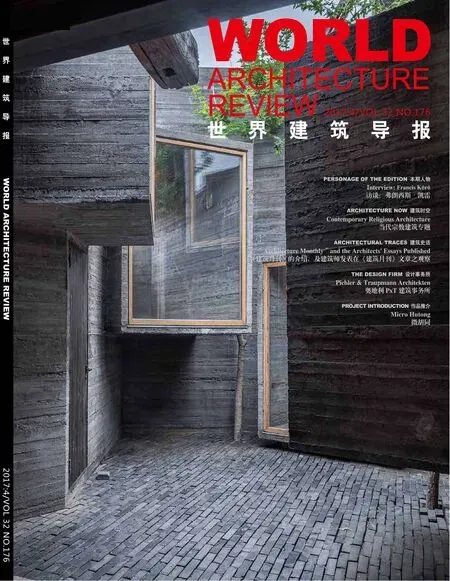
Heustadelgasse 住區開發奧地利維亞納
2017-09-07 03:47:36RupertSteiner
世界建筑導報 2017年4期
Heustadelgasse 住區開發奧地利維亞納
Heustadelgasse Housing Development Vienna, Austria
業主:AH – Gemeinnützige Siedlungsgenossenschaft
Altmannsdorf u. Hetzendorf Gen.m.b.H. Vienna
BUWOG – Bauen und Wohnen Gesellschaft mbH. Vienna
設計合作方:
Landschaftsarchitektur - bauchplan Landschaftsarchitektur
Projektentwicklung - raum & kommunikation Korab KEG
日期:設計啟動:2006年/施工:2008年/
竣工:2009年
可用建筑面積:9 179平方米
攝影:Rupert Steiner
Client: AH – Gemeinnützige Siedlungsgenossenschaft Altmannsdorf u. Hetzendorf Gen.m.b.H. Vienna
BUWOG – Bauen und Wohnen Gesellschaft mbH, Vienna
Design Partners:
Landschaftsarchitektur - bauchplan Landschaftsarchitektur, Vienna
Projektentwicklung - raum & kommunikation Korab KEG, Vienna
Year: Start of Design: 2006 / Start of Construction: 2008 /
Completion: 2009
Usable Floor Area: 9.179 m2
Photographs: Rupert Steiner
Groundfloor
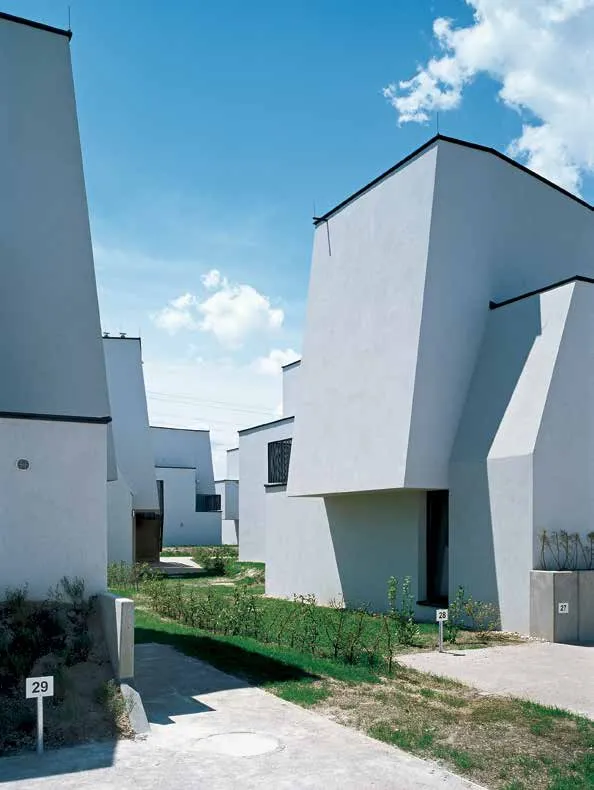
介于花園城市和私家花園之間
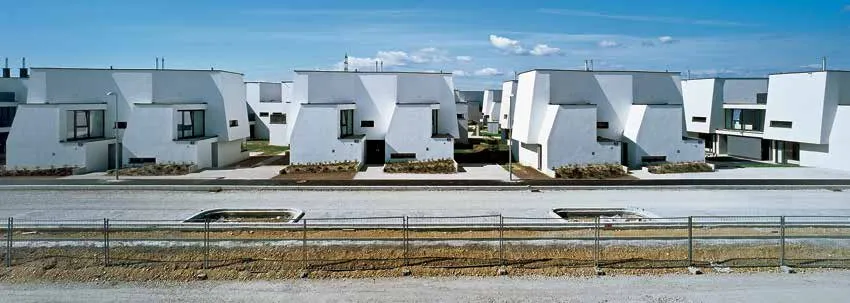
從概念上來說,Neue Siedlerbewegung(新定居遷徙項目)的定位介于花園城市和私家花園住宅之間,也就是排屋和帶私用花園的住宅之間。排屋的規劃有序性和私家花園住宅的個性和密度形成鮮明對照。新定居遷徙項目的目的是建造介于二者之間的住宅,其設計理念與類型的空間定位也介于二者之間。這一設計理念也反映了這個區域被劃為“花園定居區域”這一事實,因為“花園定居區域”的定義就是介于帶私家花園的住宅與《維也納建筑規范》中定義的第一類建筑物之間。
從建筑和城市規劃方面來看,該項目的任務是為以后新的開發項目定義一種新的住宅類型。
類型學定義:點對稱、適合增加新的用途、適合按比例縮放應用。為這個項目提出的類型學設計目的是以一種高品質的原型為基礎,開發出各種在該項目完成之后仍可在該地區推廣的設計方案。
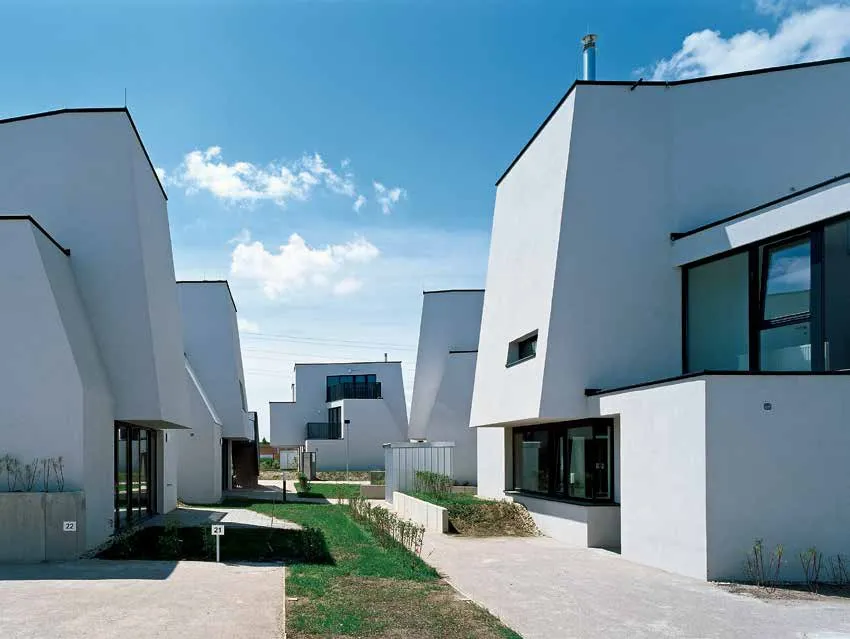
這種新的住宅始終以點對稱為基礎開發,除了開窗之外,建筑的南北高程與東西高程相同(但不是軸向對稱設計)。
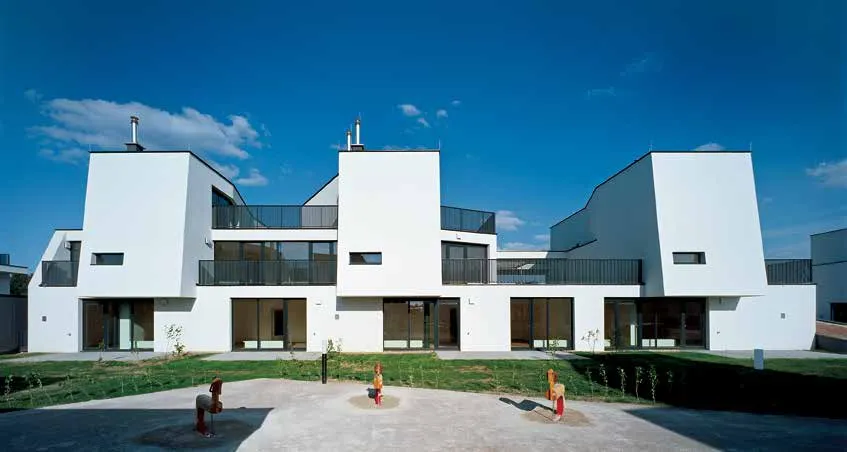
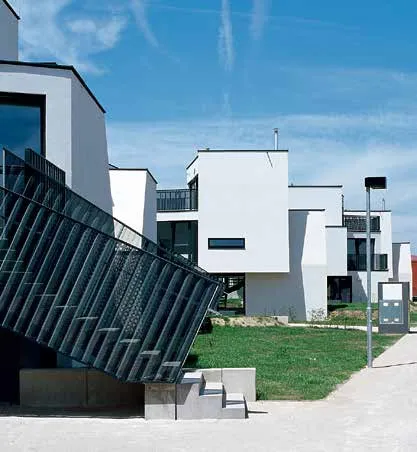
這又意味著可以向各個方向延伸開發樣式相同的連體住宅單元。點對稱還允許按比例縮放,以一種簡單而又美觀的風格建造規格不同的住宅和公寓樓,甚至還可以延伸開發大小不同的連體住宅。這是一種綜合多元化和簡單化設計理念的新型住宅設計形式,使用一種住宅設計類型建造各不相同的新型住宅。這些房屋可以采用獨立住宅、連體住宅、半獨立的連體住宅和包含兩個住宅單元的房屋或排屋,而且可以在需要遵守不同的規劃法規規定的情況下用于高密度低層住宅樓的開發。房屋本身可以采用不同方式連接起來,每幢獨立住宅又可以采用不同的設計版本。連體建造的多種可能性和個性化設計可以提供形式多樣、可以靈活選擇的方案。
Between garden city and allotment garden
In conceptual terms the Neue Siedlerbewegung (new settlement movement) is positioned somewhere between a garden city and an allotment garden, between a row house estate and an estate of houses on garden plots. The planned organization of the row house is contrasted with the individuality and density of the allotment garden house. The new settlement movement reconstitutes itself within this field of tension. The idea and type find themselves in a space in-between. This reflects the fact that this district is zoned as a “garden settlement area”, which itself is something in-between an allotment garden estate and Building Class 1 of the Vienna Building Regulations.
In architectural and urban planning terms the task was to develop a new typology for a new kind of development.
Typology: point symmetry, suitable for additive use, suitable for scaling up or down in size.
The typology proposed for this project is based on a prototype which, thanks to its qualities, can produce a wide variety of house types that is certainly not completely exhausted here and indicates possibilities that go far beyond this project.
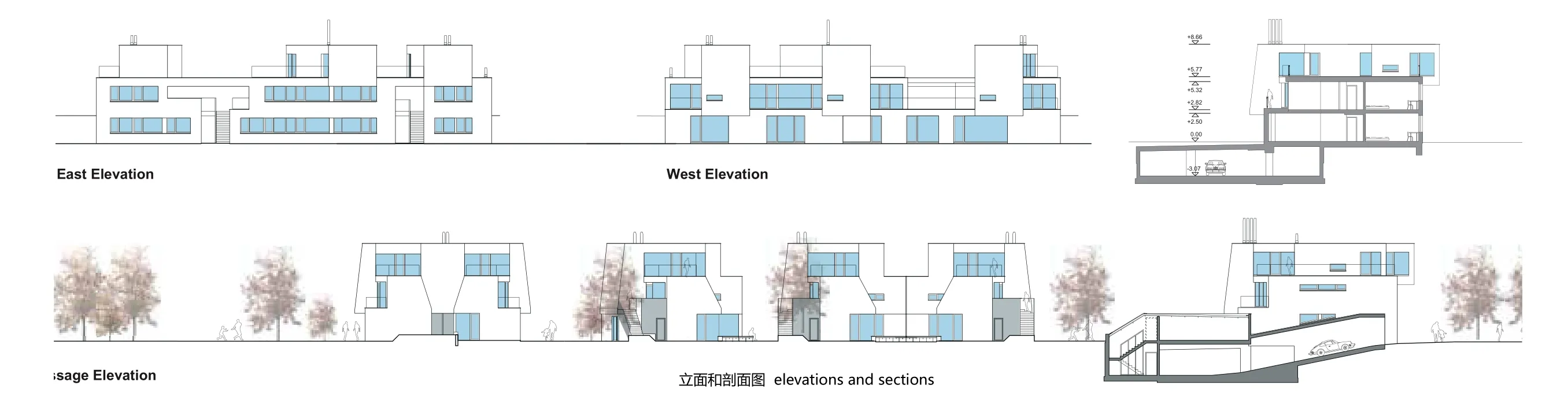
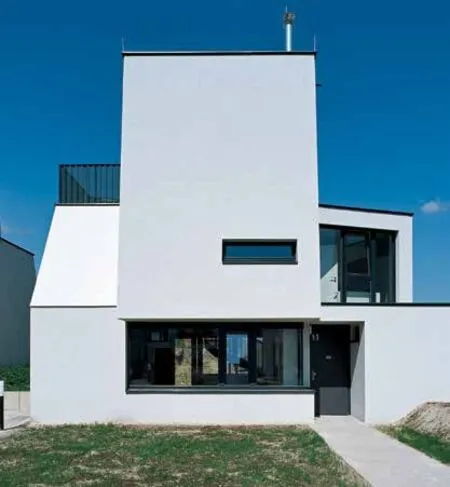
The new estate house is built up consistently on the basis of point symmetry; apart from the fenestration the north and south elevations are identical (not axially symmetrical), as are the east and west elevations. This in turn means that the units can be coupled in all four directions. The point symmetry also allows scaling up and down so as to generate several different house sizes and apartment types in a simple and yet attractive way. It is even possible to couple houses of different sizes. The result combines diversity and simplicity in the form of the design of a new estate that, while it apparently uses only one house type is nevertheless constantly new and different. The houses can take the form of a freestanding single house, paired houses, a twin (semi-detached) house, a house containing two dwelling units, or a row house and, where different zoning laws apply, they can be used in the form of high density, low rise development. Just as the houses can be connected differently, every individual house can also be offered in a number of different versions. The multiple possibilities in terms of coupling as well as individual design result in a highly diverse and flexible range of options.
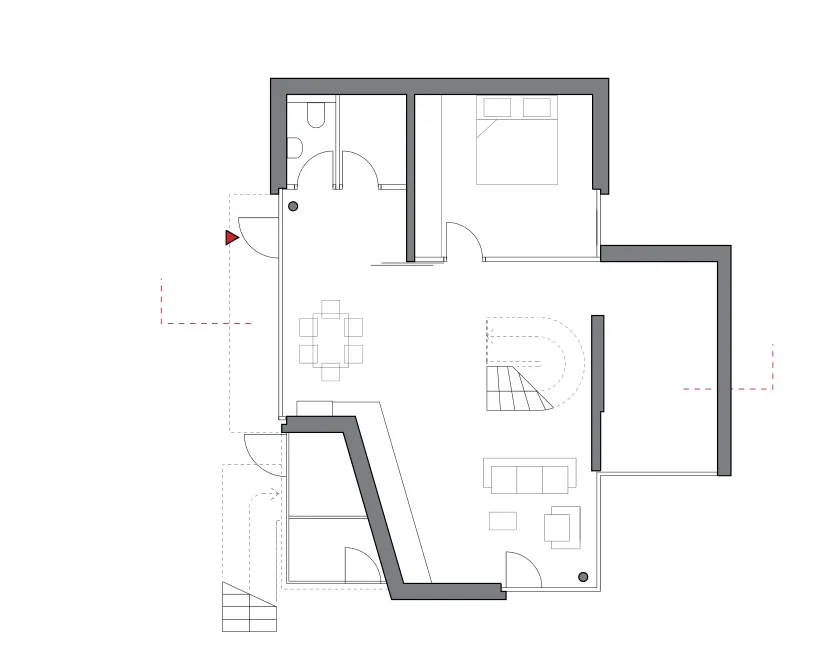
首層面圖 ground floor plan
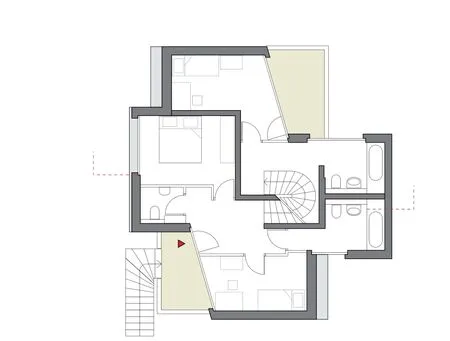
二層面圖 first floor plan
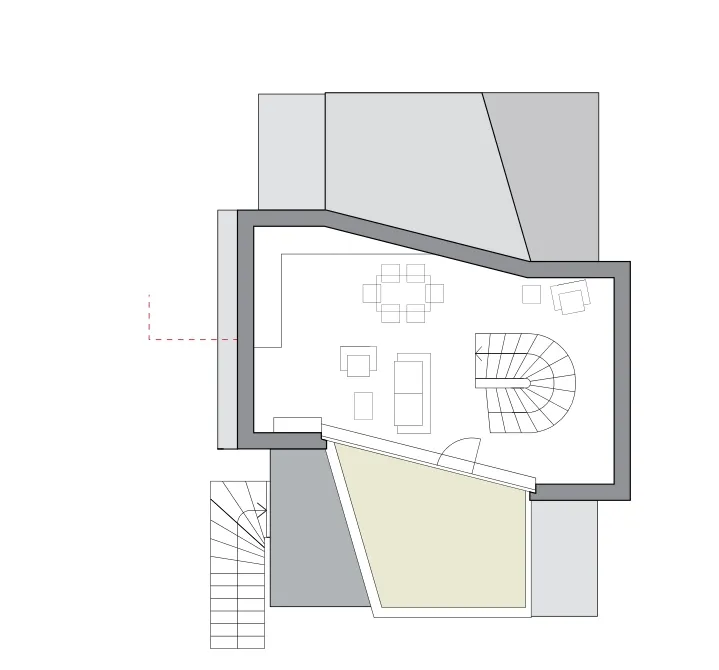
三層面圖 second floor plan
猜你喜歡
海峽姐妹(2020年9期)2021-01-04 01:35:44
VOGUE服飾與美容(2020年9期)2020-09-02 14:47:26
現代裝飾(2020年7期)2020-07-27 01:27:42
流行色(2020年1期)2020-04-28 11:16:38
藝術啟蒙(2018年7期)2018-08-23 09:14:18
海峽姐妹(2017年7期)2017-07-31 19:08:17
Coco薇(2017年5期)2017-06-05 08:53:16
山東青年(2016年1期)2016-02-28 14:25:25
當代修辭學(2014年3期)2014-01-21 02:30:44
公務員文萃(2013年5期)2013-03-11 16:08:37