
變色石竹開花物候與生殖特征
2017-08-30 17:35:02帕瑞董連新張銀來牟暢
新疆農業科學 2017年6期
帕瑞,董連新,張銀來,牟暢
(新疆農業大學林學與園藝學院,烏魯木齊 830052)
變色石竹開花物候與生殖特征
帕瑞,董連新,張銀來,牟暢
(新疆農業大學林學與園藝學院,烏魯木齊 830052)
【目的】研究變色石竹的開花物候和生殖特征,為變色石竹的繁殖和保護提供科學依據。【方法】以分布于天山西部的變色石竹自然種群為研究對象,測定變色石竹的開花振幅、開花強度和花期同步性等指標,運用SPSS軟件分析始花時間、花期持續時間、開花數與坐果數的關系。【結果】變色石竹種群花期為5月中下旬到10月上旬,種群花期歷時120~130 d。單花花期為5~7 d,個體花期為18~20 d,花序花期為26~28 d。變色石竹個體開花振幅曲線呈單峰曲線,隨著時間的推移,開花比例逐漸上升,在開花第16 d開后開花達到峰值,然后快速下降,第24 d后結束。個體開花同步指數為0.81,說明其開花同步性高,開花較為集中。坐果率與開始開花時間呈負相關,與開花總數量呈正相關,而與花期長短呈顯著正相關。【結論】過度放牧,動物啃食及人為因素的影響,是變色石竹種群減小和面積減少的主要原因,從種群繁殖生物學特性角度考慮,對變色石竹種群保護應進一步加強,盡量消除和減少人為因素的影響,盡可能增加和保證種群具有較多的開花數量,才能從根本上解決種群更新困難等問題。
變色石竹;開花物候;相對開花強度;開花同步性
0 引 言
【研究意義】植物的開花物候是繁殖生態學研究的主要內容之一[1],同時也是植物重要的生活史特征之一[2],研究植物的花開樣式與環境之間的關系,揭示植物對環境的適應性,具有深遠的生態學意義[3]。植物個體或種群的開花物候可用開花數、開花時間和開花持續時間等一系列參數來量化[4],不同的物候特征對植物的繁殖成功有重要影響[5]。變色石竹(D.versicolor)為石竹屬(Dianthus)多年生草本。分布于哈薩克斯坦,西西伯利亞,在中國僅生長在新疆地區,其自然種群主要分布于新疆天山西部尼勒克、鞏留、新源、霍城等縣域[6]。其抗逆性強,是目前栽培石竹最欠缺的。并以其強大的根系再生能力和密集的地上、地下構件等特征,使其成為防止荒漠草原水土流失和退化的重要植物,對于增加荒漠草原地表的粗糙度、防止地表水形成徑流等方面具有重要的生態價值,是保護荒漠草原的重要生物屏障。【前人研究進展】目前國內外有關植物開花物候的研究已有許多報道。Rathcke等[7]研究發現,不同的物候特征對植物產生后代并獲得預期的結果存在不同程度的影響。Primack[8]認為應該從多個水平去探討植物長期適應外界環境條件的周期性變化以及與生長發育各種參數的動態變化,從而闡明影響植物開花時間的進化選擇壓力。【本研究切入點】近年來,受過度放牧和人為因素的影響,使得變色石竹現存種群面積減少并呈片段化分布,種群更新困難,小種群趨勢增加。而對新疆變色石竹開花物候與生殖特征方面的研究還未見報道。研究變色石竹的開花物候和生殖特征。【擬解決的關鍵問題】運用開花振幅、開花強度和開花同步性等開花物候指數分析變色石竹開花物候特征,探明開花物候特征對其繁殖成功的影響,為變色石竹的保育提供科學依據。
1 材料與方法
1.1 材 料
所研究的變色石竹自然分布種群位于新疆天山西部的尼勒克縣境內,地理坐標為84°05′14′′ E,43°43′23′′ N,海拔2 093 m,年平均氣溫7℃,年日照時數3 200 h,年平均降水量500 mm,相對濕度50%~60%,春秋雨量較多,夏季較為干旱,屬溫帶荒漠草原氣候區,土壤以黑鈣土為主。伴生植物主要屬于禾本科(Cramineae)、唇形科(Labiatae)、薔薇科(Rosaceae)、菊科(Compositae)、豆科(Leguminosae)、十字花科(Cruciferae)等。
1.2 方 法
1.2.1 開花物候
參照Dafni等[9]的方法,于2016年5~10月對變色石竹的單花開花進程、種群以及個體開花物候等方面進行觀察和記錄。
1.2.1.1 群體和個體水平的物候觀察
在變色石竹試驗樣地種群內,隨機選取變色石竹個體30株,掛牌并做好標記,并在樣株上隨機標記一個花序,于花期每天記錄花序和植株的開花比例。當種群植株開花數達到5%時視為初花期,50%以上植株開花視為開花盛期,95%的植株開花結束時視為終花日期。始花期、開花高峰期和開花持續時間等是個體研究的主要開花參數。第一朵花開花的日期視為花序和個體的始花日期,≥50%時視為開花高峰日期,無花開放視為終花期。根據開花數觀測計算開花物候參數。采用同步指數檢測種群中個體開花同步性的高低,依照Mcintosh的方法進行檢測[10]。
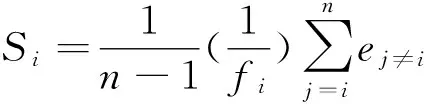
其中,ej表示個體i和j花期重疊時間(d),fi表示個體i開花的總時間(d),n表示種群中個體總數。Si的變異范圍為0~1:0表示種群內個體花期無重疊,1則表示完全重疊[1]。
始花日期的統計參考Pickering(1995)的方法[11],在研究中2016年5月20日為第1 d(計為1),5月21日為第2 d(計為2),以此類推。
1.2.1.2 單花水平和花部表型變化
觀察并記錄花蕾迅速膨大至凋謝的持續時間,從花蕾出現開始,每天早晚進行觀察,直到第一朵開始開放,每隔1~2 h觀察1次,觀測和記錄單花外層花瓣張開情況,中裂片形態結構變化,花藥生出、花絲伸長彎曲和柱頭之間的相對位置變化,花藥開裂情況;出現花氣味的時間,直到氣味消失的。
1.2.2 始花時間、花期持續時間、開花數與坐果數的關系
為了分析個體的開花參數與坐果數之間的相關關系,2016年在開花后每天觀察記錄所標記個體開花的最早開花時間、花期持續時間、開花總數與坐果總數。
1.3 數據處理
用SPSS 20.0雙因素相關性分析數據。
2 結果與分析
2.1 開花物候
2.1.1 種群和個體水平開花物候
變色石竹每年開花1次,花期從5月下旬至10月上旬都有不間斷開花,觀測的種群和個體水平的開花物候特征表明。2016年種群和個體水平始花時間分別為5月16日和5月21日,終花時間為6月18日和6月10日,開花持續時間分別為35和22 d。在個體水平上開花振幅為1~3朵/d。
單峰曲線是變色石竹個體開花振幅的主要特征(圖1),隨著時間的推移開花數量逐漸上升,開花第16 d后花量達到高峰,隨后開花數量快速下降,花后24 d結束。變色石竹花期同步指數平均為0.81,表現出較為集中的開花式樣(圖2)。開花分布頻率集中在60%~80%(圖3)。表1,圖1-3
表1 變色石竹種群和個體的開花物候
Table 1 The Phenology ofD.versicolorpopulaton and individual

觀察項目Observation種群水平Populationlevel個體水平Individuallevel始花日期Firstfloweringdate(month-day)5~165~21花期持續時間Duration(d)3522開花高峰日期Peakfloweringdate(month-day)6~86~2開花振幅Floweringamplitude(No.offlower)-1.67(1~3)開花同步指數Floweringsynchronyindex-0.81終花日期Lastfloweringdate(month-day)6~186~10

圖1 變色石竹個體的開花振幅曲線
Fig.1 The Flowering amplitudes curve ofD.versicolorindividual plant

注:左端數值為相對開花強度,右端數值為花期同步指數
Note: The values on the left side are relative flowering intensities and the ones on the right side are flowering synchrony indices
圖2 變色石竹個體始花日期(●)、開花高峰日期(▼)、終花日期(○)和花期持續時間變化
Fig.2 Variations of the first flowering date(●),peak flowering date(▼),last flowering date(○)
and duration forD.versicolorindividuals

圖3 變色石竹個體相對開花強度分布
Fig.3 Frequency distributions of relative flowering intensity inD.versicolorindividual plants
2.1.2 單花水平和花部表型變化
變色石竹花序上位于頂部的花先開,開花后2~3 d才向下依次開放,每個花序一般著生3~4朵花。單花花期,即從花蕾開放至花瓣凋謝一般要經歷5~7 d。依形態特征變化及散粉時間單花花期可劃分為4個時期,即散粉前期、散粉初期、散粉盛期和掉落期。在開花過程中花絲先于花柱生長,當花藥剛剛生出花瓣,花柱才開始伸長,但兩者的生長速度明顯不同。散粉前期,花絲高于花柱,花柱生長速度比花絲明顯要慢(圖4A);散粉初期,花絲生長速度開始加快,明顯高出花柱,10枚離生雄蕊中的4枚先伸長、花藥開裂,開始散粉,此期花柱幾乎沒有伸長(圖4B);散粉盛期,花絲幾乎停止生長并且開始彎曲,10枚離生雄蕊中的剩余6枚開裂散粉,花柱快速生長與花絲近乎等長,柱頭由乳白色逐漸變為粉紅色(圖4C);在凋謝期,花絲停止彎曲生長,而柱頭繼續向前彎曲生長,并最終高于花絲,花藥停止散粉并開始從花絲上脫落(圖4D)。圖4

注;A. 前期;B. 初期;C. 盛期;D. 凋謝期
Note: A. Pre-dehiscence; B. Initial dehiscence; C. Full dehiscence; D. Withering
圖4 變色石竹開花動態
Fig.4 The single flowering process ofD.versicolor
2.2 物候指數和坐果數的相關性
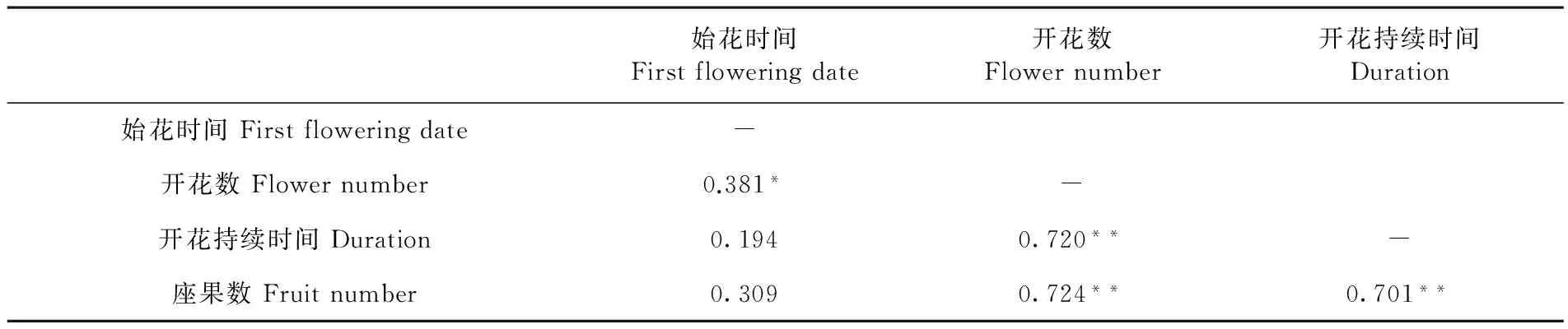
研究表明,2016年變色石竹第一朵花開花時間、延續開花時間、開花總數量及坐果總數量的相關分析結果表明,開始開花時間與開花總數、開花總數與花期延續時間、開花總數與坐果總數、開花持續時間與坐果數均呈顯著正相關。相關性分析結果顯示,第一朵花的開花時間早的比開花時間晚的具有較多的開花數量;開花數量較多的其開花延續時間較長;花數多的和開花延續時間長的植株其坐果數更高。表2
表2 2016年變色石竹個體水平的始花日期、花期持續時間、開花數及坐果數相關性
Table 2 Pearson correlation coefficients of the first flowering date, duration, flower number and fruit number ofD.versicolorat an individual level in 2016
始花時間Firstfloweringdate開花數Flowernumber開花持續時間Duration始花時間Firstfloweringdate-開花數Flowernumber0.381*-開花持續時間Duration0.1940.720**-座果數Fruitnumber0.3090.724**0.701**
注:*: 相關性顯著(雙尾檢驗) ;**: 相關性極顯著(雙尾檢驗)
Note:*Correlation is significant at 0.05 level (2-tailed);**Correlation is significant at 0.01 level (2-tailed)
3 討 論
3.1 開花物候特征與生境的關系
研究結果表明,單峰曲線是新疆變色石竹個體水平開花振幅曲線的主要特征,開花第16 d后開花量達到峰值,然后快速下降,第24 d后結束。并且其開花時間較為集中,說明其開花較為集中,同步性較高。這與Herrera[12]的研究結果相一致。研究的變色石竹材料,生長于海拔2 000 m以上的山區,花期正逢一年中降雨較多時期,嚴重影響了昆蟲傳粉行為,在這段時間內,變色石竹利用大量開花以及延續開花時間等方式來應對不利的自然環境條件,以此來保證種群的繁衍。相對開花強度在一定程度上會影響植物花粉的運動方式[13,14]。多數植物都具有相對較低的開花強度[15]。研究中,變色石竹具有較高的相對開花強度,分布頻率集中在60%~80%,表明多數個體呈現強烈開花,植株個體開花數幾乎不受環境的影響。
3.2 開花數量、開花時間與坐果數的關系
開花數量、開花時間等參數與坐果數有一定的關系[16]。開花數量是影響植物最終坐果率的主要因素之一[17],植物個體的開花數與坐果率呈正相關。通過對試驗點內變色石竹個體水平的物候參數分析結果表明,坐果率與開始開花時間呈負相關,與開花總數量呈正相關,而與花期長短呈顯著正相關。為了吸引更多的昆蟲前來為其授粉,變色石竹采用了大量開花的方式,盡可能的增加傳粉機會,以達到提高坐果率的目的。野外調查結果發現個體數目較少的種群,坐果率均明顯較低,說明小種群開花數量少,造訪的昆蟲量也會相應的減少,坐果率也會明顯下降。近幾年由于過度放牧等人為影響,新疆變色石竹種群面積在逐年縮小,應進一步加強對種群的保護,盡量消除和減少人為因素的影響,增加和保證種群具有較多的開花數量,才能從根本上解決種群更新困難等問題。
4 結 論
變色石竹每年開花1次,2016年種群開花時間為5月16日,個體開花時間為5月21日,開花結束時間分別為為6月18日和6月10日,開花持續時間分別為35和22 d。在個體水平上開花振幅為1~3朵/d。個體開花振幅曲線呈單峰曲線,隨著時間的推移開花數量逐漸上升,花后第16 d后開花數量達到高峰,然后快速下降,24 d后結束。平均花期同步指數為0.81,表現出一種大量、集中的開花式樣。相對開花強度較高,分布頻率集中在60%~80%。開始開花時間與開花數量、開花數量與坐果數、開花持續時間與坐果數均呈顯著正相關。
References)
[1] llerton, J., & Lack, A. J. (1992). Flowering phenology: an example of relaxation of natural selection?.TrendsinEcology&Evolution, 7(7): 274-276.
[2] Willson, M. F. (1984).Plantreproductiveecology..Plantreproductiveecology. John Wiley & Sons: 80-85.
[3] White, L. M. (1995). Predicting flowering of 130 plants at 8 locations with temperature and daylength.JournalofRangeManagement, 48(2): 108-114.
[4] 馬文寶, 施翔, 張道遠, 等. 準噶爾無葉豆的開花物候與生殖特征[J]. 植物生態學報, 2008, 32(4):760-767.
MA Wen-bao, SHI Xiang, ZHANG Dao-yuan, et al. (2008). Flowering phenology and reproductive features of plant eremosparton songoricum in desert zone, Xinjiang, China [J].JournalofPlantEcology(ChineseVersion), 32(4):760-767. (in Chinese)
[5] Pickering, C. C. (1995). Variation in flowering parameters within and among five species of australian alpine ranunculus.AustralianJournalofBotany, 43(1): 103-112.
[6] 董連新. 新疆野生石竹種質資源收集、保存、評價及利用研究[D]. 南京: 南京林業大學博士論文, 2009.
DONG Lian-xin. (2009).Studiesongermplasmcollection,evaluation,preservationanduseofwilddianthusfromXinjiang[D]. PhD Dissertation. Nanjing Forestry University, Nanjing. (in Chinese)
[7] Rathcke, A., & Lacey, E. P. (2003). Phenological patterns of terrestrial plants.AnnualReviewofEcology&Systematics, 16(X): 179-214.
[8] Primack, R. B. (2003). Longevity of individual flowers.AnnualReviewofEcology&Systematics, 16(16): 15-37.
[9] Dafni, A., Kevan, P. G., & Husband, B. C. (2005). Practical pollination biology.PracticalPollinationBiology: 3-26.
[10] Mcintosh, M. E. (2002). Flowering phenology and reproductive output in two sister species of ferocactus (cactaceae).PlantEcology, 159(1): 1-13.
[11] Herrera, J. (1986). Flowering and fruiting phenology in the coastal shrublands of do?ana, south spain.PlantEcology, 68(2): 91-98.
[12] Buide, M. L., Díaz-Peromingo, J. A., & Guitián, J. (2002). Flowering phenology and female reproductive success in silene acutifolia, link ex rohrb.PlantEcology, 163(1): 93-103.
[13] Dafni, A., Kevan, P. G., & Husband, B. C. (2005). Practical pollination biology.PracticalPollinationBiology: 3-26.
[14] Xiao, Y., He, P., & Li, X. (2004). The flowering phenology and reproductive features of the endangered plant disanthus cercidifolius var longipes h. t. chang (hamamelidaceae).ActaEcologicaSinica, 24(1):14-21.
[15] Ollerton, J., & Diaz, A. (1999). Evidence for stabilising selection acting on flowering time in arum maculatum, (araceae): the influence of phylogeny on adaptation.Oecologia, 119(3):340-348.
[16] Augspurger, C. K. (1983). Phenology, flowering synchrony, and fruit set of six neotropical shrubs.Biotropica, 15(4): 257-267.
Flowering Phenology and Reproductive Feature ofD.versicolor
PA Rui, DONG Lian-xin, ZHANG Yin-lai, MU Chang
(CollegeofForestryandHorticulture,XinjiangAgriculturalUniversity,Urumqi830052,China)
【Objective】 The purpose of this study is find the flowering phenology and reproductive feature ofD.versicolorin order to provide scientific basis for its protection and reproduction. 【Method】In this research, natural populations ofD.versicolordistributed in the western Tianshan Mountains were studied to test the flowering amplitude, flowering intensity and flowering synchrony, and the relationship between initial flowering date, flowering duration, flower number and fruit number was analyzed by SPSS 20.【Result】The florescence ofD.versicolorpopulation was about 120-130 days from late May to early October, and the florescence of single flower, individual plant and inflorescence was 5-7 days, 18-20 days and 26-28 days, respectively; the flowering amplitude curve of individual plant showed a progressive unimodal amplitude curve, the proportion of flowering gradually increased with the passage of time, the peak appeared after flowering 16 days, and then decreased rapidly until flowering 24 days. The flowering synchrony of single flower was 0.81 with a high flowering synchrony. The results of correlation showed that the percentage of fertile fruit made a negative correlation with the flowering date, but a positive correlation with the flower number and flowering duration.【Conclusion】The main reasons for the decrease of the population and the area were the effects of overgrazing, animal eating and human factors. The protection of theD.versicolorpopulation should be further strengthened considering the reproductive biology, the human factors should be eliminated or reduced as far as possible and a greater number of flowing population should be increased or ensured as much as possible so as to solve the problem ofD.versicolorpopulation regeneration fundamentally.
D.versicolor; flowering phenology; relative flowering intensity; flowering synchrony
DONG Lian-xin(1963-), male, native place: Ganyu, Jiangsu. Associate professor. research field: Wild plant resources. (E-mail)dlx-xj@163.com
10.6048/j.issn.1001-4330.2017.06.011
2017-03-12
國家大學生創新創業訓練計劃項目“新疆變色石竹繁殖特性研究”(201510758003);上海科技興農項目“香石竹種質創新與繁育體系研究”(214110008)
帕瑞(1995-),女,新疆石河子人,本科生,研究方向為觀賞園藝學,(E-mail)1270579660@qq.com
董連新(1963-),男,江蘇人,副教授,博士,研究方向為野生植物資源,(E-mail)dlx-xj@163.com
S682.1+9
A
1001-4330(2017)06-1054-07
Supported by: Students' Innovation and Entrepreneurship Training Program of Xinjiang Agricultural University"Reproductive Characteristics of Dianthus versicolor"in Xinjiang(201510758003)、Shanghai Science and Techonology Developing Agriculture Program "Study on Germplasm Innovation and Breeding System of Dianthus caryophyllus "(207110008)
