
Characteristic Study of the Random Wind Load on Semi-submersible Tender Support Platform
2017-06-22 14:44:22GUJiayangZHANGPeiXIEYulinDENGBinglinCHEN
船舶力學(xué) 2017年6期
GU Jia-yang,ZHANG Pei,XIE Yu-lin,DENG Bing-lin,CHEN Yü
(School of Naval Architecture and Marine Engineering,Jiangsu University of Science and Technology,Zhenjiang 212003,China)
Characteristic Study of the Random Wind Load on Semi-submersible Tender Support Platform
GU Jia-yang,ZHANG Pei,XIE Yu-lin,DENG Bing-lin,CHEN Yü
(School of Naval Architecture and Marine Engineering,Jiangsu University of Science and Technology,Zhenjiang 212003,China)
Wind load is one of the most important loads acting on offshore platform,and it is directly related to the stability of platform.So it is necessary to determine wind load on various conditions in the design of platform.By using software Fluent and self-compiled program UDF,the wind force (moment)of the semi-submersible support platform in survival condition is numerically calculated. And,the numerical simulation is based on the Reynold’s average NS equation and DES numerical model.Then,typical spectrum Davenport,NPD and API in frequency-domain were converted into random fluctuating wind in time-domain by the superposition of simple harmonic waves.The maximum wind forces/moments are compared and verified with results defined by CCS,DNV and ABS rules.As is concluded from the study:wind forces(moments)of the platform are related to wind spectrum characteristics,wind directions and the tilt angle of platform.On the simulation of three wind spectrums,the maximum wind force(moment)of NPD spectrum is biggest.Mean wind forces (moments)of Davenport and NPD spectrum are close.The minimum wind forces(moments)of Davenport and NPD spectrum change in almost same trend corresponding to different wind directions.
semi-submersible support platform;random fluctuating winds;wind load; numerical simulation
0 Introduction
The capsizal of offshore platforms caused by typhoon(hurricane)not only brings inestimable economic losses but also threatens the life safety of personnel,and even worse,it is often accompanied by oil pollution incidents.For the sake of economy and safety,accurate forecast for wind loads is quite significant.
Now many numerical researches about wind load on offshore platforms have been carried out.A three-dimensional numerical simulation about a jacket platform on steady wind was madeby Chen et al[1],which can provide reference for the calculation of limit capacity,anti-typhoon practicable exploration and the structural design of platform.The wind load of a jack-up drilling platform which is underwater 400 feet on steady wind was investigated by Lin et al[2].The study is based on a combination of numerical simulation and model test;values show some similarities to wind tunnel experiment results.A numerical simulation about a Truss-Spar-platform on operation and survival conditions was conducted by Yan et al[3]using CFD method,and results were compared with relevant norm.An experimental study about the wind load of a deepwater semi-submersible platform in survival condition(10y or 100y environmental condition)was developed by Cao et al[4].And results were used for dynamic positioning design of the platform. Based on wind load data of massive mobile offshore platforms,Yuan et al[5]discussed the prediction and calculation of wind load in current classification rules.What is more,he depicted the calculation of wind cross curves over turning movement and its specific application. Through a combination of theoretical and experimental method,Chevula et al[6]investigated the unsteady aerodynamics characteristics of hemispherical blunt body at different wind frequencies.Results showed that the stagnation pressure coefficients of bluff body from experiments and theoretical prediction had coincidence in some dimensionless frequency.By using a combination method of CFD and wind-tunnel test,a comparative research about wind load between LNG transport vessel and floating offshore platform was carried out by Wn?k and Soares[7],which especially focus on varying coefficients of wind force and yaw moment along ship length and width direction according to different wind directions.The wind pressure coefficient of oil tanks with several openings in different arrangement forms(2P,3E,3C,4S and 3T),spacing and wind directions was studied by Uematsu et al[8].
Generally speaking,present numerical simulations of wind load on floating platform mostly concerns steady or gradient wind.The new contribution of this study is that:characteristics of random wind load on a semi-submersible tender support platform BT3500 TSV were investigated based on Fluent software and compiled UDF program.Three kinds of random winds from Davenport,NPD and API wind spectrums were mutually compared,using simple-harmonicwave superposition method.Wind forces and moments corresponding to different platform’s tilt angles,drafts and wind directions were predicted.What is more,changing rules of the wind force and moment were comparatively analyzed also.
1 Three typical wind spectrums and the simulation of random fluctuating wind
1.1 Composition of Random fluctuating wind
The wind force acting on the platform consists of constant and fluctuating components. The wind speed at any point can be expressed as a steady Gauss random process.
1.2 Three typical wind spectrums
Wind spectrum can reflect fluctuating changes about wind frequency characteristics.Frequency distribution is an important feature of random wind,which directly affects the interaction between the wind and structures.In this study,typical spectrum Davenport,NPD and API were selected to simulate random wind acting on the platform.
Davenport wind spectrum(Zuo et al[9]),which is constant in height direction.Its expression is:

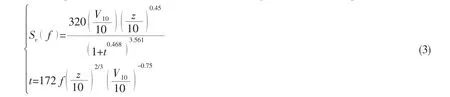
NPD wind spectrum(Zuo et al[9]),which varied in height direction.Its expression is:
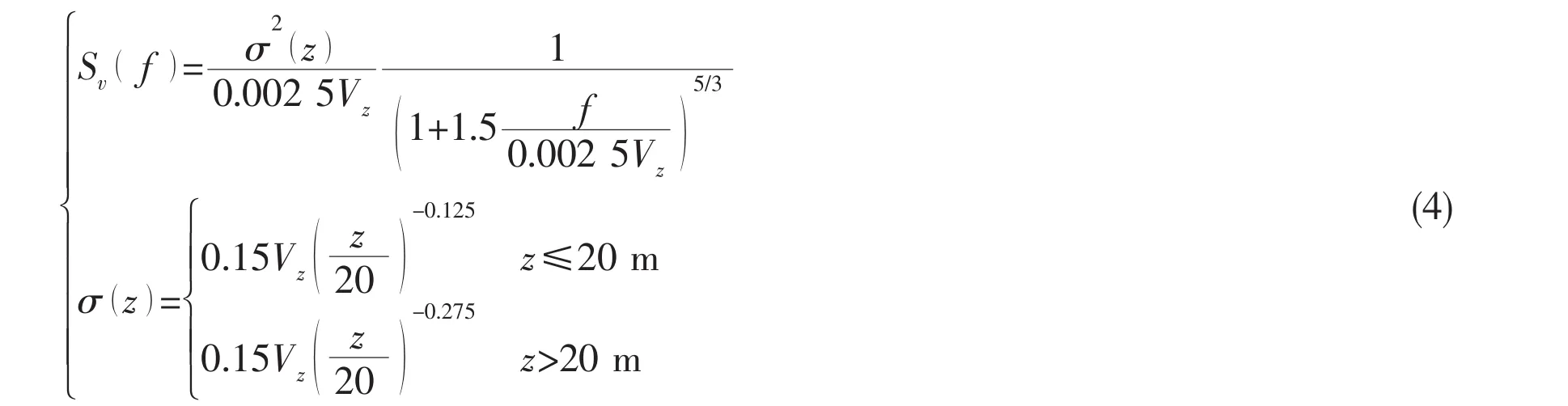
API wind spectrum(Zuo et al[9]),which also varies in height direction,its expression is:

1.3 Simulation of random fluctuating wind
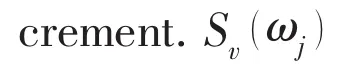
There are many methods that can simulate random fluctuating wind in time-domain, simple harmonic wind superposition is the most direct and mature one.In this study,stationary random process was gained by superposing a series of sinusoidal function or cosine function on random phase.The weighted amplitude harmonic-wave superposition proposed by Shinozuka was commonly adopted.Its transformation process can be showed by the following for-mula:

According to the theory above,the average wind speed above sea level 10 m is identified as V10=20m/s.The random fluctuating wind speed above sea level 20 m in 200 seconds is simulated.As shown in Fig.1.
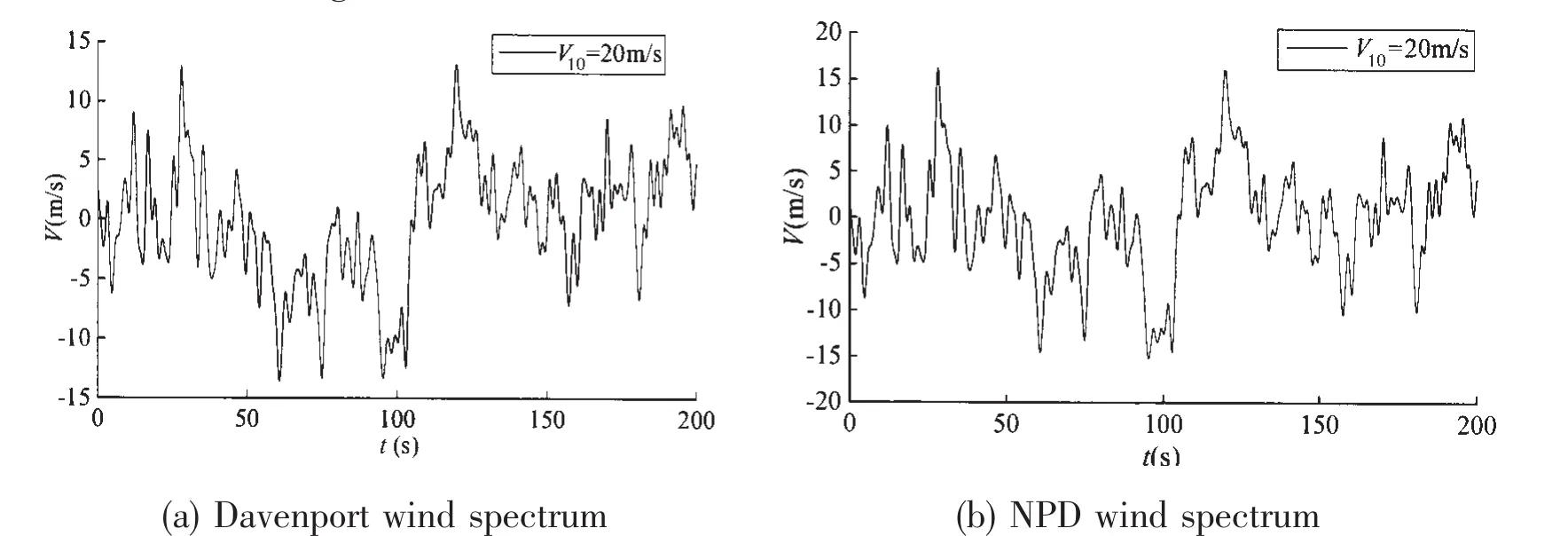
Fig.1 The fluctuating wind velocity in time-domain produced by simple harmonic wind superposition
As can be seen from Fig.1,the random fluctuating wind about mean-speed zero obtained through simple harmonic waves superposition,which shows prominent randomness,pulsation and similar to the practical situation.
2 Numerical simulation of random wind load on platform
2.1 Computational procedure
Fig.2 shows the computational procedure of wind force and moment acting on the platform.The actual calculation procedure based on rules is similar to the flow diagram below. However,the wind is defined as constant value in the rule calculation procedure,not considering the randomness and pulsation.The wind force can be directly computed by the Fluent software.When calculating the wind moment,we need to know the distance between centroid of underwater part and waterline in every load case.The distance can be measured by the model that is produced by Solidworks software.
2.2 Numerical model and working conditions
In this study,the wind load of semi-submersible support platform BT3500 TSV is discussed.The BT-3500 is a moored semi-submersible for tender support activities,such as fixed SPAR or TLP platforms located in Brazil,Gulf of Mexico,West of Africa,South East Asia orthe Bass Strait.Generally,a lower hull mainly consists of two pontoons and four columns supported by two bracings.An upper hull consists of a buoyant deck box characterizing the vessel.Living quarters,deck house,other equipments and cranes are all located in or above the upper hull.The platform has the capacity to accommodate an operation staff of 140 persons.
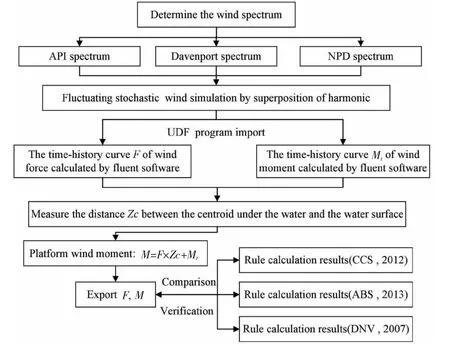
Fig.2 Flow chart of numerical calculation
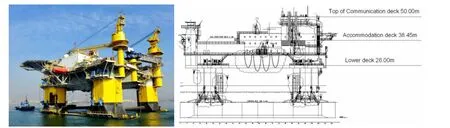
Fig.3 Photos and general layout of BT3500 semi-submersible tender support platform
The model and general layout are exhibited in Fig.3. The coordinate and wind directions are shown in Fig.4.Main parameters of the platform including overall dimensions,pontoons and columns are shown in the Tab.1.A series of typical condition parameters are determined and exhibited in Tab.2.
2.3 The calculation flow domain and boundary condition
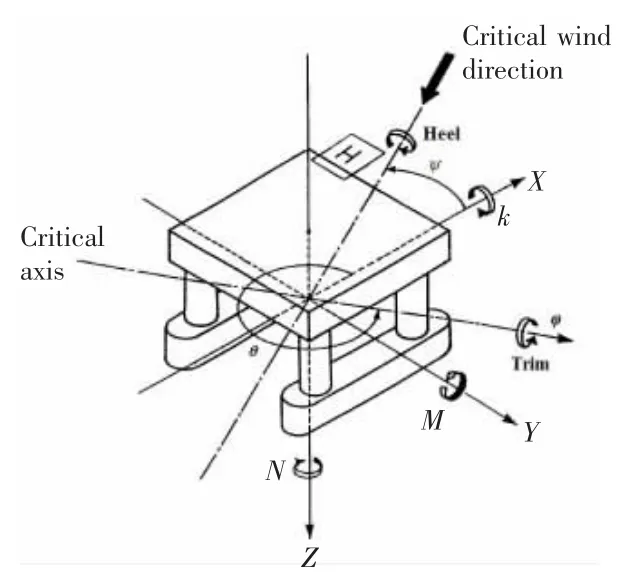
Fig.4 Plot of the platform coordinates and wind directions
The overall size of the semi-submersible platform is 83.00 m×77.35 m×50.00 m,and the calculation flow domainis 500 m×300 m×200 m.The platform is arranged at the front of the fluid domain,which is 200 m from its center to fluid domain entrance.The hull model for dividing mesh in ANSYS ICEM software is exhibited in Fig.5.The boundary conditions are shown in Fig.6.
(1)Inflow surface is defined as velocity inlet.Random fluctuating wind velocity is computed by self-compiled program.For comparative analysis,random numbers of different calculation schemes are the same.
(2)Outflow surface is defined as outlet.
(3)The platform surface is set as wall surface with no slip.
(4)In order to avoid wall effect,other surfaces are symmetric and vertical component is zero.
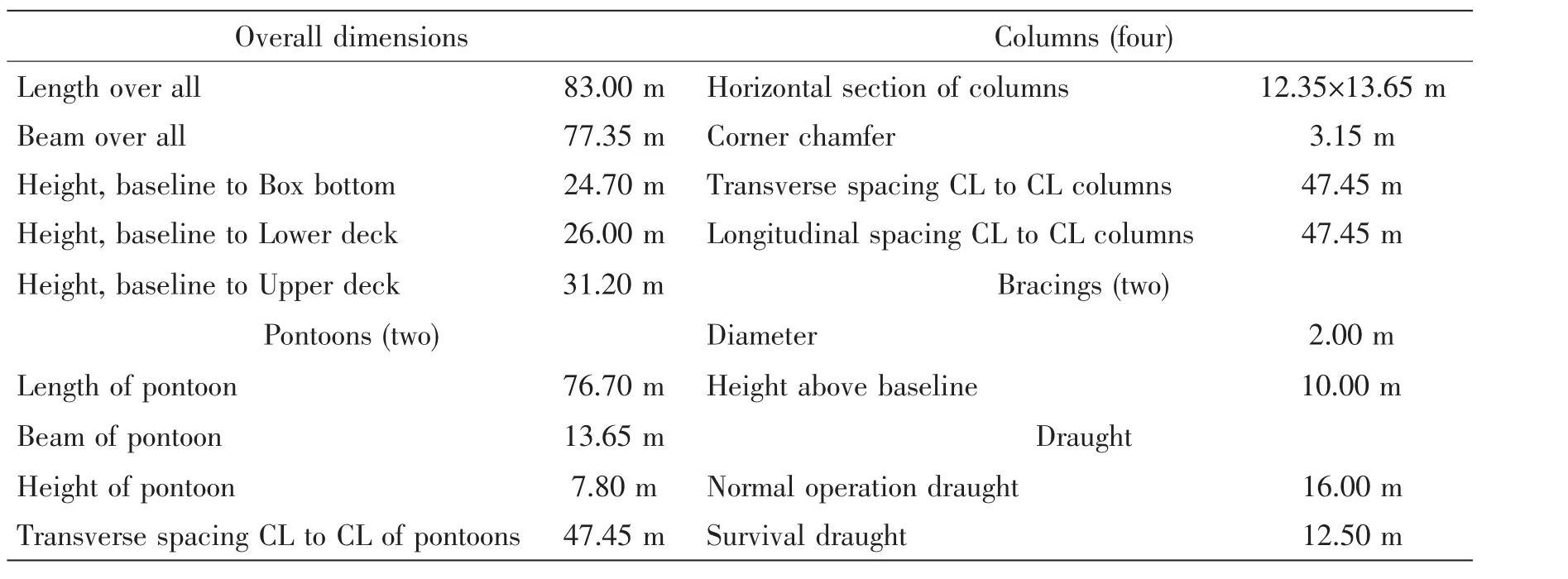
Tab.1 Main parameters of the platform

Tab.2 Wind loads of platform on various working cases
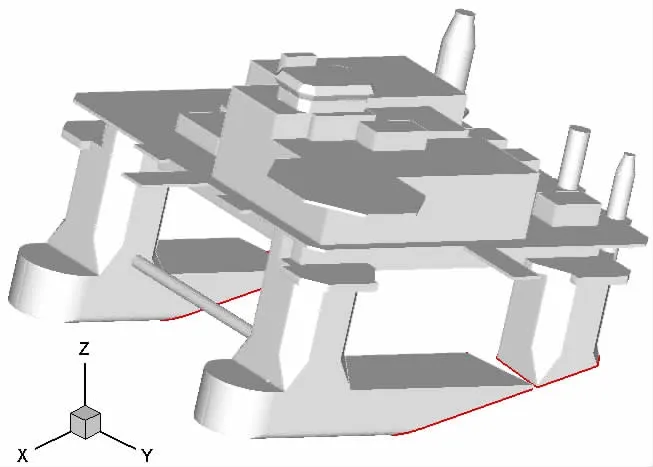
Fig.5 Model in tilt 17°and draft of 14.04 m(10°wind direction)
2.4 Turbulence model and computing parameters
The Fluent software and Detached Eddy simulation(DES)model are used in this study. What is more,statistical model is applied on boundary-layer near wall and large vortex model is applied in separation zone.Unsteady viscous solver and SIMPLEC method are employed torealize the coupling of pressure and velocity. For better precision,a second order discrete scheme is set.The time step is 0.05s,and every calculation continues 200 s.
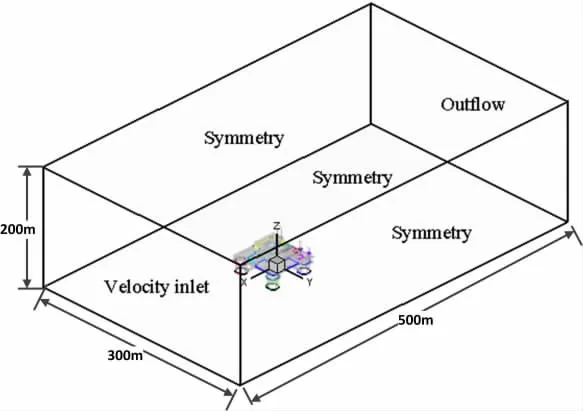
Fig.6 Boundary condition
2.5 The meshing
For better accuracy,denser grids were set in the near-wall region and the wake region.However,relatively sparse grids were set in the far-field region to control smaller mesh quantity.Hexahedral,five-sided,prismatic,and a small amount of tetrahedral grids were arranged in boundary layer.The entire meshes of platform surface are shown in Fig.7, and some partial meshes are exhibited in Fig.8 and Fig.9.
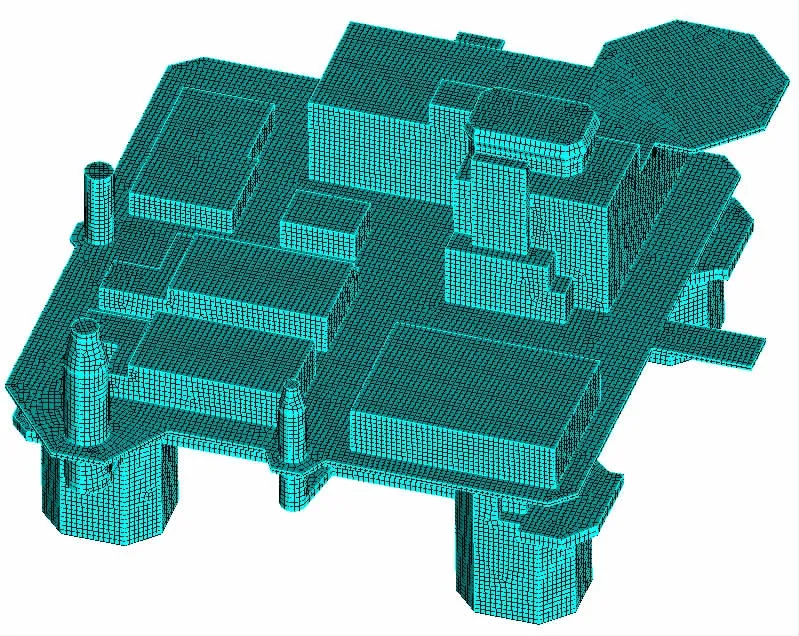
Fig.7 Meshes on surface of platform
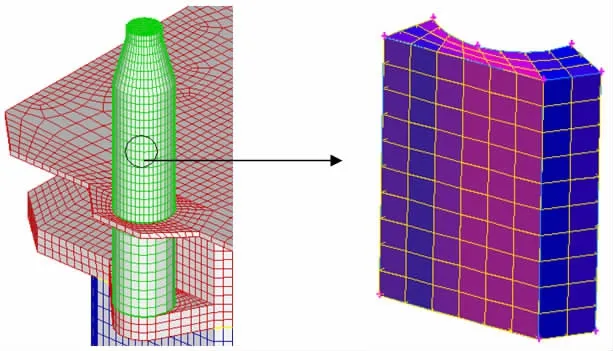
Fig.8 Meshes on surface and wall of crane
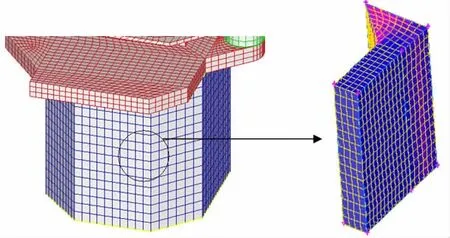
Fig.9 Meshes on surface and wall of column
3 Results and analysis
According to the wind force(moment)time history curve,the mean,maximum and minimum wind force(moment)values on different random winds and different conditions were gained.
3.1 Analysis of condition(12.5 m draft and no tilt)
3.1.1 The mean wind force and moment
Fig.10 shows the mean wind force and moment of the platform under different random winds.It can be seen that the wind angle changes from 0°to 120°,the mean wind force and moment both change in sinusoidal order roughly and peak angles are about 60°or 120°nearby.When the wind angle is 0°,the mean wind force and moment both reach their minimums because of smallest wind area and layout of components.The mean wind force(moment)curves of Davenport and NPD spectrums are very similar,values are slightly larger than API wind spectrum.
As wind angle ranges from 0°to 60°,the mean wind force(moment)increases rapidly, indicating greater capsizing risk of platforms.When wind angle ranges from 60°to 90°,the mean wind force(moment)decreases owing to the reduction of wind area.When the wind angle ranges from 90°to 120°,the mean wind force(moment)increases again owing to the con-tinuous increasing wind area of superstructure.
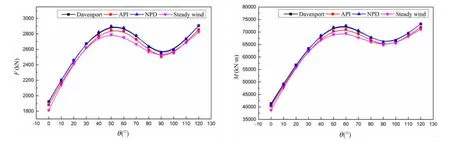
Fig.10 Mean wind force and moment under random winds
3.1.2 The maximum wind force and moments
The maximum wind force and moment have achieved more attention than the mean value,because the former have closer relationship with platform’s capsizal.A platform may overturn under instantaneous strong wind.
In the design of platform,the calculation of wind force and moment often referred from relevant rules,such as ABS[10],DNV[11]and CCS[12].The wind force is related to wind pressure, orthographic projection area,the component height coefficient and wind component shape factor.The wind load calculation formulas of ABS and CCS are similar.There are subtle differences on height coefficients and shape factors,results are comparatively close too.DNV specification considers the effect of component height width ratio and Reynolds number on the shape factor,while it is more complex in the actual calculation.
According to specification,the calculation of wind load can be greatly simplified.But it can not fully consider the effect of shading between platform components,which lead to greater value than wind tunnel experiment and CFD calculation results(Yuan et al[5]).What is more, because of the technical secret,wind tunnel test results of ocean engineering design companies are rarely published,which lead to the difficulty of calculation results verification.In this study,we compared the maximum wind load with specification value and analyzed their changing trends of wind force and moment corresponding to different wind directions.
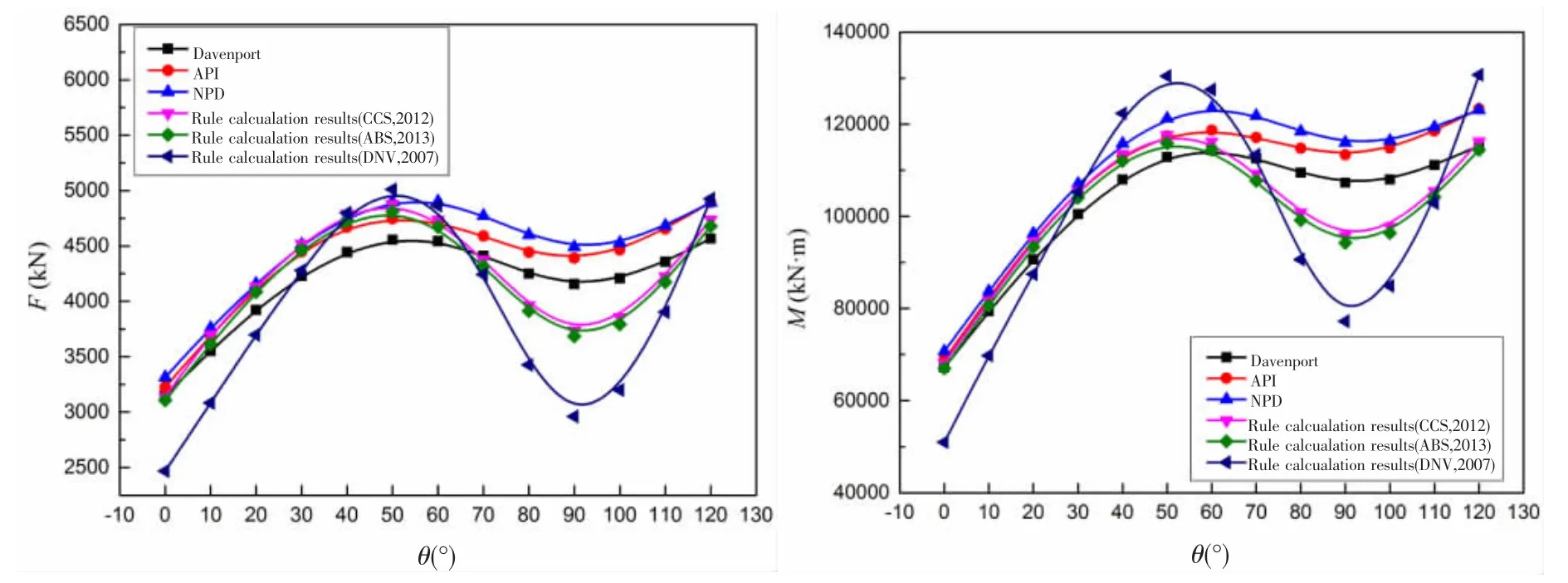
Fig.11 Maximum wind force and moment under random winds
Fig.11 shows the maximum wind force and moment of the platform according to different calculation method in survival condition.From figures above,we can find that changing trends of the maximum wind force and moment are respectively calculated according to random wind spectrums of Davenport,API and NPD.Values are similar to results calculated by CCS,ABS and DNV.When wind angles are 30°and 120°,the maximum wind force(moment)of NPD and API spectrums are close.From figures above we can conclude,the maximum wind force (moment)of NPD spectrum is the largest,API follow,and Davenport is the smallest.It is due to that main wind areas are located at columns,deck boxes and superstructure which are far away from the sea level without consideration of platform’s tilt.What is more,the wind velocity produced by Davenport is constant in height direction but wind velocities produced by NPD and API change in height direction.Different distribution modes of random wind result in different calculation results.
3.1.3 The minimum wind force and moment
Fig.12 shows the minimum wind force and moment of platform corresponding to three different wind spectrums in operation condition.As can be seen from the figure,the minimum wind force and moment according to API and NPD spectrums are close and both far less than Davenport spectrum.The NPD and API spectrums,whose spectrum in height direction is in change,random wind stimulated by them are close to the real situation,so the minimum wind and moment based on API and NPD spectrums are more credible because their wind velocity distribution are more similar to the real.
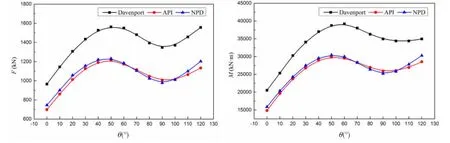
Fig.12 Minimum wind force and moment under random wind
3.1.4 Pressure coefficient distribution of platform surface
In operation condition,we considered the pressure coefficient of platform surface at 60° wind direction on NPD spectrum.As is shown in Fig.13,the wind force appears clear viscous when wind flow through platform surface.The largest positive pressure is located on the windward of four columns,deck house and the deck box,windward of three cranes are under positive pressure.The wind flows through the helicopter deck,producing a thin boundary layer. Furthermore it induced some trailing vortex and swirled in its rear.And negative pressures are produced on the upper surface of the deckhouse.At the same time,positive pressure appears on the upper surface of the helicopter deck due to its thin sheet feature.
3.2 Analysis of conditions(14.04 m draft and 17°tilt angle)
3.2.1 Mean wind force and moment
Fig.14 shows the mean wind force and moment of platform according to three different wind spectrums in operation condition.As wind angle changes from 10°to 30°,the mean wind force and moment increase gradually,and the growth rate becomes larger with the increasing wind angle.In this region,the mean wind force and moment of Davenport and NPD spectrums are approximately the same and both larger than API spectrum.As wind angle changes from 30°to 40°,all three mean wind forces and moments continue to increase at small growth rate, especially the Davenport wind spectrum.As wind angle changes from 40°to 50°,mean wind force and moment of NPD and API spectrums begin to decline,while Davenport spectrum still increases slightly.When at 50°wind angle,mean wind force and moment of Davenport spectrum are larger among all three wind spectrums.
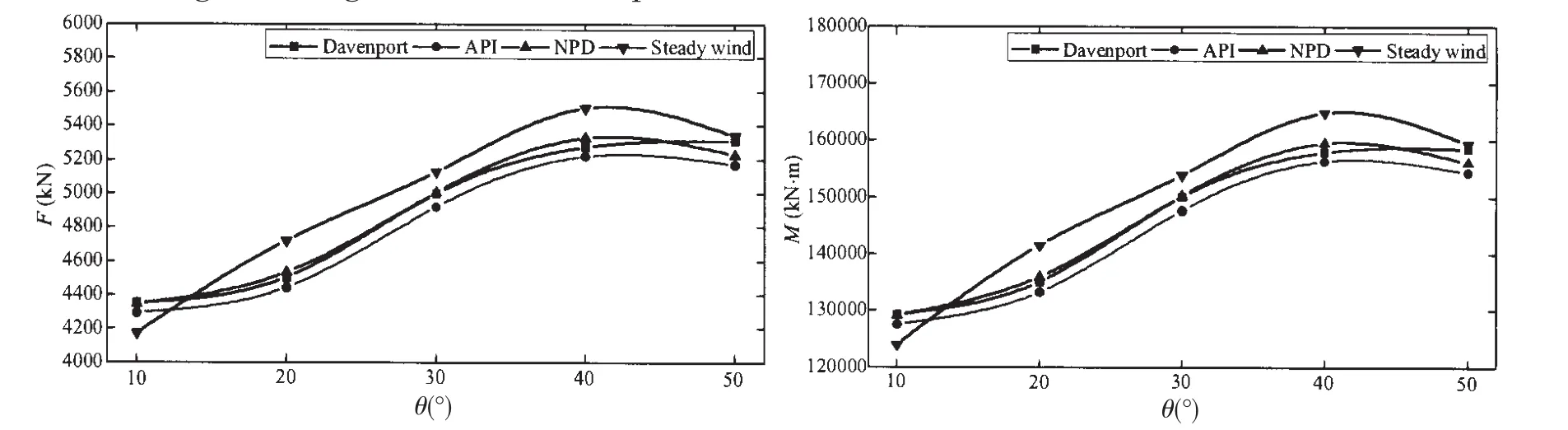
Fig.14 Mean wind force and moment under random winds
3.2.2 The maximum wind force and moment
Fig.15 shows the maximum wind force and moment according to three different wind spectrums in operation condition.As wind angle ranges from 10°to 50°,all three maximum wind forces(moments)are almost similar to mean values.When the wind angle ranges from 10°to 40°,all maximum wind forces(moments)gradually increase.When the wind angle ranges from 40°to 50°,all maximum wind forces(moments)begin decreasing with smaller windward area and less‘shadowing’effect.As is shown in Fig.15,when they are at the same wind angle,the maximum wind force(moment)of NPD wind spectrum is the largest,API spectrumfollows,and Davenport spectrum value is the smallest.
3.2.3 The minimum wind force and moment
Fig.16 shows the minimum wind force and moment according to three different wind spectrums in operation condition.As can be seen from the figure,the minimum wind force and moment based on API and NPD spectrums exhibit similar values and changing trends.At the same wind angle,the minimum wind force and moment of Davenport spectrum is 33%larger than API and NPD spectrums.
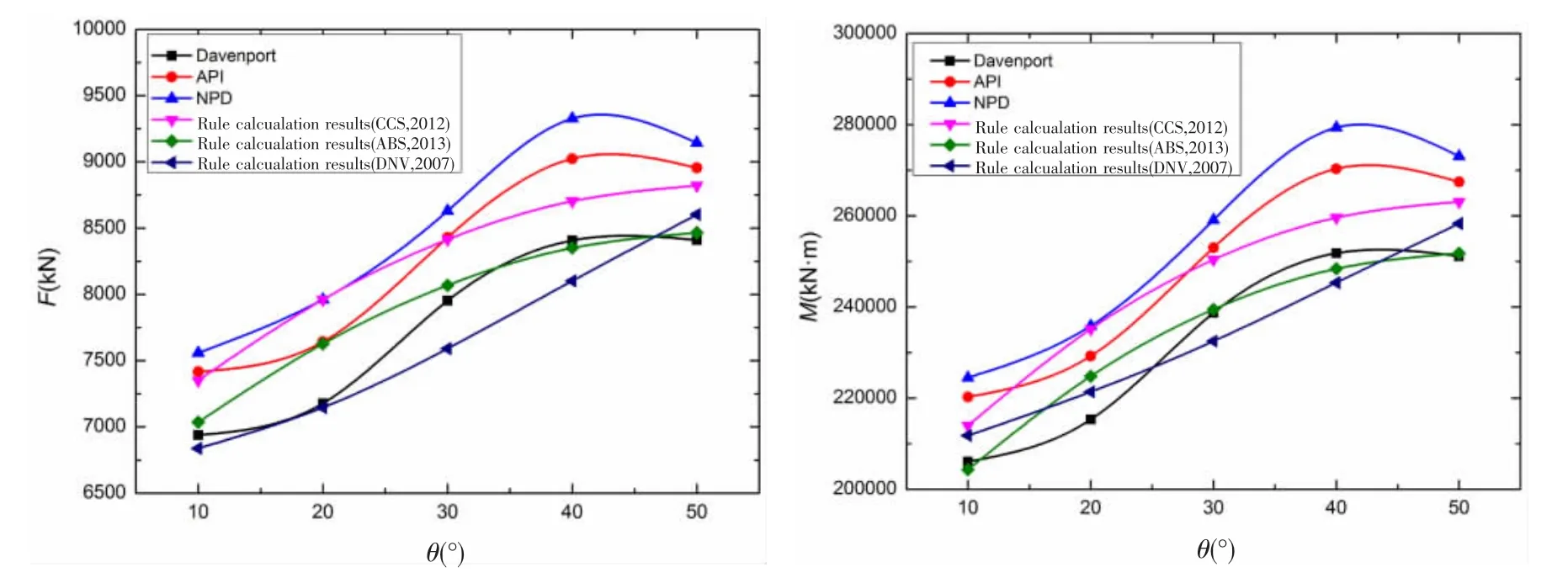
Fig.15 Maximum wind force and moment under random winds
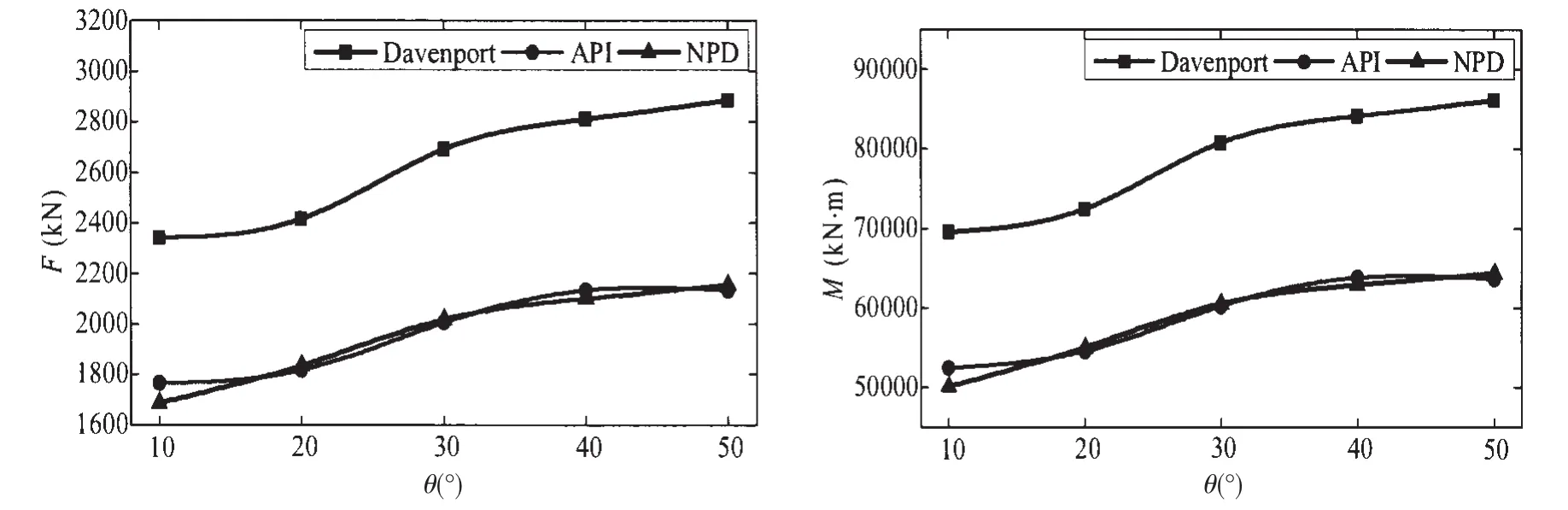
Fig.16 Minimum wind force and moment under random winds
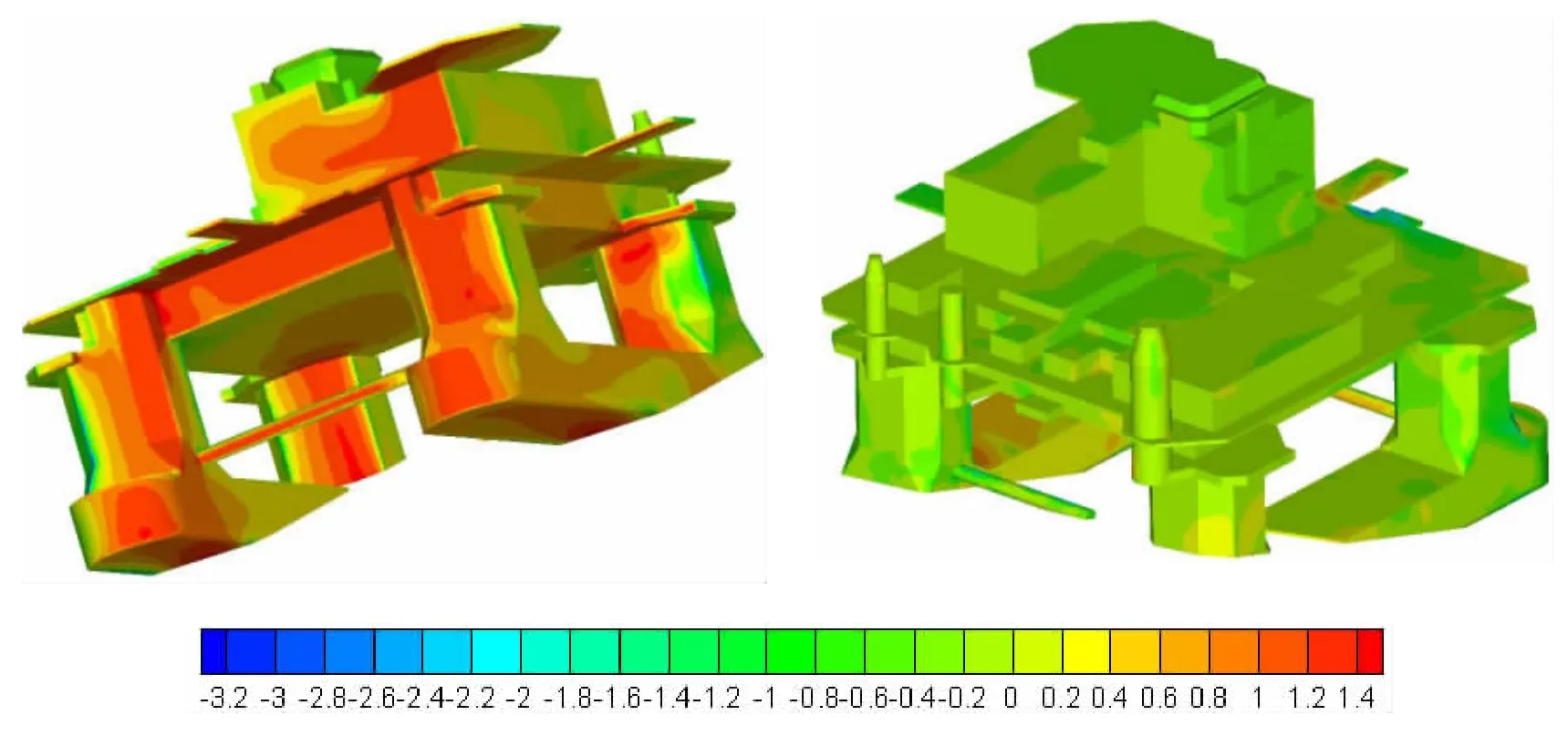
Fig.17 Pressure distribution on platform surface at 20°wind direction(NPD/100 s)
3.2.4 Pressure coefficient distribution of platform surface
In this study,we considered the pressure coefficient of platform surface at 20°wind angle based on NPD spectrum.From the Fig.17,as pontoons out of water directly face the wind,its bottom surface,the front and left sides are all under large positive pressure.Windward surfaces of four columns are under great positive pressure,while the thin boundary layer of column corner is under negative pressure.As to the pressure distribution of deckhouse,the positive pressure on the front surface is greater.Then it decreases significantly on the left surface with obvious boundary of right angle turning under the helicopter deck.The main reason is that the wind separates after passing the front surface,and some airflow branches alter flow direction that lead to the decline of pressure.
4 Conclusions
In this study,typical wind spectrums Davenport,NPD and API were converted into random fluctuating winds by simple harmonic spectrum superposition method.By using Fluent software and self-compiled program UDF,wind load and pressure coefficient distribution of the semi-submerged service platform on various conditions were analyzed comparatively,followings are major conclusions:
(1)Main structures subjected to wind of platform are columns,deckhouse and deck box.
(2)The wind force and moment of platform are related to wind spectrum characteristics, tilt angles and wind directions.
(3)The mean wind force(moment)based on Davenport and NPD wind spectrums are close,and both greater than API wind spectrum.
(4)The maximum wind force(moment)of NPD wind spectrum is the largest,API follows, and Davenport wind spectrum is the smallest.
(5)The minimum wind force(moment)based on API and NPD wind spectrums are similar on every condition,and the minimum wind force(moment)based on the API and NPD spectrums are more reasonable.
[1]Chen W J,Chen G M,Zhu B R,Chang Y J.Numerical simulation of wind load on jacket platform under strong typhoon [J].China Offshore Oil and Gas,2013,25(3):73-77.
[2]Lin Y,Hu A K,Xiong F.Numerical simulation and experiment study on wind load of Jack-Up platform[J].Hydrodynamics Research and Development,Series A,2012,27(2):208-215.
[3]Yan H S,Xu Y,Zhang Y S,Sun W Y,Fan Z X.The research of wind loading for the SPAR Loadout[J].Ocean Engineering,2012,30(3):131-136.
[4]Cao M Q,Wang L,Zhou L.Test analysis of wind load on deepwater semi-submersible platform[J].Ocean Engineering, 2009,28(9):17-28.
[5]Yuan J M,Pan B.Wind overturning loads on the mobile offshore platform[J].Ocean Engineering,1997,15(2):32-38.
[6]Chevula S,Sanz-Andres A,Franchini S.Aerodynamic external pressure loads on a semi-circular bluff body under wind gusts[J].Journal of Fluids and Structures,2015,54:947-957.
[7]Wn?k A D,Soares C G.CFD assessment of the wind loads on an LNG carrier and floating platform models[J].Ocean Engineering,2015,97:30-36.
[8]Uematsu Y S S,Yasunaga J P,Koo C M.Design wind loads for open-topped storage tanks in various arrangements[J]. Journal of Wind Engineering and Industrial Aerodynamics,2015,138:77-86.
[9]Zuo Q H,Du Q L,Zhao Y H,Duan Z B,Wang Y D.Review of studies on random wind spectrum and its application in coastal engineering[J].Ocean Engineering,2016,34(2):111-121.
[10]American Bureau of Shipping.Rules for building and classing floating production installations[S].2013.
[11]Det Norske Veritas.Environmental conditions and environmental loads[S].2007.
[12]China Classification Society.Standard Specification for offshore mobile platform[S].2012.
半潛式鉆井服務(wù)支持平臺隨機(jī)風(fēng)載荷特性研究
谷家揚(yáng),章培,謝玉林,鄧炳林,陳宇
(江蘇科技大學(xué)船舶與海洋工程學(xué)院,江蘇鎮(zhèn)江212003)
風(fēng)載荷是海洋平臺設(shè)計(jì)載荷之一,直接關(guān)系到平臺穩(wěn)性,確定平臺在不同工況下的風(fēng)荷載對于平臺安全設(shè)計(jì)具有重要的工程意義。該文基于Fluent軟件結(jié)合自編UDF程序,考慮Davenport、NPD以及API三種典型風(fēng)譜的影響,利用簡諧波疊加法將風(fēng)譜由頻域轉(zhuǎn)換為時(shí)域內(nèi)的隨機(jī)脈動(dòng)風(fēng)速,引入雷諾平均法求解NS方程結(jié)合分離渦(DES)湍流模型對半潛式鉆井服務(wù)支持平臺在自存海況下的風(fēng)力和風(fēng)傾力矩開展了數(shù)值研究,并將數(shù)值模擬得到的最大風(fēng)力及風(fēng)傾力矩與ABS、DNV以及CCS的計(jì)算結(jié)果進(jìn)行了對比驗(yàn)證。計(jì)算結(jié)果表明:平臺受到的風(fēng)力和風(fēng)傾力矩與風(fēng)譜自身特性、平臺傾斜角及風(fēng)向角等因素密不可分;同一工況下采用Davenport與NPD風(fēng)譜計(jì)算時(shí)平臺受到的平均風(fēng)力(矩)較為接近;NPD風(fēng)譜作用時(shí)平臺受到的隨機(jī)最大風(fēng)力(矩)最大;采用API與NPD風(fēng)譜計(jì)算時(shí),各工況下最小風(fēng)力(矩)隨風(fēng)向角的變化趨勢、計(jì)算結(jié)果均基本一致。
半潛平臺;隨機(jī)脈動(dòng)風(fēng);風(fēng)載荷;數(shù)值模擬
P751
:A
谷家揚(yáng)(1979-),男,博士,江蘇科技大學(xué)副教授,通訊作者,E-mail:gujayang@126.com;
P751
:A
10.3969/j.issn.1007-7294.2017.06.003
1007-7294(2017)06-0672-13
章培(1993-),男,江蘇科技大學(xué)碩士研究生;
謝玉林(1994-),男,江蘇科技大學(xué)碩士研究生;
鄧炳林(1990-),男,江蘇科技大學(xué)碩士研究生;
陳宇(1993-),男,江蘇科技大學(xué)碩士研究生。
date:2017-03-28
Supported by the National Natural Science Foundation of China(51309123);the Open Foundation of State Key Laboratory of Ocean Engineering(1407)and‘Qing Lan Project’of Colleges and Universities in Jiangsu Province,the collaborative innovation center funded projects in Jiangsu University(High Technology Ship category)
Biography:GU Jia-yang(1979-),male,Ph.D,associate professor,corresponding author,E-mail:gujiayang@126.com;
ZHANG Pei(1993-),male,master graduate student;XIE Yu-lin(1994-),male,master graduate student.
猜你喜歡
中學(xué)生天地(A版)(2022年6期)2022-07-14 12:39:26
大學(xué)(2021年2期)2021-06-11 01:13:48
大學(xué)(2021年2期)2021-06-11 01:13:12
學(xué)苑創(chuàng)造·B版(2021年2期)2021-03-15 05:50:49
海峽姐妹(2020年12期)2021-01-18 05:53:08
民主與法制(2020年16期)2020-08-24 06:54:50
少兒科學(xué)周刊·兒童版(2017年9期)2018-03-15 15:00:11
華人時(shí)刊(2017年13期)2017-11-09 05:39:29
兒童故事畫報(bào)·發(fā)現(xiàn)號趣味百科(2017年4期)2017-06-30 12:41:53
兒童故事畫報(bào)·發(fā)現(xiàn)號趣味百科(2016年6期)2016-08-19 06:35:19

- 船舶力學(xué)的其它文章
- Modified Backstepping Controller for Path Following of Marine Crafts with Actuator Dynamics
- Comparison on Different Schemes of Direct Numerical Simulation for Low/medium Reynolds Flow
- Sound Field Separation Technique Based on Acoustic Radiation Modes
- Mechanical Behavior Analysis for Unbonded Umbilical under Axial Loads
- New Impulsive Factor in Representing Cabin Damage under External Air Explosion
- Numerical Simulation of Nonlinear Sloshing Waves in Three-dimensional Tank based on DBIEM