
微灌石英砂過濾器反沖洗數值模擬驗證與流場分析
2016-12-19 08:54:08李景海翟國亮黃修橋馮俊杰
農業工程學報 2016年9期
李景海,翟國亮,黃修橋※,馮俊杰,劉 楊
(1. 中國農業科學院農田灌溉研究所/河南省節水農業重點實驗室,新鄉 453002;2. 安陽市水資源管理委員會辦公室,安陽 455000)
微灌石英砂過濾器反沖洗數值模擬驗證與流場分析
李景海1,2,翟國亮1,黃修橋1※,馮俊杰1,劉 楊1
(1. 中國農業科學院農田灌溉研究所/河南省節水農業重點實驗室,新鄉 453002;2. 安陽市水資源管理委員會辦公室,安陽 455000)
微灌石英砂濾層的反沖洗,是實現濾料再生的有效途徑,為了對反沖洗過程流場進行分析,并確定合理的反沖洗速度。該文建立了石英砂過濾器幾何模型并進行了網格劃分,采用Eulerian模型作為石英砂濾層反沖洗數值模擬模型,分別對石英砂當量粒徑為1.06、1.2和1.5 mm的3種濾層的反沖洗過程進行了瞬態模擬,并將濾層整體壓降和整體密度的模擬結果與試驗結果進行對比,結果顯示,整體壓降的最大模擬誤差為7.03%,整體密度的最大模擬誤差為1.93%,說明數值模擬準確可信。在此基礎上,分析了石英砂濾層反沖洗過程壓降的波動規律、壓降均值和壓降標準偏差隨反沖洗速度的變化趨勢;并分析了濾層密度的分布規律、密度均值和密度標準偏差隨反沖洗速度的變化趨勢。根據壓降波動的穩定性,結合濾層密度分布的穩定性,確定了石英砂濾層反沖洗強度的合理范圍,3種濾層分別為0.0149~0.0212、0.0146~0.0218和0.0191~0.0261 m/s。該研究為石英砂濾層反沖洗過程的機理研究提供了參考,為砂過濾器反沖洗性能參數的確定提供了依據。
灌溉;模型;計算機仿真;石英砂濾層;反沖洗;多相流
0 引言
砂過濾器的反沖洗,是實現砂濾料再生的一個有效途徑。不少學者對砂過濾器的反沖洗進行了研究,董文楚[1-2]對碎石英砂特性、反沖洗強度與膨脹率進行了研究,翟國亮等[3-4]對均質石英砂反沖洗參數進行了試驗研究,馮俊杰等[5]設計出了水壓驅動反沖洗閥,鄧忠等[6]對石英砂過濾器在反沖洗條件下,泥沙出水濁度、出水粒徑級配隨時間的變化規律進行了測定分析。趙紅書[7]對堵塞的過濾模型進行了正交反沖洗試驗。
試驗研究的結果具有直觀、可信的特點,但試驗研究往往會受到流場擾動、測量精度等因素的限制。隨著多相流體動力學理論的不斷完善和高性能計算技術的迅猛發展[8],對微灌過濾器進行數值模擬成為現實,不少學者進行了相關研究[9-13],但目前對砂過濾器反沖洗的多相流模擬尚不多見[14]。
在前期研究的基礎上[15],本文首先開展了石英砂濾層反沖洗試驗,然后建立了石英砂過濾器幾何模型并進行了網格劃分,采用Eulerian模型對3種粒徑的石英砂濾層的反沖洗進行了瞬態數值模擬,并將模擬結果與試驗結果進行對比,對比結果說明了數值模擬的可行性。在此基礎上,分析了石英砂濾層反沖洗過程壓降的波動規律和濾層密度的分布規律,根據壓降波動的穩定性,結合濾層密度分布的穩定性,確定了石英砂濾層反沖洗強度的合理范圍,以期為石英砂濾層反沖洗過程的機理研究提供參考,為砂過濾器的運行提供技術支撐。
1 微灌石英砂濾層反沖洗試驗
試驗在中國農業科學院農田灌溉研究所進行。試驗用濾料為石英砂,采用粒徑范圍為1.0~1.18、>1.18~1.4 和>1.4~1.7 mm的3種濾層。經測算,3種濾層當量粒徑分別為1.06、1.2和1.5 mm。結合砂過濾器實物,設計并建立了試驗用模型裝置,如圖1所示,主過濾室使用透明有機玻璃管制作,有機玻管內徑200 mm、高1 600 mm,在其上每隔100 mm高度打孔,設為測壓取料孔,有機玻管上下兩端使用特制的封頭密封,下端封頭安裝3個濾帽。石英砂濾料放置于主過濾室內,濾層孔隙率0.44,厚400 mm。試驗時,使用水池供水,采用渦輪流量計(LWGY-25)測流量,濾層內部壓差采用U型壓差計測量。
反沖洗時,利用水泵將清水從反沖洗進水口注入過濾器模型,通過砂過濾器底部濾帽將水流分散并均勻作用于濾料,試驗過程中,記錄下每一個反沖洗速度對應的濾層膨脹高度、濾層壓降。
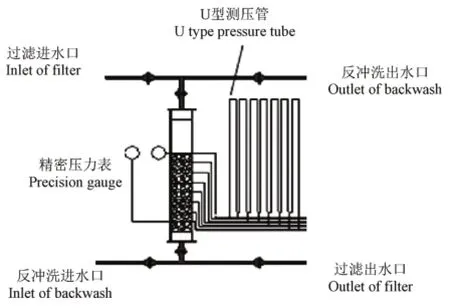
圖1 試驗裝置示意圖Fig.1 Schematic diagram of test device
2 石英砂濾層數值模擬
2.1 模擬模型
在微灌石英砂反沖洗過程中,石英砂濾層僅在一定范圍內上下波動而不被水流帶到過濾器外部,即石英砂只集中在區域的一部分且所占體積分數較大,同時,石英砂與水的兩相流是不可壓縮的且是有黏性的,基于以上特點,采用Eulerian模型模擬石英砂濾層的反沖洗是比較合適的[16]。
均質石英砂濾層的反沖洗,可以認為是由水與石英砂組成的固液兩相流,Eulerian模型[17]中固液兩相流連續性方程如下

動量方程可表示為

式中αi為相體積分數;ρi為相密度,m3/s;t為時間,s;為相速度,m/s;P為壓力項,Pa;
守恒方程需要由固液曳力系數、固相應力相這兩種本構方程來實現封閉。曳力系數項可增加到動量守恒方程相間作用系數Kij來計算,固相應力項可增加到源項si中計算。
液固交換系數Ksl僅是液相體積分數或固相體積分數的函數,而石英砂與水的混合物中,水的體積分數一般要小于0.8。因而,對于Gidaspow提出的曳力模型[18],當αl≤0.8,適用于石英砂濾層的反沖洗模擬,即石英砂濾層反沖洗模擬的曳力模型為式中μl為流體黏度,Pa·s;ds為顆粒直徑,m;其余同上。

水與石英砂兩相流固相應力模型為[19]

式中τs為固相應力,Pa;αl為液相體積分數。
2.2 模型邊界條件及算法設置
采用Gambit軟件建立幾何模型,過濾器幾何模型與細部結構見圖2和圖3。
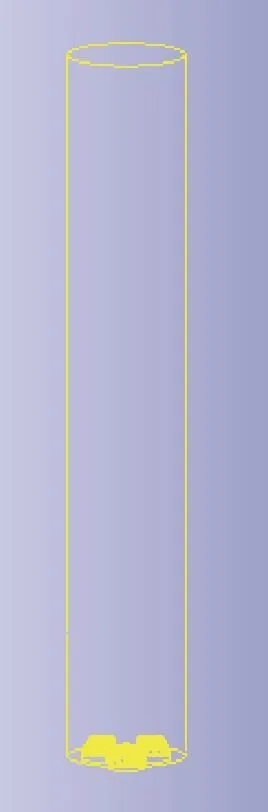
圖2 石英砂過濾器數值模擬三維模型Fig.2 3D model of numerical simulation for quartz sand filter
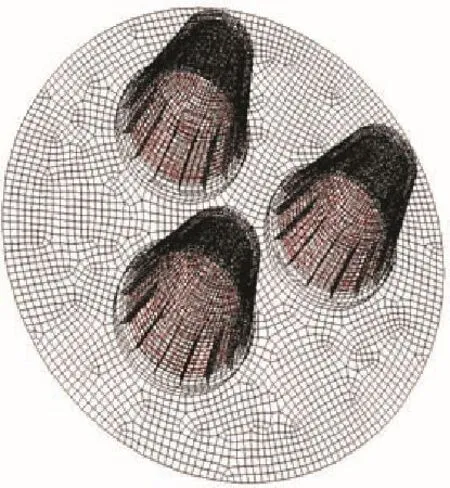
圖3 濾帽幾何模型Fig.3 Geometry model of filter cap
控制方程采用二階隱式時間方案,采用瞬態求解器計算。多相流模型采用Eulerian模型,壓力速度耦合方程用PC-SIMPLE算法,空間離散化采用基于Green-Gauss的梯度方程,動量、湍動能、湍流耗散率和體積分數方程均采用一階迎風格式,進口邊界條件為velocity-inlet,出口邊界條件為pressure-outlet,采用速度進口對流場進行初始化,單位時間步長為0.01 s,單位時間步長最大迭代次數為7。
3 計算結果分析
3.1 濾層壓降計算結果分析
3.1.1 濾層壓降的試驗驗證
根據入口的反沖洗流速,由CFD軟件計算出濾層的整體壓降,繪出濾層整體壓降隨反沖洗速度的變化關系圖并與試驗值進行對比(圖4)。
由圖4可知,當濾層當量粒徑為1.06 mm時,濾層壓降最大誤差為6.25%;當濾層當量粒徑為1.2 mm時,濾層壓降最大誤差為5.64%;當濾層當量粒徑為1.5 mm時,濾層壓降最大誤差為7.03%。對比結果說明,濾層壓降試驗值與模擬值能夠較好地吻合,模擬結果準確可信。
根據圖4中曲線的變化趨勢可知,在反沖洗速度較小時,濾層壓降隨反沖洗速度的增大呈線性變化關系。當反沖洗速度達到濾層的最小流化速度后,濾層壓降達到最高值,此后,隨著反沖洗速度的繼續增加,濾層壓降基本保持穩定。當量粒徑為1.06、1.2和1.5 mm的濾層對應的最小流化速度分別為0.0121、0.0146和0.0160 m/s。
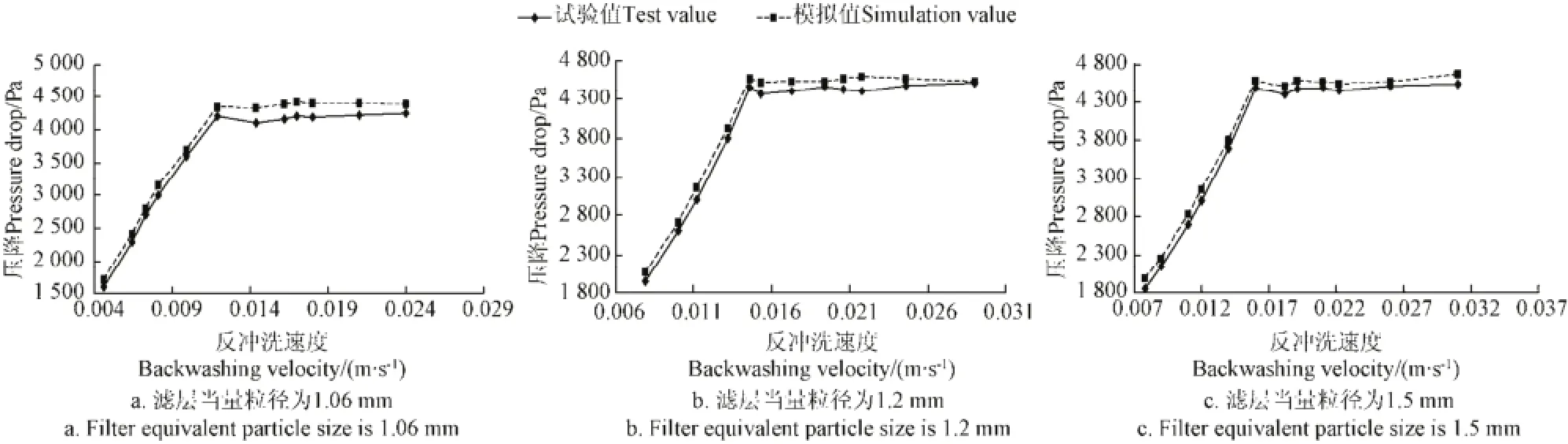
圖4 濾層壓降隨反沖洗速度變化關系圖Fig.4 Relation curve of filter layer pressure drop with change of back washing velocity
顯然,只有當濾層完全流化后,才能達到較好的反沖洗效果。本文選取濾層完全流化后的5個反沖洗速度,并選取濾層高度H為15、25和35 cm的3個橫截面對濾層壓降和密度進行分析。對于當量粒徑為1.06 mm的濾層,選取的反沖洗速度v分別為:0.0121、0.0149、0.0180、0.0212和0.0240 m/s。對于當量粒徑為1.2 mm的濾層,選取的反沖洗速度v分別為:0.0146、0.0196、0.0218、0.0246和0.0291 m/s。對于當量粒徑為1.5 mm的濾層,選取反沖洗速度v分別為:0.0160、0.0191、0.0222、0.0261 和0.0310 m/s。
3.1.2 濾層壓降的波動規律
濾層壓降波動是否穩定,是衡量濾層流化質量的重要標準,對反沖洗效果有直接影響。對于3種濾層,分別繪制3個橫截面上,5個反沖洗速度對應的壓降隨時間的變化關系曲線,如圖5~圖7。
分析圖5、圖6和圖7可知,當反沖洗水流進入濾層時,濾層開始流化,在流化的初始階段,濾層各個截面的壓降值有一個急劇的大幅波動,并在極短時間內恢復至某一固定值,此后,濾層截面壓降不再發生突變,而是隨時間在這一固定值附近上下波動,呈現一個比較穩定的狀態。同時可以看出,濾層壓降隨濾層截面高度的增加而增加。造成這種波動現象的原因是,在反沖洗的初期,石英砂濾層處于完全的自然堆積狀態,顆粒間孔隙率低,孔隙非常小,水流從濾層底部進入濾層的時候,需要克服較大的濾層阻力才能上升。當水流開始進入濾層時,濾層在短時間內經歷了由自然堆積到迅速膨脹的過程,此時,濾層壓降達到最大值。石英砂顆粒在強勁水流的沖擊下迅速上升,孔隙率迅速增大,反沖洗水流速度則隨之減小,被水流攜帶的顆粒在重力作用下迅速下降,此時濾層壓降又達到最小值。經過這個短暫的突變過程后,濾層孔隙率與水流速度逐漸相適應,壓降基本保持穩定,并隨時間以某一固定值為基準上下波動。
為了分析濾層壓降波動的穩定性,對3種濾層,計算3個截面壓降的平均值,繪出壓降均值隨反沖洗速度的變化關系圖(圖8)。計算3個截面壓降的標準偏差,繪出壓降標準偏差隨反沖洗速度的變化關系圖(圖9)。
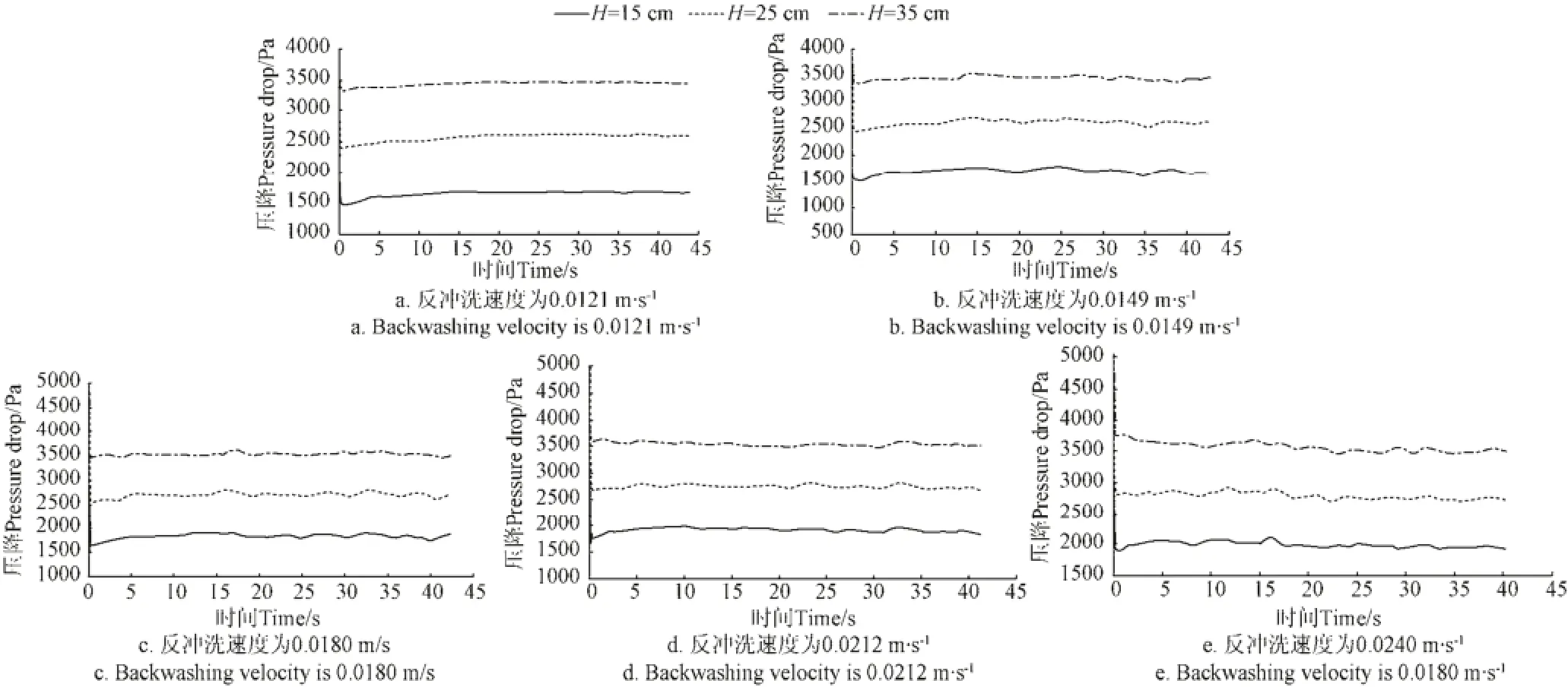
圖5 壓降隨時間變化關系曲線(當量粒徑為1.06 mm)Fig.5 Relation curve of pressure-drop and time (Filter equivalent particle size is 1.06 mm)
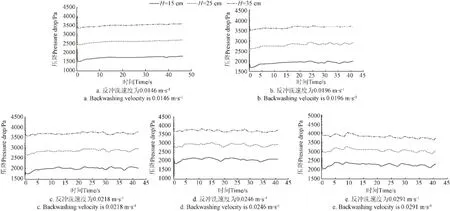
圖6 壓降隨時間變化關系曲線(當量粒徑為1.2 mm)Fig.6 Relation curve of pressure-drop and time (Filter equivalent particle size 1.2 mm)
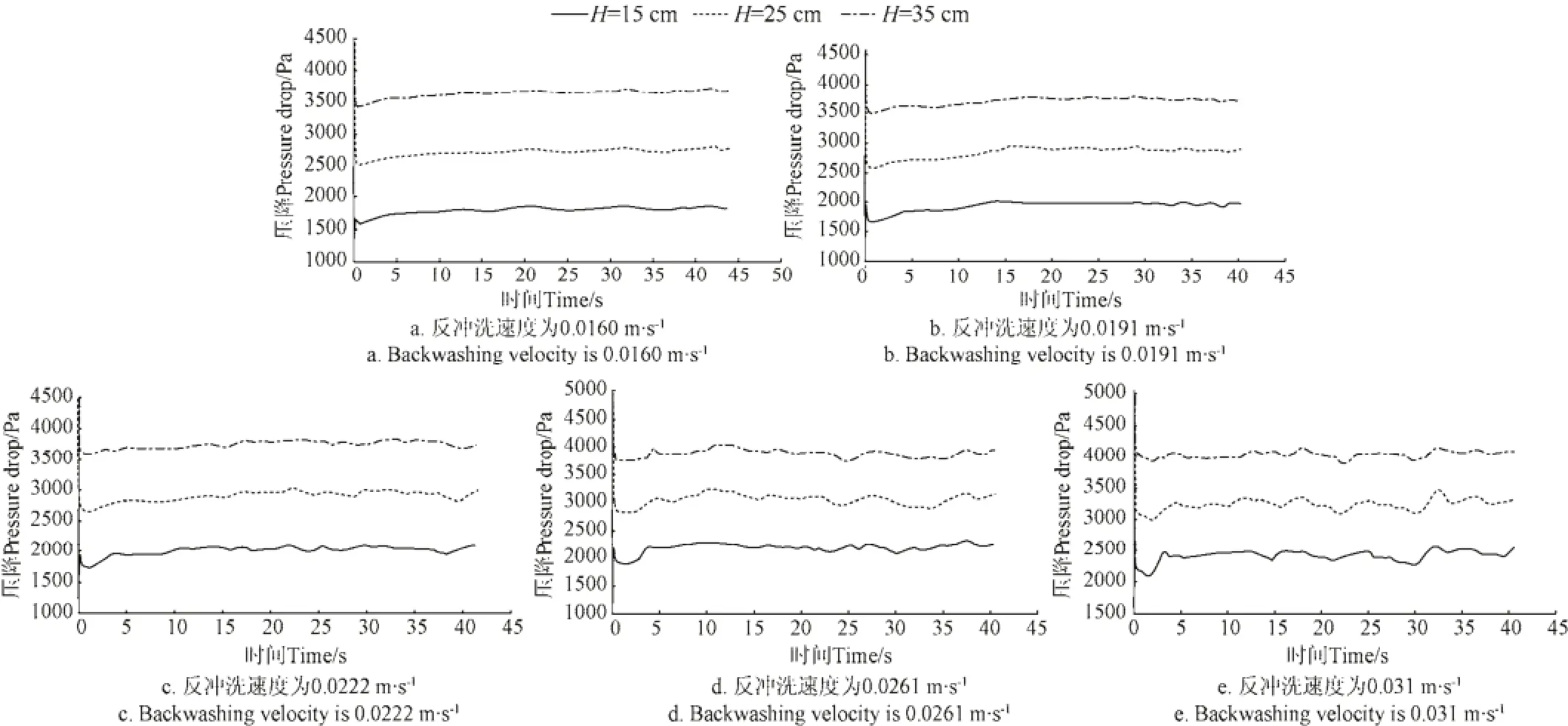
圖7 壓降隨時間變化關系曲線(當量粒徑為1.5 mm)Fig.7 Relation curve of pressure-drop and time (Filter equivalent particle size is 1.5 mm)
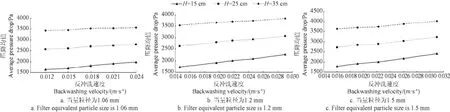
圖8 壓降均值隨反沖洗速度的變化關系曲線Fig.8 Relation curve of average pressure drop and backwashing velocity
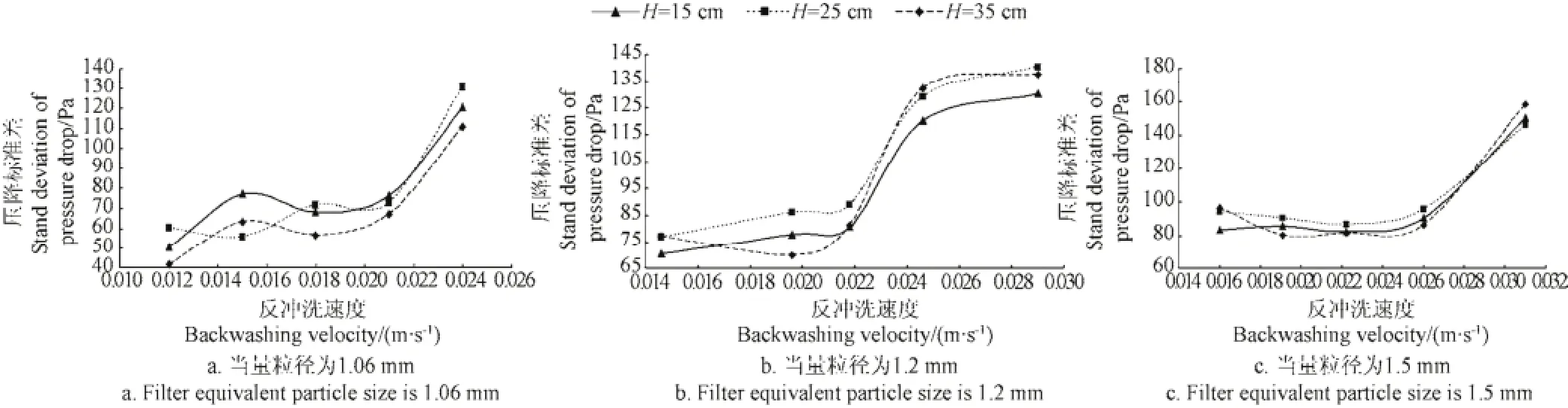
圖9 壓降標準偏差隨反沖洗速度的變化關系曲線Fig.9 Relation curve of pressure drop standard deviation and backwashing velocity
分析圖8和圖9可知,對于當量粒徑為1.06 mm的濾層,當反沖洗速度≤0.0212 m/s時,3個截面的壓降均值隨反沖洗速度的增加基本保持穩定,壓降標準偏差值較小,也基本保持穩定。當反沖洗速度≥0.0240 m/s時,壓降均值仍然保持穩定,但壓降標準偏差卻明顯增加,這說明濾層波動幅度增大,穩定性開始變差。所以,對于當量粒徑為1.06 mm的濾層,反沖洗速度不宜超過0.0212 m/s。
同理可知,對于當量粒徑為1.2 mm的濾層,反沖洗速度不宜超過0.0218 m/s。對于當量粒徑為1.5 mm的濾層,反沖洗速度不宜超過0.0261 m/s。
3.2 濾層密度的分布規律分析
3.2.1 濾層密度的試驗驗證
將濾層混合體密度的試驗值與模擬值(圖10)對比可知,當濾層當量粒徑為1.06 mm時,濾層水砂混合體密度的最大誤差為0.81%;當濾層當量粒徑為1.2 mm時,濾層水砂混合體密度的最大誤差為0.87%;當濾層當量粒徑為1.5 mm時,濾層水砂混合體密度的最大誤差為1.93%。對比結果說明,濾層水砂混合體密度的試驗值與模擬值能夠較好地吻合,模擬結果準確可信。
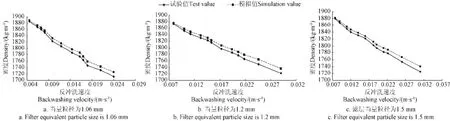
圖10 濾層密度隨反沖洗速度變化關系圖Fig.10 Relation curve of filter layer density with change of backwashing velocity
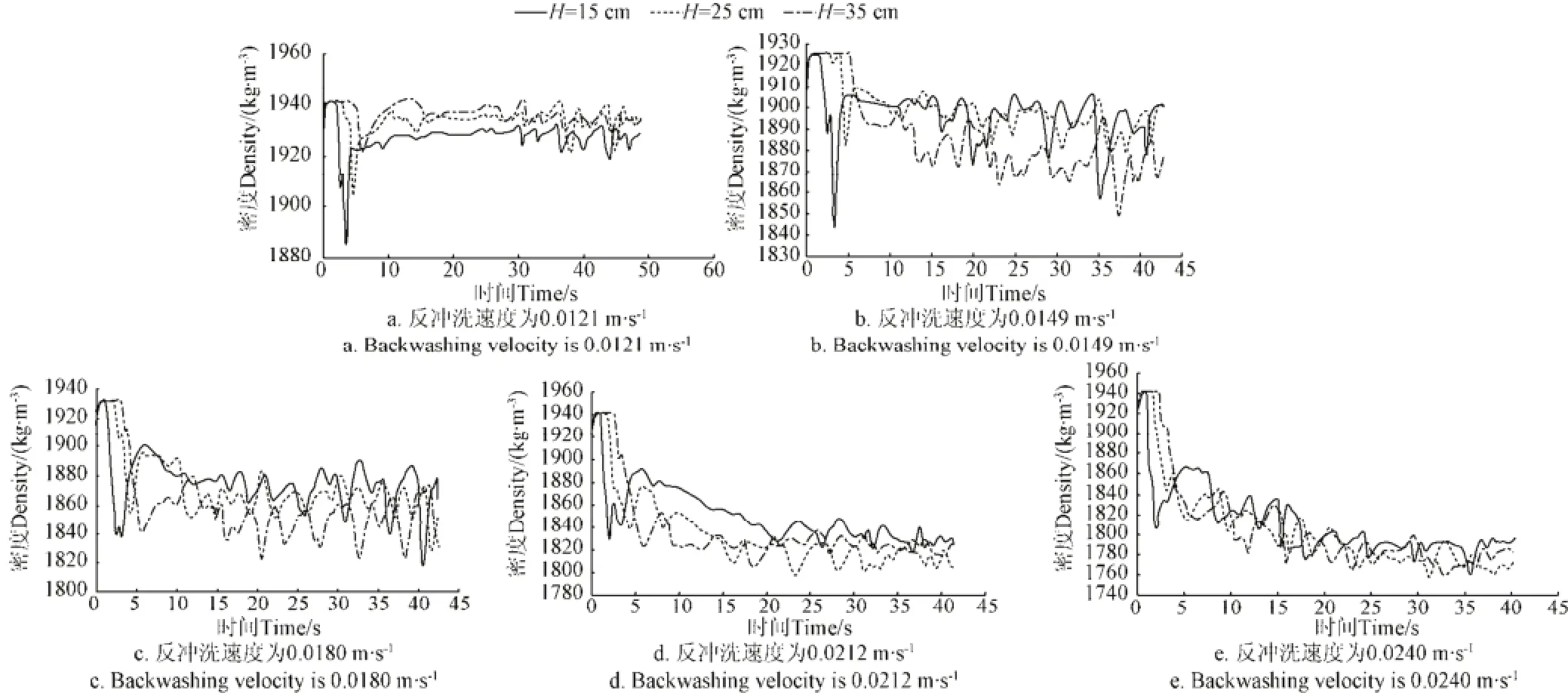
圖11 密度隨時間變化關系曲線(當量粒徑為1.06 mm)Fig.11 Relation curve of density and time (Filter equivalent particle size is 1.06 mm)
3.2.2 濾層橫截面的密度分布
濾層密度分布是否均勻,關系到濾層在反沖洗過程中是否存在局部堆積。對于密度的分析,反沖洗速度和濾層截面選取與壓降相同。
對于3種濾層,分別繪制3個橫截面上,5個反沖洗速度對應的密度隨時間的變化關系曲線,如圖11~圖13。
分析圖11~圖13可知,在反沖洗的初始階段,濾層密度先由自然堆積狀態迅速降至最低點,然后又在極短時間內回升,而后經過幾個周期的波動逐漸穩定至某一固定值,并圍繞這一固定值上下波動。密度呈現的波動規律與壓降隨時間的波動規律基本一致,主要原因在于,密度的上下波動是由于壓降的上下波動引起的。
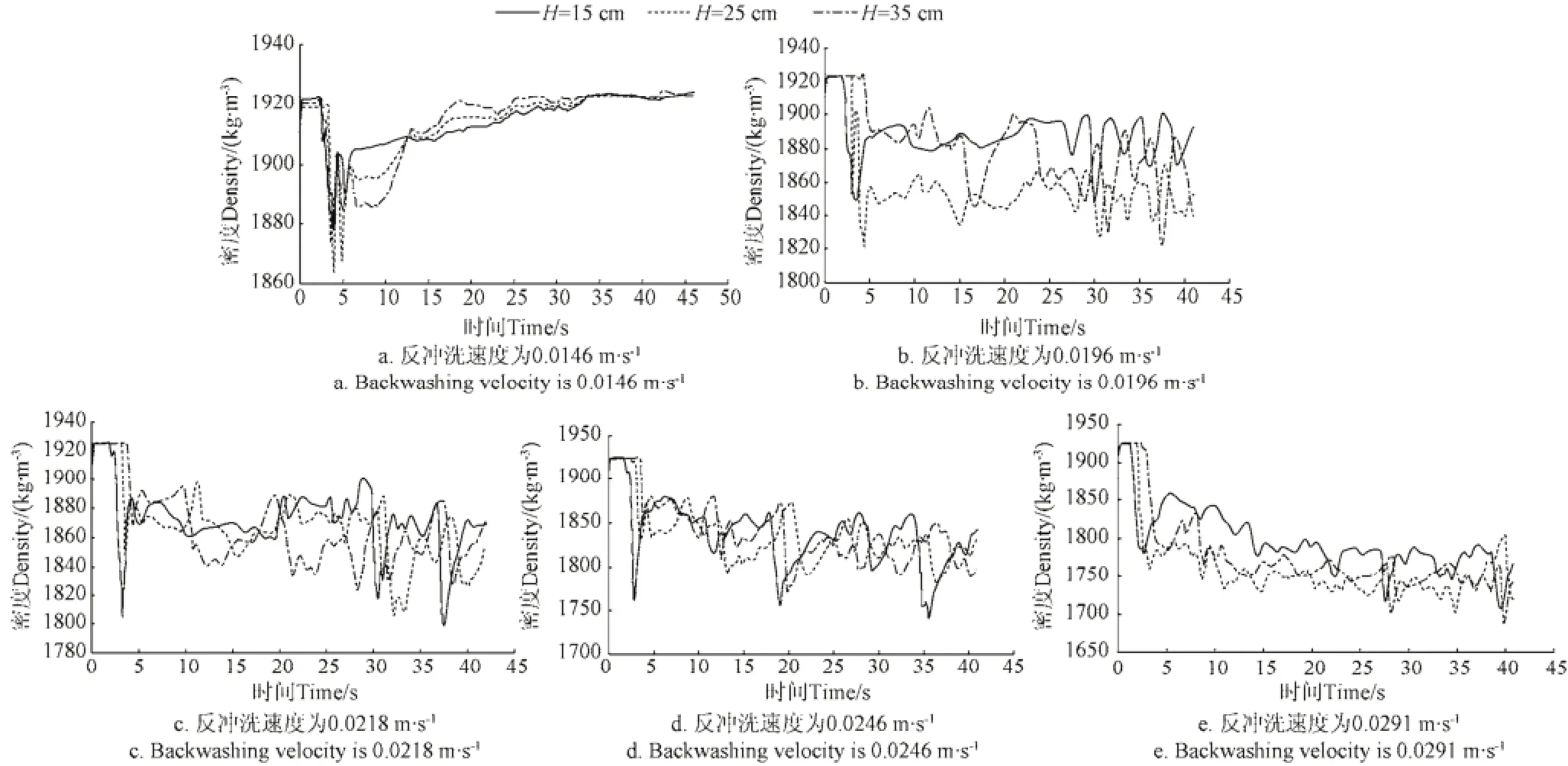
圖12 密度隨時間變化關系曲線(當量粒徑為1.2 mm)Fig.12 Relationship of density and time (Filter equivalent particle size is 1.2 mm)
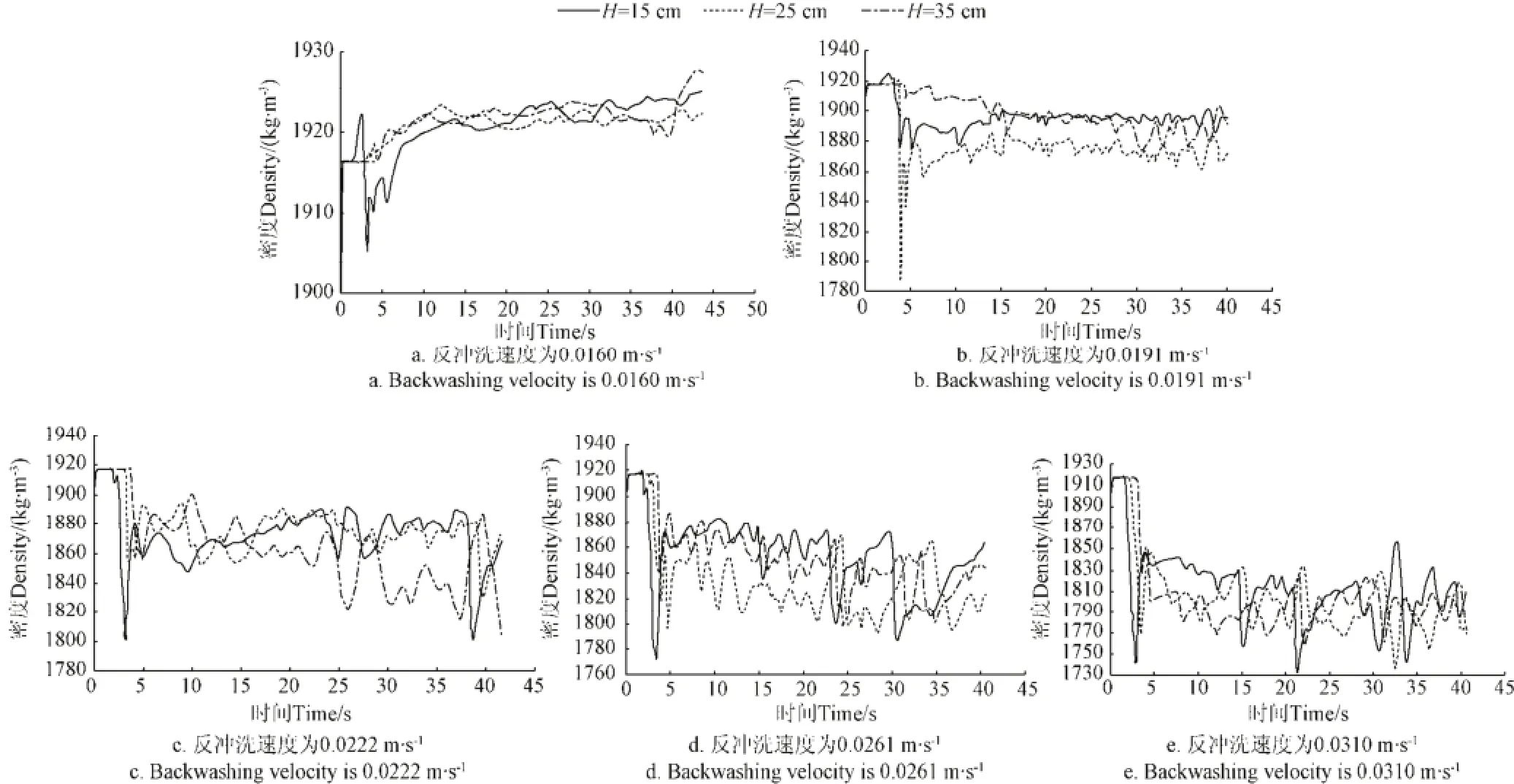
圖13 密度隨時間變化關系曲線(當量粒徑為1.5 mm)Fig.13 Relationship of density and time (Filter equivalent particle size is 1.5 mm)
為了分析濾層密度分布的均勻性,對3種濾層,計算3個截面密度的平均值,繪出密度均值隨反沖洗速度的變化關系圖(圖14)。計算3個截面密度的標準偏差,繪出密度標準偏差隨反沖洗速度的變化關系圖(圖15)。
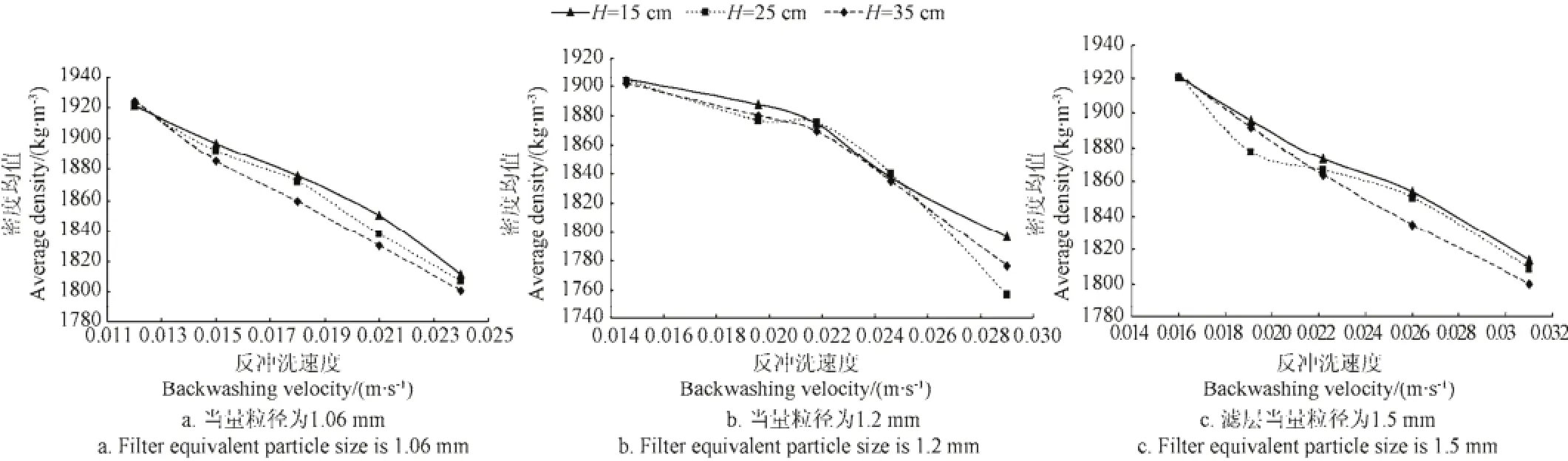
圖14 密度均值隨反沖洗速度的變化關系曲線Fig.14 Relation curve of average density and back washing velocity
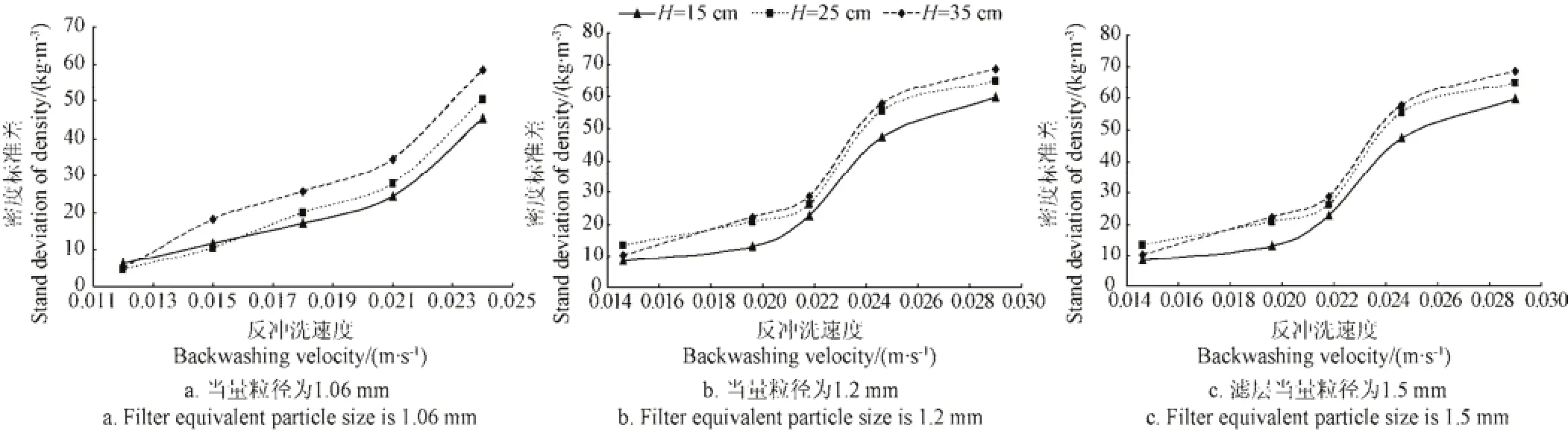
圖15 密度標準偏差隨反沖洗速度的變化關系曲線Fig.15 Relation curve of density standard deviation and back washing velocity
分析圖14和圖15,對于當量粒徑為1.06 mm的濾層,由密度標準偏差變化趨勢可以看出,當反沖洗速度為0.0121、0.0149、0.0180和0.0212 m/s時,密度標準偏差的變化趨勢比較平緩,而當反沖洗速度為0.0240 m/s時,標準偏差明顯增大,說明密度波動的穩定性變差,不利于反沖洗效果的增強。同時,由密度均值的變化趨勢可以看出,密度均值隨反沖洗速度的增加而呈減小趨勢,密度變小,說明水的體積分數增大,對反沖洗有利。但反沖洗速度0.0121 m/s對應的濾層密度高于1 920 kg/m3,幾乎接近于濾層的靜止狀態,因而不適于進行反沖洗。因此,對于當量粒徑為1.06 mm的濾層,適宜的反沖洗速度范圍為0.0149~0.0212 m/s。
同理可知,對于當量粒徑為1.2 mm的濾層,適宜的反沖洗速度范圍為0.0146~0.0218 m/s。對于當量粒徑為1.5 mm的濾層,適宜的反沖洗速度范圍為0.0191~0.0261 m/s。
3.3 合理反沖洗速度的確定
綜合濾層壓降與密度的波動規律可知,對于當量粒徑為1.06 mm的濾層,適宜的反沖洗速度范圍為0.0149~0.0212 m/s;對于當量粒徑為1.2 mm的濾層,適宜的反沖洗速度范圍為0.0146~0.0218 m/s;對于當量粒徑為1.5 mm的濾層,適宜的反沖洗速度范圍為0.0191~0.0261 m/s。
4 結論與討論
4.1 結 論
1)采用Eulerian模型作為反沖洗模擬模型,對石英砂濾層反沖洗過程進行了瞬態模擬,并且通過室內試驗對模擬結果進行了驗證,結果顯示該模擬方法是可行的。
2)分析了壓降的波動規律,確定了使壓降波動保持穩定的反沖洗速度。對濾層密度進行數值模擬,分析了密度的分布規律,確定了使密度均勻性保持穩定的反沖洗速度。
3)結合濾層密度和壓降的波動規律,確定了3種濾層反沖洗速度的合理范圍,分別為0.0149~0.0212、0.0146~0.0218和0.0191~0.0261 m/s。
4.2 討 論
在反沖洗模擬方面,由于濾層中雜質顆粒粒徑小、體積分數小,在反沖洗穩定后,可以近似認為對流場不產生影響,因而沒有考慮對濾層中雜質的模擬。對于雜質的模擬,主要難點在于,雜質顆粒種類多、粒徑分布廣,對于雜質顆粒的描述存在困難,而且在多相流的模擬過程中,每增加一相,模擬量會增加十幾倍,對于計算機的要求較高。
[1] 董文楚. 微灌用砂過濾器的過濾與反沖洗[J]. 中國農村水利水電,1996(12):15-20. Dong Wenchu. On filtering and inverse washing of sandy filter in micro-irrigation[J]. China Rural Water and Hydropower, 1996(12): 15-20. (in Chinese with English abstract)
[2] 董文楚. 微灌用過濾砂料選擇與參數測定[J]. 噴灌技術,1995(2):42-46. Dong Wenchu. The material selection and parameter determination of sand filter in micro irrigation[J]. Sprinkler Irrigation Technology, 1995(2): 42-46. (in Chinese with English abstract)
[3] 翟國亮,陳剛,趙武,等. 微灌用石英砂濾料的過濾與反沖洗試驗[J]. 農業工程學報,2007,23(12):46-50. Zhai Guoliang, Chen Gang, Zhao Wu, et al. Experimental study on filtrating and backwashing of quartz sand media in micro-irrigation filter[J]. Transactions of the Chinese Society of Agricultural Engineering (Transactions of the CSAE), 2007, 23(12): 46-50. (in Chinese with English abstract )
[4] 翟國亮,馮俊杰,鄧忠,等. 微灌用砂石過濾器反沖洗參數試驗[J]. 水資源與水工程學報,2007,18(1):24-28. Zhai Guoliang, Feng Junjie, Deng Zhong, et al. Parameters experiment of backwashing on sandy filter in micro-irrigation[J]. Journal of Water Resources & Water Engineering, 2007,18(1): 24-28. (in Chinese with English abstract)
[5] 馮俊杰,翟國亮,鄧忠,等. 微灌過濾器用水壓驅動反沖洗閥啟閉機構的力學計算[J]. 農業機械學報,2007,38(12):212-214. Feng Junjie, Zhai Guoliang, Deng Zhong, et al. Mechanical calculation of opening and closing mechanism of back flushing valve driven by hydraulic pressure[J]. Transactions of the Chinese Society of Agricultural Machinery, 2007, 38(12): 212-214. (in Chinese with English abstract)
[6] 鄧忠,翟國亮,仵峰,等. 微灌過濾器石英砂濾料過濾與反沖洗研究[J]. 水資源與水工程學報,2008,19(2):34-37. Deng Zhong, Zhai Guoliang, Wu Feng, et al. Study on the filtration and backwashing for the quartz filter in micro-irrigation[J]. Journal of Water Resources & Water Engineering, 2008, 19(2): 34-37. (in Chinese with English abstract)
[7] 趙紅書. 微灌用石英砂濾料的過濾與反沖洗性能研究[D].北京:中國農業科學院,2010. Zhao Hongshu. Performance of Filtration and Flushing of Quartz sand Media for Micro-irragation[D]. Beijing: Chinese Academy of Agricultural Sciences, 2010. (in Chinese with English abstract)
[8] Ansys Inc. Ansys Fluent User’s Guide[M]. Pittsburgh: ANSYS Inc, 2011.
[9] 宗全利,鄭鐵剛,劉煥芳,等. 滴灌自清洗網式過濾器全流場數值模擬與分析[J]. 農業工程學報,2013,29(16):57-65. Zong Quanli, Zheng Tiegang, Liu Huanfang, et al. Numerical simulation and analysis on whole flow field for drip self-cleaning screen filter[J]. Transactions of the Chinese Society of Agricultural Engineering (Transactions of the CSAE), 2013, 29(16): 57-65. (in Chinese with English abstract)
[10] 宋輝智. 溢流管插入深度及圓柱段高度對旋流式過濾器沉沙效果的影響[D]. 內蒙古:內蒙古農業大學,2012. Song Huizhi. Overflow Pipe Insertion Depth and the Cylindrical Section Height of Cyclone Filter Settling Effect[D]. Inner Mongolia, Inner Mongolia Agricultural University, 2012. (in Chinese with English abstract)
[11] 王新坤,高世凱,夏立平,等. 微灌用網式過濾器數值模擬與結構優化[J]. 排灌機械工程學報,2013,31(8):719-723. Wang Xinkun, Gao Shikai, Xia Liping, et al. Numerical simulation and structure optimization of screen filter in micro-irrigation[J]. Journal of Drainage and Irrigation Machinery Engineering, 2013, 31(8): 719-723. (in Chinese with English abstract)
[12] 王棟蕾,宗全利,劉建軍. 微灌用自清洗網式過濾器自清洗結構流場分析與優化研究[J]. 節水灌溉,2011(12):5-8. Wang Donglei, Zong Quanli, Liu Jianjun. Flow analysis and structure optimization of Self cleaning nets filter for micro-irrigation[J]. Water Saving Irrigation, 2011(12): 5-8. (in Chinese with English abstract)
[13] 羅力. 水力旋流器固-液兩相流動數值計算及性能分析[D].廣州:華南理工大學,2012. Luo Li. Numerical Calculation and Performance Analysis of Solid Liquid Two Phase Flow in Hydrocyclone[D]. Guangzhou: South China University of Technology, 2012. (in Chinese with English abstract)
[14] 劉文娟. 石英砂過濾器過濾及反沖洗特性的實驗研究與數值模擬[D]. 北京:中國農業科學院,2014. Liu Wenjuan. Experimental Study and Numerical Simulation of Filtration and Backwashing Characteristics of Quartz Sand Filter[D]. Beijing: Chinese Academy of Agricultural Sciences, 2010. (in Chinese with English abstract).
[15] 李景海,劉清霞,黃修橋,等. 微灌石英砂濾層流態特性與分形阻力模型參數確定[J]. 農業工程學報,2015,31(13):113-119. Li Jinghai, Liu Qingxia, Huang Xiuqiao, et al. Flow state characteristics and fractal model parameters determination of quartz sand filter layer used in micro-irrigation[J]. Transactions of the Chinese Society of Agricultural Engineering (Transactions of the CSAE), 2015, 31(13): 113-119. (in Chinese with English abstract).
[16] Ansys Inc. Ansys Fluent Theory Guide[M]. Pittsburgh: ANSYS Inc, 2011: 457-458.
[17] 賀靖峰. 基于歐拉-歐拉模型的空氣重介質流化床多相流體動力學的數值模擬[D]. 北京:中國礦業大學,2012:25-26. He Jingfeng. Numerical Simulation of Multiphase Fluid Dynamic in Air Dense Medium Fluidized Bed Based on Euler-Euler Model[D]. Beijing: China University of Mining and Technology, 2012, 25-26. (in Chinese with English abstract)
[18] Gidaspow D. Hydrodynamics of fluidization and heat transfer: Supercomputer modeling[J]. Applied Mechanics Reviews, 1986, 39(1): 1-22.
[19] Mansoori Z, Saffar-Avval M, Basirat-Tabrizi H, et al. Thermo-mechanical modeling of turbulent heat transfer in gas-solid flows including particle collisions[J]. International Journal for Heat Fluid Flow, 2002, 23(6): 792-806.
Numerical simulation and flow field analysis of backwashing of quartz sand filter in micro-irrigation
Li Jinghai1,2, Zhai Guoliang1, Huang Xiuqiao1※, Feng Junjie1, Liu Yang1
(1. Farmland Irrigation Research Institute, Chinese Academy of Agricultural Sciences/Key Laboratory of Water-saving Agriculture in Henan Province, Xinxiang 453002, China; 2.Water Resources Management Committee Office of Anyang City, Anyang 455000, China)
Backwashing of quartz sand filter in micro-irrigation is an effective way to realize the regeneration of quartz sand filter media. Analysis of flow field in the backwashing process of quartz sand filter and determination of reasonable backwashing velocity play an important role in the design and operation of the quartz sand filter. The method of numerical simulation has obvious advantage in the analysis and investigation of the flow field in the filter layer. In order to realize the numerical simulation of the backwashing process of quartz sand filter, the geometric model of quartz sand filter was established through Gambit software, and the mesh division of the geometric model was carried out. Because the backwashing process of quartz sand filter layer is a solid-liquid multiphase flow system interacted by both water and quartz sand, in which quartz sand particles are distributed only in a part of the region during the process of backwashing, not being carried away to outside of the filter by the stream, and in which quartz sand accounted for a larger proportion of the whole volume, the Eulerian model was adopted as a model for numerical simulation of backwashing. At the same time, because the backwashing process of quartz sand filter layer is a dynamically stable process, the transient simulation solver was adopted. The simulation objects were three kinds of quartz sand filter layer with the same thickness of 400 mm, but the equivalent particle size were 1.06, 1.2 and 1.5 mm respectively. In order to verify the reliability of simulation results, backwashing experiments were conducted in Farmland Irrigation Research Institute, Chinese Academy of Agricultural Sciences, in 2014. The parameters such as backwashing velocity, pressure drop and expansion height of filter layer were measured. The simulation results were compared with the experimental results. Comparison showed that the maximum simulation error of the whole pressure drop of filter layer was 7.03%, and the maximum simulation error of filter layer density was 1.93%. It was proved that the numerical simulation results were reliable. On this basis, the fluctuation trend of pressure drop with time and the variation trend of the mean value and the standard deviation of the pressure drop with backwashing velocity in backwashing process of quartz sand filter layer were analyzed. If the standard deviation of pressure drop is large, it shows that the fluctuation of pressure drop is unstable, and the unstable fluctuation of pressure drop will affect the effect of backwashing. This result can determine the reasonable range of the backwashing velocity. Then, the distribution rule of the filter layer density with time, the variation trend of the mean value and the standard deviation of the density with the change of the backwashing velocity were analyzed. When the density is close to the static density of the mixture composed of water and quartz sand, the effect of backwashing is poor. When the standard deviation of density is too large, partial concentration phenomenon will appear in the filter layer, which will cause negative influence on the effect of backwashing. Thus, the reasonable range of the backwashing velocity was determined. After combined the rules of pressure drop fluctuation and density distribution, the reasonable ranges of the backwashing velocity of three kinds of filter layer are obtained as 0.0149-0.0212, 0.0146-0.0218 and 0.0191-0.0261 m/s respectively. The research results provided a theoretical basis for the mechanism of quartz sand filter in the process of backwashing. It also provided a technical support for the operation of the sand filter.
irrigation; models; computer simulation; quartz sand filter layer; backwashing; multiphase flow
10.11975/j.issn.1002-6819.2016.09.011
S275.6
A
1002-6819(2016)-09-0074-09
李景海,翟國亮,黃修橋,馮俊杰,劉 楊. 微灌石英砂過濾器反沖洗數值模擬驗證與流場分析[J]. 農業工程學報,2016,32(9):74-82.
10.11975/j.issn.1002-6819.2016.09.011 http://www.tcsae.org
Li Jinghai, Zhai Guoliang, Huang Xiuqiao, Feng Junjie, Liu Yang. Numerical simulation and flow field analysis of backwashing of quartz sand filter in micro irrigation[J]. Transactions of the Chinese Society of Agricultural Engineering (Transactions of the CSAE), 2016, 32(9): 74-82. (in Chinese with English abstract) doi:10.11975/j.issn.1002-6819.2016.09.011 http://www.tcsae.org
2016-02-19
2016-03-16
“十二五”農村領域國家科技支撐計劃課題(2014BAD12B05);公益性行業(農業)專項(201203003)
李景海,男,河南安陽人,博士生,高級工程師,主要從事微灌過濾器及水資源配置研究。新鄉 中國農業科學院農田灌溉研究所,453002,Email:649923670@qq.com
※通信作者:黃修橋,男,湖北漢川人,博士,研究員,博士生導師,主要從事節水灌溉理論與技術研究。新鄉 中國農業科學院農田灌溉研究所,453002,Email:huangxq626@126.com
