英語文摘
2016-11-19 12:51:52
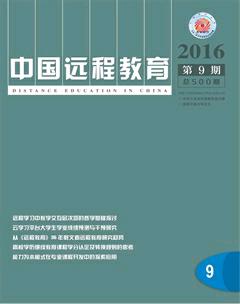
中國(guó)遠(yuǎn)程教育 2016年9期
關(guān)鍵詞:英語
Hierarchical Model for Instructional Interaction in distance learning:
a philosophical perspective
Zhijun Wang, Li Chen, Min Chen, Shimei Han
The Hierarchical Model for Instructional Interaction (HMII) in distance learning has attracted wide attention from researchers because it sheds insights into the instructional interaction process of distance learning. This article begins with a review of the core concepts and ideas of Habermas Theory of Communicative Action (TCA), including communicative action and three principles of discourse communication behavior, communicative rationality and ideal communication context, and inter-subjectivity. Combined with the characteristics of communication of subject in the life world, which is a system constituted by objective, social and subjective inner worlds, this study sets out to systematically analyze the relationship between communicative action and the rationale of HMII as well as its three levels of instructional interaction. Implications of HMII for instructional interaction are discussed in terms of communicative rationality and inter-subjectivity. It is found that TCA is theoretically underpinned by Habermas communicative action and communicative rationality concepts, which are in line with the rationale of HMII and can serve as its philosophical foundation. Ideal communication context and inter-subjectivity are found to be able to deepen our understanding of instructional interaction in distance learning. This study supplements and improves HMII from a philosophical perspective and may help perfect the theory of instructional interaction in distance learning.
Keywords: Habermas; Theory of Communicative Action; distance learning; Hierarchical Model for Instructional Interaction; philosophical foundation
Predictions of and interventions in university students academic
achievement on cloud-based learning platforms
Jiaxin You and Zhong Sun
Predicting students academic achievement and providing timely intervention guidance has proved to be an effective strategy for enhancing learning outcomes. In the cloud-based environment, process data generated by learning performance can be an important source of prediction. This study reports on a university course blending the physical classroom and cloud-based platforms such as Moodle and WeChat. A multiple regression model is built using various student attributes and learning process data, in order to predict academic achievement and offer timely intervention guidance. Key prediction factors include GPA, online learning engagement, preceding course achievement, and learning interest. Intervention is found to be conducive to better learning outcomes, in particular for students in difficulty.
Keywords: cloud-based learning platform; academic achievement; prediction; intervention; multiple linear regression
Mapping research trends from 35 years of
publications in Distance Education
Olaf Zawacki-Richter and Som Naidu
This article maps out trends in distance education research and scholarship from 35 years of publications in the Distance Education journal. Titles and abstracts of 515 full papers were analyzed using the text-mining tool LeximancerTMto identify and describe themes in distance education research covered by these publications in the journal over the period 1980-2014. Analysis of titles and abstracts over 5-year periods reveals the following broad emerging themes over the seven time periods: professionalization and institutional consolidation (1980-1984), instructional design and educational technology (1985-1989), quality assurance in distance education (1990-1994), student support and early stages of online learning (1995-1999), the emergence of the virtual university (2000-2004), collaborative learning and online interaction patterns (2005-2009), and interactive learning, MOOCs and OERs (2010-2014). The place of these themes within waves of alternating institutional and individual research is discussed.
Keywords: content analysis; distance education; mapping trends; research and scholarship; text mining
Credit recognition and transfer for degree/diploma programs
in continuing higher education
Huaying Bao, Faxin Wang, Yuanxia Liu, and Binglin Zhong
In light of the status quo of continuing higher education in China and drawing on lessons from other countries such as the UK, this study set out to develop a credit system for degree/diploma programs in continuing higher education by identifying its key elements and constitution. It then went on to propose and discuss regulations for credit recognition, including general principles, cross-program credit recognition and transfer of informal learning outcomes into credits for formal learning programs. This study is assumed to be of practical relevance to mutual recognition of learning outcomes in the higher education sector as well as facilitation of credit transfer.
Keywords: credit recognition; credit transfer; regulations for credit recognition; continuing education
Towards a competency-based education
model for curriculum development
Lu Tan, Xiaoxia Wang and Shimei Han
Competency-based education (CBE) model is conducive to curriculum development. This article reviews the practice of different types of Chinese universities in using CBE model for curriculum development, for example, the vocational competency-based DACUM approach, ‘Experienced Practitioner Seminar approach, and BAG-based DECDA approach. It then introduces the attempt of the Open University of Beijing to develop its competency spectrum which is informed by previous studies. It also discusses the efforts of higher education institutions in Hong Kong to carry out curriculum reforms by establishing qualifications frameworks featuring outcome-based education. Findings from this study may have implications for adopting CBE in Chinese universities, cultivating students competencies, maintaining curriculum consistency on the national or regional level, and establishing Chinese qualifications frameworks.
Keywords: competency-based education; curriculum; competency analysis; curriculum standard
猜你喜歡
新東方英語·中學(xué)版(2017年9期)2017-09-25 20:25:46
高考金刊·理科版(2016年3期)2016-04-13 07:13:48
小學(xué)生導(dǎo)刊(低年級(jí))(2016年2期)2016-02-24 23:02:11
小天使·五年級(jí)語數(shù)英綜合(2014年5期)2014-06-25 05:22:42
興趣英語(2013年12期)2014-02-11 03:21:38
海外英語(2013年11期)2014-02-11 03:21:02
興趣英語(2013年3期)2013-05-13 09:21:06
興趣英語(2013年2期)2013-04-25 01:50:06