Behind the House Buying Frenzy
2016-05-19 04:06:04
中國經貿聚焦·英文版
2016年4期
Over the past few months, China has seen another boom in the real estate market—housing prices in big cities, such as Beijing, Shanghai and Shenzhen, spiked again, on top of an already-dangerous housing bubble.
Some attributed it to the$5 trillion rout in Chinese stock market.The steep correction in Chinese stock market triggers a negative wealth effect , as said by Wendy Liu, head of China Equity Research at Nomura.
Buying Frenzy in Big Cities
After getting burned by the bursting of Chinas stock-market bubble, Liu Yihui is seeking salvation from the countrys latest investment mania: bigcity properties.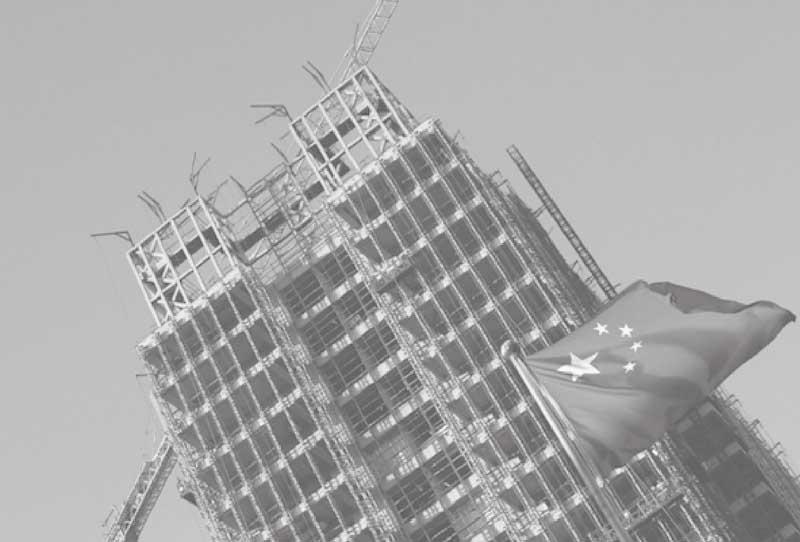
The 35-year-old civil engineer dumped his equity holdings after losing 40% last year, using the proceeds to buy a 5 million yuan ($763,464) apartment in Shenzhen.
Prices in the southern business hub have surged more than 50% over the past year, the fastest pace since at least 2011.
“People are a bit crazy in this market, but what can you do?” said Liu, who took on a mortgage to buy the apartment, an investment property that hes renting out. “Stock returns were terrible, so I made up my mind to put my money in real estate.”
In an echo of the buying frenzy that propelled Chinese shares to unsustainable valuations last June, leveraged speculators are snapping up homes in top-tier cities in hopes that prices will keep surging.
The boom, fueled by monetary stimulus and a loosening of property curbs in February, shows how govern- ment efforts to revive the worlds second-largest economy risk fueling asset bubbles instead.
In Shanghai, lines of prospective buyers outside property agents offices clogged roads and forced police in the suburban Baoshan district to curb traffic as they sought to maintain order.
The buying frenzy prompted Chinas official Xinhua News Agency to warn against “panic” buying, while Shanghais government issued a call for calm on its official Weibo microblog account.
“There is no need to rush, the trading centers are open seven days a week,”the citys government said in a posting on Feb 28. “The service centers will also deploy more people and add desks for buyers.”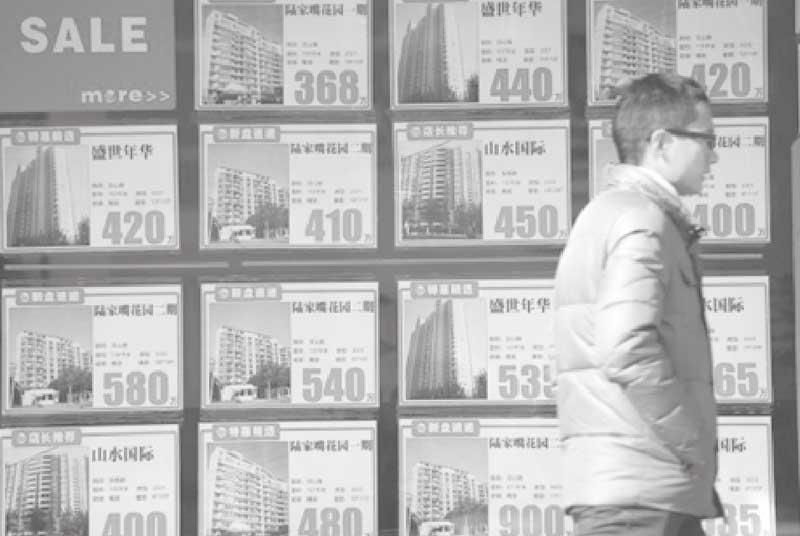
The clamor to buy is reminiscent of the Chinese property market boom that peaked in 2013, before regulators instituted a series of measures to cool the market.endprint
They began rolling back those curbs in November 2014, accelerating efforts to support demand last month by cutting down-payment requirements and reducing real estate transaction taxes.
The measures -- intended to ease a glut of unsold homes in smaller cities-- have instead lifted prices in the coun- trys biggest population centers.
“The bubble has been growing big,” since the government rolled out easing measures last year, UOB Kay Hian Ltd. analysts led by Edison Bian wrote in a March 2 note to clients.
Demand is also getting a boost from monetary stimulus after the Peoples Bank of China, the countrys central bank, cut benchmark lending rates six times since 2014, lowered banks reserve requirements and flooded the financial system with cash to keep borrowing costs low.
With local stocks in a bear market and yields on the nations fixed-income securities near all-time lows, investors see few appealing alternatives outside real estate to park their savings.
Prices Soar
“Property prices continued to soar in cities like Shenzhen and Shanghai for the past month, driven by the sharp surge of credit expansion, which appears to be endorsed by the central bank and local governments as a way to reinvigorate sales and digest inventory in third- and fourth-tier cities,” analysts at HSBC Holdings Plc wrote in a March 1 report.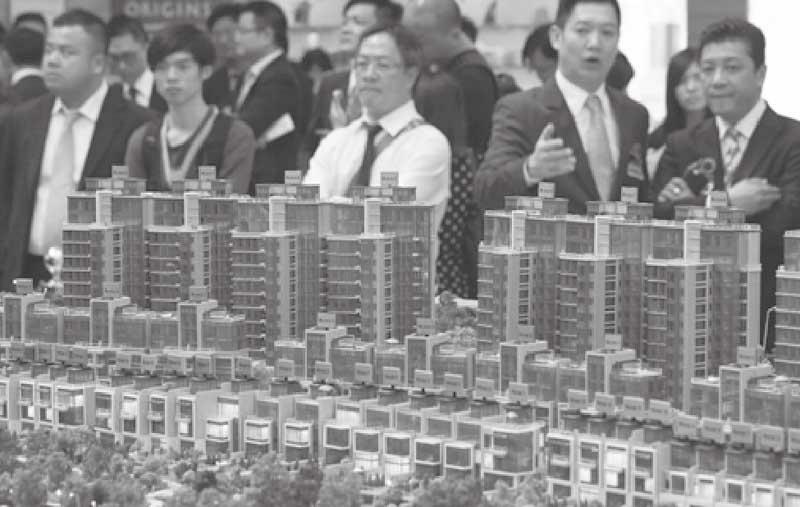
The boom is most extreme in Shenzhen, where prices jumped 4% in January from a month earlier and have gained 52% over the past year. Values in the financial center of Shanghai have increased 18% in the last 12 months, while those in Beijing advanced about 10%. Prices in many smaller cities have continued falling, though at a slower pace. In the northeastern city of Shenyang, for example, new-home prices slipped 0.5% in January.
Shenyang is examining a zero down-payment mortgage policy, the party committee of the city said in a Weibo post on March 1, an idea that the Peoples Daily decried on its microblog account, saying that an “artificial bull market” will cause hidden dangers. The Shenyang government subsequently backed away from the plan, saying on its Weibo account that its plans are still in a preliminary stage and “not ready for implementation.”
Home prices in Shanghai jumped to a record high of 35,911 yuan per square meter, or the equivalent of $509 per square foot, according to realtor China Real Estate Information Corp..endprint
Those in Shenzhen have surged to the equivalent of $659 per square foot. By comparison, the price per square foot of a Manhattan apartment was almost $1,497 as of the third quarter of 2015, according to Miller Samuel Inc. and brokerage Douglas Elliman.
Authorities may act to cool demand in cities where prices have risen fastest, according to Alan Jin, a Hong Kongbased analyst at Mizuho Securities Asia Ltd.
“First-tier cities could run the risk of overheating amid abundant liquidity,”Jin said. “Some cities, notably Shenzhen and Shanghai, could introduce tightening measures in the near future.”
For Yao Peirong, a 61-year-old Shanghai retiree, fear of missing out on the real estate boom has led to sleepless nights. After seeing prices soar in an area about an hours commute from the city center, he bought a two-bedroom apartment there for 6.6 million yuan on Feb. 19. He borrowed 300,000 yuan within an hour after his first viewing to secure the purchase with a deposit.
“I couldnt sleep,” Yao said. “Home prices in this neighborhood have jumped almost 11% since two weeks ago.”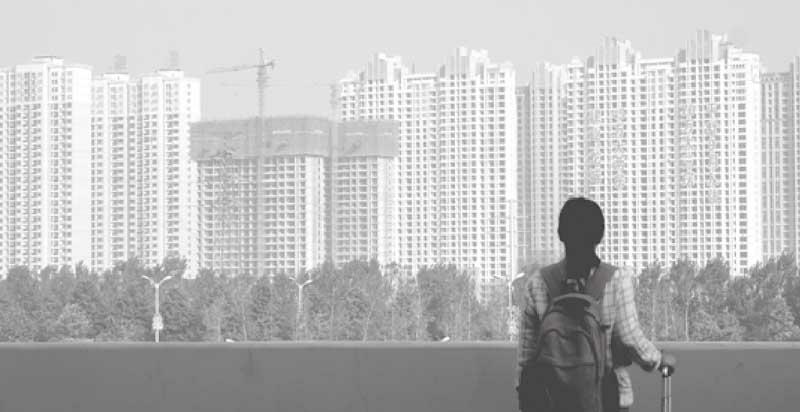
Boom or Bust?
Some asked: “Will the buying frenzies signal a bust in Chinas real estate market?”
According to Chen Zhenggao, Minister of Housing and Urban-Rural Development in a press conference during the annual two sessions of Chinas government, the countrys real estate market will continue to experience a steady and healthy development,
Chen cited several favorable factors including stable economic growth, a rapid pace of urbanization, and huge demand from urban dwellers. He also listed three main features of Chinas real estate market: Rebounding sales, a large difference in needs between cities, and oversupply of real estate.
“Last year, the sales started to rise month by month. The sales area increased by 6.5% and sales revenue increased by 14%. We kept this momentum this January and February, so our conclusion is that sales are now rebounding,” Chen said.
“We see different situations between tier-one and tier-three or four cities, which gives us a big challenge in regulation and control.”
There was also 718 million square meters of housing inventory last year, an increase of 15.6% from the previous year, Chen added. This is primarily in third and fourth tier cities, he added.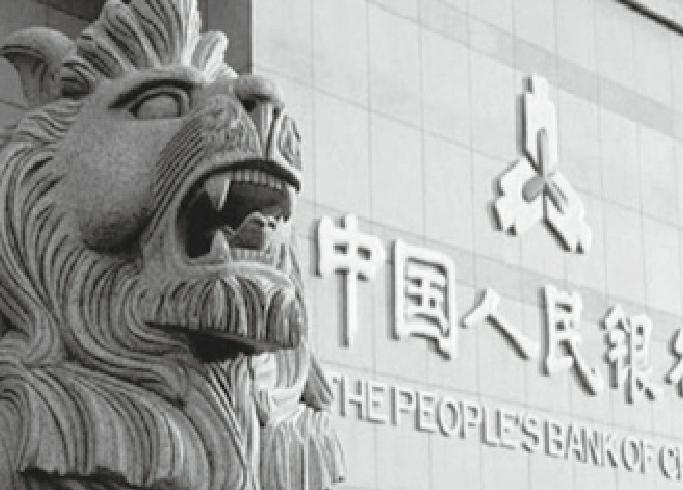 endprint
On the surge in house price inflation in the first tier cities in China after the Spring Festival, including in Beijing, Shanghai, Shenzhen, Chen said the ministry will take measures to stabilize the housing price in first tier cities and some of the second tier cities.
“The first is to strengthen restrictions on house purchasing, tax and financial policies. Second, to increase land supply, and make it more transparent and expectable. Third, to increase the supply of small-and-middle-sized flats. Fourth, to crack down on illegal actions, and the last is to give appropriate guide to media reports of the real estate market,” Chen said, adding that the country is now considering “purchasing and renting” housing system reform plans to meet the housing needs of the public.
Chen said that China currently has 770 million urban residents, meaning 56.1% of the population live in cities. That number is expected to reach 60% in the next five years.
He added that Chinas urbanization process provides great potential for real estate development. In certain smallmiddle cities, migrant workers have purchased 30% of the housing, so that they have great potential to drive housing purchase in the cities.
The ministry aims to renovate 18 million shantytown homes from 2015 to 2017, according to the 13th Five-year Plan. For this year, China will further rebuild 6 million shanty homes and for those displaced, the ministry will try to increase the rate of monetary housing compensation to 50% from last years 29%.endprint
登錄APP查看全文