
高職學生時間管理傾向、心理健康水平及二者的關系研究
2016-02-18 05:57:17石貴瑩周明潔
中國全科醫(yī)學 2016年7期
石貴瑩,周明潔
高職學生時間管理傾向、心理健康水平及二者的關系研究
石貴瑩,周明潔
目的了解高職學生時間管理傾向、心理健康水平,并探討二者之間的關系。方法于2014年5—6月選取甘肅省3所高職院校學生307例,采用青少年時間管理傾向量表(ATMD)和癥狀自評量表(SCL-90)以班為單位對高職學生的時間管理傾向和心理健康水平進行集體測試。時間管理傾向得分與心理健康得分的相關分析采用Pearson相關分析;時間管理傾向各維度對心理健康的預測作用采用分層回歸分析。結果307例高職學生,ATMD總均分為(144.65±21.39)分,其中時間價值感、時間監(jiān)控觀、時間效能感分量表得分分別為(34.64±6.13)、(76.77±11.90)、(33.23±5.93)分;SCL-90總均分為(2.00±0.70)分。不同性別的高職學生時間價值感得分間差異有統(tǒng)計學意義(P<0.05),而時間監(jiān)控觀、時間效能感得分及總均分間差異無統(tǒng)計學意義(P>0.05)。不同專業(yè)的高職學生時間價值感、時間監(jiān)控觀、時間效能感得分及總均分間差異均有統(tǒng)計學意義(P<0.05)。不同年級、是否獨生子女的高職學生時間價值感、時間監(jiān)控觀、時間效能感得分及總分間差異均無統(tǒng)計學意義(P>0.05)。不同生源地、是否學生干部的高職學生時間價值感、時間效能感得分及總分間差異無統(tǒng)計學意義(P>0.05),而時間監(jiān)控觀得分間差異有統(tǒng)計學意義(P<0.05)。不同性別、專業(yè)、生源地及是否獨生子女的高職學生SCL-90各因子得分及總均分間差異均無統(tǒng)計學意義(P>0.05)。不同年級的高職學生SCL-90除軀體化、焦慮、恐怖外其余因子得分及總均分間差異有統(tǒng)計學意義(P<0.05)。是否學生干部的高職學生強迫癥狀、抑郁、恐怖得分間差異有統(tǒng)計學意義(P<0.05),而SCL-90其余因子得分及總均分間差異無統(tǒng)計學意義(P>0.05)。高職學生SCL-90各因子得分均高于全國青年常模,差異有統(tǒng)計學意義(P<0.05)。高、低時間管理傾向得分的高職學生SCL-90各因子得分及總均分間差異均有統(tǒng)計學意義(P<0.05)。時間價值感得分與軀體化、恐怖、精神病性得分均呈線性負相關(P<0.05),而與SCL-90其余因子得分及總均分無線性相關關系(P>0.05);時間監(jiān)控觀得分及總分與SCL-90各因子得分及總均分均呈線性負相關(P<0.05);時間效能感得分與SCL-90除強迫癥狀、人際關系敏感外的其余因子得分及總均分均呈線性負相關(P<0.05)。當控制了人口學變量后,時間監(jiān)控觀對心理健康癥狀有負向預測作用(P<0.05)。結論高職學生時間管理能力尚可,心理健康水平普遍較低,時間管理傾向中的時間監(jiān)控觀對心理健康有明顯預測作用。
高職學生;時間管理傾向;心理健康
石貴瑩,周明潔.高職學生時間管理傾向、心理健康水平及二者的關系研究[J].中國全科醫(yī)學,2016,19(7):842-847.[www.chinagp.net]
ShiGY,Zhou MJ.Time management disposition and mental health status of vocational college students and the relation between them[J].Chinese General Practice,2016,19(7):842-847.
時間管理傾向是個體在運用時間方式上所表現(xiàn)出來的心理和行為特征,是一種時間維度上的人格特點。黃希庭等[1]提出了時間管理傾向的概念和相應的三維理論模型,并編制了青少年時間管理傾向量表,認為時間管理傾向包括時間價值感、時間監(jiān)控觀和時間效能感3個維度。秦啟文等[2]的研究表明時間管理傾向與心理健康之間存在一定程度的相關,時間管理傾向及其各維度與心理健康各因子的相關主要集中在軀體化、抑郁和焦慮等及總癥狀指數(shù)上。牟麗霞等[3]的研究發(fā)現(xiàn)時間管理傾向總分與人際關系敏感、敵對、精神病性、偏執(zhí)這些因子有明顯負相關,時間監(jiān)控觀對心理健康總體水平有一定的預測功能。孫慧等[4]研究表明,高心理健康水平的學生在時間管理能力方面明顯高于低水平者。此外,這方面研究還涉及時間管理傾向與個體焦慮、抑郁、壓力等心理健康多個維度之間的關系[5-8]。但以往相關研究多以本科學生為研究對象,而高職學生較本科學生而言,大多數(shù)在中學期間未能養(yǎng)成良好的學習習慣,如自學能力差、時間觀念不強,做事拖拉、沒有計劃,自控能力弱等,學習成績不是很好,很少得到老師與同學的重視和肯定,而且高職類的課程專業(yè)性較強,學生容易產(chǎn)生無聊、失望等消極情緒[9]。本研究旨在探討高職學生時間管理傾向與心理健康水平之間的關系。
1 資料與方法
1.1 一般資料 于2014年5—6月選取甘肅省3所高職院校學生307例,其中男142例(46.3%),女165例(53.7%);年齡為18~23歲,平均為20.8歲;一年級112例(36.5%),二年級114例(37.1%),三年級81例(26.4%);文科182例(59.3%),理科125例(40.7%);城鎮(zhèn)學生67例(21.8%),農(nóng)村學生240例(78.2%);獨生子女40例(13.0%),非獨生子女267例(87.0%);學生干部66例(21.5%),普通學生241例(78.5%)。
1.2 方法 采用問卷調(diào)查法,以班為單位對高職學生的時間管理傾向和心理健康水平進行集體測試,由主試統(tǒng)一指導語,一次性完成調(diào)查問卷所有題目。共發(fā)放問卷330份,回收有效問卷307份,問卷有效回收率為93.0%。
1.2.1 青少年時間管理傾向量表(ATMD) 由黃希庭等[1]編制,共44個條目,由時間價值感、時間監(jiān)控觀和時間效能感3個分量表組成,其中時間價值感包括社會取向和個人取向2個維度;時間監(jiān)控觀包括設置目標、計劃、優(yōu)先級、時間分配和反饋性5個維度;時間效能感包括時間管理效能和時間管理行為效能2個維度,各分量表按5點等級計分。量表各維度的內(nèi)部一致性信度系數(shù)為0.62~0.81,重測信度系數(shù)為0.71~0.85。
1.2.2 癥狀自評量表(SCL-90) 由Derogatis.L.R.編制(1975年),1984年由王征宇等修訂[10],包括9個癥狀因子,即軀體化、強迫癥狀、人際關系敏感、抑郁、焦慮、敵對、恐怖、偏執(zhí)、精神病性。量表采用5分的評分標準,反映不同程度的癥狀。其內(nèi)部一致性系數(shù)為0.61~0.96。
1.3 統(tǒng)計學方法 采用SPSS 17.0統(tǒng)計軟件進行統(tǒng)計學分析。計量資料以(±s)表示,兩組間比較采用t檢驗,多組間比較采用方差分析;時間管理傾向得分與心理健康得分的相關分析采用Pearson相關分析;時間管理傾向各維度對心理健康的預測作用采用分層回歸分析。以P<0.05為差異有統(tǒng)計學意義。
2 結果
2.1 高職學生時間管理傾向與心理健康總分情況 307例高職學生,ATMD總分為(144.65±21.39)分,其中時間價值感、時間監(jiān)控觀、時間效能感分量表得分分別為(34.64 ±6.13)、(76.77±11.90)、(33.23±5.93)分;SCL-90總均分為(2.00±0.70)分。
2.2 不同特征高職學生時間管理傾向得分比較 不同性別的高職學生時間價值感得分間差異有統(tǒng)計學意義(P<0.05),而時間監(jiān)控觀、時間效能感得分及總均分間差異無統(tǒng)計學意義(P>0.05)。不同專業(yè)的高職學生時間價值感、時間監(jiān)控觀、時間效能感得分及總均分間差異均有統(tǒng)計學意義(P<0.05)。不同年級、是否獨生子女的高職學生時間價值感、時間監(jiān)控觀、時間效能感得分及總分間差異均無統(tǒng)計學意義(P>0.05)。不同生源地、是否學生干部的高職學生時間價值感、時間效能感得分及總分間差異無統(tǒng)計學意義(P>0.05),而時間監(jiān)控觀得分間差異有統(tǒng)計學意義(P<0.05,見表1)。
2.3 不同特征高職學生心理健康得分比較 不同性別、專業(yè)、生源地及是否獨生子女的高職學生SCL-90各因子得分及總均分間差異均無統(tǒng)計學意義(P>0.05)。不同年級的高職學生SCL-90除軀體化、焦慮、恐怖外其余因子得分及總均分間差異有統(tǒng)計學意義(P<0.05);其中三年級高職學生強迫癥狀、人際關系敏感、抑郁、偏執(zhí)得分及總分與一、二年級比較,三年級高職學生敵對、精神病性得分與二年級比較,差異均有統(tǒng)計學意義(P<0.05)。是否學生干部的高職學生強迫癥狀、抑郁、恐怖得分間差異有統(tǒng)計學意義(P<0.05),而SCL-90其余因子得分及總均分間差異無統(tǒng)計學意義(P>0.05,見表2)。
2.4 高職學生心理健康得分與全國青年常模比較 高職學生SCL-90各因子得分與全國青年常模比較,差異均有統(tǒng)計學意義(P<0.05,見表3)。
2.5 高、低時間管理傾向得分的高職學生心理健康得分比較
將被試按照時間管理傾向總得分,由高到低進行排序,取前27%為高時間管理傾向組,后27%為低時間管理傾向組,比較兩組心理健康得分情況。結果顯示,兩組SCL-90各因子得分及總均分間差異均有統(tǒng)計學意義(P<0.05,見表4)。2.6 時間管理傾向得分與心理健康得分的相關分析 時間價值感得分與軀體化、恐怖、精神病性得分均呈線性負相關(P<0.05),而與SCL-90其余因子得分及總均分無線性相關關系(P>0.05);時間監(jiān)控觀得分及總分與SCL-90各因子得分及總均分均呈線性負相關(P<0.05);時間效能感得分與SCL-90除強迫癥狀、人際關系敏感外的其余因子得分及總均分均呈線性負相關(P<0.05,見表5)。
表1 不同特征高職學生時間管理傾向得分比較(±s,分)Table 1 Comparison of the score of time management disposition among vocational college studentswith different features

表1 不同特征高職學生時間管理傾向得分比較(±s,分)Table 1 Comparison of the score of time management disposition among vocational college studentswith different features
性別男1 4 2 3 3 . 7 6 ± 5 . 8 0 7 6 . 1 6 ± 1 1 . 3 9 3 2 . 6 2 ± 5 . 7 4 1 4 2 . 5 5 ± 2 0 . 5 1女1 6 5 3 5 . 4 1 ± 6 . 3 3 7 7 . 2 9 ± 1 2 . 3 3 3 3 . 7 7 ± 6 . 0 6 1 4 6 . 4 8 ± 2 2 . 0 2 t-2 . 3 6 3-0 . 8 3 1-1 . 7 0 3-1 . 6 1 0 P值值0 . 0 1 9 0 . 4 0 7 0 . 0 9 0 0 . 1 0 8專業(yè)文科1 8 2 3 5 . 5 0 ± 6 . 1 5 7 8 . 2 8 ± 1 2 . 3 4 3 3 . 9 4 ± 6 . 0 7 1 4 7 . 7 2 ± 2 2 . 0 3理科1 2 5 3 3 . 3 9 ± 5 . 9 2 7 4 . 5 6 ± 1 0 . 8 9 3 2 . 2 2 ± 5 . 5 9 1 4 0 . 1 7 ± 1 9 . 6 6 t 2 . 9 9 7 2 . 7 2 0 2 . 5 2 4 3 . 0 8 1 P值值0 . 0 0 3 0 . 0 0 7 0 . 0 1 2 0 . 0 0 2年級一年級1 1 2 3 5 . 5 5 ± 6 . 4 8 7 8 . 6 4 ± 1 2 . 7 9 3 4 . 1 6 ± 6 . 4 1 1 4 8 . 3 5 ± 2 3 . 4 6二年級1 1 4 3 4 . 2 2 ± 5 . 8 3 7 6 . 1 3 ± 1 1 . 1 1 3 3 . 1 9 ± 5 . 4 5 1 4 3 . 5 4 ± 1 9 . 6 9三年級 8 1 3 4 . 0 1 ± 6 . 0 2 7 5 . 1 4 ± 1 1 . 5 4 3 2 . 0 5 ± 5 . 7 7 1 4 1 . 2 0 ± 2 0 . 2 5 F值1 . 9 0 0 2 . 3 0 6 3 . 0 1 0 2 . 8 8 8 P值0 . 1 5 1 0 . 1 0 1 0 . 0 5 1 0 . 0 5 7生源地城鎮(zhèn) 6 7 3 4 . 2 5 ± 6 . 6 2 7 3 . 7 6 ± 1 1 . 7 1 3 2 . 2 7 ± 5 . 8 4 1 4 0 . 2 8 ± 2 0 . 6 7農(nóng)村2 4 0 3 4 . 7 5 ± 6 . 0 0 7 7 . 6 0 ± 1 1 . 8 3 3 3 . 5 1 ± 5 . 9 4 1 4 5 . 8 6 ± 2 1 . 4 7 t-0 . 5 8 5-2 . 3 5 5-1 . 5 1 6-1 . 8 9 6 P值值0 . 5 5 9 0 . 0 1 9 0 . 1 3 1 0 . 0 5 9是否學生干部是 6 6 3 4 . 5 6 ± 5 . 2 1 7 9 . 7 9 ± 1 2 . 2 0 3 4 . 1 0 ± 6 . 4 5 1 4 8 . 4 5 ± 2 1 . 9 6否2 4 1 3 4 . 6 6 ± 6 . 3 7 7 5 . 9 4 ± 1 1 . 7 0 3 3 . 0 0 ± 5 . 7 7 1 4 3 . 6 0 ± 2 1 . 1 6 t-0 . 1 2 1 2 . 3 4 7 1 . 3 4 4 1 . 6 3 8 P值值0 . 9 0 4 0 . 0 2 0 0 . 1 8 0 0 . 1 0 3是否獨生子女是 4 0 3 3 . 2 5 ± 7 . 4 7 7 4 . 3 3 ± 1 3 . 8 4 3 1 . 8 3 ± 7 . 5 4 1 3 9 . 4 0 ± 2 6 . 4 4否2 6 7 3 4 . 8 5 ± 5 . 9 0 7 7 . 1 3 ± 1 1 . 5 6 3 3 . 4 5 ± 5 . 6 4 1 4 5 . 4 3 ± 2 0 . 4 7 t-1 . 2 9 6-1 . 2 2 1-1 . 3 0 9-1 . 3 8 2 P值值0 . 2 0 1 0 . 2 2 8 0 . 1 9 7 0 . 1 7 4
表2 不同特征高職學生心理健康得分比較(±s,分)Table 2 Comparison of the score ofmental health among vocational college studentswith different features
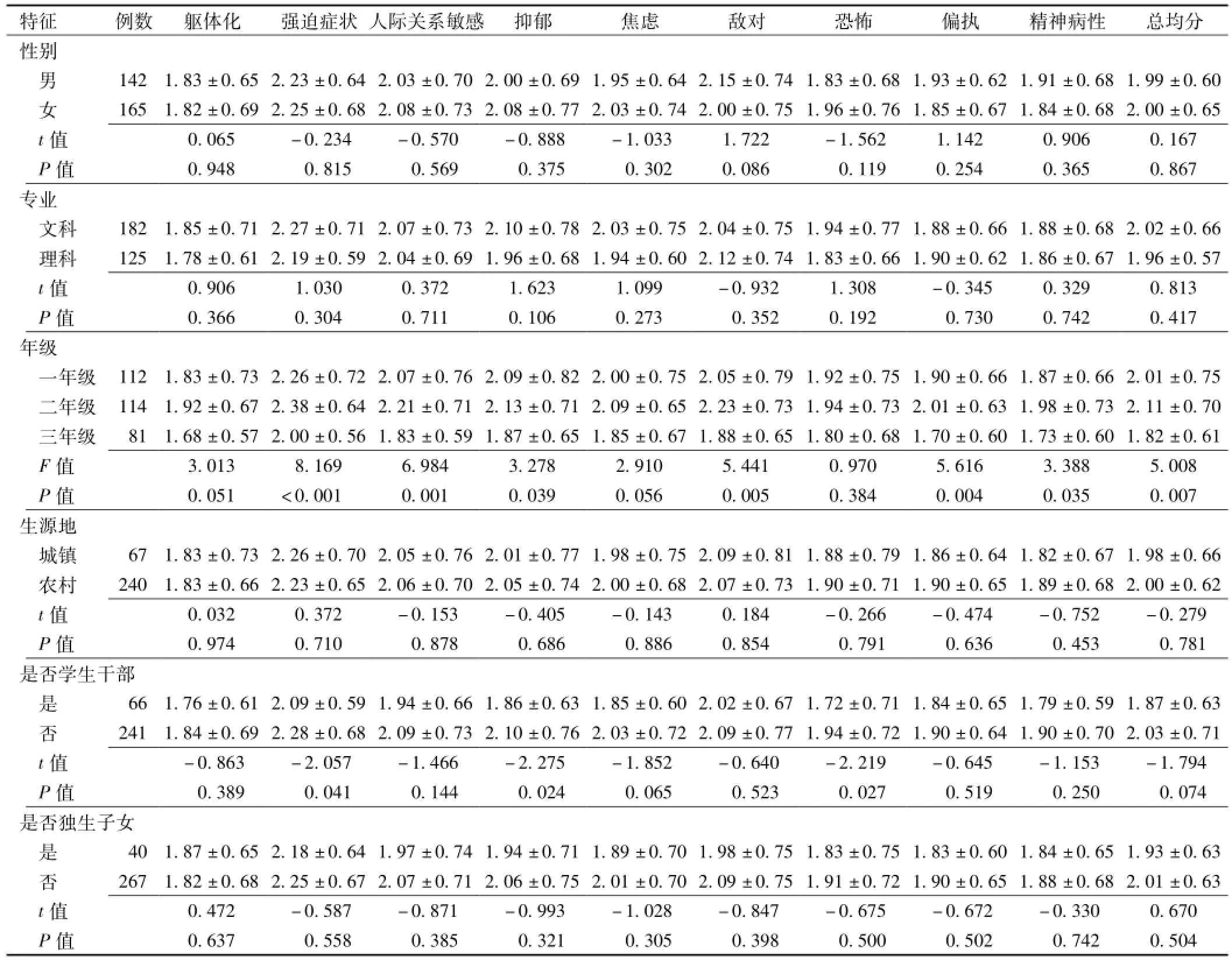
表2 不同特征高職學生心理健康得分比較(±s,分)Table 2 Comparison of the score ofmental health among vocational college studentswith different features
特征例數(shù)軀體化強迫癥狀人際關系敏感抑郁焦慮敵對恐怖偏執(zhí)精神病性總均分性別男142 1.83±0.65 2.23±0.64 2.03±0.70 2.00±0.69 1.95±0.64 2.15±0.74 1.83±0.68 1.93±0.62 1.91±0.68 1.99±0.60女165 1.82±0.69 2.25±0.68 2.08±0.73 2.08±0.77 2.03±0.74 2.00±0.75 1.96±0.76 1.85±0.67 1.84±0.68 2.00±0.65 t 2 1.142 0.906 0.167 P值0.948 0.815 0.569 0.375 0.302 0.086 0.119 0.25值0.065-0.234-0.570-0.888-1.033 1.722-1.56 4 0.365 0.867專業(yè)文科182 1.85±0.71 2.27±0.71 2.07±0.73 2.10±0.78 2.03±0.75 2.04±0.75 1.94±0.77 1.88±0.66 1.88±0.68 2.02±0.66理科125 1.78±0.61 2.19±0.59 2.04±0.69 1.96±0.68 1.94±0.60 2.12±0.74 1.83±0.66 1.90±0.62 1.86±0.67 1.96±0.57 t 345 0.329 0.813 P值0.366 0.304 0.711 0.106 0.273 0.352 0.192 0.73值0.906 1.030 0.372 1.623 1.099-0.932 1.308-0. 0 0.742 0.417年級一年級112 1.83±0.73 2.26±0.72 2.07±0.76 2.09±0.82 2.00±0.75 2.05±0.79 1.92±0.75 1.90±0.66 1.87±0.66 2.01±0.75二年級114 1.92±0.67 2.38±0.64 2.21±0.71 2.13±0.71 2.09±0.65 2.23±0.73 1.94±0.73 2.01±0.63 1.98±0.73 2.11±0.70三年級 81 1.68±0.57 2.00±0.56 1.83±0.59 1.87±0.65 1.85±0.67 1.88±0.65 1.80±0.68 1.70±0.60 1.73±0.60 1.82±0.61 F值6 3.388 5.008 P值0.051<0.001 0.001 0.039 0.056 0.005 0.384 0.0 3.013 8.169 6.984 3.278 2.910 5.441 0.970 5.61 04 0.035 0.007生源地城鎮(zhèn) 67 1.83±0.73 2.26±0.70 2.05±0.76 2.01±0.77 1.98±0.75 2.09±0.81 1.88±0.79 1.86±0.64 1.82±0.67 1.98±0.66農(nóng)村240 1.83±0.66 2.23±0.65 2.06±0.70 2.05±0.74 2.00±0.68 2.07±0.73 1.90±0.71 1.90±0.65 1.89±0.68 2.00±0.62 t-0.474-0.752-0.279 P值0.974 0.710 0.878 0.686 0.886 0.854 0.791 0.63值0.032 0.372-0.153-0.405-0.143 0.184-0.266 6 0.453 0.781是否學生干部是 66 1.76±0.61 2.09±0.59 1.94±0.66 1.86±0.63 1.85±0.60 2.02±0.67 1.72±0.71 1.84±0.65 1.79±0.59 1.87±0.63否241 1.84±0.69 2.28±0.68 2.09±0.73 2.10±0.76 2.03±0.72 2.09±0.77 1.94±0.72 1.90±0.64 1.90±0.70 2.03±0.71 t 219-0.645-1.153-1.794 P值0.389 0.041 0.144 0.024 0.065 0.523 0.027 0.51值-0.863-2.057-1.466-2.275-1.852-0.640-2. 9 0.250 0.074是否獨生子女是 40 1.87±0.65 2.18±0.64 1.97±0.74 1.94±0.71 1.89±0.70 1.98±0.75 1.83±0.75 1.83±0.60 1.84±0.65 1.93±0.63否267 1.82±0.68 2.25±0.67 2.07±0.71 2.06±0.75 2.01±0.70 2.09±0.75 1.91±0.72 1.90±0.65 1.88±0.68 2.01±0.63 t 75-0.672-0.330 0.670 P值0.637 0.558 0.385 0.321 0.305 0.398 0.500 0.50值0.472-0.587-0.871-0.993-1.028-0.847-0.6 2 0.742 0.504
表3 高職學生心理健康得分與全國青年常模比較(±s,分)Table 3 Comparison of the score ofmental health between vocational college students and national norm

表3 高職學生心理健康得分與全國青年常模比較(±s,分)Table 3 Comparison of the score ofmental health between vocational college students and national norm
注:因全國青年常模中無總均分,所以未進行總均分比較
7±0.68全國青年常模781 1.34±0.45 1.69±0.61 1.76±0.67 1.57±0.61 1.42±0.43 1.50±0.57 1.33±0.47 1.52±0.60 1.36±0.47 t組別例數(shù)軀體化強迫癥狀人際關系敏感抑郁焦慮敵對恐怖偏執(zhí)精神病性高職學生307 1.83±0.67 2.24±0.66 2.06±0.71 2.05±0.74 1.99±0.70 2.07±0.74 1.90±0.72 1.89±0.64 1.8 001<0.001<0.001 13 10.051 13.274 P值<0.001<0.001<0.001<0.001<0.001<0.001<0.值13.432 14.454 7.322 11.232 14.442 13.458 13.7
表4 高、低時間管理傾向得分的高職學生心理健康得分比較(±s,分)Table 4 Comparison of the score ofmental health between students with high score of timemanagement disposition and students with low score of time management disposition

表4 高、低時間管理傾向得分的高職學生心理健康得分比較(±s,分)Table 4 Comparison of the score ofmental health between students with high score of timemanagement disposition and students with low score of time management disposition
組別例數(shù)軀體化強迫癥狀人際關系敏感抑郁焦慮敵對恐怖偏執(zhí)精神病性總均分低時間管理傾向組89 2.00±0.75 2.33±0.65 2.16±0.79 2.22±0.82 2.12±0.73 2.27±0.83 2.11±0.78 2.00±0.65 2.05±0.76 2.15±0.68高時間管理傾向組86 1.58±0.53 2.02±0.58 1.87±0.58 1.78±0.64 1.81±0.61 1.83±0.58 1.65±0.61 1.67±0.49 1.60±0.52 1.76±0.51 t 9 4.456 4.125 P值<0.001 0.002 0.008<0.001 0.004<0.001<0.001值4.216 3.202 2.728 3.866 2.958 3.981 4.222 3.69<0.001<0.001<0.001

表5 時間管理傾向得分與心理健康得分的相關分析(r)Table 5 Correlation analysis between the score of timemanagement disposition and the score ofmental health
2.7 時間管理傾向各維度預測心理健康癥狀的分層回歸分析
考慮到年級、是否學生干部對心理健康癥狀的影響,進行分層回歸,第一層考慮年級、是否學生干部的影響;第二層考察控制了人口學變量后,時間管理傾向3個維度對心理健康癥狀的影響。結果顯示,年級、是否學生干部對心理健康癥狀的影響無統(tǒng)計學意義(P>0.05);當控制了人口學變量后,時間監(jiān)控觀對心理健康癥狀有負向預測作用(P<0.05),時間監(jiān)控觀與年級對心理健康癥狀的聯(lián)合預測率為0.077,△R2為0.055(見表6)。
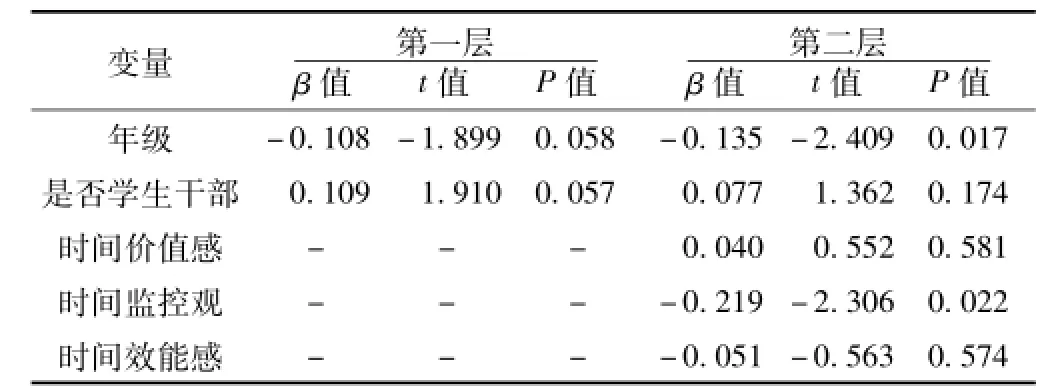
表6 時間管理傾向各維度預測心理健康癥狀的分層回歸分析Table 6 Hierarchical regression analysis of the prediction ofmental health symptom by each dimension of timemanagement disposition
3 討論
3.1 不同特征高職學生時間管理傾向得分的差異分析 本研究結果顯示,高職學生時間管理傾向各維度得分與以往研究結果基本一致[12]。高職學生時間管理傾向及其各維度得分不存在年級的差異,這與以往研究結果相一致[12],但存在性別的差異,與趙維燕等[13]研究結果一致。本研究結果顯示,男生的時間價值感得分低于女生,這是因為在當今社會,女生的人生追求越來越高,這既來自個體本身,也是在良好的時間管理中得以實現(xiàn)的。就高職學生而言,在專業(yè)學習方面男生比女生具有更大的優(yōu)勢,如動手操作能力強、思維抽象化程度高等,所以對女生而言,要想取得較好的成績,只有更好地利用時間,再加上高校獎學金種類多,金額大,而女生對此更為在乎,所以女生對時間的價值有更充分的認識。理科學生時間管理傾向得分明顯低于文科學生,這與鄧凌等[5]的研究結果相一致。城鎮(zhèn)學生一般更多受到父母的溺愛,很多方面比較依賴父母,當上大學后,在學習生活的目標設置、計劃安排、結果檢查等一系列監(jiān)控活動中表現(xiàn)出來的能力會有所欠缺,而農(nóng)村學生因為生活環(huán)境的原因,自理能力相對較強,所以其時間監(jiān)控觀得分高于城鎮(zhèn)學生。學生干部較普通學生而言,不僅要搞好學習,還要參與其他方面的很多活動,這使得他們會更好地監(jiān)控、管理自己的時間,所以時間監(jiān)控觀得分較高,這證實了郭芳等[14]的研究。高職學生不管獨生與否,一般在中學階段未能養(yǎng)成良好的學習習慣,所以時間管理傾向各維度得分不存在是否獨生子女方面的差異。
3.2 不同特征高職學生心理健康得分的差異分析 年級方面與以往的研究結果不太一致[15]。從高中到大學的轉(zhuǎn)變中,最顯著的一點就是學習方式的轉(zhuǎn)變,一年級學生因為尚未適應大學相對自由的學習環(huán)境,對很多可以自己支配的時間沒有明確規(guī)劃,也缺乏很好的自我監(jiān)控能力,而且有些學生上高職也并非自己心甘情愿,再加上離開了熟悉的環(huán)境、朋友,新的人際關系尚未建立,容易產(chǎn)生空虛、無助、迷茫等不良情緒。二年級學生對環(huán)境相對適應,但因為專業(yè)學習、戀愛、課余活動、等級考試等多方面需要協(xié)調(diào),在具體行為操作中經(jīng)常會與預期的計劃目標不協(xié)調(diào),容易在敵對、精神病性等方面產(chǎn)生一些變化。相比本科學生,三年級高職學生忙于畢業(yè)論文,而且因為就業(yè)期望值較小,就業(yè)較順利,所以三年級學生會覺得比較充實,會因為即將開始的新生活而充滿激情,心理狀態(tài)較為良好。高職學生在上中學時多數(shù)由于成績不好,很少得到老師和同學的重視和肯定,自信心水平較低,在上高職后擔任學生干部,不僅是對他們綜合素質(zhì)的提升,更多地讓他們感受到了成功的喜悅,感受到了尊重和被需要,所以相比普通學生,他們的心理健康水平要高。普通學生則因為以往的失敗經(jīng)驗,容易產(chǎn)生“習得性無助感”,在強迫、抑郁、恐怖等方面消極體驗明顯。性別、文理專業(yè)、來自城市還是農(nóng)村、是否獨生子女等方面對高職學生心理健康水平并無太大影響。
3.3 時間管理傾向得分與心理健康得分的相關性分析 本研究結果顯示,時間管理傾向各維度及總分與心理健康各因子及總均分之間存在一定程度的相關,特別是時間監(jiān)控觀及總分與心理健康各因子及總均分均存在線性相關關系。時間價值感更多表現(xiàn)在對時間價值的穩(wěn)定性態(tài)度和理解,不是很直接或經(jīng)常性地對個體心理情緒的變化起作用。時間效能感反映的是個體對時間管理的信心以及對時間管理行為能力的估計,在各因子上的相關程度要比時間價值感高,這可能是因為時間效能感同時也是制約時間監(jiān)控的一個重要因素。時間監(jiān)控觀是個體利用和運籌時間的能力和觀念,其體現(xiàn)在一系列的外顯活動中。高職學生在學習、工作等具體的活動領域中更加強調(diào)自我監(jiān)控能力,他們在具體行為操作中經(jīng)常會與預期的計劃目標不協(xié)調(diào),較容易產(chǎn)生一些不良的心理狀態(tài)。本研究結果亦顯示,時間管理傾向得分高與得分低的高職學生心理健康各因子得分及總均分間均有差異。時間管理傾向得分高的學生能更好地認識時間的重要性,在生活、學習和工作中都有明確的目標,更善于合理地支配和監(jiān)控時間,同時良好的時間管理活動有助于降低憂慮和工作中的拖拉現(xiàn)象[16],可以提高做事效率,更易體驗成功的喜悅,有助于提高心理健康總體水平。
3.4 時間管理傾向各維度預測心理健康癥狀的分層回歸分析
本研究結果顯示,控制年級與是否學生干部之后,時間監(jiān)控觀對心理健康癥狀有明顯預測作用。之前的研究結果也表明,時間監(jiān)控觀對心理健康具有一定的預測力[3,5,12],其更多地表現(xiàn)為個體在運用時間上的心理和行為特征。此外,高職學生心理健康得分與全國青年常模相比較,各因子得分都明顯高于全國青年水平。這說明高職學生心理健康水平普遍低于全國青年水平,有必要進一步加強高職學生的心理健康教育工作,提高高職學生心理健康水平。
作者貢獻:石貴瑩主要進行調(diào)查設計與實施、資料收集、撰寫論文、成文并對文章負責;周明潔進行評估、質(zhì)量控制與審校。
本文無利益沖突。
[1]Huang XT,Zhang ZJ.The compiling of adolescence time management disposition inventory[J].Acta Psychologica Sinica,2001,33(4):338-343(in Chinese)黃希庭,張志杰.青少年時間管理傾向量表的編制[J].心理學報,2001,33(4):338-343.
[2]Qin QW,Zhang ZJ.The relationship between time management disposition and mental health[J].Journal of Psychological Science,2002,25(3):360.(in Chinese)秦啟文,張志杰.時間管理傾向與心理健康關系的相關研究[J].心理科學,2002,25(3):360.
[3]Mou LX,Wang L.The correlation between time management disposition and mental health[J].China Journal of Health Psychology,2005,15(13):61-63.(in Chinese)牟麗霞,王麗.浙江省高師學生時間管理傾向與心理健康水平的相關研究[J].中國健康心理學雜志,2005,13(1):61-63.
[4]Sun H,Jiang Y,Song SZ.Research on the influence of time management on students′psychological health[J].Journal of Hebei Jiaotong Vocational and Technical College,2011,8(1):73-77.(in Chinese)孫慧,姜宇,宋尚志.時間管理對大學生心理健康狀況的影響研究[J].河北交通職業(yè)技術學院學報,2011,8(1):73-77.
[5]Deng L,Chen BY.The timemanagement disposition,subjective time pressure and depression of college students[J].Chinese Mental Health Journal,2005,19(10):672-675.(in Chinese)鄧凌,陳本友.大學生時間管理傾向、主觀時間壓力與抑郁的關系[J].中國心理衛(wèi)生雜志,2005,19(10):672-675.
[6]涂濤,王道陽,方雙虎.大學生時間管理傾向、焦慮及其相關性分析[J].中國學校衛(wèi)生,2009,30(4):356-357.
[7]Wang KX.Correlative research on timemanagement disposition and life satisfaction of university students[J].China Journal of Health Psychology,2009,17(11):1342-1343.(in Chinese)王凱旋.大學生時間管理傾向與生活滿意度的相關研究[J].中國健康心理學雜志,2009,17(11):1342-1343.
[8]Huang G,Qin QW,Zhang YH.A research on the relationship among college students,timemanagement disposition,stress and sleep quality[J].Journal of Psychological Science,2009,32(1):170-172.(in Chinese)黃崗,秦啟文,張永紅.大學生時間管理傾向與壓力和睡眠質(zhì)量的相關研究[J].心理科學,2009,32(1):170-172.
[9]鄧莉萍.高職學生心理特點及教育對策研究[D].成都:西南交通大學,2011.
[10]Huang YP,Li L.SCL-90 as measurement of mental health in college students:a meta-analysis[J].Chinese Mental Health Journal,2009,23(5):366-371.(in Chinese)黃艷蘋,李玲.用癥狀自評量表(SCL-90)評估中國大學生心理健康狀況的Meta分析[J].中國心理衛(wèi)生雜志,2009,23(5):366-371.
[11]朱祥路,李鵬,謝平霞,等.醫(yī)學生癥狀自評量表與全國諸常模的對比分析[J].中國臨床康復,2005,28(1):235.
[12]劉玲玲.大學生時間管理傾向與心理健康的關系研究[D].南昌:江西師范大學,2006.
[13]Zhao WY,Hou RX,Ji F.Relationship between college students′time management disposition and learning burnout[J].China Journal of Health Psychology,2012,20(8):1246-1248.(in Chinese)趙維燕,侯日霞,吉峰.大學生時間管理傾向與學習倦怠的關系研究[J].中國健康心理學雜志,2012,20(8):1246-1248.
[14]Guo F,Qi XD,Wang XL.The relationship of vocational college students′timemanagementdisposition and self efficacy:intermediary role ofmood[J].China Journal of Health Psychology,2013,21(5):754-757.(in Chinese)郭芳,齊曉棟,王曉磊.高職大學生時間管理傾向與自我效能感的關系[J].中國健康心理學雜志,2013,21(5):754-757.
[15]Wang T,Yuan J.197 college students′timemanagement disposition and parenting styles[J].Chinese Mental Health Journal,2008,22(6):429-432.(in Chinese)王婷,袁婕.197名大學生的時間管理傾向與父母教養(yǎng)方式的關系[J].中國心理衛(wèi)生雜志,2008,22(6):429-432.
[16]Van Eerde W.Procrastination atwork and timemanagement training[J].JPsychol,2003,137(5):421-434.
Time M anagement Disposition and M ental Health Status of Vocational College Students and the Relation Between Them
SHIGui-ying,ZHOU Ming-jie.Key Laboratory of Mental Health&Institute of Psychology,Chinese Academy of Sciences,Beijing 100101,China
ObjectiveTo investigate the timemanagement disposition and mental health status of vocational college students and the relation between them.M ethodsBetween May and June in 2014,we enrolled 307 vocational college students from three vocational colleges in Gansu Province.Using adolescent time management disposition scale(ATMD)and symptom checklist 90(SCL-90),we conducted teston the timemanagementdisposition and mental health level of these students together based on classes.The correlation between the score of timemanagement disposition and the score ofmental health was analyzed by Pearson correlation analysis;the predictive effect of each dimension of time management disposition was analyzed using hierarchical regression analysis.ResultsThe total score of ATMD was(144.65±21.39),and the scores of sense of timevalue,conceptof timemonitor and sense of time potency were(34.64±6.13),(76.77±11.90)and(33.23±5.93),and the total score of SCL-90 was(2.00±0.70).Male students and female students were significantly different in the score of sense of time value(P<0.05),while theywere significantly different in the scores of conceptof timemonitor and sense of time potency and the total score of timemanagement(P>0.05).Students of differentmajorswere significanlty different in the scores of sense of time value,conceptof timemonitor and sense of time potency and the total score of timemanagement(P<0.05). No significant differences existed in the scores of sense of time value,concept of timemonitor and sense of time potency and the total score of timemanagement among students of different grades and between students who were from one-child family and students who were not(P>0.05).No significant differences existed in the scores of sense of time value and sense of time potency and the total score of timemanagement among students from differentplacesand between studentswhowere student cadres and studentswho were not(P>0.05),while significant differencesexisted in the score of concept of timemonitor(P<0.05). No significant differences existed in the score of each SCL-90 factor and the total score of SCL-90 between male students and female students,among students of differentmajors and students from different places,and between studentswho were from one-child family and students who were not(P>0.05).Significant differences existed in the scores of SCL-90 factors except somatization,anxiety and terror and the total score of SCL-90 among students of different grades(P<0.05).Significant differences existed in the scores of obsessive-compulsive symptom,depression and terror between students who were student cadres and studentswho were not(P<0.05),while no significant difference existed in the scores of other SCL-90 factors and the total score of SCL-90(P>0.05).The score of each SCL-90 factor of these vocational college students was higher than national norms(P<0.05).Significant differences existed in the score of each SCL-90 factor and the total score of SCL-90 between studentswith high timemanagement disposition score and low timemanagement disposition score(P<0.05).There was negative correlation between the score of sense of time value and the scores of somatization,terror and psychotism(P<0.05),while there wasno linear correlation between the score of sense of time value and the scoresof other SCL-90 factorsand the total score of SCL-90(P>0.05);the score of timemonitor and the total score of timemanagement had negative linear correlation with the score of each SCL-90 factor and the total score of SCL-90(P<0.05);the score of time potency had negative linear correlation with the scores of all SCL-90 factors except obsessive-compulsive symptom and sensitivity of interpersonal relationship and the total score of SCL-90(P<0.05).A fter the control of demographic variables,the concept of timemonitor had negative predictive effect on mental health symptoms(P<0.05).ConclusionVocational college students have a passable level of timemanagement ability and a lower level of mental health.The concept of timemonitor in timemanagement disposition has obvious predictive effect on mental health.
Vocational college students;Timemanagement disposition;Mental health
R 395.6
A
10.3969/j.issn.1007-9572.2016.07.022
2015-11-14;
2016-01-10)
(本文編輯:崔沙沙)
100101北京市,中國科學院心理健康重點實驗室,中國科學院心理研究所(石貴瑩,周明潔);中國科學院大學(石貴瑩);甘肅機電職業(yè)技術學院(石貴瑩)
周明潔,100101北京市,中國科學院心理健康重點實驗室,中國科學院心理研究所;E-mail:zhoumj@psych.ac.cn
猜你喜歡
音樂探索(2022年2期)2022-05-30 21:01:37
品牌研究(2022年9期)2022-04-06 02:41:56
品牌研究(2022年8期)2022-03-23 06:49:06
品牌研究(2022年6期)2022-03-23 05:25:50
品牌研究(2022年1期)2022-03-18 02:01:10
小天使·一年級語數(shù)英綜合(2019年8期)2019-08-27 02:23:00
活力(2019年21期)2019-04-01 12:18:24
小學科學(學生版)(2018年7期)2018-08-13 09:33:04
中國教育技術裝備(2015年6期)2015-03-01 02:36:27
鄭州大學學報(醫(yī)學版)(2015年2期)2015-02-27 14:50:46
