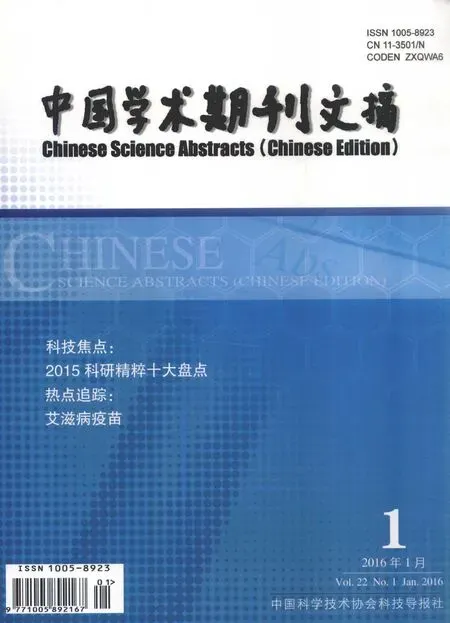
針對我國HIV-1流行株的AIDS疫苗研究策略與進展——國家傳染病重大專項進展介紹
2016-02-13 14:05:23萬延民徐建青
中國學術期刊文摘 2016年1期
關鍵詞:進展
萬延民,徐建青
?
針對我國HIV-1流行株的AIDS疫苗研究策略與進展——國家傳染病重大專項進展介紹
萬延民,徐建青
摘要:雖然RV144 AIDS疫苗臨床試驗觀察到了部分保護效果,但遠未達到臨床應用的要求,其保護水平有待進一步提高。鑒于抗體反應和T細胞反應在抵抗和控制HIV-1感染過程中的重要作用,我們認為可以通過同時活化有效的抗體反應和T細胞反應來提升AIDS疫苗的保護效果。在國家傳染病重大專項課題的資助下,本實驗室設計了一套針對我國HIV-1流行株的AIDS疫苗策略,本文簡要介紹我們的設計方案及主要研究進展。
關鍵詞:疫苗;獲得性免疫缺陷綜合征;HIV-1
Balance of cellular and humoral immunity determines the level of protection by HIV vaccines in rhesus macaque models of HIV infection
Fouts, TR; Bagley, K; Prado, IJ; et al.
Abstract:A guiding principle for HIV vaccine design has been that cellular and humoral immunity work together to provide the strongest degree of efficacy. However, three efficacy trials of Ad5-vectored HIV vaccines showed no protection. Transmission was increased in two of the trials, suggesting that this vaccine strategy elicited CD4+T-cell responses that provide more targets for infection, attenuating protection or increasing transmission. The degree to which this problem extends to other HIV vaccine candidates is not known. Here, we show that a gp120-CD4 chimeric subunit protein vaccine (full-length single chain) elicits heterologous protection against simian-human immunodeficiency virus (SHIV) or simian immunodeficiency virus (SIV) acquisition in three independent rhesus macaque repeated low-dose rectal challenge studies with SHIV162P3 or SIVmac251. Protection against acquisition was observed with multiple formulations and challenges. In each study, protection correlated with antibody-dependent cellular cytotoxicity specific for CD4-induced epitopes, provided that the concurrent antivaccine T-cell responses were minimal. Protection was lost in instances when T-cell responses were high or when the requisite antibody titers had declined. Our studies suggest that balance between a protective antibody response and antigen-specific T-cell activation is the critical element to vaccine-mediated protection against HIV. Achieving and sustaining such a balance, while enhancing antibody durability, is the major challenge for HIV vaccine development, regardless of the immunogen or vaccine formulation. The generation of vaccines against HIV/AIDS able to induce long-lasting protective immunity remains a major goal in the HIV field. The modest efficacy (31.2%) against HIV infection observed in the RV144 phase III clinical trial highlighted the need for further improvement of HIV vaccine candidates, formulation, and vaccine regimen. In this study, we have generated two novel NYVAC vectors, expressing HIV-1 clade C gp140(ZM96) (NYVAC-gp140) or Gag(ZM96)-Pol-Nef(CN54) (NYVAC-Gag-Pol-Net), and defined their virological and immunological characteristics in cultured cells and in mice. The insertion of HIV genes does not affect the replication capacity of NYVAC recombinants in primary chicken embryo fibroblast cells, HIV sequences remain stable after multiple passages, and HIV antigens are correctly expressed and released from cells, with Env as a trimer (NYVAC-gp140), while in NYVAC-Gag-Pol-Nefinfected cells Gag-induced virus-like particles (VLPs) are abundant. Electron microscopy revealed that VLPs accumulated with time at the cell surface, with no interference with NYVAC morphogenesis. Both vectors trigger specific innate responses in human cells and show an attenuation profile in immunoconapromised adult BALB/c and newborn CD1 mice after intracranial inoculation. Analysis of the immune responses elicited in mice after homologous NYVAC prime/NYVAC boost immunization shows that recombinant viruses inducedbook=22,ebook=26polyfunctional Env-specific CD4 or Gag-specific CD8 T cell responses. Antibody responses against gp140 and p17/p24 were elicited. Our findings showed important insights into virus-host cell interactions of NYVAC vectors expressing HIV antigens, with the activation of specific immune parameters which will help to unravel potential correlates of protection against HIV in human clinical trials with these vectors. The third variable region (V3 peptide) of the HIV-1 gp120 is a major immunogenic domain of HIV-1. Controlling the formation of the immunologically active conformation is a crucial step to the rational design of fully synthetic candidate vaccines. Herein, we present the modulation and stabilization of either the alpha-helix or beta-strand conformation of the V3 peptide by conjugation to negatively charged gold glyconanoparticles (GNPs). The formation of the secondary structure can be triggered by the variation of the buffer concentration and/or pH as indicated by circular dichoism. The peptide on the GNPs shows increased stability toward peptidase degradation as compared to the free peptide. Moreover, only the V3β-GNPs bind to the anti-V3 human broadly neutralizing mAb 447-52D as demonstrated by surface plasmon resonance (SPR). The strong binding of V3 beta-GNPs to the 447-52D mAb was the starting point to address its study as immunogen. V3 beta-GNPs elicit antibodies in rabbits that recognize a recombinant gp120 and the serum displayed low but consistent neutralizing activity. These results open up the way for the design of new fully synthetic HIV vaccine candidates. Objectives: We developed and evaluated a novel National Institutes of Health-sponsored Research and Mentorship Program for African American and Hispanic medical students embedded within the international, multisite HIV Vaccine Trials Network, and explored its impact on scientific knowledge, acquired skills, and future career plans. Methods: Scholars conducted social, behavioral, clinical, or laboratory-based research projects with HIV Vaccine Trials Network investigators over 8 to 16 weeks (track 1) or 9 to 12 months (track 2). We conducted an in-depth, mixed-methods evaluation of the first 2 cohorts (2011-2013) to identify program strengths, areas for improvement, and influence on professional development. Results: A pre-post program assessment demonstrated increases in self-reported knowledge, professional skills, and interest in future HIV vaccine research. During in-depth interviews, scholars reported that a supportive, centrally administered program; available funding; and highly involved mentors and staff were keys to the program’s early success. Conclusions: A multicomponent, mentored research experience that engages medical students from underrepresented communities and is organized within a clinical trials network may expand the pool of diverse public health scientists. Efforts to sustain scholar interest over time and track career trajectories are warranted. Human immunodeficiency virus (HIV) genome integration indicates that persistent sterilizing immunity will be needed for a successful vaccine candidate. This suggests a need for broad antibodies targeting the Env protein. Immunogens targeting gp120 have been developed that block infection in monkeys and mimic the modest success of the RV144 clinical trial in that protection is short-lived following a decline in antibody-depending cell-mediated cytotoxicity-like antibodies. Attempts to induce antibody persistence have been complicated by a loss of efficacy, presumably by increasing the number of HIV-target cells. The key seems to be achieving an immune balance. This report shows that a nanovector composed of peptide-based nanofibrous hydrogel can condense DNA to result in strong immune responses against HIV. This nanovector can strongly activate both humoral and cellular immune responses to a balanced levelbook=23,ebook=27rarely reported in previous studies, which is crucial for HIV prevention and therapy. In addition, this nanovector shows good biosafety in vitro and in vivo. Detailed characterizations show that the nanofibrous structure of the hydrogel is critical for the dramatically improved immune responses compared to existing materials. This peptide-based nanofibrous hydrogel shows great potential for efficacious HIV DNA vaccines and can be potentially used for delivering other vaccines and drugs. The quest for a prophylactic AIDS vaccine is ongoing, but it is now clear that the successful vaccine must elicit protective antibody responses. Accordingly, intense efforts are underway to identify immunogens that elicit these responses. Regardless of the mechanism of antibody-mediated protection, be it neutralization, Fc-mediated effector function, or both, antibody persistence and appropriate T-cell help are significant problems confronting the development of a successful AIDS vaccine. Here, we discuss the evidence illustrating the poor persistence of antibody responses to Env, the envelope glycoprotein of HIV-1, and the related problem of CD4+T-cell responses that compromise vaccine efficacy by creating excess cellular targets of HIV-1 infection. Finally, we propose solutions to both problems that are applicable to all Env-based AIDS vaccines regardless of the mechanism of antibody-mediated protection. While the human immunodeficiency virus (HIV)/AIDS pandemic continues, the incidence of HIV infections has fallen because of the deployment of antiretroviral drugs and multiple prevention modalities. To achieve a durable end to the pandemic, a vaccine remains essential. Recent advances in vaccinology offer new promise for an effective HIV vaccine. HIV-1 broadly neutralizing antibodies (BNAbs) develop after several years of infection through a recursive process of memory B cell adaptation and maturation against co-evolving virus quasispecies. Advances in single-cell sorting and memory B cell antibody cloning methods have identified many new HIV BNAbs targeting conserved epitopes on the HIV envelope (env) protein. 3D crystal structures and biophysical analyses of BNAbs bound to invariant virus structures expressed on monomeric gp120, epitope scaffolds, core structures, and native trimers have helped us to visualize unique binding interactions and paratope orientations that have been instrumental in guiding vaccine design. A paradigm shift in the approach to structure-based design of HIV-1 envelope immunogens came recently after several laboratories discovered that native viral envelopes or “env-structures” reverse-engineered to bind with high affinity to a handful of broadly neutralizing antibodies did not in fact bind the predicted germline precursors of these broadly neutralizing antibodies. A major challenge for HIV-1 B cell vaccine development moving forward is the design of new envelope immunogens that can trigger the selection and expansion of germline precursor and intermediate memory B cells to recapitulate B cell ontogenies associated with the maturation of a broadly neutralizing antibody response. Equally important for vaccine development is the identification of delivery systems, prime-boost strategies, and synergistic adjuvant combinations that can induce the magnitude and quality of antigen-specific T follicular helper (TFH) cell responses needed to drive somatic hypermutation (SHM) and B cell maturation against heterologous primary virus envelopes. Finding the combination of multiprotein envelope immunogens and immunization strategies that can evolve a potent broadly neutralizing antibody response portends to require a complex vaccine regimen that might be difficult to implement on any scale. This perspective strives to integrate recent insights into mechanisms associated with the evolution of an HIV-1 broadly neutralizing antibody response with current immunogen design and proffers a novel immunization strategy for skewing TH17/TFH cell responses that can drive B cell adaptation and affinity maturation associated with a broadly neutralizing antibody response. CD4+T cells can perform a panoply of tasks to shape an effective response against a pathogen. Limited attention has been paid to the potential importance of functional CD4+T cell responses in the context of the development of next-generation vaccines, including HIV vaccines. Many CD4+T cell functions are newly appreciated and only partially understood. A workshop was held as a forum to bring together a small group of experts to exchange ideas on the role of CD4+T cells in developing durable functional antibody responses, via follicular helper T cells, as well as on the roles of CD4+T cells in other aspects of protective immunity. Here we discuss whether CD4+T cell responses may represent a beneficial component of an efficacious HIV vaccine. Broadly neutralizing Abs against HIV protect from infection, but their routine elicitation by vaccination has not been achieved. To generate small animal models to test vaccine candidates, we have generated targeted transgenic (“knock-in”) mice expressing, in the physiological Ig H and L chain loci, two well-studied broadly neutralizing Abs: 4E10, which interacts with the membrane proximal external region of gp41, and b12, which binds to the CD4 binding site on gp120. 4E10HL mice are described in the companion article (Doyle-Cooper et al., J. Immunol. 191: 3186-3191). In this article, we describe b12 mice. B cells in b12HL mice, in contrast to the case in 4E10 mice, were abundant and essentially monoclonal, retaining the b12 specificity. In cell culture, b12HL B cells responded avidly to HIV envelope gp140 trimers and to BCR ligands. Upon transfer to wild-type recipients, b12HL B cells responded robustly to vaccination with gp140 trimers. Vaccinated b12H mice, although generating abundant precursors and Abs with affinity for Env, were unable to rapidly generate neutralizing Abs, highlighting the importance of developing Ag forms that better focus responses to neutralizing epitopes. The b12HL and b12H mice should be useful in optimizing HIV vaccine candidates to elicit a neutralizing response while avoiding nonprotective specificities.
來源出版物:Proceedings of the National Academy of Sciences, 2015, 112(9): E992-E999
聯系郵箱:Fouts, TR; fouts@profectusbiosciences.net
Virological and Immunological Characterization of Novel NYVAC-Based HIV/AIDS vaccine candidates expressing clade C trimeric soluble gp140(ZM96) and Gag(ZM96)-Pol-Nef(CN54) as virus-like particles
Perdiguero, B; Gomez, CE; Cepeda, V; et al.
來源出版物:Journal of Virology, 2015, 89(2): 970-988 聯系郵箱:Esteban, M;mesteban@cnb.csic.es
Negatively charged glyconanoparticles modulate and stabilize the secondary structures of a gp120 V3 loop peptide: Toward fully synthetic HIV vaccine candidates
Di Gianvincenzo, P; Calvo, J; Perez, S; et al.
來源出版物:Bioconjugate Chemistry, 2015, 26(4): 755-765 聯系郵箱:Penades, S; spenades@cicbiomagune.es
Enhancing diversity in the public health research workforce: The research and mentorship program for future HIV vaccine scientists
Sopher, CJ; Adamson, BJS; Andrasik, MP; et al.
來源出版物:American Journal of Public Health, 2015, 105(4): 823-830 聯系郵箱:Sopher, CJ; csopher@fhcrc.org
Developing a successful HIV vaccine
Gallo, RC
Keywords:HIV; AIDS; vaccine; antibodies; T cells Peptide-based nanofibrous hydrogel; HIV DNA vaccine; DNA condensation; immune response; safety evaluation HIV; vaccine; antibody persistence; AIDS; T cell human immunodeficiency virus (HIV); HIV prevention; HIV vaccine
來源出版物:Journal of Infectious Diseases, 2015, 212(S1): S40-S41 聯系郵箱:Gallo, RC; rgallo@ihv.umaryland.edu
A peptide-based nanofibrous hydrogel as a promising DNA nanovector for optimizing the efficacy of HIV vaccine
Tian, Y; Wang, HM; Liu, Y; et al.
來源出版物:Nano Letters, 2014, 14(3): 1439-1445 聯系郵箱:Yang, ZM; jean-paul.concordet@mnhn.fr
Antibody persistence and T-cell balance: Two key factors confronting HIV vaccine development
Lewis, GK; DeVico, AL; Gallo, RC
來源出版物:Proceedings of the National Academy of Sciences, 2014, 111(44): 15614-15621
聯系郵箱:Lewis, GK; glewis@ihv.umaryland.edu
Ending the global HIV/AIDS pandemic: The critical role of an HIV vaccine
Fauci, AS; Folkers, GK; Marston, HD
來源出版物:Clinical Infectious Diseases, 2014, 59(S2): S80-S84 聯系郵箱:Fauci, AS; afauci@niaid.nih.gov
All eyes on the next generation of HIV vaccines: Strategies for inducing a broadly neutralizing antibody response
Ahlers, JD
來源出版物:Discovery Medicine, 2014, 94: 187-199 聯系郵箱:Ahlers, JD; jahlers@vgtifl.org
Harnessing CD4+T cell responses in HIV vaccine development
Streeck, H; D'Souza, MP; Littman, DR; et al.
來源出版物:Nature Medicine, 2013, 19(2): 143-149 聯系郵箱:Streeck, H; hstreeck@hivresearch.org
B cells from knock-in mice expressing broadly neutralizing HIV antibody b12 carry an innocuous B cell receptor responsive to HIV vaccine candidates
Ota, T; Doyle-Cooper, C; Cooper, AB; et al.
來源出版物:The Journal of Immunology, 2013, 191(6): 3179-3185 聯系郵箱:Nemazee, D; nemazee@scripps.edu
編輯:王微
領跑者5000論文
地球物理學
來源出版物:傳染病信息, 2013 (4): 202-204 聯系郵箱:徐建青,jianqingxu2008@gmail.com
猜你喜歡
水泵技術(2022年4期)2022-10-24 02:17:22
現代儀器與醫療(2021年4期)2021-11-05 08:25:32
皮膚病與性病(2021年3期)2021-07-30 08:07:32
心肺血管病雜志(2020年5期)2021-01-14 00:43:54
中國化肥信息(2019年12期)2020-01-16 08:40:04
科技傳播(2019年22期)2020-01-14 03:06:40
中國核電(2017年2期)2017-08-11 08:00:56
中國衛生(2014年8期)2014-11-12 13:01:04
科技視界(2014年32期)2014-08-15 00:54:11
疑難病雜志(2014年12期)2014-04-16 05:19:34