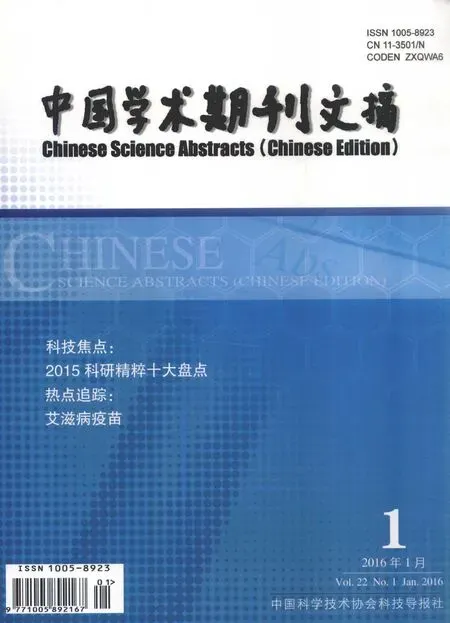
HIV疫苗的研究策略及其進(jìn)展
2016-02-13 14:05:23鄭紅朱錫華
中國(guó)學(xué)術(shù)期刊文摘 2016年1期
鄭紅,朱錫華
?
HIV疫苗的研究策略及其進(jìn)展
鄭紅,朱錫華
摘要:研制和發(fā)展HIV疫苗是人類抑制和消滅HIV感染的必要手段。對(duì)HIV生物學(xué)和病理學(xué)的逐漸的深入認(rèn)識(shí)為制定合理的疫苗研究策略,制備有效的 HIV疫苗奠定了依據(jù)。本文綜述了作為制備HIV疫苗的主要靶位——HIV包膜蛋白結(jié)構(gòu)的研究進(jìn)展、用于疫苗研究的動(dòng)物模型的發(fā)展?fàn)顩r和迄今所實(shí)施的各種HIV疫苗的研究策略。
關(guān)鍵詞:HIV;包膜蛋白;疫苗;中和抗體
Eventual AIDS vaccine failure in a rhesus monkey by viral escape from cytotoxic T lymphocytes
Barouch, DH; Kunstman, J; Kuroda, MJ; et al.
Abstract:We developed an AIDS vaccine based on attenuated VSV vectors expressing env and gag genes and tested it in rhesus monkeys. Boosting was accomplished using vectors with glycoproteins from different VSV serotypes. Animals were challenged with a pathogenic AIDS virus (SHIV89.6P). Control monkeys showed a severe loss of CD4+T cells and high viral loads, and 7/8 progressed to AIDS with an average time of 148 days. All seven vaccinees were initially infected with SHIV89.6P but have remained healthy for up to 14 months after challenge with low or undetectable viral loads. Protection from AIDS was highly significant (P=0.001). VSV vectors are promising candidates for human AIDS vaccine trials because they propagate to high titers and can be delivered without injection. Development of a preventive immunogen for human immunodeficiency virus (HIV) infection is a national priority. The complexities associated with HIV host-virus interactions, coupled with the rapid progression of the HIV epidemic worldwide, have necessitated lowering expectations for an HIV vaccine that is 100 percent effective and have raised important scientific and nonscientific issues regarding development and use of preventive and therapeutic HIV vaccines. Several viral and bacterial live recombinant vaccine vehicles are being developed to produce a new generation of vaccines against a broad spectrum of infectious diseases. The human tuberculosis vaccine Mycobacterium bovis bacillus Calmette-Guerin (BCG)2has features that make it a particularly attractive live recombinant vaccine vehicle. BCG and other mycobacteria are highly effective adjuvants, and the immune response to mycobacteria has been studied extensively. With nearly two billion immunizations, BCG has a long record of safe use in man. It is one of the few vaccines that can be given at birth, it engenders long-lived immune responses with only a single dose, and there is a worldwide distribution network with experience in BCG vaccination. Recently developed molecular genetic tools and methods for mycobacteria have provided the means to introduce foreign genes into BCG. Here we report that a variety of human immunodeficiency virus type 1 polypeptides can be expressed in BCG recombinants under the control of the mycobacterial HSP70 promoter and that the foreign polypeptides produced in BCG can induce antibody and T-cell responses. These results demonstrate that BCG can be used as a live recombinant vaccine vehicle to induce immune responses to pathogen proteins produced by the bacillus. Given the mucosal transmission of HIV-1, we compared whether a mucosal vaccine could Induce mucosal cytotoxic T lymphocytes (CTLs) and protect rhesus macaques against mucosal infection with simian/human immunodeficiency virus (SHIV) more effectively than the same vaccine given subcutaneously. Here we show that mucosal CTLs specific for simian immunodeficiency virus can be induced by intrarectal immunization of macaques with a synthetic-peptide vaccine incorporating the LT(R192G) adjuvant. This response correlated with the level of T-helper response. After intrarectal challenge with pathogenic SHIV-Ku2, viral titers were eliminated more completely (to undetectable levels) both in blood and intestine, a major reservoir for virus replication, in intrarectally immunized animals than in subcutaneously immunized or control macaques. Moreover, CD4+T cells were better preserved. Thus, induction of CTLs in the intestinal mucosa, a key site of virus replication, with a mucosal AIDS vaccine ameliorates infection by SHIV in non-human primates. The International AIDS Vaccine Initiative has established a consortium to elucidate mechanisms of protection conferred by live attenuated simian immunodeficiency virus vaccines in monkeys. Here, the strategies defining key components of the protective immune response elicited by these vaccines are discussed. Recently, encouraging AIDS vaccine trials in macaques have implicated cytotoxic T lymphocytes (CTLs) in the control of the simian human immunodeficiency virus SHIV89.6P that induces acute CD4+T cell depletion. However, none of these vaccine regimens have been successful in the containment of replication of the pathogenic simian immunodeficiency viruses (SIVs) that induce chronic disease progression. Indeed, it has remained unclear if vaccine-induced CTL can control SIV replication. Here, we show evidence suggesting that vaccine-induced CTLs control SIVmac239 replication in rhesus macaques. Eight macaques vaccinated with DNA-prime/Gag-expressing Sendai virus vector boost were challenged intravenously with SIVmac239. Five of the vaccinees controlled viral replication and had undetectable plasma viremia after 5 wk of infection. CTLs from all of these five macaques rapidly selected for escape mutations in Gag, indicating that vaccine-induced CTLs successfully contained replication of the challenge virus. Interestingly,book=17,ebook=21analysis of the escape variant selected in three vaccinees that share a major histocompatibility complex class I haplotype revealed that the escape variant virus was at a replicative disadvantage compared with SIVmac239. These findings suggested that the vaccine-induced CTLs had “crippled” the challenge virus. Our results indicate that vaccine induction of highly effective CTLs can result in the containment of replication of a highly pathogenic immunodeficiency virus. The design of an effective AIDS vaccine has eluded the efforts of the scientific community to the point that alternative approaches to classic vaccine formulations have to be considered. We propose here that HIV vaccine research could greatly benefit from the study of natural simian immunodeficiency virus (SIV) infections of African nonhuman primates. Natural SIV hosts (for example, sooty mangabeys, African green monkeys and mandrills) share many features of HIV infection of humans; however, they usually do not develop immunodeficiency. These natural, nonprogressive SIV infections represent an evolutionary adaptation that allows a peaceful coexistence of primate lentiviruses and the host immune system. This adaptation does not result in reduced viral replication but, rather, involves phenotypic changes to CD4+T cell subsets, limited immune activation and preserved mucosal immunity, all of which contribute to the avoidance of disease progression and, possibly, to the reduction of vertical SIV transmission. Here we summarize the current understanding of SIV infection of African nonhuman primates and discuss how unraveling these evolutionary adaptations may provide clues for new vaccine designs that might induce effective immune responses without the harmful consequences of excessive immune activation. Objective: To genetically characterize HIV-1 strains in injecting drug users (IDU) in Bangkok, Thailand in 1994, and compare these with strains found earlier in Thai IDU; such information is essential for HIV-1 vaccine development and evaluation. Methods: Peripheral blood mononuclear cells were collected from 84 IDU attending 14 drug treatment clinics in Bangkok in 1994. DNA was amplified using a nested polymerase chain reaction (PCR) procedure and sequenced directly (without cloning) from the PCR products. The V3 and flanking regions (345 nucleotides) of the env gene were analyzed using a neighbor-joining tree. Results: Only one (1%)strain was a typical subtype B virus, 69 (82%) were genetically distinct subtype B' viruses (Thai B), and 14 (17%) were subtype E strains (Thai A). Persons with recently acquired infection were more likely to have subtype E viruses (P<0.001) than those in our 1991 survey, who were more likely to have subtype B' viruses. Pairwise intra-subtype differences within subtypes E and B' were 5.3 and 4.3%, respectively, compared with 3.4 and 3.5% among strains collected in 1991 in Thailand. Conclusion: The genetic diversity within subtypes B' and E in Thailand and the proportion of new infections due to subtype E viruses among Bangkok IDU are increasing significantly. These data highlight the importance of monitoring the molecular epidemiology of HIV-1 in populations being considered for HIV-1 vaccine trials. Vaccine efficacy is determined largely by cellular and humoral immunity as well as long-lasting immunological memory. IL-2 and IL-15 were evaluated in vaccinia vectors expressing HIV gp160 for the establishment of an effective vaccine strategy. Both IL-2 and IL-15 in the vaccinia vector induced strong and long-lasting antibody-mediated immunity as well as a short-term cytotoxic T cell response against HIV gp120. In addition, IL-15 also supported robust CD8+T cell-mediated long-term immunity, whereas the CD8+T cell-mediated immunity induced by IL-2 was short-lived. Moreover, we found that the cytokine milieu at the time of priming had surprisingly persistent effects on the character of the memory CD8 T cells long afterward with respect to their fate, functional activities, cytokine receptorbook=18,ebook=22expression, and antigen-independent proliferation. Because a strategy to elicit broadly neutralizing anti-human immunodeficiency virus type 1 (HIV-1) antibodies has not yet been found, the role of an Env immunogen in HIV-1 vaccine candidates remains undefined. We sought to determine whether an HIV-1 Env immunogen genetically disparate from the Env of the challenge virus can contribute to protective immunity. We vaccinated Indian-origin rhesus monkeys with Gag-Pol-Nef immunogens, alone or in combination with Env immunogens that were either matched or mismatched with the challenge virus. These animals were then challenged with a pathogenic simian-human immunodeficiency virus. The vaccine regimen included a plasmid DNA prime and replication-defective adenoviral vector boost. Vaccine regimens that included the matched or mismatched Env immunogens conferred better protection against CD4+T-lymphocyte loss than that seen with comparable regimens that did not include Env immunogens. This increment in protective immunity was associated with anamnestic Env-specific cellular immunity that developed in the early days following viral challenge. These data suggest that T-lymphocyte immunity to Env can broaden the protective cellular immune response to HIV despite significant sequence diversity of the strains of the Env immunogens and can contribute to immune protection in this AIDS vaccine model.
來源出版物:Cell, 2001, 106(5): 539-549
被引頻次:321
An effective AIDS vaccine based on live attenuated vesicular stomatitis virus recombinants
Rose, NF; Marx, PA; Luckay, A; et al.
來源出版物:Science, 1993, 260(5112): 1279-1286
被引頻次:261
Humoral and cell-mediated immune responses to live recombinant BCG–HIV vaccines
Aldovini, A; Young, RA
來源出版物:Nature, 1991, 351(6326): 479-482
被引頻次:195
Mucosal AIDS vaccine reduces disease and viral load in gut reservoir and blood after mucosal infection of macaques
Belyakov, IM; Hel, Z; Kelsall, B; et al.
來源出版物:Nature Medicine, 2001, 7(12): 1320-1326
被引頻次:167
HIV vaccine design: Insights from live attenuated SIV vaccines
Koff, WC; Johnson, PR; Watkins, DI; et al.
來源出版物:Nature, 2002, 415(6869): 335-339
被引頻次:154
Cytotoxic T lymphocyte-based control of simian immunodeficiency virus replication in a preclinical AIDS vaccine trial
Matano, T; Kobayashi, M; Igarashi, H; et al.
來源出版物:Journal of Experimental Medicine, 2004, 199(12): 1709-1718
被引頻次:128
Toward an AIDS vaccine: Lessons from natural simian immunodeficiency virus infections of African nonhuman primate hosts
Sodora, DL; Allan, JS; Apetrei, C; et al.
來源出版物:Nature Medicine, 2009, 15(8): 861-865
被引頻次:126
The evolving molecular epidemiology of HIV-1 envelope subtypes in injecting drug users in Bangkok, Thailand: Implications for HIV vaccine trials
Kalish, ML; Baldwin, A; Raktham, S;etal.
來源出版物:AIDS, 1995, 9(8): 851-858
被引頻次:125
Coadministration of HIV vaccine vectors with vaccinia viruses expressing IL-15 but not IL-2 induces long-lasting cellular immunity
Oh, S; Berzofsky, JA; Burke, DS; et al.
來源出版物:Proceedings of the National Academy of Sciences, 2003, 100(6): 3392-3397
被引頻次:113
來源出版物:Journal of Virology, 2004, 78(14): 7490-7497
·推薦論文摘要·
Heterologous envelope immunogens contribute to AIDS vaccine protection in rhesus monkeys
Letvin, NL; Huang, Y; Chakrabarti, BK; et al.
來源出版物:免疫學(xué)雜志, 2009 (S1): 59-62
被引頻次:546