
Efficacy observation on tuina for children with cough
2015-05-19 06:12:30WangYanchao王延超LiTing李婷YuDongdong于冬冬
Wang Yan-chao (王延超), Li Ting (李婷), Yu Dong-dong (于冬冬)
1 Henan College of Traditional Chinese Medicine, Zhengzhou 450003, China
2 Gansu College of Traditional Chinese Medicine Gansu University of Chinese Medicine, Lanzhou 730000, China
Efficacy observation on tuina for children with cough
Wang Yan-chao (王延超)1, Li Ting (李婷)2, Yu Dong-dong (于冬冬)1
1 Henan College of Traditional Chinese Medicine, Zhengzhou 450003, China
2 Gansu College of Traditional Chinese Medicine Gansu University of Chinese Medicine, Lanzhou 730000, China
Objective:To observe the therapeutic effect of ‘Three Steps to Regulate Qi Method’ tuina for infantile cough.
Tuina; Massage; Cough; Infant; Child
Cough is a common symptom in pediatric department. Recently, due to overuse and misuse of antibiotics, infantile cough is often recurrent with a lingering duration, which can severely affect the health and growth of the children[1]. External treatment in traditional Chinese medicine (TCM) has unique advantage in treating infantile cough[2]. We have treated 51 infantile cough cases using ‘Three Steps to Regulate Qi Method’ tuina since June 2014. The report is given as follows.
1 Clinical Materials
1.1 Diagnostic criteria
The diagnostic criteria of cough were set up according to theCriteria of Diagnosis and Therapeutic Effects of Diseases and Syndromes in Traditional Chinese Medicine[3]: cough as the main symptom, often secondary to common cold and easily caused by climate changes, usually occurring in winter and spring; rough breath sounds detected in auscultation, occasionally with scattered light rales or rhonchi; increased bronchovascular shadows showing through X-ray film or fluoroscopy.
1.2 Inclusion criteria
In conformity with the above diagnostic criteria; aged between 3 months and 14 years old; no limitation in gender; with the guardians' signature of an informed consent form.
1.3 Exclusion criteria
Cough complicated with severe organic lesions or with hyperpyrexia.
1.4 General data
Fifty-one cases were enrolled, including 32 males and 19 females; the age ranged from 3 months to 9 years old; the duration ranged from 1 d to 13 d.
2 Therapeutic Methods
Step 1: Regulating qi of the spleen and stomach. The manipulations started from Qing-clearing Weijing. The doctor Tui-pushed with the thumb pulp from the child’s base of the thumb straightly towards the proximal metacarpophalangeal joint along the radial side of thenar muscles (Figure 1). Subsequently, Bu-reinforced Pijing by Tui-pushing with the thumb pulp from the tipof child's thumb straightly towards the proximal metacarpophalangeal joint along the radial side of the thumb (Figure 2), with the frequency of 200 times per minute continuously for 10 min.
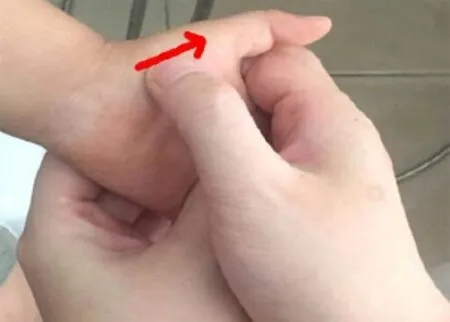
Figure 1. Qing-clearing Weijing
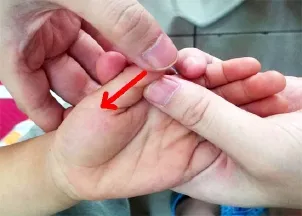
Figure 2. Bu-reinforcing Pijing
Step 2: Regulating qi of the liver and lung. Mildly Qing-clearing Ganjing and Feijing. The doctor Tui-pushed with palm side of the index finger from the tips of patient's index and ring fingers to the digital base along the midline of the palm; with the frequency of 200 times per minute continuously for 5 min (Figure 3).
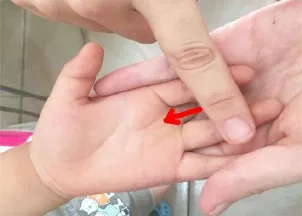
Figure 3. Mildly Qing-clearing Ganjing and Feijing
Step 3: Regulating the qi of upper Jiao. Started from Rou-kneading Tiantu (CV 22). The doctor Rou-kneaded with the index finger clockwise at Tiantu (CV 22) for 2 min (Figure 4). Subsequently, the doctor parting Tui-pushed with both thumbs from Danzhong (CV 17) to the lateral sides of the chest for 3 min (Figure 5).

Figure 4.Rou-kneading Tiantu (CV 22)
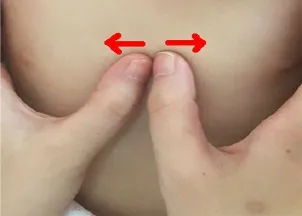
Figure 5. Parting Tui-pushing Danzhong (CV 17)
The tuina manipulations were done once a day. The efficacy should be evaluated after 5 d.
Cautions: Tuina manipulations for infantile are different from those for adult, requiring not only gentle and agile technique, but also highly-focused, steady breath and intensive monitoring of patients’ reaction in case of any damage to the skin.
3 Observation on Therapeutic Effects
3.1 Criteria of therapeutic effects
The criteria of therapeutic effects over cough were stipulated by referring to theCriteria of Diagnosis and Therapeutic Effects of Diseases and Syndromes in Traditional Chinese Medicine[3].
Cure: Symptoms and rales or rhonchi all vanished; normal body temperature in the case complicated with fever.
Improvement: Symptoms relieved, breath sounds turned into clear, less sputum production.
Failure: Symptoms or signs remained unimproved or even exacerbated.
3.2 Therapeutic results
All the 51 cases were involved in to the analysis of results, with 37 cases were cured and 14 cases were improved, and the total effective rate was 100%.
3.3 Case study
A 7-year-old boy, first visited on 6th August, 2014.
Chief complaints and history of present illness: According to his mother, the child began to cough during the night after catching cold 1 week ago, with severe respiratory symptoms that disturbed sleep. Meanwhile, the child suffered retching during eating food. After the ineffective transfusion therapy in the community medical service center for a whole week, the patient came for consultation.
Current signs and symptoms: Low spirit, lusterless complexion, a reddish tongue with thin and yellowish tongue coating; body temperature at 37.5 ℃, mild rough breath sounds detected in both lungs.
Diagnosis: Infantile cough.
Treatment: After 2 treatments, the child's mother reported no more cough during night; after 5 treatments, retching during the meal time vanished, never relapsed again in the follow-up of half a month.
4 Discussion
In TCM, infantile cough covers lung system symptoms (e.g. coughing with sputum) due to ascending of lung qi upon external contraction of pathogenic factors or dysfunctions of the Zang-fu organs[4]. In Western medicine, this condition is known as bronchitis and very common in pediatrics department, especially on seasonal changes. Although it is a mild condition, it can be refractory and, over time, may result in pneumonia or even asthma. Considering the special constitution and delicate organs of infants, it’s not advisable to prescribe medicine for small kids. External therapy can significantly alleviate symptoms and shorten the duration[5]. Chinese tuina can balance yi and yang by stimulating meridians and is reliable and effective for pediatric conditions. In addition, soft gentle tuina manipulations can remove pathogenic factors without damaging healthy qi. InSi Shen Xin Yuan, Huang Yuan-yu believed coughing occurs as a result of failure of lung qi to descend. The focus of treatment is therefore to regulate qi. First, it’s essential to regulate qi of the spleen and stomach, since spleen and stomach are the pivot of ascending and descending of qi activity. Ascending of stomach qi may cause cough, descending of spleen qi may cause diarrhea. Considering the fact that greasy or cold food may damage the spleen and stomach in children, the treatment strategy is to strengthen the spleen to support the lung. Secondly, it’s also important to regulate liver qi, since liver maintains the ascending of qi and lung maintains the descending of qi, abnormal qi activity may cause cough. Finally, it’s also necessary to regulate qi of the upper jiao, since cough is more associated with the lung and lung is located in the upper jiao. Tiantu (CV 22) is located close to the throat, and digital Rou-kneading this point can resolve phlegm, remove pathogenic factors and alleviate coughing[6]. Danzhong (CV 17) is the influential point of qi and can regulate qi activity of the body, soothe the chest, circulate blood and unblock meridians[7]. Combination of these points can regulate qi of the entire body.
In clinical practice, we followed the direction ofSi Sheng Xin Yuanand the TCM theory of ‘treating internal disease by external therapy’[8], applying tuina technique to harmonizing Zang-fu organs through regulating qi movement[9-11].
The research results have confirmed the validity of our therapeutic protocol. Since pediatrics diseases are more caused by attack of external pathogens than internal injuries due to excessive emotions, the pathogenesis is quite simple and usually defined as poor qi circulation of whole body. Regulation of qi movement does facilitate the recovery of many pediatric diseases. In clinical practice, this method had remarkable effect on not only infantile cough but also infantile diarrhea and poor appetite[12-13]. This method is simple, low-cost, effective, and can avoid adverse reactions of drug and intravenous infusion. It therefore is worthy of further clinical application[14-15].
Conflict of Interest
The authors declared that there was no conflict of interest in this article.
Statement of Informed Consent
Informed consent was obtained from the guardians of the recruited children in this study.
Received: 8 April 2015/Accepted: 13 May 2015
[1] Xue WH, Shi YL, Ding M, Wang YJ, Wang JL. Clinical research on rapid needling-cupping therapy for infantile cough. Shizhen Guoyi Guoyao, 2007, 18(9): 2169-2170.
[2] Lan CM, Wang MM. The research development of infant cough from the spleen. Xibu Zhongyiyao, 2015, 28(2): 135-137.
[3] State Administration of Traditional Chinese Medicine. Criteria of Diagnosis and Therapeutic Effects of Diseases and Syndromes in Traditional Chinese Medicine. Nanjing:Nanjing University Press, 1994: 76.
[4] Wang PF. Pediatrics of Traditional Chinese Medicine. 6th Version. Shanghai: Shanghai Scientific and Technical Publishers, 2003: 37-41.
[5] Xu YH. Application of modifiedEr Chen Tangin 146 cases of infantile cough. Zhongchengyao, 2006, 28(9): S2.
[6] Zhu QG, Ye B, Lin YF, Zheng XB. Application of Qiapinching at Tiantu (CV 22) in 146 cases of infantile wind fever cough. Zhonghua Zhongyiyao Zazhi, 2009, 24(6): 110-111.
[7] Ding XF, Liu FM. Application of acupuncture combined with rubbing-kneading at Danzhong (CV 17) in 26 cancerrelated hiccup. Zhongguo Zhen Jiu, 2014, 34(8): 746.
[8] Chen QZ, Chen JX. Clinical observation on the treatment of infantile cough with application at Feishu (BL 13) point. Zhongguo Quanke Yixue, 2011, 14(1A): 110-111.
[9] Li DZ, Wang JG.Tongmaitransfer gas abdominal massage treatment of tension-type headache efficacy observation. Shiyong Zhongyi Neike Zazhi, 2010, 24(7): 96-97.
[10] Wang WF. Observations on the efficacy of contralateral meridian needling at Xi-Cleft points plus massotherapy in treating scapulohumeral periarthritis. Shanghai Zhenjiu Zazhi, 2011, 30(2): 110-112.
[11] Ma QL, Hu B. Clinical study of acupuncture combine moxibustion and manipulation to chronic fatigue syndrome (CFS). Zhongyi Xuebao, 2011, 26(3): 371-373.
[12] Yao Y, Zhao Y. Diseases spectrum study on pediatric tuina in recent 10 years. J Acupunct Tuina Sci, 2012, 10(3): 181-184.
[13] Xie B, Zhang WY, Zhu Y. Massage treatment of infantile diarrhea research progress. Shiyong Zhongyi Neike Zazhi, 2010, 24(5): 19-21.
[14] Zhong GY. Application of spine-pinching combined with bloodletting in ear apex on 28 cases of infantile external pathogens cough. Shanghai Zhenjiu Zazhi, 2014, 33(4): 364.
[15] Li HM, Zhu LX, Li CX. Acupoints analysis of tuina in treating infantile cough. Zhongyiyao Linchuang Zazhi, 2012, 24(8): 721-722.
Translator: Feng Xiao-ming (豐曉溟)
推拿治療小兒咳嗽療效觀察
目的:觀察“三步調(diào)氣法”推拿治療小兒咳嗽的療效。方法:對(duì)符合納入標(biāo)準(zhǔn)的51例咳嗽患兒給予“三步調(diào)氣法”推拿治療, 每日治療1次, 治療5次后觀察療效。結(jié)果:治療過(guò)程中沒(méi)有脫落病例, 51例患兒中治愈37例, 好轉(zhuǎn)14例, 總有效率100%。結(jié)論:“三步調(diào)氣法”推拿治療小兒咳嗽療效可靠, 操作簡(jiǎn)便, 值得臨床推廣應(yīng)用。
推拿; 按摩; 咳嗽; 嬰兒; 兒童
R244.1 【
】B
Author: Wang Yan-chao, 2014 graduate student.
Email: hnzywyc@163.com
Methods:Fifty-one children with cough were enrolled and received ‘Three Steps to Regulate Qi Method’ tuina, once a day for 5 d. The effects were observed after 5 treatments.
Results:There was no dropout case during the process. Among the 51 infantile patients, 37 cases were cured, 14 cases were improved, and the total effective rate was 100%.
Conclusion:'Three Steps to Regulate Qi Method’ tuina is an effective, simple and convenient method for infatile cough and worth spreading in clinical application.
猜你喜歡
基層中醫(yī)藥(2021年2期)2021-07-23 01:41:54
幽默大師(2020年11期)2020-11-26 06:12:18
中華養(yǎng)生保健(2020年1期)2020-11-16 00:47:38
幽默大師(2020年10期)2020-11-10 09:07:20
海峽姐妹(2019年12期)2020-01-14 03:24:46
中國(guó)中醫(yī)急癥(2019年10期)2019-05-21 07:20:30
中國(guó)醫(yī)藥指南(2017年3期)2017-11-13 02:57:31
中國(guó)康復(fù)理論與實(shí)踐(2015年10期)2015-12-24 05:42:46
云南中醫(yī)學(xué)院學(xué)報(bào)(2014年3期)2014-07-31 18:57:41
中醫(yī)研究(2014年9期)2014-03-11 20:29:30
 Journal of Acupuncture and Tuina Science2015年6期
- Journal of Acupuncture and Tuina Science的其它文章
- Clinical observation of Da Huang (Rheum Officinale) application at Shenque (CV 8) for constipation after operation for lumbar vertebral fracture
- Therapeutic efficacy observation on combining interaction and routine acupuncture for intractable facial palsy
- Therapeutic efficacy observation on needling Yangming method for facial palsy
- Effect of breathing and Daoyin exercises on the quality of life in patients with chronic obstructive pulmonary disease
- Observation on clinical effect of acupuncture for peripheral facial paralysis in acute period and facial nerve F-wave
- Review on studies of acupuncture treatment for luteinized unruptured follicle syndrome