
China in APEC:Observer to Major Player
2014-11-24 02:16:50
China Pictorial 2014年10期
Asia-Pacific Economic Cooperation (APEC) was estab- lished in the late 1980s in response to the rapid development of economic globalization and growing interdependence of Asia-Pacific economies as the Cold War was dissolving. APEC works for mutual benefits and greater interdependency among its members through establishing open multilateral trading systems and reducing local trade barriers.
When APEC was established in 1989, it was just a regional eco- nomic forum and negotiation organization with 12 member economies. After development of 25 years, it has evolved into a top-level inter-governmental economic cooperation organization canvassing the entire Asia-Pacific region. Currently with 21 members, it is one of the most influential organizations for economic cooperation in the world. APEC members differ in terms of history, cul-ture, religion, economic and political systems, especially economic institutions, economic development levels, and investment liberalization levels.
Some deemed China not yet qualified to join when APEC was established. At that time, developed countries such as the U.S. and Australia didnt have positive feelings about China. In 1989, when Australian Prime Minister Bob Hawke called for better economic cooperation across the Pacific Rim region, which would lead to the first meeting of APEC, China expressed willingness to “participate in economic cooperation in the Asia-Pacific region.” However, the country wasnt invited to the first meeting for senior officials and ministers. Thus, the Chinese national flag wasnt seen at the venue for the First APEC Ministerial Meeting in Canberra, Australia.
However, on November 7, 1989, the First APEC Ministerial Meeting included an attachment as it issued the Canberra Statement, noting that “ministers have noticed the importance of China in terms of the future prosperity of the Asia-Pacific region,”and agreed to consider Chinas involvement in regional economic cooperation.
In 1991, at the Third APEC Ministerial Meeting held in Seoul, after nine months of complicated and difficult negotiations, the Chinese mainland, Hong Kong, and Taiwan, the three most vibrant economies in Asia, all joined APEC.
Since China became a member of APEC in 1991, it has been actively participating in various APEC activities and making contributions to its development.
From November 11 to 14, 1991, at the Third APEC Ministerial Meeting in Seoul, then-Chinese Foreign Minister Qian Qichen and Chinese Minister of Foreign Trade and Economic Cooperation Li Lanqing declared three principles for regional economic cooperation: diversity, mutual benefits, and openness. This was Chinas first major contribution to APEC.
In 1993, the U.S. proposed to change APEC from Asia-Pacific Economic “Cooperation” to Asia-Pacific Economic “Community”, aiming to change the nature of APEC as an economic cooperation platform. Then-Chinese President Jiang Zemin opposed the suggestion, stating that China hoped APEC to remain an open, flexible, and practical economic cooperative forum and negotiation mechanism rather than a closed and stiff economic group. Ultimately, members reached the “APEC big family spirit,” on the basis of mutual understand- ing and equal treatment and safeguarding the economic interests of member economies, especially developing members.
In 1997, the Asian financial crisis broke out, and economies of Southeast Asian countries were hit hard. At that time, China, which maintained rapid economic development speed, decided not to devalue its currency and helped Southeast Asian countries economies through international organizations and bilateral aid. These measures greatly enhanced Chinas popularity in APEC. After the financial crisis, greater international discussion about whether and how China could be a responsible power emerged, and China embraced greater responsibility in the region and even the world.
Along with its development, China has become more confident. On October 20, 2001, the Ninth APEC informal economic leaders meeting was held in Shanghai. The global economy had just recovered from the Asian financial crisis and the September 11 attack had just happened, which created greater uncertainty for the international political situation. During the Shanghai summit, participating members reached a consensus, reiterating determination to achieve common prosperity through cooperation and pushing forward the development of bilateral relations among members.
The APEC Shanghai Summit also discussed fighting terrorism, the first time APEC expanded to a field outside economics. Later, many other non-economic issues such as international anti-terrorism cooperation and climate change were also raised at APEC meetings.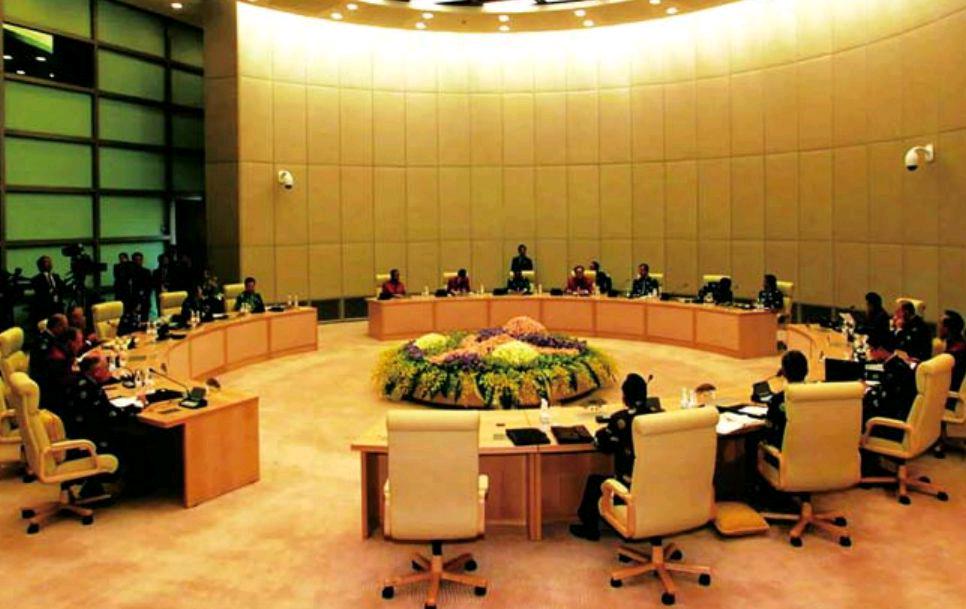
Since joining APEC, to realize the long-term goal of liberalizing and fa- cilitating trade and investment, China has not only actively participated, but also launched many projects and completed practical work. William Bodde, Jr., the first APEC executive director, once remarked that China was originally just another important member of APEC. However, after the September 11 attack, the U.S. couldnt focus on Asian trade and China began to play an increasingly important role along with its rapid economic development.
For the past 25 years, while China has been making contributions to enhancing cooperation within APEC and promoting economic development of the Asia-Pacific region, APEC has become an important stage for China to cooperate with other economies in the region, to conduct multilateral diplomacy, and to strengthen its national image.
For its 25th birthday, the 2014 APEC economic leaders meeting will return to China again after 13 years away. Under the 2014 theme “Shaping the Future through Asia-Pacific Partnership,” discussions of three sub-themes have top priority: advancing regional economic integration, promoting innovative development, economic reform and growth, and strengthening comprehensive connectivity and infrastructure development.
“The core of the three themes remains to build partnerships, a goal for APEC since its establishment,” explains Liu Chenyang, vice director of APEC Research Center of Nankai University. “At the same time, we can see that China is using its influence in the Asia-Pacific region to promote regional cooperation to a higher level, on the basis of mutual benefits.”
Against this backdrop, what will China, a nation at the historic turning point of deepening reform, bring to the world? This is a question drawing global attention. Now, at the center of the 2014 APEC stage, China is clearing its throat to answer.
