The Floundering Bishan Project
2014-11-24 13:39:00byQianMengni
China Pictorial 2014年9期
by+Qian+Mengni
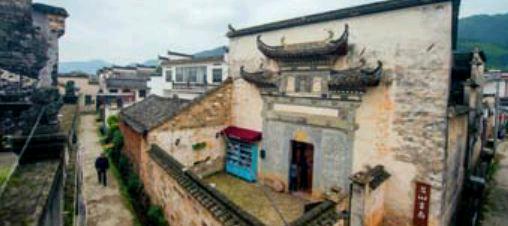
In 2011, Ou Ning, an intellectual and activist, purchased a time-honored structure in Bishan Village, Anhui Province, and moved his whole family into it. Since then, he has been performing rural reconstruction at the foot of Huangshan Mountain. Along with fellow scholar and friend Zuo Jing, he launched the Bishan Project in hopes of carrying out experimental rural reconstruction from cultural perspectives through using their respective resources in cultural and artistic fields.
However, three years later, Ou is exhausted. “I am scared,” he admits. “Since we arrived in Bishan, the gradual gentrification of the place has made me worry. Ultimately, you may not find farmers in this village. I have been fighting gentrification for a long time. But it seems that the farmers are expecting exactly that. Now, I dont know what to think.”
The most exemplary infrastructure is street lights. Villagers are eager to install street lights, which do more than just illumination, but project an image – a well-lit place usually also has a welldeveloped economy. However, for poets coming from far away metropolises to visit Bishan, street lights are the last thing they want to see: A well-lit street obscures the stars.
No one seems to know what is right.
Facing Reality
Born in a small village in Suixi County, Guangdong Province, Ou Ning wasnt fond of his birthplace as a child. He worked very hard at school in hopes of escaping. However, after finding home in a metropolis as an adult, he became nostalgic for his humble rural upbringing, and gained a better understanding of rural areas. This was Ous initial motivation for the rural reconstruction movement.
Ou chose Bishan Village in Yixian County as the site for his experiment. He invited some intellectuals to join his project, in the hope of creating a sort of utopia. At first, his plan was not complicated or refined. With ruralism and anarchism as its core, the plan originally involved construction of a living system, an architectural system, and a communication system. Ou even planned to design a special “passport,” banner, and clothes for his commune to testify to contemporary Chinese intellectuals resolve to return to rural areas.
Although Ou faced many challenges and problems, he solved quite a few by learning from local farmers. With the help of the local government, Ou and other intellectuals working on the project began researching and sorting traditional local crafts in an attempt to turn traditional local handiwork such as hand-woven bamboo baskets and bamboo carving into art and sell it on the art market. According to Zuo Jing, the other mind behind the Bishan Project and a teacher at Anhui University, the two-year project to preserve Yixians traditional crafts has come to an end, and the whole process has been compiled in a book. Later, designers from various regions of China will be invited to participate in projects for specific local craft preservation, with the help of the contents of the book.
The Asia Society came to the village for two consecutive years to shoot a documentary. In another documentary series called Masters, Ou Nings Bishan Project is deemed a contemporary effort deriving from a rural reconstruction experiment carried out by Yan Yangchu (Y.C. James Yen, 1890-1990), a Chinese educator and organizer known for his efforts in mass literacy and rural reconstruction, during the Republic of China (1912-1949) era. In early 2014, Southern People Weekly, a respected Chinese publication, also launched a feature about “rescuing the homeland,” with Bishan as the major story. However, Ou stayed prudent. “People engaging in social movements may become addicted to the roles of‘speaking for the public and ‘social conscience because they taste power and enjoy moral superiority,” opines Ou.
Limited Achievements
Change in rural areas is extremely slow. Some philosophies have been prevalent for centuries, so changing them takes a really long time. The biggest challenge Ou faces remains changing existing mindsets.
In the summer of 2011, scores of artists, architects, designers, musicians, and poets from around China were invited to Bishan village for the first Bishan “Harvestival”. They came to survey local society, and discussed dreams and realities with local villagers. When the villagers saw Ou bringing in so many artists on tourist buses, they thought he was a businessman and dubbed him “Boss Ou.” To clear up this misunderstanding, Ou invited more than 30 villagers to his home to explain his intentions.
“They were disappointed and thought the activities we organized were not practical, something they can feel but never touch,”he sighs. “Local villagers expected us to develop Bishan into a renowned tourist attraction like Xidi and Hongcun.”
Xidi and Hongcun, two nearby UNESCO World Heritage Sites, became very popular through tourism development. However, locals are now “perpetually in character,” acting for tourists every day. Entrance fees into the villages are pricey, which makes meeting a friend in either quite a hassle. Locals even vie for tourists while selling counterfeit antiques at the entrances.
And these popular tourist sites have raised consumption levels even in nearby smaller villages like Bishan. For example, it costs about 200 yuan, quite a large sum for locals, to take a car from Yixian to Huangshan Airport, a distance of 60-plus kilometers. Three years ago, when Ou was launching the first Bishan Harvestival, organizers he hired from Yixian County seat charged him more than those in Beijing.
However, from another perspective, changes have been happening. In the past, Bishan villagers were desperate to escape rural life and didnt value their time-honored houses. This situation changed considerably since Ou and other Bishan Project participants arrived. “They began to wonder why people from cities would trouble themselves to come to the village and ponder why urbanites seemed happy with their lives here,” explains Ou. “Locals drew their own conclusions: It is due to fresh air and pesticidefree vegetables. This is the process of re-building confidence in rural life.”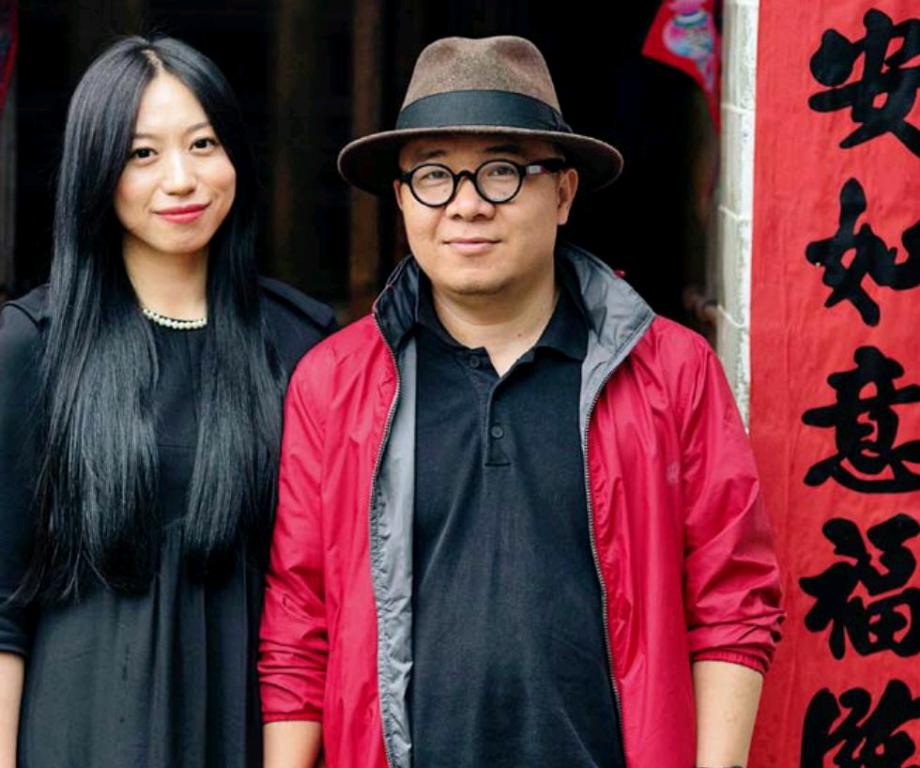
However, not everyone has been converted into an ideal lifestyle. It is not only about material life, but more of an attitude. For a farmer who has never lived in a metropolis for a single day, it is almost impossible to comprehend any opposition to urbanization. Only after living in cities for some period and experiencing their various problems can one see rural areas in a new light.
A shortage of professionals is another problem facing Ous rural construction. Ou explains although he has gathered plenty of resources, they need to be turned into a workable mechanism suitable for local conditions by local residents. But the young people are leaving for big cities. If they are ever to return to the village, they must give up relatively high-paying city jobs and find new employment in the countryside, which brings back the importance of developing the rural economy.
Some have suggested Ou launch rural construction from another angle, say, by popularizing mass education like Y.C. James Yens movement from 1926 to 1937 in Dingxian County, Hebei Province. However, this ambitious project was beyond the capabilities of Ou and his friends. “We are all struggling,” he admits. “It is incredibly difficult to turn theory into practice and we face tons of problems.”
Return to Countryside?
Two issues of Bishan, a magazine edited by Zuo Jing, cover the topic “l(fā)eaving cities and returning to countryside.”
“I have reasons I chose Bishan over my own hometown as the village to return to,” reveals Ou. “I dont like my hometown because of its cruel reality and less-than-lovely folk people. I find a profound, physical, and umbilical cord-like relationship with my native hometown. When I think of it, I see my days as a kid and teenager or I recall specific people, like my mom. However, in other places I find a better sense of hometown identity, like Taiwan and Bishan.”
In Bishan, Ou, who hails from a village himself, finds little difficulty getting along with locals. However, the more he learns about locals, the more he feels the great gap between intellectuals and farmers. In Bishan, Ou and his friends hope to restore traditional rural society based on clanship and neighborhood relations, and inspire young people to return to their hometowns, engage in farming, and preserve traditional crafts. However, locals hope to further develop the economy and attract greater investments. They hope that rich people come to the village and buy the old houses so that they can move into tall buildings in the county seat, or transform Bishan into a tourist attraction like Hongcun so they can charge entry fees. If this happened, locals could easily make much better incomes just by renovating their homes into bed and breakfasts and selling pickles.
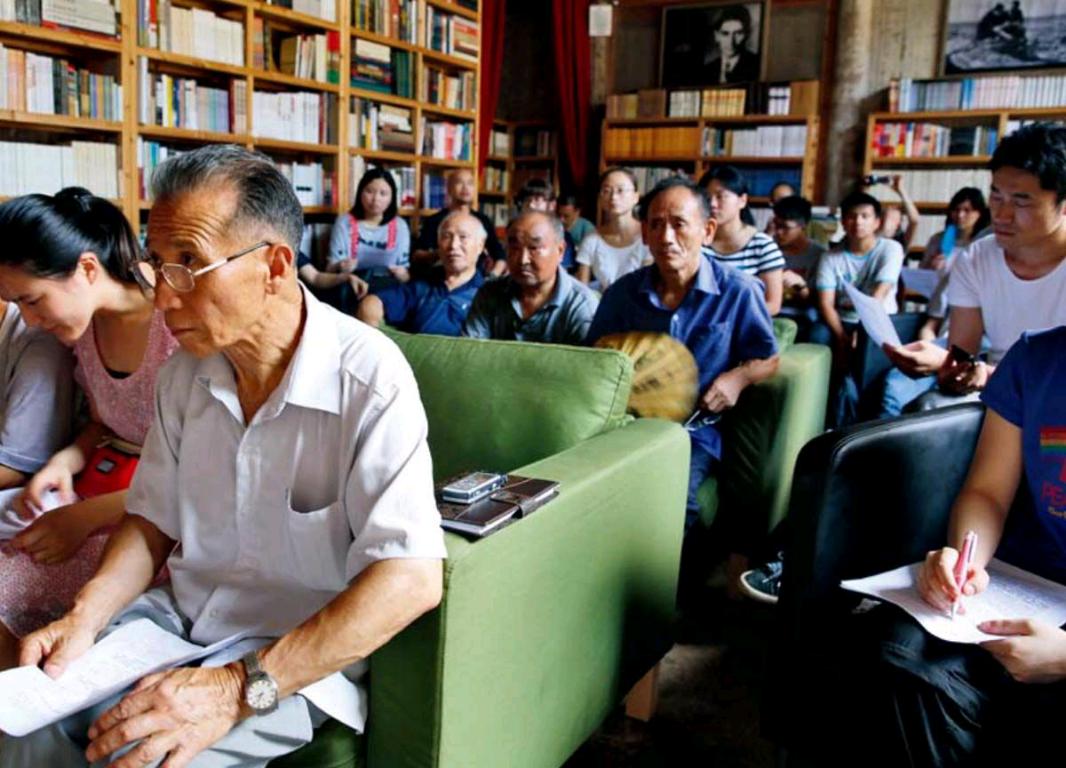
“I never think of what the future will be,” Ou admits. Due to his and Zuos efforts, the local ancestral hall was renovated into Bishan Bookstore: Bookshelves are lined up in the courtyard and a café sits on the second floor. A dilapidated oil mill was turned into a hotel. Unintentionally, these kinds of projects meet the expectations of both his team and locals: Ou needs space for future activities and books for education. And tourists love places like this.
Zuo is also renovating a house in Bishan which will eventually become Bishan Culture Institute. Then, the whole editorial department of the magazine will move into the house and begin their rural education campaign. “The biggest difference between Bishan and most tourist sites is that people living and working in Bishan remain indigenous,” Zuo asserts. “We hope that locals can make full use of their time-honored structures and make Bishan a village with abundant public cultural activities in the future.”